The 60-second version
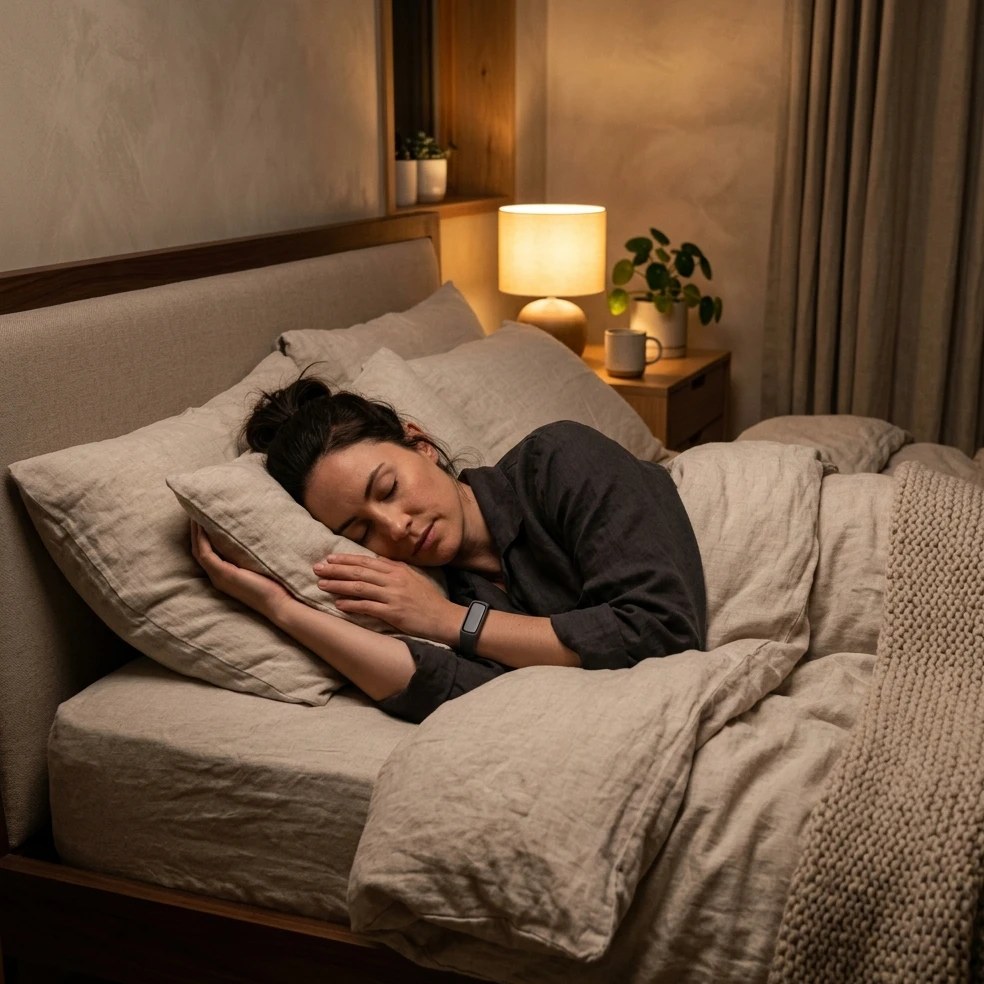
Sleep is the single most underrated performance-enhancing intervention. Consistently sleeping less than 7 hours per night significantly impairs cognitive function, blunts muscle protein synthesis, and creates a metabolic environment that resembles pre-diabetes. For the athlete, sleep debt is not just about feeling tired; it is about reduced testosterone, increased cortisol, a roughly two-fold increase in injury risk, and a measurable bump in long-term mortality risk if it persists for years.
Educational journalism, not medical advice. Every claim here is checked against its cited sources by editor Timothy Bunce — a health writer, not a physician. It isn’t specific to your situation: for health decisions, talk to your own clinician. How we work →
Some links in this article are affiliate links. If you buy through one, The Beachside Reader earns a commission at no extra cost to you. It never changes which products we pick, or what we say about them. Full affiliate disclosure →
What the evidence says
The cognitive impact of sleep deprivation is comparable to alcohol intoxication. Research shows that after 17–19 hours of wakefulness, performance on cognitive tasks is equivalent to that of someone with a blood-alcohol concentration (BAC) of 0.05% Durmer 2005. Chronic sleep restriction is even more insidious: subjects restricted to 6 hours per night for two weeks accumulated cognitive deficits equivalent to two full nights of total sleep deprivation, but rated their own sleepiness as only mildly elevated. The mismatch between objective decline and subjective feeling is exactly what makes chronic sleep debt so dangerous — you do not notice yourself getting worse.
Metabolic and Endocrine Fallout
Sleep debt directly attacks metabolic health. A landmark Lancet study showed that just six nights of restricted sleep (4 hours per night) impaired glucose tolerance and elevated evening cortisol, mimicking the early stages of insulin resistance Spiegel 1999. For body-composition-focused trainees, this means the body is more likely to store fat and break down lean tissue even when diet is on point. A separate trial demonstrated that one week of 5-hour sleep nights cuts daytime testosterone in healthy young men by 10–15% — equivalent to ageing 10–15 years Leproult 2011.
Cardiovascular and Immune Costs
The damage extends well beyond the gym. A meta-analysis of more than 470,000 participants found that habitually sleeping less than 6 hours per night was associated with a 48% increased risk of developing or dying from coronary heart disease and a 15% greater risk of stroke Cappuccio 2011. Immune function takes a parallel hit: in a controlled inoculation study, participants who slept less than 6 hours per night were over four times more likely to catch a cold than those sleeping 7 hours or more, even after controlling for stress, age, and BMI Prather 2015.
“Sleep is the price we pay for plasticity during the day.”
— Durmer & Dinges, Seminars in Neurology, 2005 view source
Sleep, Injury, and the Athlete
For training populations the link is even more direct. A widely cited prospective study of adolescent athletes found that those who slept less than 8 hours on average were 1.7 times more likely to suffer a sports injury than those sleeping 8 hours or more, with a near-linear dose-response across sleep duration Milewski 2014. The proposed mechanisms are well documented: blunted growth-hormone release during deep sleep, reduced reaction time, decreased proprioceptive accuracy, and impaired emotional regulation that pushes athletes to override fatigue cues.
The Two-Way Street with Mental Health
Sleep and mood travel together. A large meta-analysis demonstrated that insomniacs are roughly twice as likely to develop a depressive episode within the next several years, controlling for prior mental-health history Baglioni 2011. The relationship is bidirectional: poor sleep increases vulnerability to anxiety and depression, and those mood states then further fragment sleep architecture. For trainees this matters because adherence to any program depends on motivation, and motivation collapses quickly when REM and slow-wave sleep are repeatedly truncated.
The Hidden Disorder: Sleep Apnoea
An estimated one in four middle-aged adults has obstructive sleep apnoea (OSA) and the majority do not know it. The disorder produces dozens to hundreds of brief breathing pauses per hour, fragmenting sleep architecture and starving the cardiovascular system of oxygen during what should be its overnight rest. Untreated OSA more than doubles the risk of fatal cardiovascular events at 10-year follow-up Marin 2005. The classic presentation is loud habitual snoring, witnessed apnoeas (a partner reports gasping or choking), morning headaches, and unrelenting daytime sleepiness despite "adequate" hours in bed. A formal home sleep study is inexpensive relative to the downstream stakes, and CPAP therapy delivers measurable cognitive and metabolic improvements within weeks for those who tolerate it.
Age, Architecture, and Why Older Adults Sleep Differently
Sleep does not stay the same across the lifespan. Total sleep time declines modestly from young adulthood, but the more striking change is in the proportion of slow-wave (deep) sleep, which can fall by half between ages 30 and 70 in cross-sectional comparisons. Slow-wave sleep is when growth hormone is released and when the glymphatic system clears metabolic waste from the brain — including beta-amyloid implicated in Alzheimer’s pathology. Recent prospective work has linked chronically reduced sleep duration in midlife to a roughly 30% increased risk of dementia three decades later, even after adjusting for cardiovascular and lifestyle confounders Sabia 2021. The implication is uncomfortable but actionable: sleep is one of the few midlife levers with measurable late-life cognitive payoff.
The Weekend Catch-Up Myth and What Actually Helps
Many people believe they can "catch up" on sleep over the weekend. Controlled studies suggest weekend recovery sleep partially restores subjective alertness and reaction time, but does not fully reverse the metabolic disruption or the cumulative cognitive decline produced by a workweek of restricted sleep Banks 2010. Consistency in sleep timing — the so-called regularity of the circadian rhythm — appears to matter as much as total duration. Recent observational work on Fitbit-style trackers shows sleep-regularity scores predicting all-cause mortality more strongly than sleep-duration scores in some cohorts.
Building a Sleep Strategy You Will Actually Follow
The single highest-leverage habit is a fixed wake time, anchored by light exposure within the first 30 minutes of waking. The wake time, more than the bed time, sets the daily phase of the circadian system; a consistent morning light dose synchronises the suprachiasmatic nucleus and makes sleep onset that night more reliable. Caffeine has roughly a six-hour half-life in most adults, which means a 3 pm cup leaves a quarter of its dose in circulation at 9 pm and is a common silent saboteur of sleep onset. Alcohol shortens sleep latency but fragments REM and is a net negative even at modest doses. The bedroom should be cool, dark, and reserved for sleep and intimacy — deliberately, since the brain learns the bed as a "place where sleep happens" only when it is consistently used that way. None of these is exotic; the difficulty is the consistency, which is exactly what makes the payoff so large for the small minority who follow them.
The Strategic Nap
For shift workers, parents of young children, and anyone whose night sleep is genuinely capped, naps are the most underused intervention in the literature. A 20–30 minute nap restores roughly 30–40% of the cognitive deficit produced by short night sleep without producing the post-nap grogginess (sleep inertia) that 60–90 minute naps reliably trigger. The trick is timing: nap before 3 pm to avoid pushing back that night’s sleep onset, and lie down only when the eyelids are heavy — forcing a nap when the homeostatic pressure is low usually produces 30 minutes of staring at the ceiling rather than recovery. The data is clearest for nap-trained populations such as airline pilots and emergency-medicine residents, where structured nap protocols measurably reduce error rates on simulated tasks.
Travel, Jet Lag, and What the Evidence Supports
The single best intervention for jet lag is sunlight exposure at the destination’s morning hours, which advances the circadian phase. Low-dose melatonin (0.3–0.5 mg, taken at the destination’s evening) accelerates phase shifts by roughly one hour per day on average and has the cleanest safety profile among sleep aids. Strategic napping covers the immediate fatigue but does not advance the rhythm. Alcohol on long-haul flights extends the recovery window because it fragments the brief sleep that would otherwise occur in flight. The eastward-travel rule of thumb is one day per time zone for full adaptation; westward travel is roughly half that because lengthening the day is biologically easier than shortening it.
Children, Teenagers, and the Sleep-Schoolwork Tradeoff
The sleep needs of adolescents are larger than the cultural script around early school start times allows for. The American Academy of Pediatrics formally recommends middle and high schools start no earlier than 8:30 am, citing measurable improvements in academic performance, mental health, and traffic-accident rates in districts that have shifted to later start times. Teenagers’ circadian rhythms naturally delay by about two hours during puberty, which is why the same 16-year-old who looks awake at 11 pm is genuinely incapable of being mentally present at 7 am. The athletic implication is that the early-morning training sessions favoured by some sports cost the affected athletes meaningful cognitive performance even when total sleep duration is held constant. The body of evidence points the same way at every age: respect the body’s preferred timing, not just its preferred quantity.
Practical takeaways
- The 7-hour floor. Treat 7 hours as a hard physiological minimum, not a goal. Most athletes need 8–9 hours for full hormonal recovery and tissue repair.
- Cool the room. A drop in core body temperature is required to initiate sleep; aim for around 18°C (65°F) for higher slow-wave-sleep yield.
- Manage the blue-light window. Dim screens or use blue-light filtering for the 60 minutes before bed to allow natural melatonin onset.
- Prioritise regularity. Going to bed and waking within the same 30-minute window every day — weekends included — stabilises the circadian system more than chasing extra hours on Saturday morning.
- Treat snoring seriously. Loud snoring with daytime fatigue is the classic obstructive-sleep-apnoea presentation, which silently amplifies every cardiovascular and cognitive risk above. A formal sleep study costs little compared with the downstream consequences.
Frequently asked questions
Can I survive on 6 hours of sleep?
While you may 'feel' fine, cognitive testing shows that 6 hours of sleep leads to significant deficits in reaction time and decision-making that most people are unaware of.
Does caffeine replace sleep?
No. Caffeine masks sleepiness by blocking adenosine receptors, but it does not perform the biological 'housekeeping' that occurs during deep sleep.
How does sleep affect muscle growth?
Deep sleep is when the body releases the majority of its growth hormone. Sleep deprivation reduces protein synthesis and increases muscle protein breakdown.
Could my snoring be sleep apnoea?
Loud habitual snoring combined with daytime fatigue is the classic OSA presentation. A formal home sleep study is inexpensive and worth doing if either symptom is present.
References
Durmer 2005Durmer JS, Dinges DF. Neurocognitive consequences of sleep deprivation. Seminars in Neurology. 2005;25(1):117-129. View source →Spiegel 1999Spiegel K, Leproult R, Van Cauter E. Impact of sleep debt on metabolic and endocrine function. The Lancet. 1999;354(9188):1435-1439. View source →Leproult 2011Leproult R, Van Cauter E. Effect of 1 week of sleep restriction on testosterone levels in young healthy men. JAMA. 2011;305(21):2173-2174. View source →Cappuccio 2011Cappuccio FP, et al. Sleep duration predicts cardiovascular outcomes: a systematic review and meta-analysis of prospective studies. European Heart Journal. 2011;32(12):1484-1492. View source →Prather 2015Prather AA, et al. Behaviorally Assessed Sleep and Susceptibility to the Common Cold. Sleep. 2015;38(9):1353-1359. View source →Milewski 2014Milewski MD, et al. Chronic lack of sleep is associated with increased sports injuries in adolescent athletes. Journal of Pediatric Orthopaedics. 2014;34(2):129-133. View source →Baglioni 2011Baglioni C, et al. Insomnia as a predictor of depression: a meta-analytic evaluation of longitudinal epidemiological studies. Journal of Affective Disorders. 2011;135(1-3):10-19. View source →Marin 2005Marin JM, et al. Long-term cardiovascular outcomes in men with obstructive sleep apnoea-hypopnoea with or without treatment with continuous positive airway pressure: an observational study. The Lancet. 2005;365(9464):1046-1053. View source →Sabia 2021Sabia S, et al. Association of sleep duration in middle and old age with incidence of dementia. Nature Communications. 2021;12:2289. View source →Banks 2010Banks S, et al. Neurobehavioral dynamics following chronic sleep restriction: dose-response effects of one night for recovery. Sleep. 2010;33(8):1013-1026. View source →