Balance & Fall Prevention
Falls are the leading cause of injury-related death in older Canadians. The published evidence on balance training is large, consistent, and under-used. These articles cover the movements and habits that reduce fall risk.
Sherrington 2019 (Cochrane review of 108 trials, 23,000 participants) found exercise programs that include balance challenge reduce falls by 23–35% in adults over 65. The articles below cover the movements with the strongest evidence — from low-impact aquatic work to standing balance under load.
8 articles on this topic
 Deep dive
Fitness After 65: What the Evidence Actually Says
Most of what we call 'aging' — strength loss, balance decline, fading energy — is actually detraining. Untreated, the loss compounds. Treate…
 Deep dive
Mobility, Flexibility, Stability: What Actually Works
Three different things, three different training approaches. The peer-reviewed dose for ROM gains, why pre-workout static stretching costs y…
 Deep dive
Posture: Why "Sitting Up Straight" Matters Less Than You Think
The modern evidence base has moved away from a single "ideal" posture. Pain correlates better with sedentary time and tissue load tolerance …
 Deep dive
Isometric Holds: Building Serious Strength Without Moving a Muscle
Strength gains comparable to dynamic resistance training. Blood-pressure reductions comparable to first-line medications. Joint-friendly eno…
 Deep dive
Aquatic Jogging: The Joint-Recovery Workout the Sports-Medicine World Has Used for Decades
Deep-water running preserves 99% of running fitness during injury recovery, with zero ground-reaction force. What the published trials show,…
 Deep dive
Animal Flow Workouts: What They Are, Who They’re For
Ape walks, beast holds, scorpion reaches, transitions strung to music. Animal Flow draws from gymnastics, parkour, and yoga. The peer-review…
 Deep dive
SUP as a Hidden Core Workout
Stand-up paddleboarding looks like leisure. EMG and heart-rate data tell a different story: deep core stabilisers fire continuously, oblique…
 Deep dive
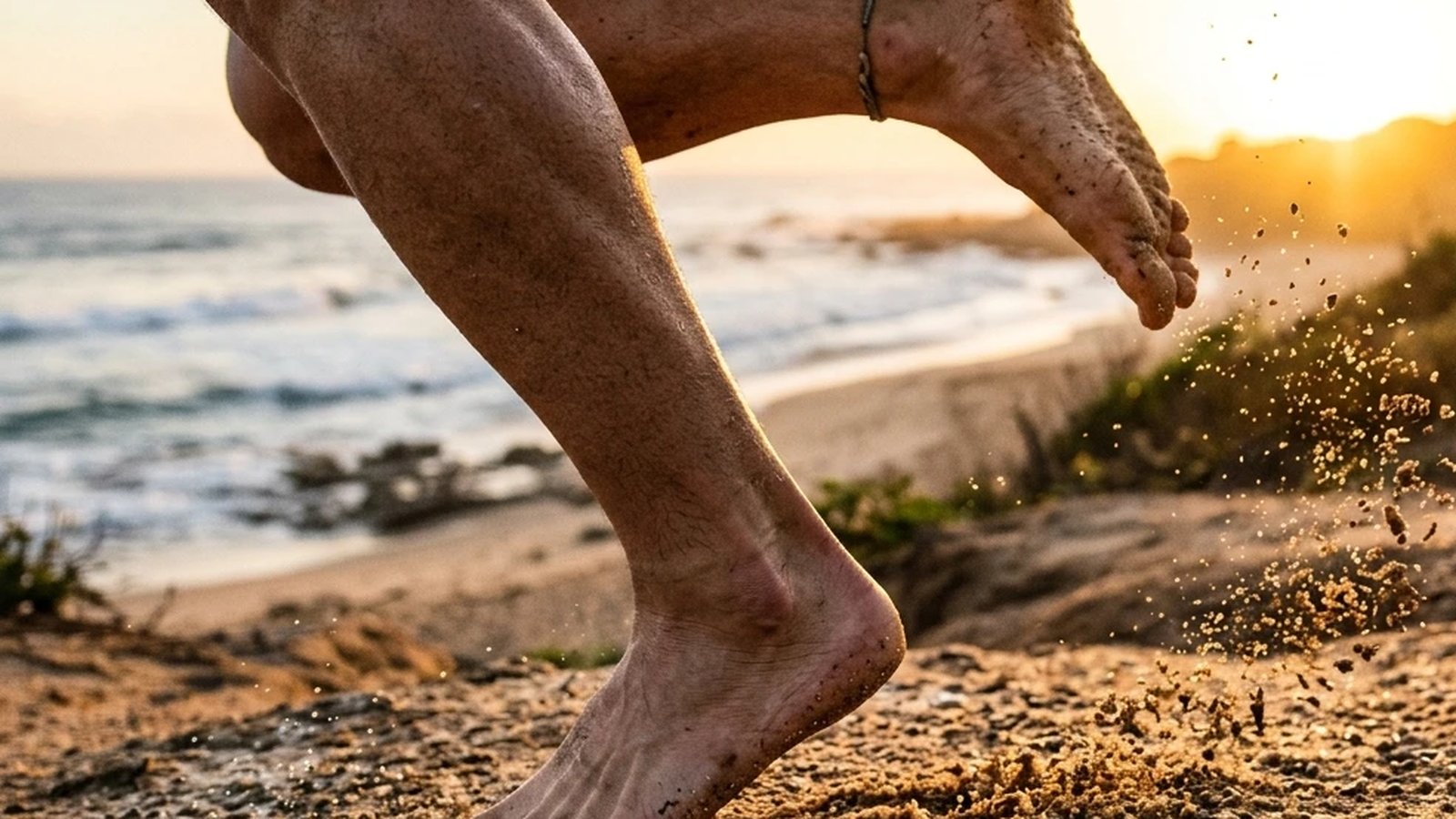
Barefoot Running: Evolutionary Advantage or Fast Track to Injury
Lieberman’s 2010 Nature paper made barefoot running a movement. The biomechanics are real - but the injury data are complicated. What …