The 60-second version
The persistent claim that “your knees should never travel past your toes” comes from a 1978 misreading of competitive powerlifter form, not from injury data. Restricting knee travel reduces knee joint torque by about 22% but increases hip joint torque by roughly 1,070% (Fry 2003) — trading a marginal benefit at one joint for a major cost at two others. The published evidence on full-depth squatting in healthy lifters (Hartmann 2013, reviewing 164 papers) finds no greater long-term joint risk than parallel squatting. What predicts knee pain in lifters is training-load mismanagement, asymmetry, and glute medius weakness — not depth or knee position. Squat through the full range you have. Train the glute medius. Manage load progression and you almost never develop chronic patellar issues.
Educational journalism, not medical advice. Every claim here is checked against its cited sources by editor Timothy Bunce — a health writer, not a physician. It isn’t specific to your situation: for health decisions, talk to your own clinician. How we work →
Some links in this article are affiliate links. If you buy through one, The Beachside Reader earns a commission at no extra cost to you. It never changes which products we pick, or what we say about them. Full affiliate disclosure →
Where the “knees behind toes” rule actually comes from
The original advice traces to McLaughlin et al. (1978) in Research Quarterly, which observed that competitive powerlifters tended to keep their knees roughly above their toes during heavy back squats McLaughlin 1978. That observation generalised into a categorical “don’t let your knees go past your toes,” which is not what the original paper said.
Fry, Smith and Schilling (2003) tested the rule directly in the Journal of Strength and Conditioning Research. Restricting knee travel during squats reduced knee joint torque by about 22% — and increased hip joint torque by roughly 1,070% Fry 2003. You got a marginal benefit at one joint at a major cost to two others. The literature has held to that finding since.
Knee position is a leverage problem, not a moral one
When you squat, your knee acts as a hinge with two forces pulling on it: the quadriceps tendon above and the patellar tendon below. As you descend, both forces increase in proportion to the moment arm — the perpendicular distance from the load to the joint axis.
Forward knee travel makes the knee’s moment arm larger. That increases the demand on the patellar tendon. It is not the same as increasing shear force on cartilage; tendon loading is what builds tendon resilience over time. In a person with healthy knees and a tolerated training history, deep knee bend with forward travel is a training stimulus, not a structural threat. In a person with patellar tendinopathy, an ACL repair, or a meniscus injury, the same loading is a problem. The biomechanics don’t change. The tissue’s tolerance does.
Depth and the meniscus
The persistent claim that squatting below parallel “grinds your meniscus” comes from interpreting cadaver-pressure studies as if loaded squats and dead joints behave the same way. They don’t.
“Contrary to commonly voiced concern, deep squats do not contribute increased risk of injury to passive tissues… Provided that technique is learned accurately under expert supervision and with progressive training loads, the deep squat presents an effective training exercise for protection against injuries and strengthening of the lower extremity.”
— Hartmann, Wirth & Klusemann, Sports Medicine, 2013 view source
Hartmann’s 2013 review of 164 papers concluded that, in healthy subjects, full-depth squats produce no greater long-term joint risk than parallel squats Hartmann 2013. Squat depth is, in other words, a question of mobility and ankle dorsiflexion more than a question of safety. If you can hit depth without lifting your heels or rounding your lower back, your knees are not the limiting factor.
The three things that actually matter
If the depth-and-knee-position arguments are mostly noise, what does signal in the literature?
- Foot position and tibial alignment. The most reliable predictor of knee pain in squatters is medial collapse — the knee tracking inside the line of the foot under load. Glute medius weakness drives this in most cases. The fix is targeted glute work, not changes to squat depth.
- Loading rate and recovery. Tendon health responds to consistent mechanical tension over time, not maximum tension on any one session. Squat biomechanics research shows that forward knee travel increases the knee’s moment arm and, with it, the tensile load on the patellar tendon; progressively increasing that load lets the tendon adapt, while abrupt jumps in load well beyond the tendon’s accustomed level are the pattern most likely to outpace it Schoenfeld 2010.
- Asymmetries. A 10% strength difference between left and right legs is normal. Above 15% it predicts knee pain. Unilateral training (split squats, lunges, single-leg RDLs) is the cheapest way to keep asymmetries in the safe range.
The training implication
For a healthy lifter without prior injury, the practical takeaway is straightforward.
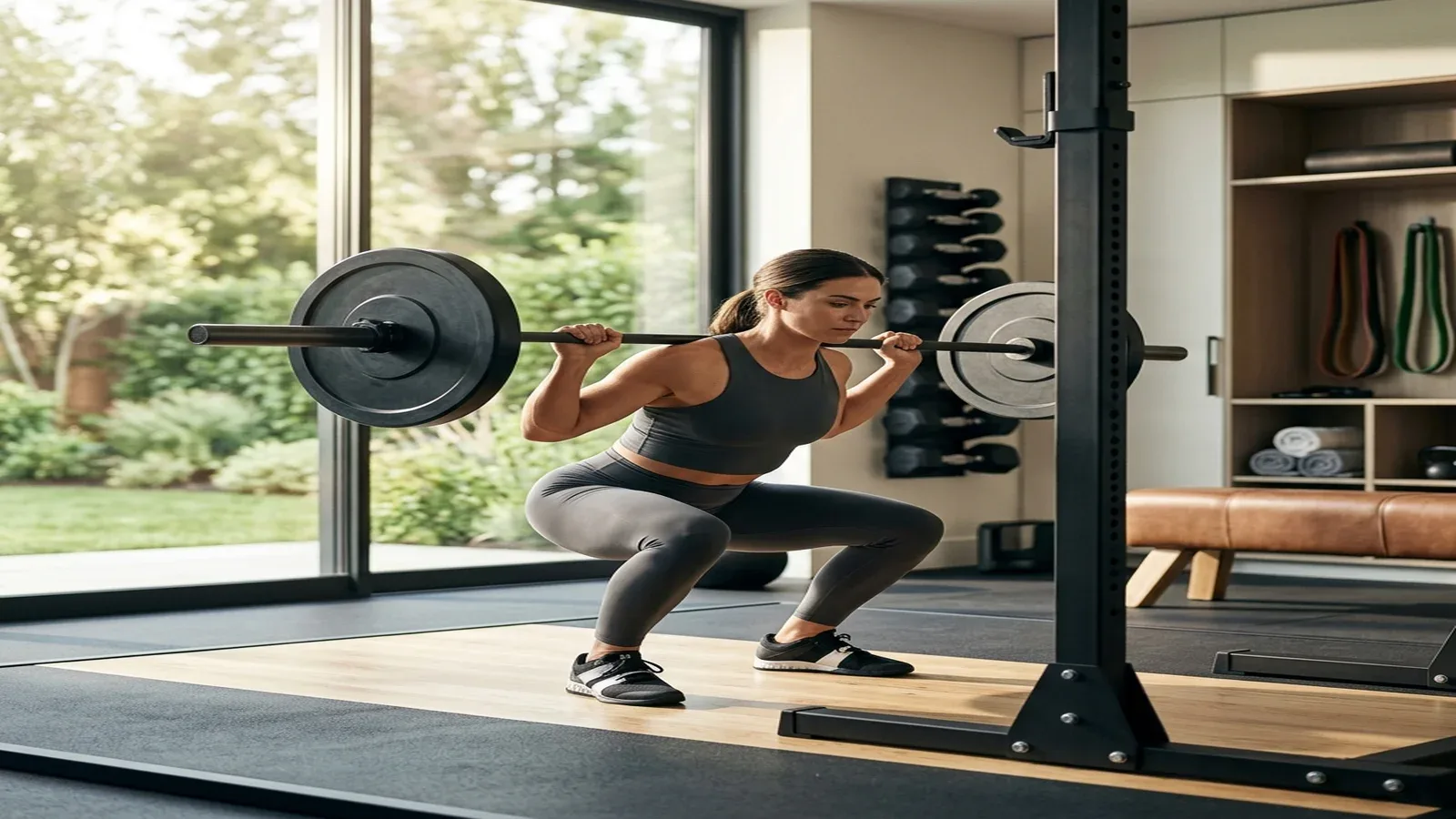
- Squat through the full available range of motion. Forward knee travel is fine and probably beneficial for tendon resilience.
- Drive depth from ankle dorsiflexion and hip mobility, not by leaning forward and rounding your lower back.
- Train your glute medius — banded clamshells, side-lying leg raises, single-leg work — to stop knee valgus before it starts.
- Manage load progression. The lift that hurts you is rarely the lift you did with bad form; it’s the lift you did with good form one too many weeks in a row.
- Add unilateral work as 20–30% of your weekly squat-pattern volume.
For a lifter coming back from injury, the same principles apply with three modifications: shorter range of motion early in the rehab progression, slower loading rate (2% weekly increases for the first eight weeks), and a return-to-loaded-squatting test specific to the injury — your physio or sports-medicine doctor sets that.
When ankle mobility is the actual limiter
Many lifters who can’t hit depth without rounding their lower back are actually ankle-limited, not hip-limited. The test is simple: place the toes of one foot four inches from a wall and try to touch the wall with your knee while keeping the heel down. If your knee can’t reach the wall, ankle dorsiflexion is constraining your squat.
The fixes range from cheap to slow: heel-raised shoes give you about 0.5 to 0.75 inch of effective dorsiflexion immediately; banded ankle distractions over six to eight weeks restore tissue compliance; in stubborn cases an evaluation by a physiotherapist familiar with bony block versus soft-tissue restriction is worth the visit. The reason this matters: a lifter who tries to drive depth without the ankle range available will compensate by pushing the hips back and torso forward, which shifts load onto the hip in exactly the way Fry’s 2003 paper warned about. The fix is upstream — expand ankle range, or accept the heel raise — not changing knee mechanics.
The warm-up actually matters here
One thing the literature is consistent on across both squat-injury and patellar-tendinopathy research: warm-up sets at 50 to 70% of working weight materially reduce both perceived joint stiffness and force-production variance on the first heavy set. Two warm-up sets are the published minimum; three to four are common in practice. Skipping them — in the name of saving time, or because the working weight feels light — is a common factor in lifters who develop knee pain over a year or two of training.
The warm-up sets are not for the muscles. They are for the joint capsule, the tendons, and the central nervous system’s recruitment timing. None of those tissues respond well to abrupt loading. A practical rule: never put your working weight on your back without at least two ramp sets at meaningful percentages of it. The cost is two minutes; the benefit is the difference between training for the next decade and managing patellar tendinopathy for it.
The longevity case
People sometimes ask whether squatting heavy in your 30s and 40s is worth the eventual joint cost. The answer the longevity literature gives is roughly the inverse of the question. Loaded squatting through a full range of motion is one of the most robust predictors of preserved lower-body function in old age. Sarcopenic adults who can squat without aid live longer and fall less. The risk of not training the squat pattern over decades almost certainly exceeds the risk of training it.
The squat is a pattern your body needs to keep, ideally for the rest of your life. The biomechanics are not exotic. The only thing that can really hurt you is the same thing that can hurt anyone in any sport — getting greedy with the load and unforgiving with the recovery.
Practical takeaways
- Squat through your available depth. Knee-over-toe is fine in healthy lifters; restricting it pushes load onto your spine and hip.
- Train glute medius weekly. Bands, clamshells, single-leg work — the cheapest knee insurance available.
- Add unilateral volume. 20–30% of weekly squat-pattern work as split squats / lunges / step-ups.
- Progress load gradually and build in regular deload weeks. This favors the same gradual-loading pattern the tendon biomechanics above support — not a specific dose this article’s sources tested directly.
- If your ankles are the limiter, work mobility — or wear lifting shoes. Don’t round your back to hit depth.
Frequently asked questions
Is the knees-over-toes approach safe?
For healthy lifters, yes. The discomfort that drove the original "knees behind toes" rule was based on a misreading of cadaver studies. For people with existing patellar tendinopathy, the rate of loading still matters — talk to a physio.
How deep should I squat?
As deep as you can go without losing neutral spine, lifting your heels, or shifting weight onto your toes. For most people that is at or below parallel; for some it is a full ass-to-grass squat.
Should I wear lifting shoes?
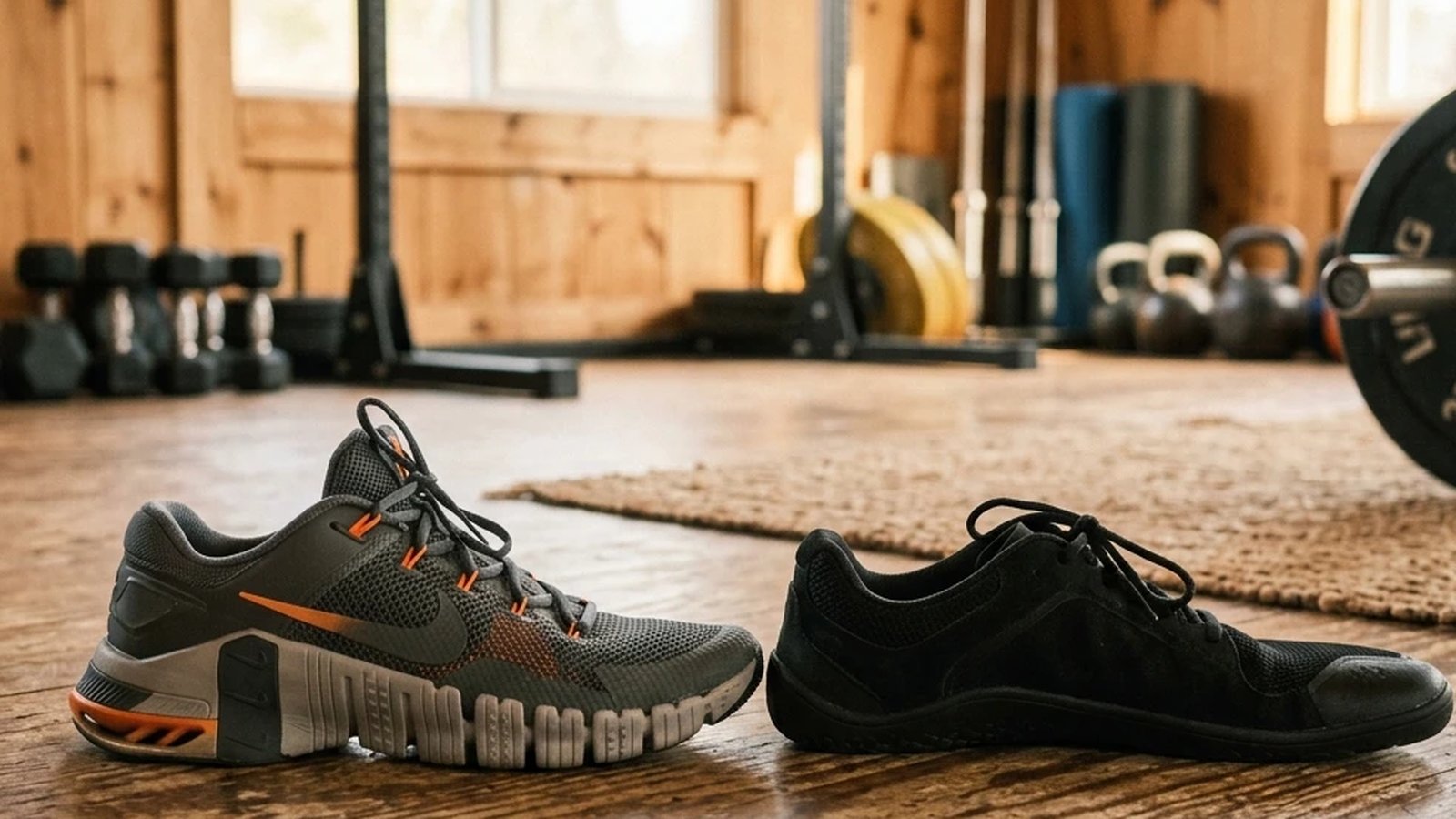
Lifting shoes raise the heel and effectively give you more dorsiflexion, which lets you sit deeper without the lower back rounding. If your ankle mobility is the limiter, yes. If it is hip mobility, work the hips and skip the shoes.
Front squat or back squat?
Both. Front squats place more demand on the upper back and quads with less spinal load; back squats let you load more total weight. A balanced program uses both.
References
McLaughlin 1978McLaughlin TM, Lardner TJ, Dillman CJ. Kinetics of the parallel squat. Research Quarterly. 1978;49(2):175-189. View source →Fry 2003Fry AC, Smith JC, Schilling BK. Effect of knee position on hip and knee torques during the barbell squat. J Strength Cond Res. 2003;17(4):629-633. View source →Hartmann 2013Hartmann H, Wirth K, Klusemann M. Analysis of the load on the knee joint and vertebral column with changes in squatting depth and weight load. Sports Medicine. 2013;43(10):993-1008. View source →Schoenfeld 2010Schoenfeld BJ. Squatting kinematics and kinetics and their application to exercise performance. J Strength Cond Res. 2010;24(12):3497-3506. View source →