The 60-second version
Workout-induced skin issues — acne mechanica, contact dermatitis, eczema flares, fungal infections — have less to do with sweat itself and more to do with fabric choice + friction + how quickly you change out of the gear. The peer-reviewed dermatology and sports-medicine literature points to four reliable variables: (1) breathability and moisture-wicking, (2) tight-vs-loose fit at chafe-prone areas, (3) post-workout shower-and-change latency, and (4) chemical residues from detergents, fabric softeners, and antimicrobial finishes. Cotton, despite its “natural” halo, is one of the worst choices for sweat-heavy training (holds moisture, breeds bacteria); technical synthetics with anti-microbial finishes can flare contact dermatitis in sensitive users; Merino wool and bamboo sit in a middle ground that most sensitive-skin users tolerate well. This article walks through the dermatology evidence, the practical fabric choices, the laundry-routine variables, and when to see a dermatologist.
Educational journalism, not medical advice. Every claim here is checked against its cited sources by editor Timothy Bunce — a health writer, not a physician. It isn’t specific to your situation: for health decisions, talk to your own clinician. How we work →
Some links in this article are affiliate links. If you buy through one, The Beachside Reader earns a commission at no extra cost to you. It never changes which products we pick, or what we say about them. Full affiliate disclosure →
Why this matters
Roughly 15–25% of regular gym-goers report some form of activity-related skin issue: acne mechanica (friction-acne under bra straps, helmet liners, weightlifting-strap contact zones), heat/sweat-driven eczema flares, athlete’s foot, jock itch, contact dermatitis to fabric finishes, and folliculitis. Research on skin-microbiome dysbiosis found that Staphylococcus aureus colonization can precede and help trigger atopic-dermatitis flares rather than simply following skin that is already inflamed — a mechanism plausibly relevant to the warm, occluded, sweat-soaked conditions inside workout gear Williams 2018.
The intervention map is fairly clear: fabric choice + laundry routine + post-workout hygiene handles the majority of cases without medical treatment.
Williams and Gallo’s review of the evidence concluded that Staphylococcus aureus overgrowth is not merely a bystander in atopic dermatitis: in prospective paediatric data, microbiome dysbiosis preceded flares, supporting prevention aimed at the skin microbiome — including avoiding prolonged bacterial colonization from damp, occlusive fabric — alongside standard eczema care.
— Williams & Gallo, J Invest Dermatol., 2017 view source
The honest fabric comparison for sensitive skin
| Fabric | Sensitive-skin tolerance | Notes |
|---|---|---|
| Cotton | Variable | Soft and hypoallergenic in static settings, but holds sweat against skin during exercise — promotes acne mechanica and bacterial growth |
| Polyester (technical) | Variable | Wicks well but odour-bacterial colonization is a real issue; some treated polyesters trigger contact dermatitis |
| Polypropylene | Generally well-tolerated | Hydrophobic; wicks aggressively; less common in mainstream wear |
| Nylon | Generally well-tolerated | Lower odour issue than polyester; common in sport bras and tights |
| Spandex / elastane | Generally well-tolerated | Used in small percentages (5–20%) for stretch; rare contact dermatitis to dye/finish, not the fibre itself |
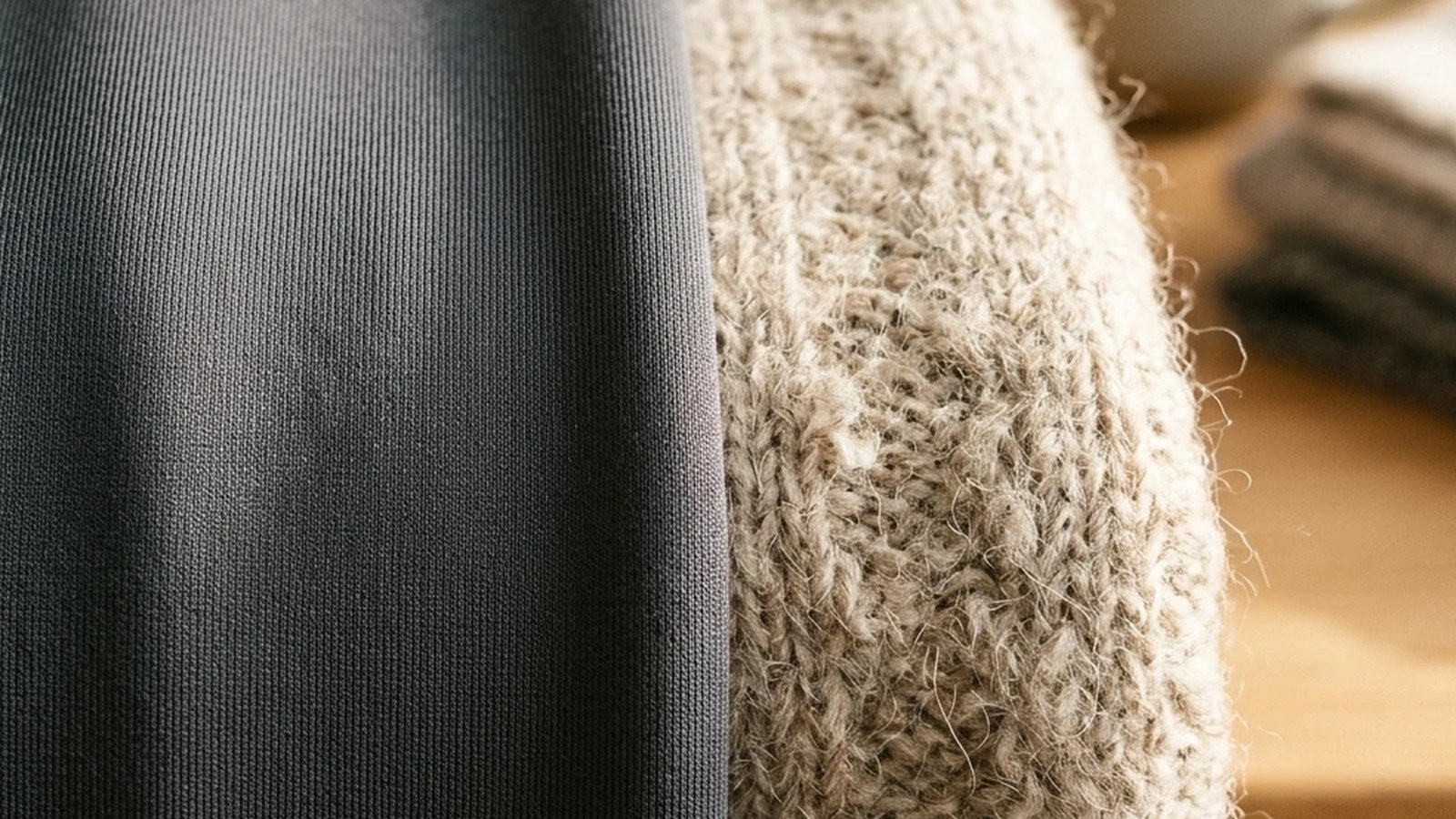
| Merino wool (15–19 micron) | Excellent for most | Antimicrobial; thermoregulating; itch threshold below 22 micron is below most adult skin sensitivity; the safer “natural-fibre” choice |
| Bamboo (rayon from bamboo) | Good | Soft; antimicrobial claims partial; usually well-tolerated; chemical processing concerns for very sensitive users |
| TENCEL / Lyocell | Good | Wood-pulp-derived; soft; sustainable; well-tolerated |
| Silk | Generally well-tolerated | Premium; smooth; not common in athletic wear but available in base layers |
| Cashmere | Good for static; not for active wear | Soft, but not built for repetitive sweat-cycle exposure |
Fabric finishes and contact dermatitis
Many modern athletic fabrics carry chemical finishes that can trigger reactions in sensitive skin:
- Antimicrobial silver-ion treatments: useful for odour, but can trigger contact dermatitis in sensitive users with prolonged exposure; if a reaction is suspected, formal patch testing under established clinical guidelines is the reliable way to confirm the cause rather than guessing Johansen 2015.
- Triclosan / triclocarban: largely phased out due to environmental and safety concerns; check old garments.
- Permanent press / wrinkle-free finishes (formaldehyde-releasing): classical contact dermatitis cause; uncommon in modern athletic wear but check vintage gear.
- Disperse dyes (especially blue and orange): a well-documented cause of textile contact dermatitis in dark-coloured synthetic fabric; when a reaction has no obvious cause, formal patch testing against standardised allergen panels is how dermatologists track it down — the same approach a patch-test study used to confirm contact allergy to standard-series and topical wound-care allergens in patients with chronic venous leg ulcers Tomljanović 2007.
- Optical brighteners: occasional cause of dermatitis in sensitive users.
- Fluorocarbon water-repellent finishes: rare reactions; mostly an outerwear concern.
For users with confirmed textile-finish allergies, look for OEKO-TEX certified or GOTS organic certifications, which restrict the most-allergenic chemicals.
Acne mechanica — the #1 sport-skin complaint
Acne mechanica is friction- and pressure-driven acne, most common where tight gear contacts skin during repetitive movement: under sport bra straps, along the waistband of leggings, where helmet straps run, where backpack straps press during running, where weightlifting wrist wraps grip. The mechanism is mechanical occlusion + sebum + bacteria.
Practical fixes:
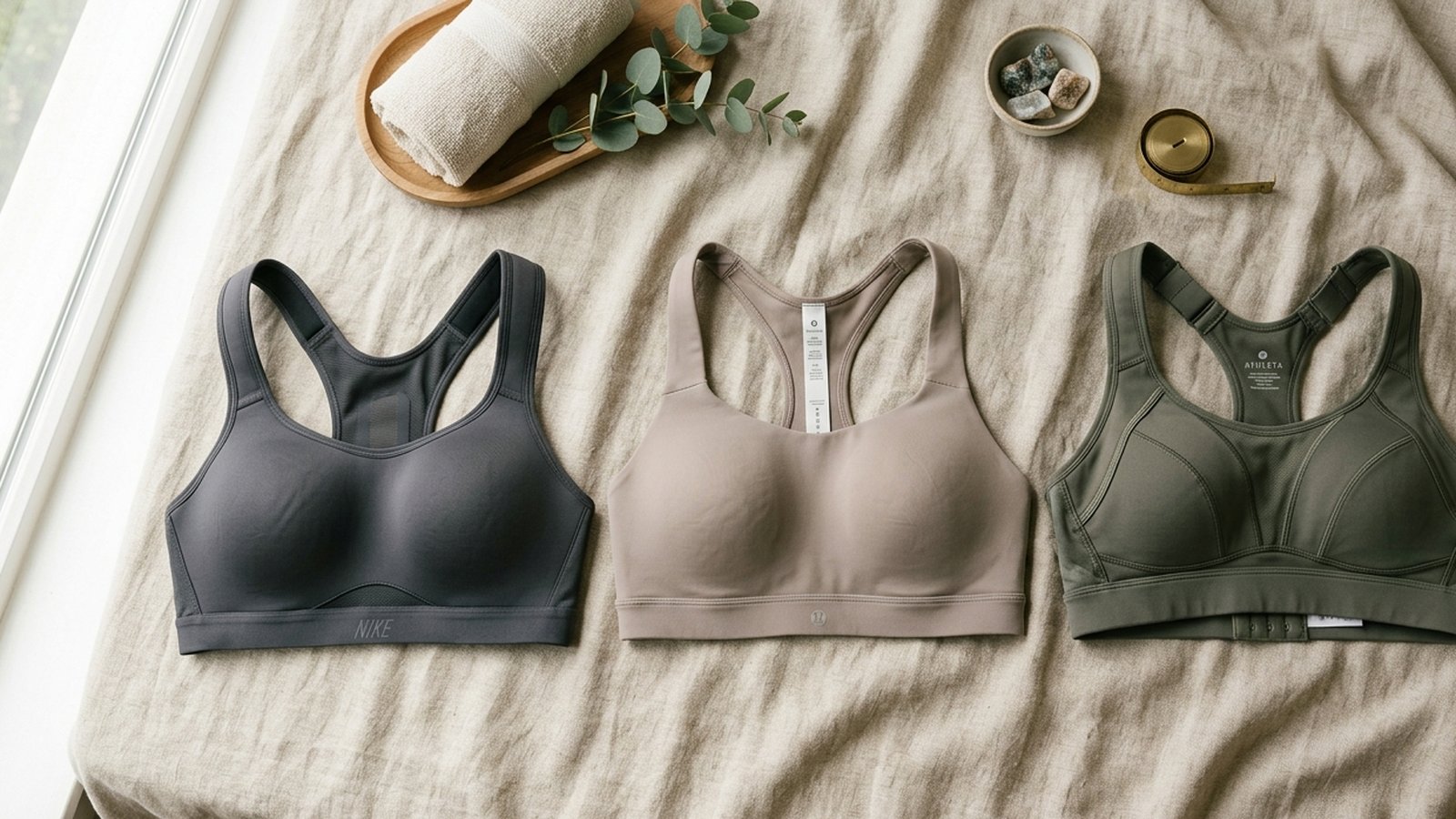
- Loosen the gear at the contact zone if possible; choose seamless or wide-strap designs.
- Wear a thin technical layer between skin and tight strap when possible.
- Shower within 30–60 minutes of finishing; the friction-occluded zones need clearance fastest.
- Avoid heavy moisturizer in the contact zone immediately before training.
- Clean reusable gear (yoga mat, weightlifting belt, bag straps) regularly — they re-inoculate the skin.
- For persistent cases, dermatologist may prescribe topical retinoid or benzoyl peroxide for the affected zones.
Laundry as a hidden variable
The clothing care routine matters more than most people realize:
- Detergent residues: sensitive-skin users often do best with fragrance-free, dye-free detergent (Tide Free & Gentle, all Free Clear, Persil Sensitive Skin). Separately, controlled research on protective/barrier creams found their real-world effectiveness against irritant contact dermatitis is dose-dependent — people who apply too thin a layer get measurably less protection than the studies assume, so a visibly generous, even application matters as much as which product you use Schliemann 2014.
- Skip fabric softener: the most common single cause of laundry-related skin reactions in athletes; quaternary ammonium compounds coat fabric, reduce wicking, and can trigger contact dermatitis.
- Hot water cycle once per month: regular cool-water washes don’t fully kill bacteria and yeasts that colonize sweaty gear. A monthly hot-wash (or vinegar pre-soak) reduces persistent odour and microbial load.
- Don’t over-dry: high-heat dryer cycles degrade synthetic fibres and can break down anti-odour finishes.
- Wash sport bras and tight-fitting items separately from looser gear to prevent abrasion and band-deformation.
- Replace gear at the right cadence: synthetic shirts after ~30–50 wash cycles begin to retain odour permanently; sport bras every 6–12 months for daily-use lifters.
Special considerations by activity
| Activity | Skin issue | Fabric/practice intervention |
|---|---|---|
| Running | Inner-thigh chafing, nipple chafing | Anti-chafe balm (BodyGlide, petroleum jelly); tight technical fabrics over loose; band-aids over nipples for long runs |
| Cycling | Saddle sore, perineal acne mechanica | Padded cycling shorts; anti-chafe balm; immediate post-ride change of clothing |
| Yoga / Pilates | Mat-related contact dermatitis (rare) | Cotton-blend leggings; clean mat regularly; consider towel or cork mat if rubber sensitivity |
| Lifting | Acne under bra straps; weightlifting-strap contact rash | Wider-strap sport bras; padded straps; clean wraps regularly; avoid leather wraps if sensitive to chrome tanning |
| Swimming | Chlorine-related dryness, contact dermatitis to swimsuit material | Shower immediately; cosmetic-grade body lotion post-swim; consider chlorine-resistant suits (PBT polyester) over polyamide for sensitive users |
| Hot yoga / heavy sweat | Heat rash, fungal flares | Lightweight Merino or technical synthetic; immediate change post-class; antifungal powder if recurrent |
| HIIT / CrossFit | Multi-modal; combined friction + sweat + dust | Layer changes during long sessions; technical mid-weight fabrics; immediate shower |
| Outdoor / cold-weather | Skin-barrier dryness | Merino base layer; emollient on exposed skin; lukewarm post-workout shower (hot showers worsen winter skin barrier) |
For specifically acne-prone users
- Choose loose-fitting tops where possible — the constant skin contact of tight tops drives mechanical acne.
- Salicylic acid body wash post-workout in the affected zones (CeraVe SA Cleanser, Neutrogena Body Clear): reasonable evidence for reducing back/chest/shoulder acne.
- Avoid heavy oils or rich moisturizers immediately pre-workout in acne-prone zones.
- Wash workout clothes after every use; don’t re-wear sweat-soaked tops.
- Shower within 30–60 minutes; the longer sweat sits, the more mechanical-acne risk.
- For persistent or severe cases, dermatologist consultation is appropriate; oral isotretinoin or hormonal treatments are reserved for significant body acne.
For eczema and atopic dermatitis
- 100% Merino wool (15–19 micron) is paradoxically often well-tolerated by eczema patients, despite the “wool itches” folk wisdom; a randomized paediatric crossover trial in infants and toddlers with atopic dermatitis found improved SCORAD severity scores vs cotton Su 2017.
- Avoid harsh detergents; double-rinse cycle reduces residue.
- Pat-dry, don’t rub after showers; emollient within 3 minutes of getting out (the “soak and seal” protocol).
- Cool down before showering; sudden temperature changes can trigger flares.
- Avoid perfumed body washes; gentle cleansers (CeraVe Hydrating, Cetaphil Restoraderm).
- Discuss with dermatologist if exercise is consistently triggering flares despite fabric and routine adjustments — topical or systemic treatment may be needed.
For fungal-prone users (athlete’s foot, jock itch, recurrent folliculitis)
- Synthetic fabrics + sweat + warmth = fungal heaven. The fungal organisms (typically Trichophyton, Candida, Pityrosporum) thrive in warm, moist, occluded environments.
- Clean socks and underwear after every workout; never re-wear.
- Antifungal powder in shoes and groin/buttock area if recurrent (clotrimazole, miconazole).
- Hot-wash workout clothes — cool water doesn’t kill all fungi.
- Don’t share towels, mats, or cleats.
- Treat aggressively at first sign; chronic fungal colonization is harder to clear than acute infection.
- Recurrent or severe cases: dermatologist; oral antifungal (terbinafine, itraconazole) when topicals fail.
When to see a dermatologist
- Persistent or worsening skin issue after 4–6 weeks of fabric/routine adjustments.
- Painful or rapidly spreading lesions.
- Open sores that aren’t healing.
- Suspected MRSA or other bacterial infection (red, warm, painful, fever).
- Severe contact dermatitis you can’t isolate the trigger for — patch testing identifies specific allergens.
- Severe acne mechanica unresponsive to topical treatment.
- Recurrent fungal infection requiring repeated treatment.
- Eczema flares that interfere with training or sleep.
Practical takeaways
- Most sport-skin issues are fabric + friction + post-workout latency, not intrinsic skin disease.
- For sensitive skin: Merino wool (15–19 micron), bamboo, TENCEL, polypropylene, nylon are usually well-tolerated.
- Cotton is NOT a safe-default for athletic wear — holds sweat, drives bacterial growth, promotes acne mechanica.
- Watch for dye reactions (especially dark synthetic blues/oranges) and antimicrobial silver-ion finishes — common contact-dermatitis triggers.
- Skip fabric softener; use fragrance-free dye-free detergent; hot-wash monthly.
- Shower within 30–60 minutes post-training; immediate change out of sweat-soaked gear.
- Acne mechanica: salicylic acid body wash + loose-fit tops + immediate shower.
- Eczema: Merino is often better-tolerated than cotton; soak-and-seal post-shower; cool down before showering.
- Fungal: hot-wash gear; antifungal powder; treat aggressively early.
- See a dermatologist for any persistent issue not resolving in 4–6 weeks.
Frequently asked questions
Is cotton actually bad for working out?
Yes, for sweat-heavy training. Cotton holds moisture against the skin (3–4× its weight in water), promotes bacterial colonization, and creates the warm-moist environment that drives acne mechanica and fungal infections. It's fine for low-sweat activities like yoga, but for running, lifting, and HIIT, technical synthetics or Merino wool work much better.
Why does Merino wool not itch like regular wool?
Fibre diameter. Wool that itches is typically 25+ micron (thick fibres mechanically irritate skin nerve endings). Merino wool below 22 micron (and especially 15–19 micron) is below most adults' itch threshold. Modern athletic Merino is non-itchy for the large majority of users, including many people who 'know they can't wear wool.'
What's causing my workout-induced rash?
Most likely contact dermatitis from a fabric finish or laundry product. The biggest single culprit is fabric softener (skip it). Next: dye reactions (especially dark blues and oranges in synthetic athletic wear). Then: antimicrobial silver-ion treatments. If switching to fragrance-free dye-free detergent and OEKO-TEX certified gear doesn't resolve it within 4 weeks, see a dermatologist for patch testing.
How do I prevent acne under sports bra straps?
Loose-fit when possible; wide padded straps when tight is needed; salicylic acid body wash post-workout in the affected zone; immediate shower; clean the bra after every use; wash with fragrance-free detergent. For persistent cases, a dermatologist can prescribe topical retinoid or benzoyl peroxide for the contact zones specifically.
Should I avoid all 'antimicrobial' workout clothes?
If you have sensitive or eczema-prone skin, consider it. Silver-ion treatments can trigger contact dermatitis in sensitive users with prolonged exposure, and clinical patch-test guidelines recommend confirming a suspected reaction with formal testing rather than guessing at the cause. The odour benefit is real but not unique — Merino wool is naturally antimicrobial without finish chemicals. If you tolerate antimicrobial synthetics fine, no need to avoid; if you have unexplained workout rashes, swap to untreated fabrics for 4 weeks as a test.
References
Williams 2018Williams MR, Gallo RL. Evidence that human skin microbiome dysbiosis promotes atopic dermatitis. J Invest Dermatol. 2017;137(12):2460-2461. View source →Johansen 2015Johansen JD, Aalto-Korte K, Agner T, et al. European Society of Contact Dermatitis guideline for diagnostic patch testing - recommendations on best practice. Contact Dermatitis. 2015;73(4):195-221. View source →Tomljanović 2007Tomljanovic-Veselski M, Lipozencic J, Lugovic L. Contact allergy to special and standard allergens in patients with venous ulcers. Coll Antropol. 2007;31(3):751-756. View source →Schliemann 2014Schliemann S, Petri M, Elsner P. Preventing irritant contact dermatitis with protective creams: influence of the application dose. Contact Dermatitis. 2014;70(1):19-26. View source →Su 2017Su JC, Dailey R, Zallmann M, et al. Determining effects of superfine sheep wool in INfantile Eczema (DESSINE): a randomized paediatric crossover study. Br J Dermatol. 2017;177(1):125-133. View source →Zhai 2001Zhai H, Maibach HI. Skin occlusion and irritant and allergic contact dermatitis: an overview. Contact Dermatitis. 2001;44(4):201-206. View source →Kohli 2016Kohli N, Nedorost S. Inflamed skin predisposes to sensitization to less potent allergens. J Am Acad Dermatol. 2016;75(2):312-317.e1. View source →Malanin 2003Malanin K. The cause and management of pruritus. Acta Derm Venereol Suppl (Stockh). 2003;213:5-14. View source →Kim 2007Kim BS, Lee WK, Pak K, et al. Acne mechanica: a study of pediatric and adult athletic populations. Cutis. 2007;79(6):448-452. View source →Draelos 2018Draelos ZD. The science behind skin care: cleansers. J Cosmet Dermatol. 2018;17(1):8-14. View source →Lodén 2003Lodén M. Role of topical emollients and moisturizers in the treatment of dry skin barrier disorders. Am J Clin Dermatol. 2003;4(11):771-788. View source →