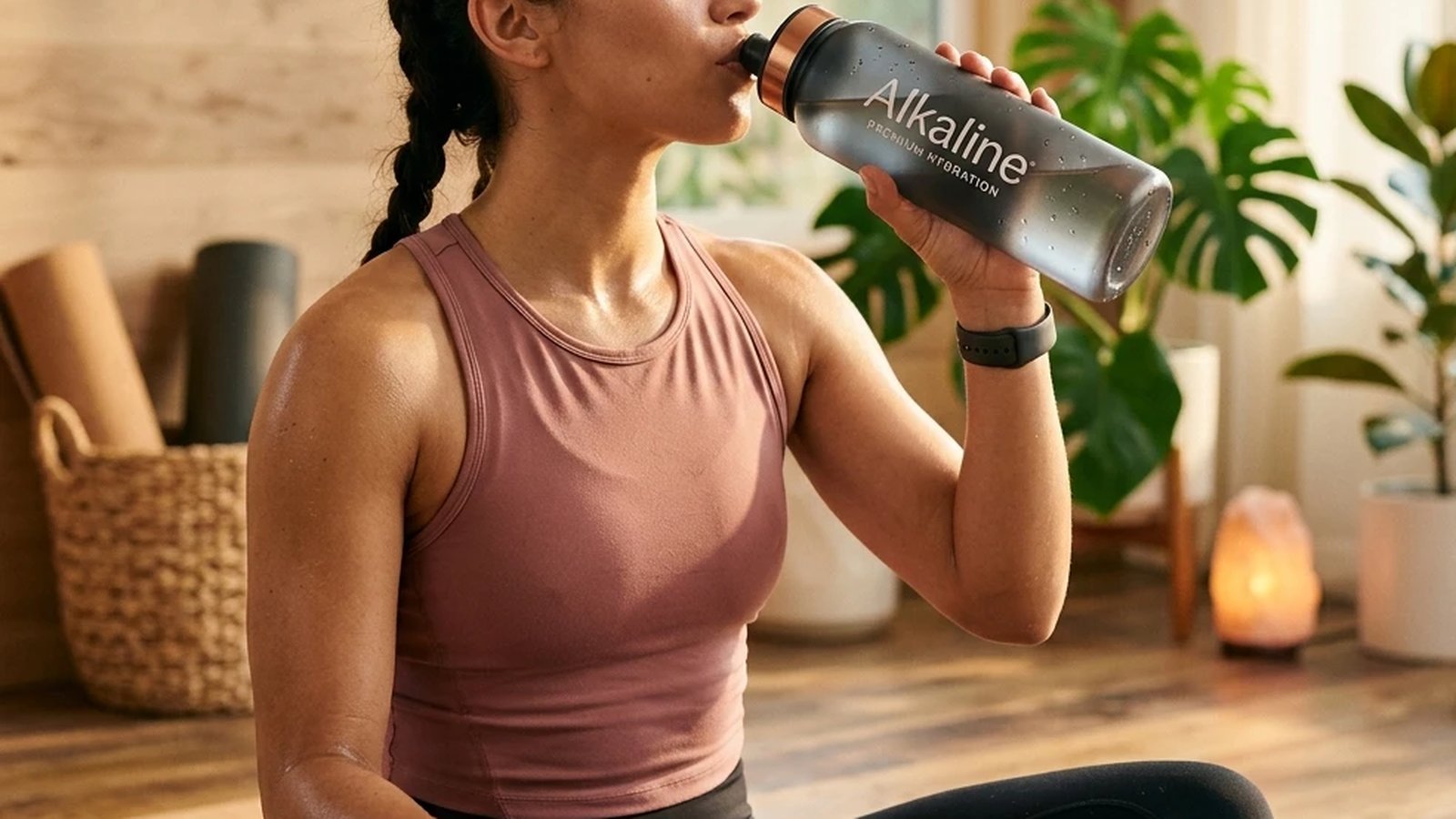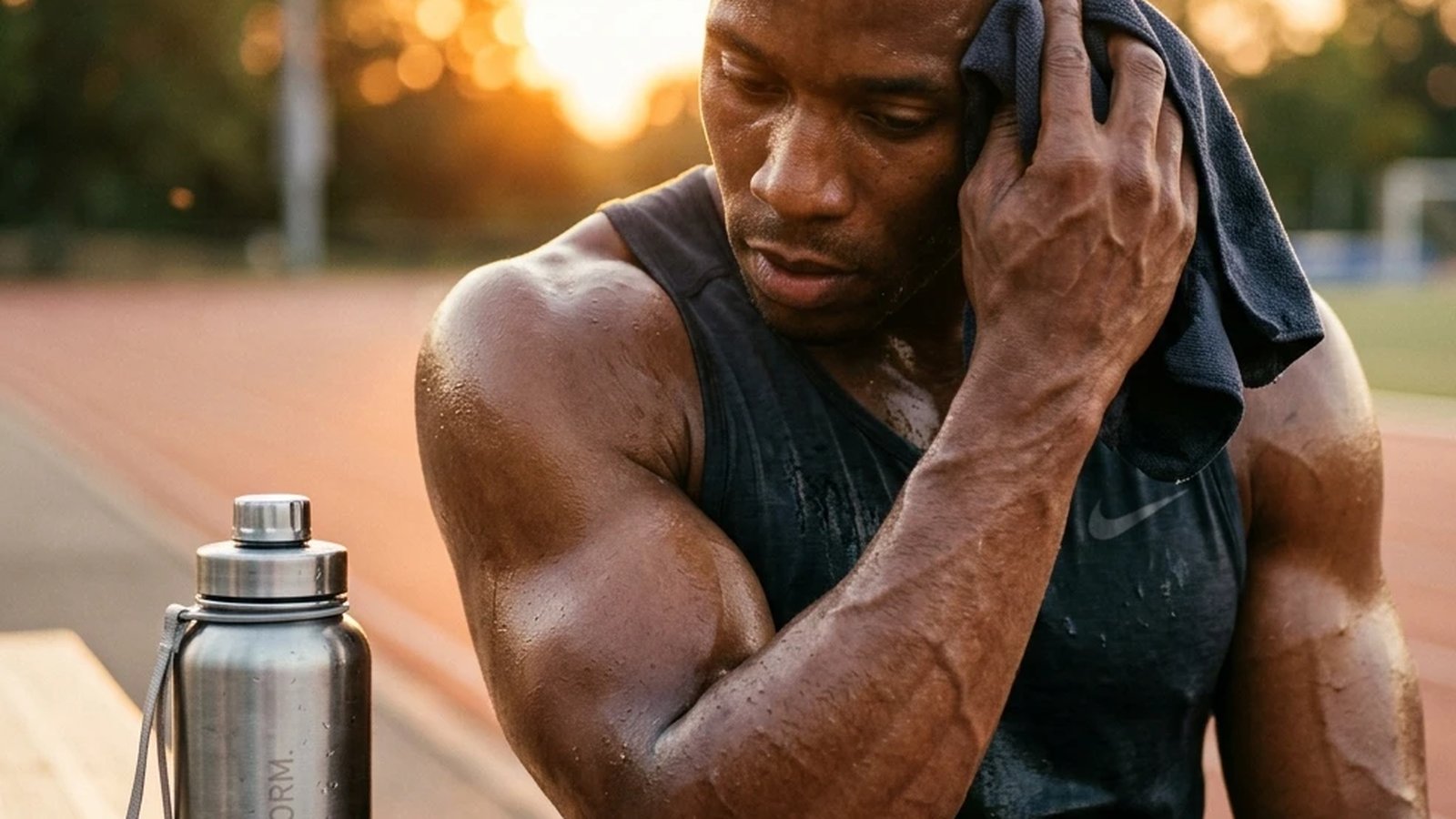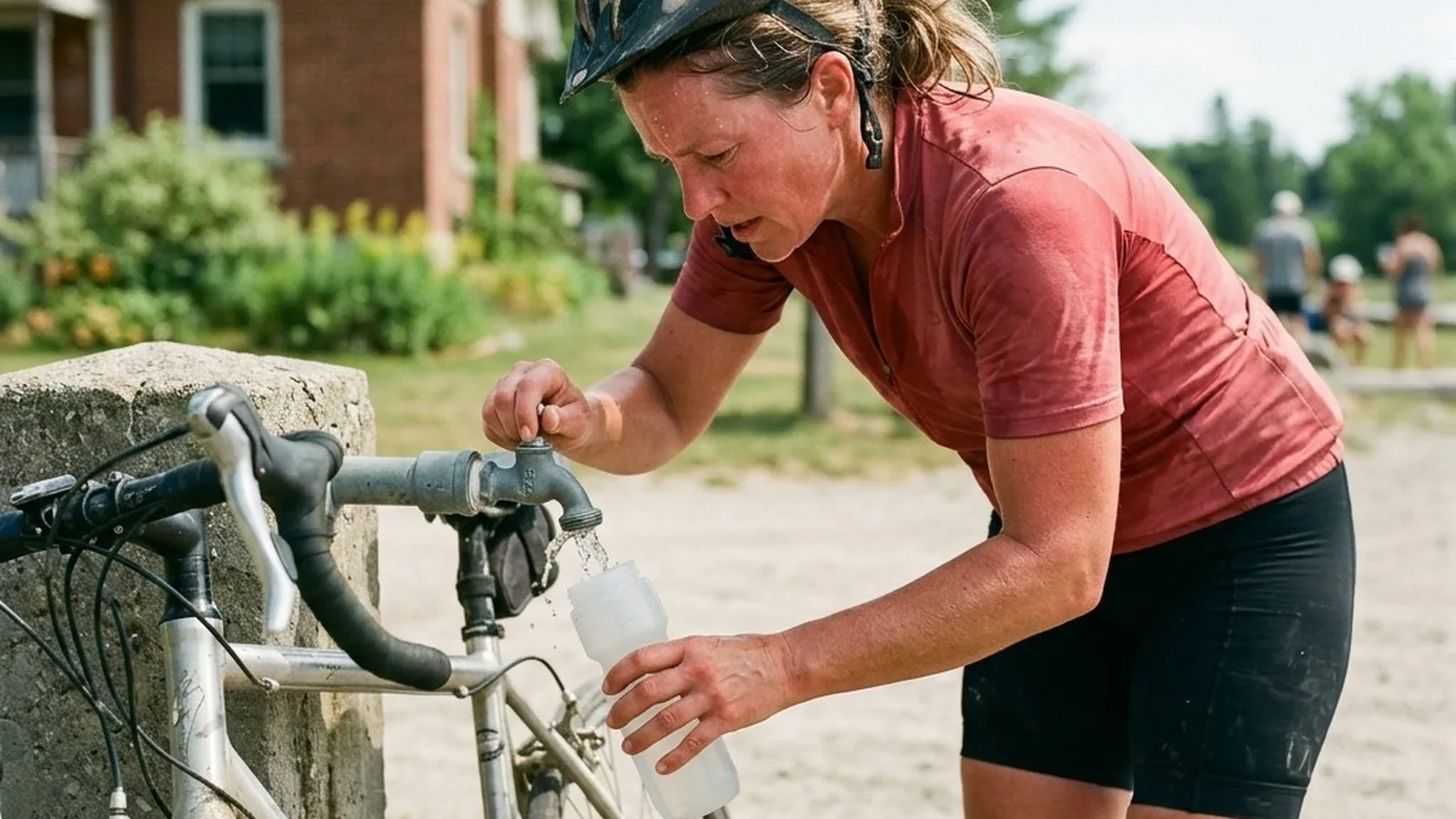
The 60-second version
The “8 glasses of water per day” rule has no peer-reviewed origin — it appears to be a misreading of a 1945 US Food and Nutrition Board recommendation that explicitly noted most fluid comes from food. The published Institute of Medicine recommendation is roughly 2.7 L total fluid per day for adult women, 3.7 L for adult men — including all sources: beverages, food, and metabolic water. About 20% of that comes from food in a normal mixed diet, leaving ~2.2–3.0 L from drinks. Most healthy adults achieve this without effort; the body's thirst response is well-calibrated. The cases where deliberate hydration matters are: athletes during sessions over 60 minutes, hot or humid environments, illness with fluid losses, older adults whose thirst response declines with age, and people taking medications that affect fluid balance. For everyone else, drinking when thirsty and aiming for pale-yellow urine is sufficient.
Educational journalism, not medical advice. Every claim here is checked against its cited sources by editor Timothy Bunce — a health writer, not a physician. It isn’t specific to your situation: for health decisions, talk to your own clinician. How we work →
Some links in this article are affiliate links. If you buy through one, The Beachside Reader earns a commission at no extra cost to you. It never changes which products we pick, or what we say about them. Full affiliate disclosure →
Where the “8 glasses” rule came from
Heinz Valtin, a Dartmouth physiologist, traced the origin in his 2002 review and could find no scientific basis for “8 glasses of 8 ounces per day” Valtin 2002. The closest source is a 1945 US Food and Nutrition Board recommendation of “1 milliliter of water per calorie of food consumed” (working out to about 2.5 L for a typical 2,500-calorie diet), which explicitly noted that most of this comes from food. The shorthand “8 glasses” was a popularization of that recommendation that dropped the food-water clause and stuck.
What you actually need
The Institute of Medicine's 2004 review set Adequate Intake (AI) values of 2.7 L/day total fluid for women and 3.7 L/day for men. About 20% of normal-diet fluid intake comes from food (fruits, vegetables, soup, yogurt, etc.), so the beverage target is roughly 2.2 L for women and 3.0 L for men IOM 2004. These numbers vary substantially with body size, activity, climate, and individual physiology — the AI is a population reference, not an individual prescription.
“The vast majority of healthy people meet their daily hydration needs by allowing thirst to be their guide. The combination of thirst and the consumption of beverages at meals, along with food intake, provides sufficient fluid intake.”
— Institute of Medicine, 2004 view source
Thirst is well-calibrated for most people
The thirst response in healthy adults is sensitive to plasma osmolality changes as small as 1–2%. For most healthy adults, drinking when thirsty maintains hydration within physiological norms. This is the published consensus across the IOM, ACSM, and EFSA reviews IOM 2004 Sawka 2007.
Where deliberate hydration matters
The thirst-only approach breaks down in five specific situations:
- Endurance exercise over 60 minutes, especially in heat. Sweat rates of 0.5–1.5 L/hour are common; the thirst response lags behind. Sawka's 2007 ACSM position stand recommends drinking to within 2% of body weight loss, with sodium replacement for sessions over 90 minutes Sawka 2007.
- Older adults (65+). The thirst response measurably declines with age; deliberate fluid intake at meals plus a glass at wake-up is the published recommendation.
- Hot environments (above 28 °C with humidity). Sweat losses can exceed thirst-driven intake.
- Illness with diarrhea or vomiting. Oral rehydration with electrolytes is the established intervention.
- Specific medications: diuretics, lithium, SSRIs at high doses, and several others affect fluid balance and may warrant individualized hydration planning.
You can drink too much
Exercise-associated hyponatremia (low blood sodium from over-drinking) is real and occasionally fatal. The 2007 ACSM position stand and subsequent reviews are clear: drinking ahead of thirst, particularly during long endurance events, is the primary cause of clinically significant overhydration Hew-Butler 2015. The recommendation is to drink to thirst, not to a fixed schedule; this is especially important for slower runners and walkers in events over 4 hours.
What counts as hydration
The IOM and EFSA both treat “total fluid intake” as inclusive of all beverages and food water. Coffee, tea, milk, juice, soup, watermelon, and yogurt all count. The often-cited “coffee dehydrates you” folk-rule is contradicted by direct measurement: at typical consumption levels, the diuretic effect of caffeine is fully offset by the water content of the coffee itself Killer 2014. Alcohol is the only common beverage with a meaningful net negative on hydration, and even that is small at moderate intake.
Realistic signs of dehydration
- Urine color is pale yellow. Dark yellow or amber suggests under-hydration; nearly clear suggests over-hydration. Aim for the color of straw.
- Thirst. Reliable signal in healthy adults under 65.
- Headache, fatigue, or reduced concentration after a long active morning. Often a hydration signal disguised as something else.
- Body-weight loss after exercise >2% of starting weight. The standard published threshold for replacement priority.
Practical takeaways
- Drink to thirst, not to a fixed daily target. Healthy adult thirst is well-calibrated; a fixed 8-glasses-a-day rule has no peer-reviewed origin.
- Aim for pale-yellow urine. Cheapest, most reliable individual hydration signal.
- Coffee, tea, soup, and watery foods all count toward fluid intake. The “coffee dehydrates” folk-rule is contradicted by direct measurement at normal intake.
- For exercise over 60 minutes, drink with electrolytes. Especially in heat. Sweat losses outpace thirst.
- For older adults, deliberate drinking at meals matters. Thirst response declines with age.
- Don’t over-drink. Exercise-associated hyponatremia is real, occasionally fatal, and almost always caused by drinking ahead of thirst on long-effort days.
Frequently asked questions
Is ‘8 glasses a day’ based on real research?
No peer-reviewed source supports it. Heinz Valtin's 2002 review traced the origin to a 1945 dietary recommendation that explicitly noted most fluid comes from food — the food-water clause was dropped in popularization.
Does coffee count toward hydration?
Yes. Direct measurement studies (including Killer 2014) show that caffeine's diuretic effect at normal coffee-intake levels is fully offset by the water content of the coffee. Coffee is a net positive for daily fluid balance.
How can I tell if I'm actually dehydrated?
Pale-yellow urine is the most reliable simple sign. Dark yellow or amber means drink up; very clear may mean you're slightly over-drinking. Headache, fatigue, and reduced concentration in late-morning are common subtle dehydration signals.
Do I need electrolytes for ordinary daily hydration?
No. A balanced diet provides ample sodium and potassium for daily fluid balance. Electrolytes matter for endurance exercise over 75–90 minutes, hot/humid conditions, illness with significant fluid loss, or specific medical conditions.
Can drinking too much water hurt you?
Yes. Exercise-associated hyponatremia (low blood sodium from over-drinking) can be serious and is almost always caused by drinking ahead of thirst on long-effort days. The published recommendation is to drink to thirst, not to a fixed schedule.
References
Valtin 2002Valtin H. “Drink at least eight glasses of water a day.” Really? Is there scientific evidence for “8 x 8”? Am J Physiol Regul Integr Comp Physiol. 2002;283(5):R993-R1004. View source →IOM 2004Institute of Medicine. Dietary Reference Intakes for Water, Potassium, Sodium, Chloride, and Sulfate. Washington DC: National Academies Press; 2004. View source →Sawka 2007Sawka MN, Burke LM, Eichner ER, Maughan RJ, Montain SJ, Stachenfeld NS. American College of Sports Medicine position stand: exercise and fluid replacement. Med Sci Sports Exerc. 2007;39(2):377-390. View source →Hew-Butler 2015Hew-Butler T, Rosner MH, Fowkes-Godek S, et al. Statement of the third international exercise-associated hyponatremia consensus development conference. Clin J Sport Med. 2015;25(4):303-320. View source →Killer 2014Killer SC, Blannin AK, Jeukendrup AE. No evidence of dehydration with moderate daily coffee intake: a counterbalanced cross-over study in a free-living population. PLoS One. 2014;9(1):e84154. View source →