The 60-second version
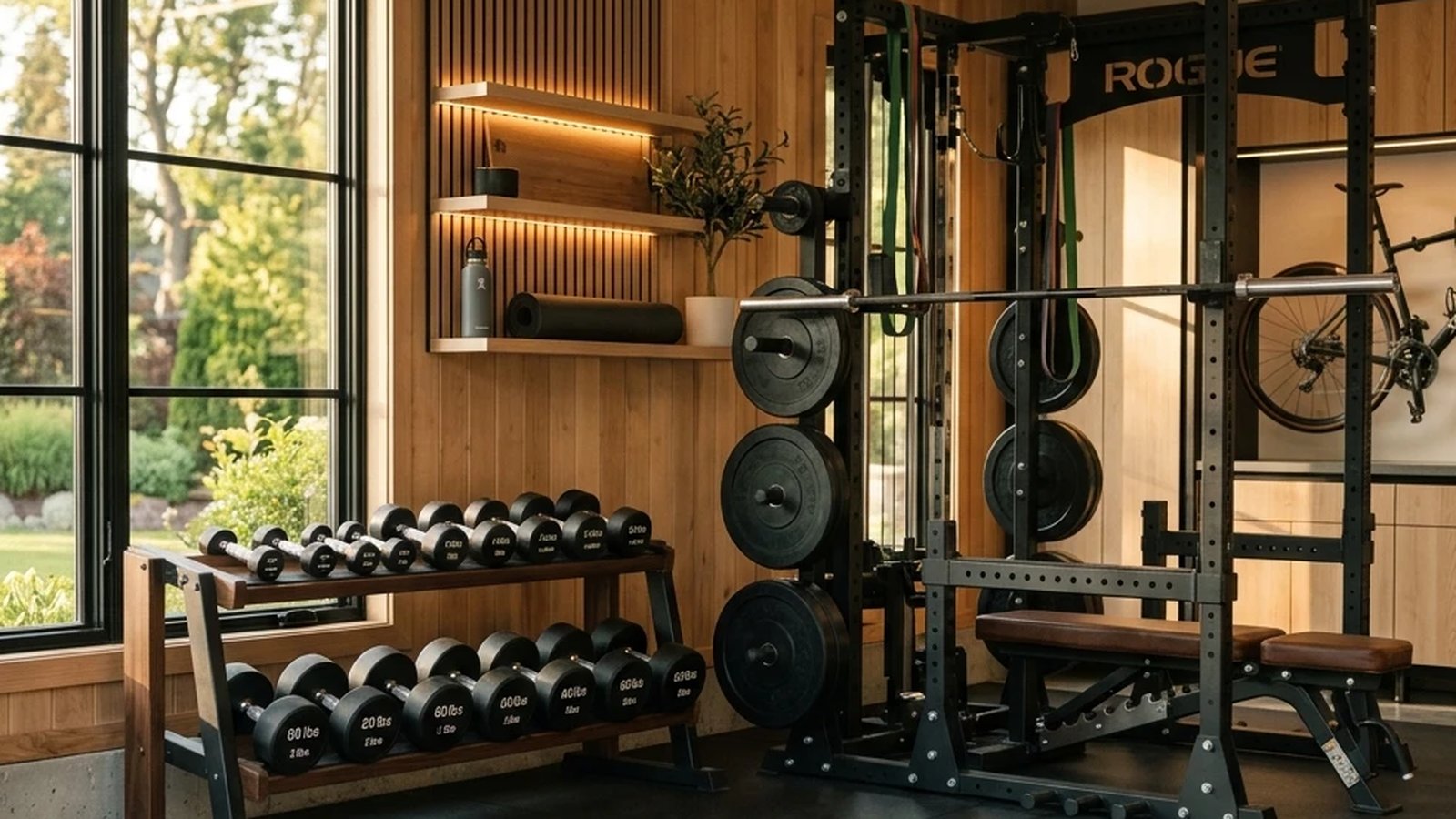
A power rack is the single largest piece of equipment most home gym owners ever buy. Rogue Fitness and Titan Fitness sit at the two ends of the value-versus-premium argument. If your budget is over $1,200, you train hard, and you intend to keep this rack for 20 years, buy the Rogue. The build quality, accessory ecosystem, and secondary-market resale value are unmatched. If your budget is under $800 and you understand that a rack is a tool, not jewelry, buy the Titan. It delivers 90% of the structural performance for 60% of the price, though you will sacrifice some finish refinement and manufacturing tolerances.
Educational journalism, not medical advice. Every claim here is checked against its cited sources by editor Timothy Bunce — a health writer, not a physician. It isn’t specific to your situation: for health decisions, talk to your own clinician. How we work →
Some links in this article are affiliate links. If you buy through one, The Beachside Reader earns a commission at no extra cost to you. It never changes which products we pick, or what we say about them. Full affiliate disclosure →
Build quality and steel
Rogue. The flagship lines (R-3, RML-390F, RM-3) use 11-gauge steel with 2x3 or 3x3 inch tubing Rogue R-3 Specs. Welds are famously clean and consistent, powder coats are durable, and bolt holes are dimensionally accurate. The rack squares true on the first build.
Titan. The X-3 series uses 11-gauge 3x3 tubing Titan X-3 Specs — on paper a heavier spec than the entry-level Rogue. In practice, manufacturing tolerances are looser. Reports of bolt holes that don't quite line up or powder coats that chip during first assembly are common in product reviews. Titan provides the structural performance required for heavy lifting, but with less aesthetic refinement.
Accessory ecosystem
Rogue’s accessory catalogue is in a different category. From lat pulldowns and monolifts to multi-grip pull-up bars and plate storage, there is more variety and better compatibility across product generations. Titan has matched many of these categories at lower prices, but the refinement gap persists: a Titan lat pulldown will work, but it rarely feels as smooth as Rogue’s commercial-grade pulleys.
Lifetime ownership cost
Rogue’s resale value on the secondary market is exceptional. A 5-year-old Rogue R-3 typically sells for 70 to 80 percent of its original price. A 5-year-old Titan X-3 typically sells for 40 to 50 percent. If you’re someone who upgrades equipment every few years, the net cost gap between the two brands closes substantially due to this residual value.
Specific recommendations
- Best Entry-Level: Rogue R-3. The cleanest balance of price and Rogue refinement. Will serve a serious home gym for two decades.
- Best Value: Titan X-3 Series. Heavier gauge than the Rogue R-3 on paper, less refined in practice. Excellent for the budget-conscious lifter.
- Best Premium: Rogue RM-6 Monster. Commercial-grade 3x3 hardware with 1-inch hole spacing throughout. The "forever" rack.
- Best for Tight Spaces: Rogue RML-3W Wall Mount. Folds flat against the wall to free up floor space when not in use.
Summary of choice
- Choose Rogue if: You value Made-in-USA manufacturing, clean welds, a massive accessory library, and high resale value.
- Choose Titan if: You want a heavy-duty rack that gets the job done for the lowest possible price and you don’t mind minor aesthetic imperfections.
- The "Bolting" Rule: Regardless of brand, any free-standing rack will be significantly more stable if bolted to the floor or a platform.
Frequently asked questions
Are cheap Amazon power racks worth considering?
For occasional bodyweight use or very light loads, yes. For serious barbell work, no. The thin-walled steel (14-gauge or higher) and narrow uprights can flex dangerously under heavy squats.
Can I install a rack on a wood floor?
Yes, but with caution. Use a 3/4-inch plywood pad to distribute the weight. Bolting down is harder on wood unless you can through-bolt to a structural joist.
Do I need a 7-foot or 8-foot rack?
If your ceiling height allows, get the taller rack. It makes overhead pressing inside the rack safer and easier.
References
Rogue R-3 SpecsRogue Fitness. R-3 Power Rack Product Specifications and Engineering Data. 2024. View source →Titan X-3 SpecsTitan Fitness. X-3 Series Bolt-Down Power Rack Product Specifications. 2024. View source →