The 60-second version
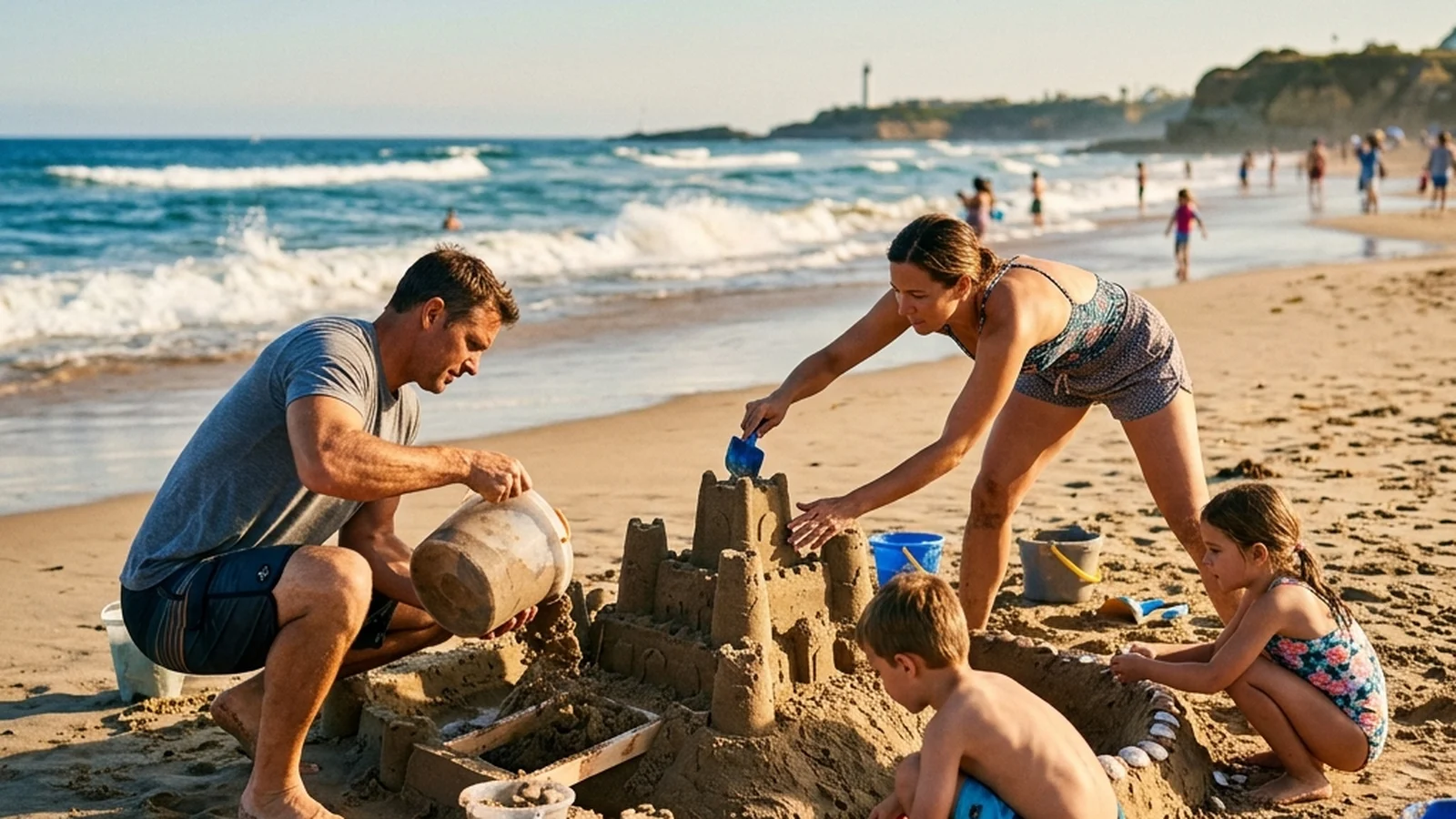
An afternoon of sand-castle building with kids on Wasaga Beach is more functional movement training than most adults log in a typical gym session. Each bucket-haul is a loaded squat-and-carry; each big dig is a hip-hinge with rotation; each pat-down is a kneeling press; the whole 90-minute session usually involves 100+ squats, 200+ hip hinges, and 30+ minutes of low-grade cardiovascular work in a kneeling-and-bending posture. The published research on functional movement and play (Pesce et al. 2016 on cognitive-motor coupling in active play) shows that cognitively engaging active play like this produces motor-learning and attentional benefits that structured exercise alone rarely matches. For Wasaga visitors and residents, the beach offers a perfect low-impact, sand-cushioned surface for this work, and the combined adult-and-child movement patterns transfer to functional capacity that pure gym work doesn’t reach.
Educational journalism, not medical advice. Every claim here is checked against its cited sources by editor Timothy Bunce — a health writer, not a physician. It isn’t specific to your situation: for health decisions, talk to your own clinician. How we work →
Some links in this article are affiliate links. If you buy through one, The Beachside Reader earns a commission at no extra cost to you. It never changes which products we pick, or what we say about them. Full affiliate disclosure →
Why sand-castle building counts as fitness
The fitness-vs-play distinction is partly cultural. Play, household tasks, and active transportation all count as physical activity under public-health movement guidelines (like the 24-Hour Movement Guidelines referenced below) — this kind of activity adds up alongside formal exercise programs — for the same total minutes of movement 24-Hour Movement Guidelines.
Sand-castle building specifically combines several movement patterns that gym programmes try to engineer:
- Repeated squats to scoop sand, fill buckets, and lower buckets. A typical 90-minute session involves 100–200 squat repetitions for a child and 50–100 for an attentive parent.
- Loaded carries: walking to the water with empty buckets and back with full ones (a 5 L sand bucket weighs 8–10 kg). The carry distance over 30+ trips totals 1–3 km.
- Hip hinges: deep digging in the sand uses the same hip-hinge pattern as a Romanian deadlift, with progressive load as the hole deepens.
- Kneeling and getting up: the down-up transition from a kneeling castle-shaping posture to standing is itself a strength movement, particularly for the quadriceps and hip flexors.
- Trunk rotation: smoothing castle walls, decorating with shells, packing sand from different angles all involve thoracic rotation that’s otherwise hard to load casually.
- Cardiovascular volume: the steady moderate-pace activity over 60–120 minutes produces heart rates of 100–130 bpm, in the aerobic-recovery zone where the body is building cardiovascular endurance.
The sand surface adds a cushioning effect that reduces impact loading on knees and hips compared to similar work on hard ground — particularly relevant for parents with arthritic joints or weight-bearing limitations.
The specific movement patterns and their gym equivalents
Mapping the beach-castle activity to gym movements helps adults appreciate what they’re actually doing:
- The bucket fill: a sumo squat with a moderate load (8–10 kg full bucket). 30–50 reps per session. Trains glutes, quadriceps, adductors.
- The water haul: a farmer carry with one or two full buckets. The 50–100 metre walk in soft sand is the loaded-carry pattern that strength-and-conditioning programmes use to build trunk strength and grip.
- The big dig: a hip hinge with active digging. As the hole deepens, the hinge depth increases. Trains hamstrings, glutes, lower back — the posterior chain gym programmes work to build.
- The wall packing: a kneeling press-down pattern with the palm of the hand. The triceps, anterior deltoid, and core engage repeatedly. 100+ reps over a 90-minute session is more triceps work than most general gym programmes prescribe.
- The decorative shell run: a child runs to fetch shells; the parent walks alongside or behind. A 90-minute session often produces 1–3 km of low-pace walking interleaved with the castle work.
- The kneel-stand transition: 30+ down-up movements, equivalent to a Cossack-squat-style hip-flexor and quad workout.
The integrated cumulative effect over 90 minutes is comparable to a moderate full-body strength session combined with low-intensity cardio — without the friction of equipment, scheduling, or formal “workout” framing.
The cognitive engagement and child development angle
Pesce et al. 2016 (and broader literature on cognitive-motor coupling in children) show that exercise integrated with cognitive challenge produces better motor learning and executive function gains than equivalent exercise alone Pesce et al. 2016. Sand-castle building is exactly this kind of integrated activity:
- Spatial reasoning: kids decide proportions, build sequences, plan moats and bridges.
- Problem-solving: when the sand collapses (as it always does), the kid has to adapt the design.
- Social negotiation: collaboration between siblings, parents, neighbouring kids on the beach. The activity scaffolds the social development without explicit instruction.
- Frustration tolerance: a wave demolishes the structure; the kid practises rebuilding rather than quitting. This is character development.
- Sustained attention: a 90-minute focused activity is unusual for kids in a screen-saturated environment. The beach provides a setting where it happens naturally.
For parents looking at kids’ physical activity through a fitness lens alone, this is the under-appreciated dimension: the sand-castle session builds skills the child cannot get from a structured fitness class.
Age-appropriate progressions
The activity scales naturally across ages, but a few patterns help match the activity to developmental stage:
- Ages 3–5: short attention spans, smaller buckets (1–2 L), simpler structures. The activity is mostly the sensory experience plus the physical effort. Parents do most of the structural work; kids contribute decoration and water-fetching. Expected duration: 30–60 minutes.
- Ages 6–8: longer attention, full-sized buckets, real architectural projects (multi-room castles, moats with channels to the water, sand sculptures of cars or animals). Kids do most of the digging and packing. Expected duration: 60–120 minutes. Parents’ role shifts to engineering consultation and water hauling.
- Ages 9–12: ambitious projects (life-size human shapes, sandcastle competitions, sand fortresses). Kids organise the activity; parents become assistants. Expected duration: 90–180 minutes. The physical work is meaningful for both adult and child.
- Teenagers and adults: serious sandcastle architecture is its own niche hobby. Look up “competitive sandcastle” for examples. The work is demanding enough to be a meaningful workout for fit adults.
Maximising the parent fitness benefit
Parents intentionally treating the sand-castle session as their own workout can structure it for greater training benefit:
- Take the water-hauling role rather than delegating it to the kid. The carry distance and load are the highest-cardiovascular component of the activity.
- Squat low when filling buckets (full hip and knee flexion) rather than bending at the waist. This is a stronger training stimulus and a better movement pattern.
- Kneel down rather than sitting cross-legged when working on detail. The kneeling-stand transitions accumulate into meaningful quadriceps and hip-flexor work.
- Stand and walk between kid’s requests rather than sitting and supervising statically. The walking volume is the difference between a sedentary afternoon and a meaningful activity day.
- Carry the kid back to the water if they’re young enough. A 15–20 kg child carried 100 metres on soft sand is real loaded-carry work.
- Schedule the heavy-architecture sessions for the morning, when sun and heat are tolerable. Switch to passive supervision in the afternoon if heat becomes an issue.
A parent who treats the session as a deliberate movement opportunity logs roughly 6,000–10,000 steps, 100–200 squat-equivalent repetitions, and 30–60 minutes of moderate cardiovascular work in a 90-minute session — without ever leaving the kid’s view.
Practical tips for the Wasaga beach context
- Tidal zone selection: Wasaga Beach has minimal tidal variation (it’s a lake, not an ocean) but the wave-wet zone changes with wind Ontario Parks — Wasaga. Build above the line of the highest recent waves; otherwise the structure won’t survive 30 minutes.
- Sand quality: damp sand 5–10 metres from the waterline is the best castle-building substrate. Pure dry sand on the upper beach won’t hold structure; soaked sand within the wave zone gets washed out.
- Tools: simple kit (bucket, plastic shovel, smoothing tool) is enough. Sandcastle-specific tools are nice but not necessary. Kids often improvise (sticks, shells, plastic cups).
- Sun and heat management: an hour-long session in 28°C sun is dehydrating; pack water, set up shade if the session extends past 90 minutes, reapply sunscreen every 90 minutes.
- Beach Area selection: Beach Areas 1–3 have flatter, wider sand surfaces ideal for big-build projects. Beach Area 5–6 is quieter and the sand is sometimes coarser; some kids prefer the smaller crowds.
- Weather windows: morning and late afternoon are the most pleasant. Mid-day sun can be punishing; some families do morning castles, leave for lunch, and return for the late-afternoon shade.
Extending the family-beach session beyond castles
For families who want to maximise the activity day, the sand-castle session pairs well with several complementary activities:
- Beach walking with the kids between castle-building bouts. A 15–20 minute walk to a different beach area refreshes attention and adds steps.
- Swimming sessions in the lifeguarded zone. The sand-castle work is fatiguing in the legs; alternating with swimming (which uses the upper body more) balances the muscle load.
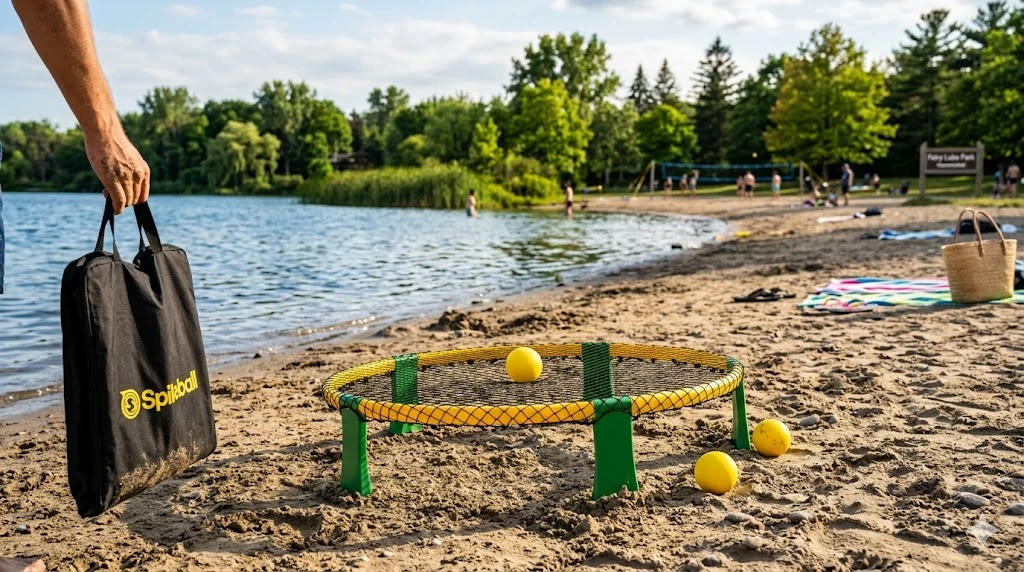
- Beach games: paddle-and-ball, frisbee, kite-flying. These add cardiovascular variety and social play.
- Sand-art photography: kids can document each castle with a parent’s phone, building a portfolio that becomes a memory anchor for future visits.
- Tide-pool exploration: not technically tidal at Wasaga but the wave-affected lower beach has small temporary pools where children can find aquatic insects and small organisms.
When the weather isn’t cooperating
For Wasaga visitors during a rainy day, the same movement patterns can be approximated:
- Pillow forts: similar pack-and-build pattern with cushions and blankets. Less cardiovascular load but similar architectural problem-solving.
- Sandbox at home: scaled-down version of the same activity. A back-yard sandbox accommodates a 30–60 minute session.
- Indoor obstacle courses: build, navigate, modify. Sustained physical play in a smaller space.
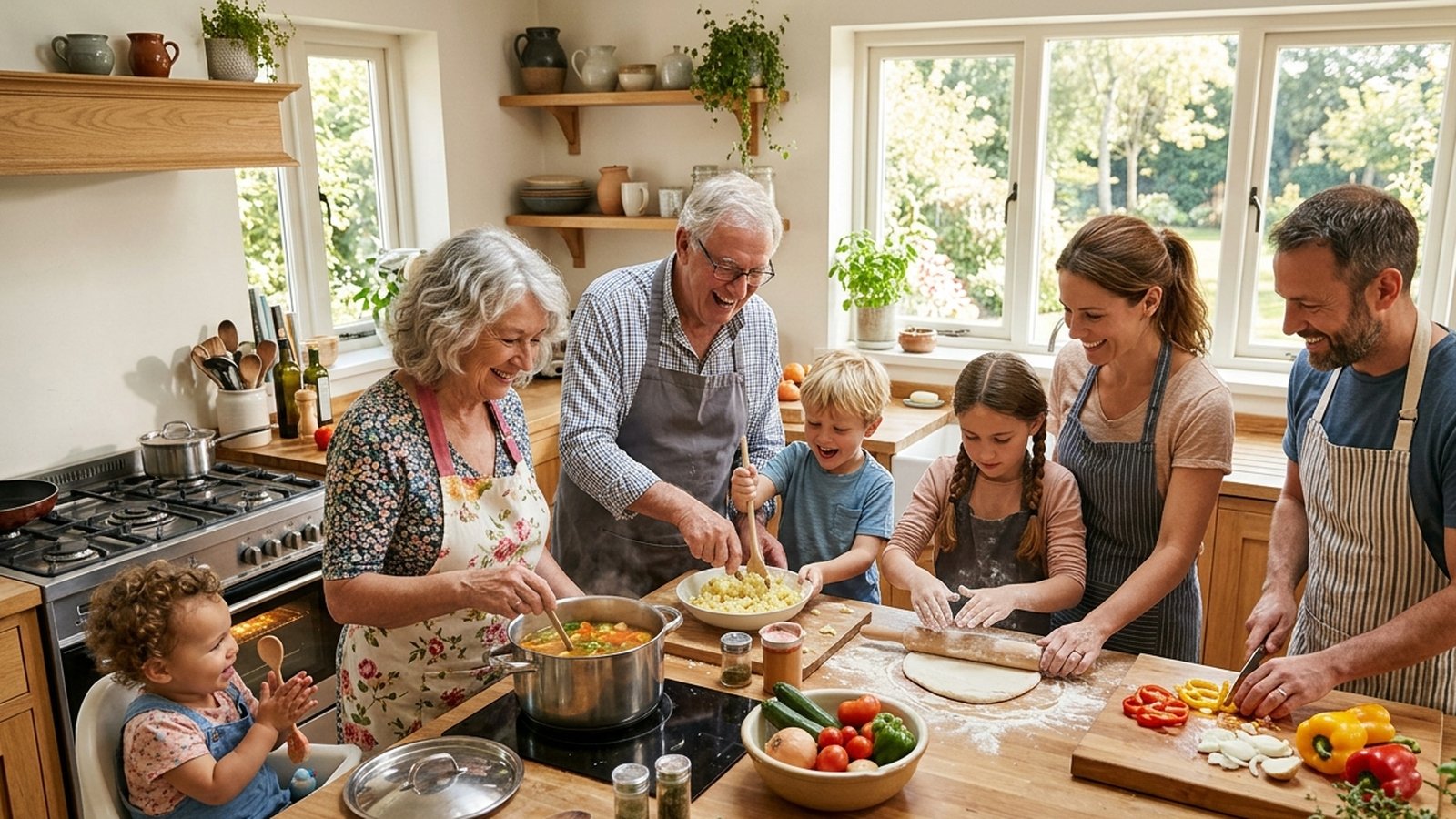
- Cooking projects: the kneading, mixing, lifting movements of bread-making are a similar low-intensity continuous activity.
Practical takeaways
- A 90-minute beach castle session for an engaged parent typically logs 100–200 squat reps, 1–3 km of carries, and 30–60 minutes of moderate-intensity cardio — comparable to a structured strength-and-cardio gym session.
- Sand cushioning reduces joint impact, making this a viable activity for parents with knee or back limitations.
- Cognitive-motor coupling from architectural play produces motor and executive-function gains in kids that structured exercise alone cannot match.
- Active parent participation (water hauling, kneeling-standing transitions, carrying kids) is the difference between a sedentary supervision afternoon and a meaningful activity day.
- Damp sand 5–10 m from the waterline is the best build surface; sun and hydration management is the limiting factor on long sessions.
Frequently asked questions
Is sand-castle building good exercise even for fit adults?
For an actively-engaged parent (water-hauling, deep-squatting, kneeling-standing transitions), yes — the cumulative load over 90 minutes is comparable to a moderate gym session. For a passive supervisor sitting on a chair, no — same as any spectator role. The fitness benefit scales with how much movement you contribute.
What about back pain — should I avoid the deep digging?
Hip-hinge digging (bending from the hips with a flat back) is a strong pattern for the lower back — it’s how lower-back resilience is built. Round-back digging (curving the spine) is what produces injury risk. The technique cue is “send the hips back, keep the chest up.” Take rest breaks when fatigue compromises form.
How does this compare to taking the kids to a fitness class?
Different goals. Structured classes provide specific skill-development for the activity (swimming, gymnastics, soccer). Beach play provides broader integrated movement, social problem-solving, and family time. Both have value — the research suggests the broader play activity is at least as important for general motor and cognitive development as structured sessions.
What if my kids prefer playing in the water?
Alternate. Castle-building for 30–45 minutes; swim break in the lifeguarded zone for 15–30 minutes; back to castles. Both activities load different muscle groups and the alternation maintains kid engagement longer than either alone. The 60–90 minute total before lunch is a realistic target.
Are there special considerations for grandparents?
Most: the squatting volume is the variable to manage. A grandparent with knee or hip arthritis can take the role of pattern-coach (advising on castle architecture) and shell-collector (gentle walking) rather than the digging-and-hauling role. The kid still gets the family time; the grandparent gets the walking volume without the joint stress.
References
Pesce et al. 2016Pesce C, Croce R, Ben-Soussan TD, et al. Variability of practice as an interface between motor and cognitive development. Int J Sport Exerc Psychol. 2016;17(2):133-152. View source →24-Hour Movement GuidelinesCanadian Society for Exercise Physiology. Canadian 24-Hour Movement Guidelines for Children and Youth. View source →Ontario Parks — WasagaOntario Parks. Wasaga Beach Provincial Park — visitor information. View source →