The 60-second version
Wasaga Beach Provincial Park’s dune trail network splits into two very different systems: easy loops through pine-oak savannah for beginners, and black-diamond climbs up 40-metre parabolic dunes for anyone chasing a real workout. Blueberry Trail (about 4 km) and Pine Trail (2.4 km) are flat-to-rolling and forgiving. Monument Hill (about 3 km) and the High Dunes Trail are rated expert for good reason — the climbs are short, steep, and made of loose sand, which exercise-physiology research shows is mechanically harder than an equivalent hard-surface hill. The whole network covers roughly 30 km, with 24 km groomed for cross-country skiing in winter, and starts at the Wasaga Nordic and Trail Centre; outside ski season it reverts to natural, ungroomed footing.
Most people who’ve driven past the Wasaga Nordic and Trail Centre on Blueberry Trail assume it’s a winter-only ski operation. It isn’t. The same roughly 30 km of trail bed that gets track-set for cross-country skiing in January stays open the rest of the year as a hiking and running network, cut through one of the largest and least disturbed sets of parabolic sand dunes left in Ontario — and the terrain is different enough from a typical forest trail that it’s worth knowing what you’re walking into before you pick a loop.
Educational journalism, not medical advice. Every claim here is checked against its cited sources by editor Timothy Bunce — a health writer, not a physician. It isn’t specific to your situation: for health decisions, talk to your own clinician. How we work →
Some links in this article are affiliate links. If you buy through one, The Beachside Reader earns a commission at no extra cost to you. It never changes which products we pick, or what we say about them. Full affiliate disclosure →
The trail system at a glance
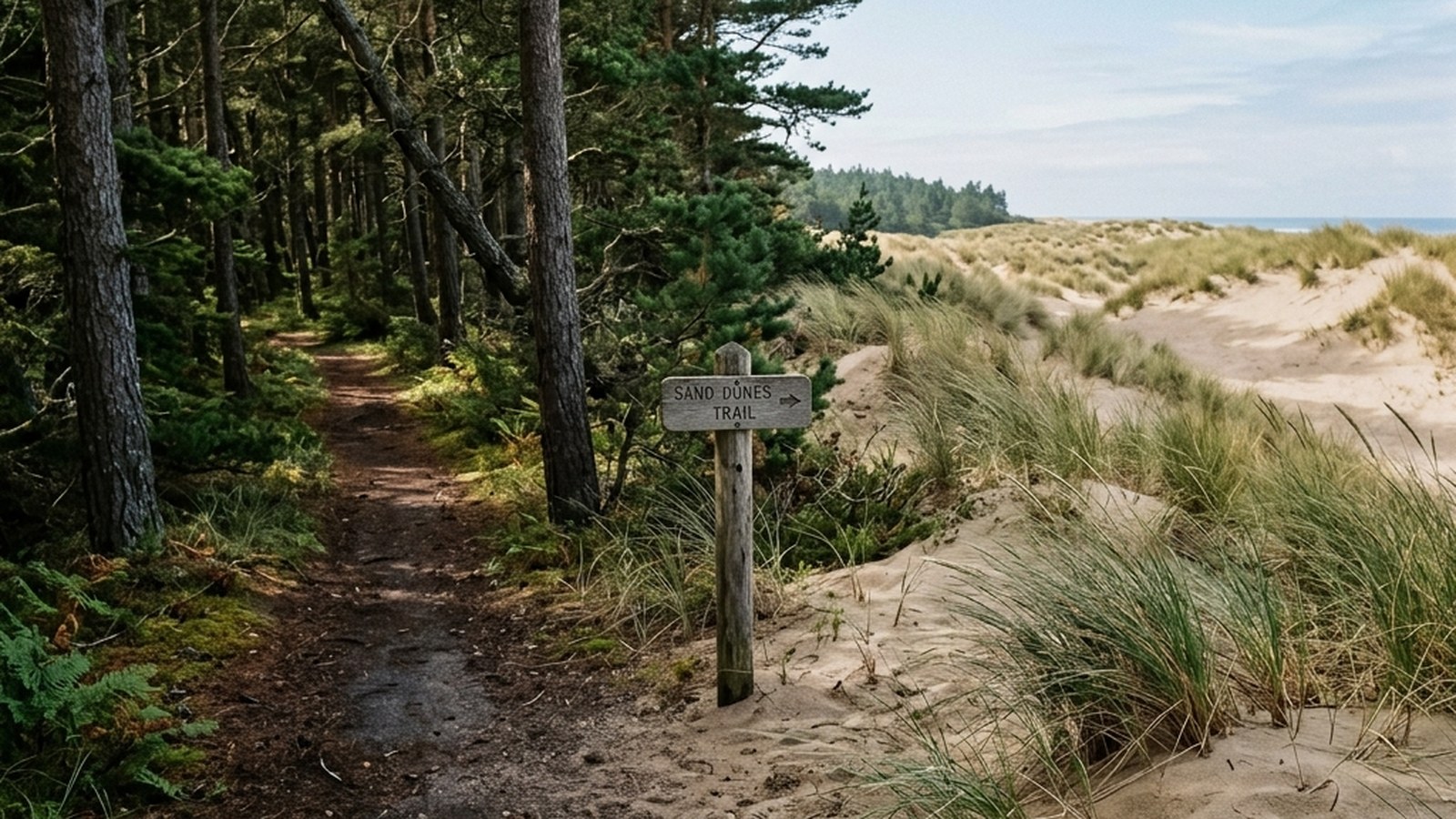
The network is based at the Wasaga Nordic and Trail Centre, 101 Blueberry Trail, on the inland side of the park away from the beach itself. The trails cross raised beach ridges left behind by a glacial lake roughly 10,000 years ago, then climb into the dune field proper, where some individual dunes top 40 metres. The park counts around 700 plant species and 230 bird species across the property, and one stretch of trail runs through pine-oak savannah, a globally rare ecosystem that’s largely disappeared from the rest of Ontario.
In winter the Nordic Centre grooms and track-sets roughly 24 km for classic and skate cross-country skiing, plus a separate 10 km snowshoe trail, with rentals and a warming shelter at the chalet (details on the ski-season setup, rentals, and grooming schedule are in our Wasaga Nordic Centre guide). Outside that January–March window, none of it is groomed or mowed — you get the natural sand-and-needle surface, which matters more on the climbs than on the flats.
Blueberry and Pine: the two easy trails
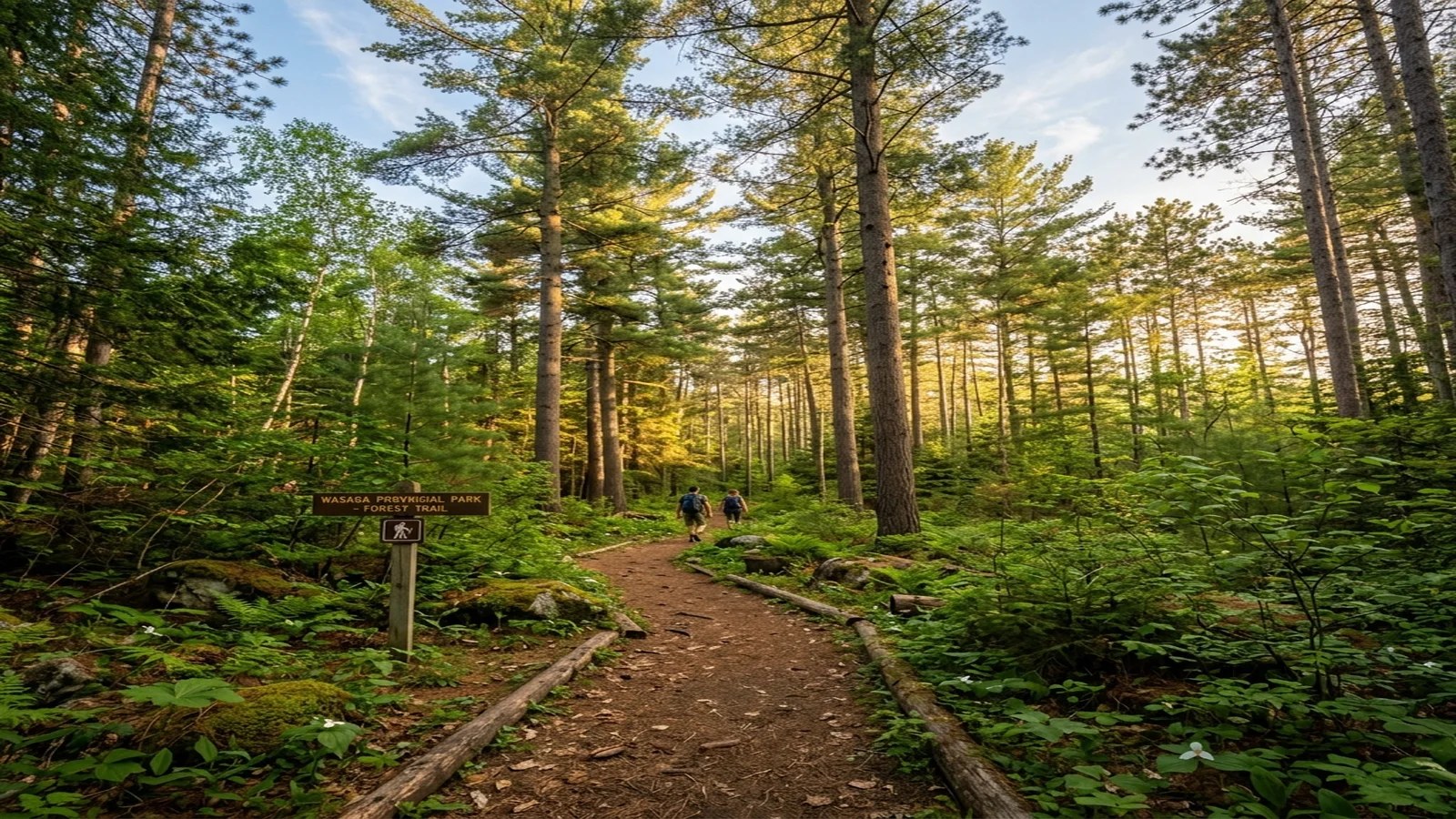
Blueberry Trail is the network’s beginner loop, roughly 4 km, looping out from the chalet in a rough figure-eight with one noticeable rise and otherwise gentle, rolling ground. It’s the trail most families and first-time visitors end up on, and it’s a reasonable low-impact option if you want time outdoors without committing to dune climbs — the same logic behind picking flat, forgiving terrain that we cover in our senior fitness guide applies directly here. Deer and a wide range of birds are commonly seen along it.
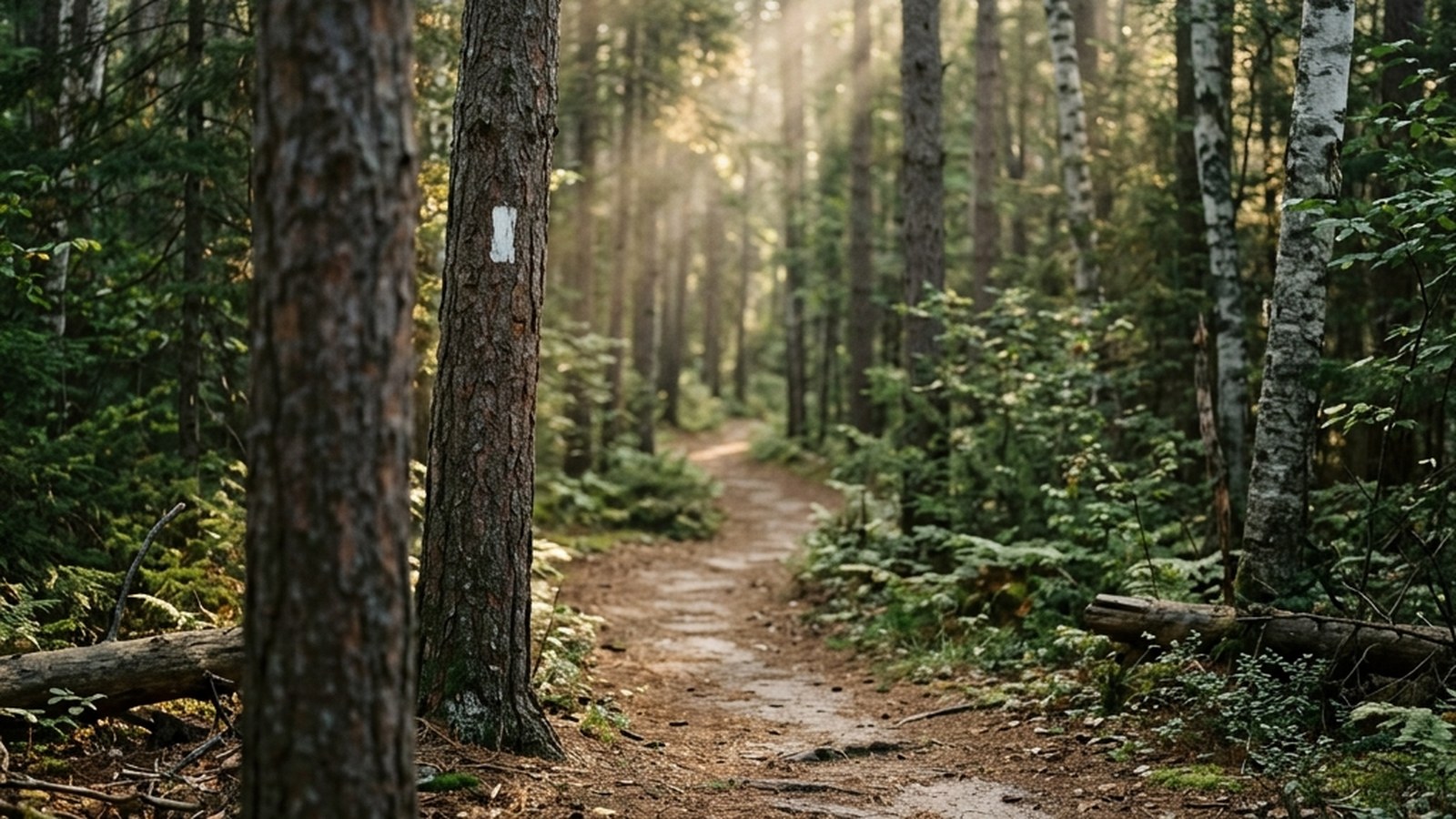
Pine Trail is shorter, about 2.4 km, and its appeal is ecological rather than physical: it runs through the pine-oak savannah, an open, prairie-like forest type that’s one of the rarest habitats in Canada. Watch for butterfly weed, New Jersey tea, and big bluestem grass along the edges. A dedicated Pine Trail guidebook is sold at the Welcome Centre / Nancy Island Historic Site if you want the plant-by-plant detail. Treat it as a slow, interpretive walk rather than a workout.
Monument Hill: the climb to the lookout
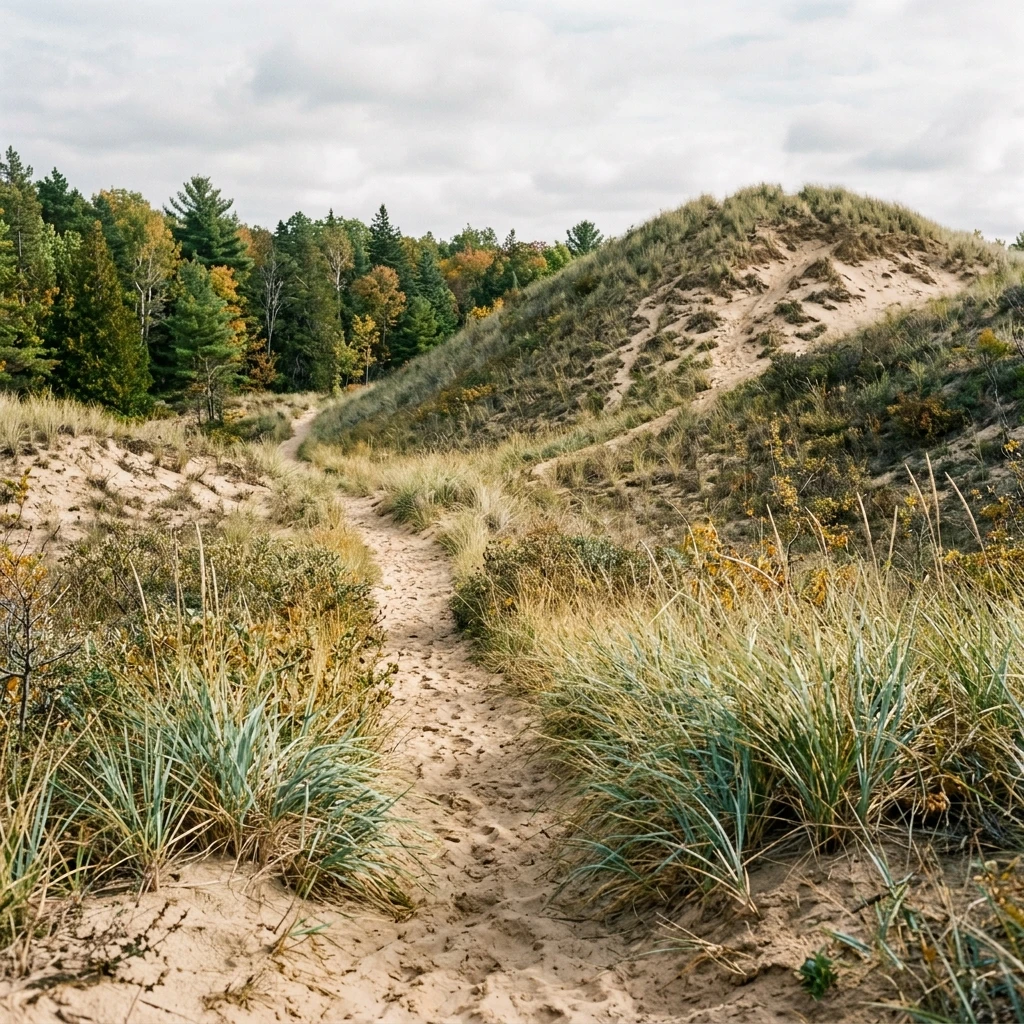
Monument Hill is the trail most people mean when they say the dunes are “actually hard.” It’s about 3 km and rated black-diamond/expert, and the reason is a short, steep, sand-surfaced climb up one of the park’s signature parabolic dunes. The payoff at the top is a genuine panoramic view — the park’s forest canopy, Georgian Bay, and the Niagara Escarpment in the distance. A common way to link it into a longer route is the standard loop combo: Rabbit Run to Fox Run, then the Monument Hill spur to the lookout, then back down via High Dunes to Rabbit Run.
Because the pitch is short and steep, Monument Hill also works well as a dedicated hill-repeat site — climb it, walk or jog back down on the connector trail, repeat. If you want a structured way to turn that into an actual session rather than a random hard walk, our zone 2 vs. HIIT breakdown has a framework for pairing easy connector-loop pace with hard climbing efforts.
High Dunes and the connector loops
High Dunes Trail is the other expert-rated route in the network and carries the most sustained elevation change of any trail here, weaving through the tallest dune sections alongside Monument Hill and Deer Run. Rabbit Run, Fox Run, and Deer Run are shorter connector loops that stitch the beginner and advanced sides of the network together, which is what lets you build a route anywhere from a couple of easy kilometres up to the full advanced combination loop. If you’re unsure how far you want to go, start on Rabbit Run and decide at each junction whether to bail toward Blueberry or push on toward Monument Hill and High Dunes.
Why dune and sand terrain is genuine training
The dune climbs here aren’t just steep on paper — the sand itself adds real mechanical load. Walking on loose sand has been measured to require roughly 1.6 to 2.5 times more mechanical work than walking the same distance on a hard surface, because each footstrike deforms and sinks into the sand instead of returning energy the way firm ground does Lejeune 1998. Running on soft, dry beach sand carries a measurably higher energy cost than running on grass at the same pace Pinnington & Dawson 2001, and earlier work comparing sand to a firm track found the same pattern held for both walking and running Zamparo 1992.
Practically, that means a moderate-effort climb up Monument Hill or High Dunes can produce more cardiovascular and lower-leg demand than a similar-looking grade on a packed forest trail — useful if you’re trying to build fitness without adding distance, but also a reason to treat your first visit as an easy-effort scouting trip rather than a hard session. The same soft-surface caution that applies to beach walking versus a treadmill applies here: build up gradually, especially through the shins and Achilles, before you start doing hill repeats on loose sand.
Training your legs for the sand climbs
Because sand training loads the calves, ankles, and Achilles tendon more than an equivalent hard-surface hill does, it’s worth building some baseline strength before your first attempt at Monument Hill or High Dunes rather than treating the climb like any other trail. Standing calf raises, done slowly through a full range of motion, target the muscle group that absorbs most of the extra mechanical work on loose sand. Single-leg balance work builds the ankle stability that a shifting, uneven surface demands with every step, and short repeats on stairs or a steep treadmill incline are a reasonable stand-in for dune climbing if you want to build some of that specific fitness before you’re on unpredictable footing for the first time.
Technique on the trail itself matters as much as base fitness. Shorter, quicker steps generally work better on loose sand than long strides, because a long stride sinks further before it finds purchase, wasting more of each step’s effort. Leaning slightly forward into the climb, rather than trying to power straight up it the way you would a packed-dirt hill, keeps your weight over your feet instead of behind them. If you’re new to the terrain, treat your first climb up Monument Hill as a pacing experiment rather than a time trial — walk it, see how your calves feel the next morning, and use that as your baseline before you consider hill repeats or the full advanced loop combination.
Picking a trail by fitness level
New to the trails or walking at a conversational pace: start with Blueberry Trail’s roughly 4 km loop, which is 45–60 minutes of mostly flat, forgiving ground. Want scenery and ecology over cardio: take Pine Trail at an unhurried pace and watch for the savannah plant life. Building fitness and want real hill work without leaving town: do Monument Hill as an out-and-back, or fold it into the Rabbit Run–Fox Run–Monument Hill–High Dunes loop combo described above. Already fit and looking for a genuine sand-hill workout: run the full advanced loop, or use Monument Hill specifically for repeated climbs. Returning to exercise after time off, or exercising with an older family member: Blueberry Trail’s flat, looped layout is the better starting point than anything with “dune” in the name.
Getting there, seasons, and what to bring
The trailhead is the Wasaga Nordic and Trail Centre at 101 Blueberry Trail; a standard Ontario Parks day-use vehicle permit applies, the same as the beach day-use areas. From January through March the trails are groomed and track-set for skiing and snowshoeing, with rentals and a warming shelter at the chalet for an additional fee. The rest of the year the same trail bed is open but ungroomed, so expect loose sand on the climbs rather than a packed surface — trail shoes with real grip are a better call than road-running shoes, especially on Monument Hill and High Dunes. Large sections of the dune trails are exposed with little tree cover, so carry more water than you would for an equivalent forested hike, and go early morning or evening if you’re out in July or August heat. Ticks are present in the brush along the network; our tick prevention guide covers the check-and-repellent routine worth doing after any of these trails, not just the wooded ones.
General trail safety practice applies here as much as anywhere: let someone know which loop you’re planning and roughly when you expect to be back, and carry a charged phone. Sun exposure is the more specific concern on the dune sections — the open sand offers little shade compared to the pine-oak savannah and forest stretches nearer the chalet, so the sunscreen and hat you’d pack for a beach day belong in your trail bag too.
Related reading
The Wasaga Nordic Centre in winter — grooming, rentals, and skate vs. classic ski details for this same trail network. Zone 2 vs. HIIT — how to structure the connector-loop-to-dune-climb pattern into an actual training session. Tick prevention on Wasaga trails — the post-hike check routine for the brush sections of Pine Trail and the connector loops.
Frequently asked questions
How long is the Wasaga Beach Provincial Park trail network?
The dune trail system covers roughly 30 km in total. In winter, about 24 km is groomed and track-set for cross-country skiing, plus a separate 10 km snowshoe trail. The rest of the year the same trail bed is open for hiking and running, just ungroomed.
Which trail should a beginner start with?
Blueberry Trail, at roughly 4 km, is the easiest option: a mostly flat, rolling loop from the Nordic Centre chalet with one noticeable rise. Pine Trail (2.4 km) is similarly easy and geared more toward the pine-oak savannah scenery than fitness.
How hard is Monument Hill, and what's at the top?
Monument Hill is about 3 km and rated black-diamond/expert because of a short, steep climb up loose sand on one of the park's parabolic dunes. At the top there's a genuine panoramic view over the park's forest, Georgian Bay, and the Niagara Escarpment in the distance.
Are the dune trails maintained or mowed outside ski season?
No. The Nordic Centre grooms and track-sets the trails only from roughly January through March for skiing and snowshoeing. Spring through fall, the same trail bed is open but natural and ungroomed — expect loose sand on the climbs rather than a packed surface, and trail shoes with grip rather than road-running shoes.
Where do I park, and is there a fee?
The trailhead is the Wasaga Nordic and Trail Centre at 101 Blueberry Trail, Wasaga Beach. A standard Ontario Parks day-use vehicle permit applies, the same as the beach day-use areas; cross-country ski rentals carry a separate winter-season fee.
Is running on the sand dune sections actually harder than a normal hill?
Yes, measurably. Research on locomotion over sand has found walking on it can require 1.6 to 2.5 times the mechanical work of a hard surface, and running on soft, dry sand carries a higher energy cost than running on grass at the same pace, because the sand deforms under each footstrike instead of returning energy.
References
Zamparo 1992Zamparo P, Perini R, Orizio C, Sacher M, Ferretti G. The energy cost of walking or running on sand. European Journal of Applied Physiology and Occupational Physiology. 1992;65(2):183-187. View source →Pinnington & Dawson 2001Pinnington HC, Dawson B. The energy cost of running on grass compared to soft dry beach sand. Journal of Science and Medicine in Sport. 2001;4(4):416-430. View source →Lejeune 1998Lejeune TM, Willems PA, Heglund NC. Mechanics and energetics of human locomotion on sand. Journal of Experimental Biology. 1998;201(13):2071-2080. View source →Ontario ParksOntario Parks. Wasaga Beach Provincial Park — Activities. View source →Ontario Trails CouncilOntario Trails Council. Blueberry Trail — Wasaga Beach Provincial Park. View source →Ontario Trails CouncilOntario Trails Council. Monument Hill Trail. View source →