The 60-second version
The "AI personal trainer" pitch has been on every fitness app's marketing page since 2023. Most of what's actually shipped is a thin layer of personalization — a recommendation system more than a coach. The real progress has been quieter and is mostly happening in three specific places: load auto-regulation, recovery prediction, and program structure inference. While AI handles dose calculations and fatigue tracking better than subjective "feel," it still lacks the context to understand injuries, life stress, and long-horizon periodization. AI is currently an exceptional assistant for human coaches, rather than a replacement for them.
Educational journalism, not medical advice. Every claim here is checked against its cited sources by editor Timothy Bunce — a health writer, not a physician. It isn’t specific to your situation: for health decisions, talk to your own clinician. How we work →
Some links in this article are affiliate links. If you buy through one, The Beachside Reader earns a commission at no extra cost to you. It never changes which products we pick, or what we say about them. Full affiliate disclosure →
Three real things AI does well today
1. Real-time load auto-regulation
The least flashy and most useful application. Apps that integrate with smart barbell sensors (Vitruve, Output Sports) measure bar velocity in real time and prescribe the next set's load to keep velocity in a target range. This is velocity-based training — a well-established methodology — automated. Individualized load-velocity profiles built from a lifter’s own training data let these systems tighten their load prescriptions over successive sessions, though the number of sessions needed and the resulting precision vary by lift and by athlete.
2. Recovery prediction from wearable data
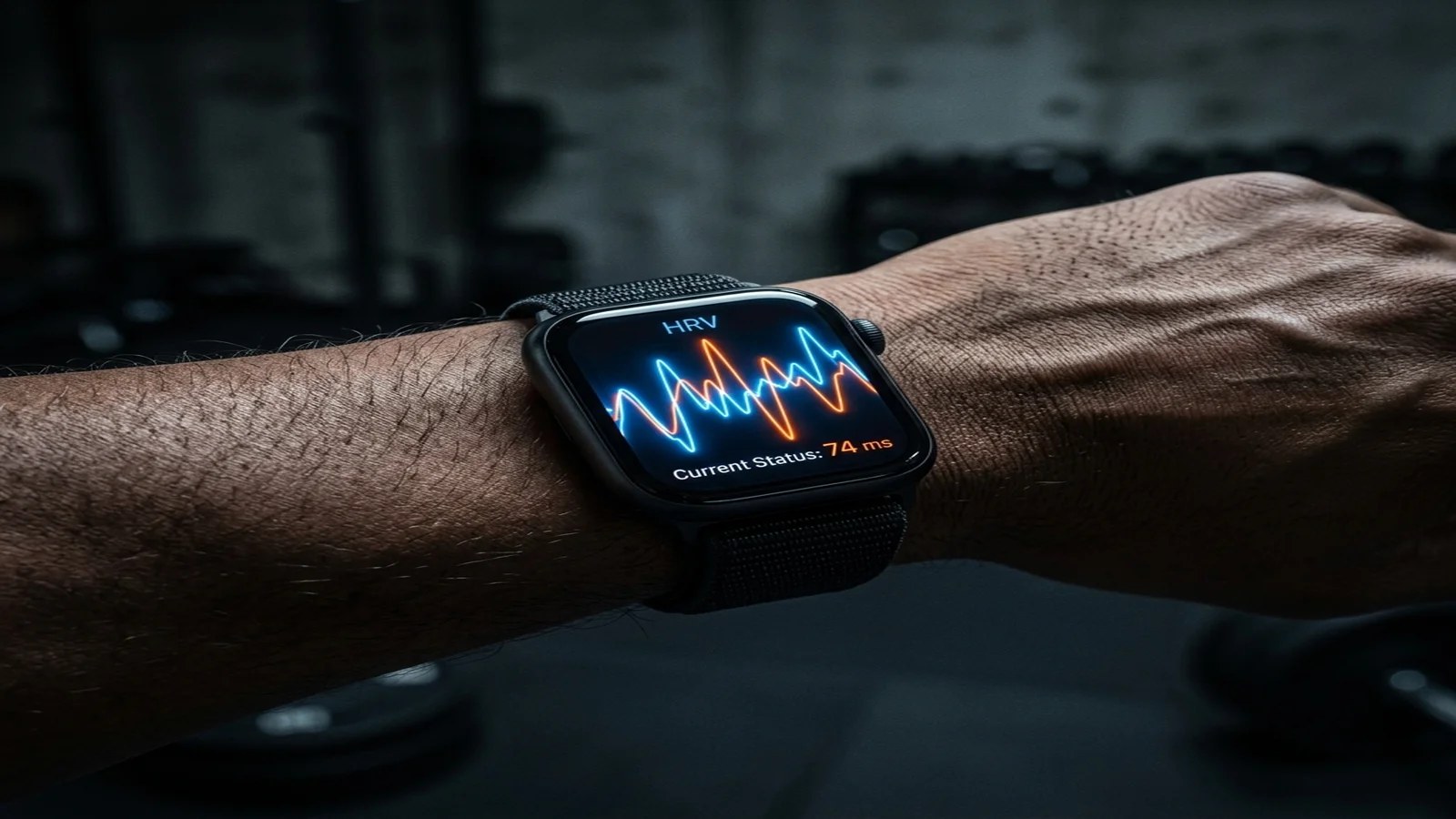
Garmin, Whoop, Oura, and Fitbit all attempt the same task: predict readiness based on HRV, resting heart rate, sleep architecture, and recent training load. HRV-guided monitoring is an active research area in endurance athletes, but the evidence is equivocal rather than a clean predictive signal: both rising and falling HRV have accompanied negative adaptation, and fitness increases have co-occurred with HRV decreases, leading researchers to conclude that practical ways to use HRV to monitor training status in elite athletes are still not established Plews 2013. Consumer wearables mostly stop short of that: their readiness scores correlate with subjective readiness about as well as a coach's morning check-in, and they cannot yet predict what to train today as a function of that score. They provide a "go hard" or "go easy" verdict that often ignores the user's actual program.
3. Program structure inference
Systems like Hyperhuman and Hevy AI ingest months of training data and produce a recommended next mesocycle. The output is plausible, picking volumes and intensities that resemble competent human coaching. However, the AI still misses the "why" — it doesn't know if a plateau is due to a technical fault or if you have a specific competition goal 12 weeks out.
Where the AI fails
- Context outside the training log. The model only knows what you tell it. It can't see the stress of a newborn, a difficult week at work, or a nagging joint issue unless it's explicitly logged.
- Long-horizon planning. Most AI programs handle the next 4 weeks well but struggle with the periodization shapes (accumulation, intensification, peak, deload) needed for long-term athlete development.
- Transfer to non-numerical goals. "I want to get back to enjoying training" is a common human goal that AI cannot yet operationalize.
The medium-term horizon
Over the next 24 to 36 months, we expect to see multi-modal training models where vision sensors watch your squat form and feed quality scores back into the load-prescription engine. We will also see tighter integration between wearable recovery data and specific session adjustments — moving from "you are tired" to "reduce today’s squat volume by 2 sets."
The unchanging fundamentals
AI does not change the laws of physiology. You still need progressive overload, adequate protein, and consistent sleep. The biggest mistake the early AI fitness wave made was promising "smarter training" when adherence, not optimization, is the bottleneck for 95% of users. The smartest program in the world is useless if you don’t show up.
Practical takeaways
- For lifters: Use auto-regulating apps (like Hevy) if you’re past the beginner phase. They are a meaningful upgrade over fixed-load plans.
- For coaches: Use AI to handle the math (VBT, fatigue tracking, substitutions), so you can focus on the human context and technical coaching.
- Be skeptical of "AI" marketing: If an app doesn’t specify what it’s actually predicting or cite peer-reviewed performance data, it’s likely just a template with a new name.
Frequently asked questions
Should I use an AI training app?
Yes if you are past the beginner phase and want something more dynamic than a static PDF, but don’t want to pay for a human coach. No if you still struggle with showing up consistently; AI won’t solve an adherence problem.
Are these systems collecting my personal data?
Yes. Most training apps collect workout logs and many integrate with biometric wearables. Treat this data as you would medical information and read the privacy policy.
Can a chatbot write my program?
LLMs are excellent at producing text but often fail at the nuances of load progression and exercise selection. Use them for research assistance, but cross-check any programming they produce against established strength standards.
References
Plews 2013Plews DJ, Laursen PB, Stanley J, et al. Training adaptation and heart rate variability in elite endurance athletes: opening the door to effective monitoring. Sports Med. 2013;43(9):773-781. View source →