The 60-second version
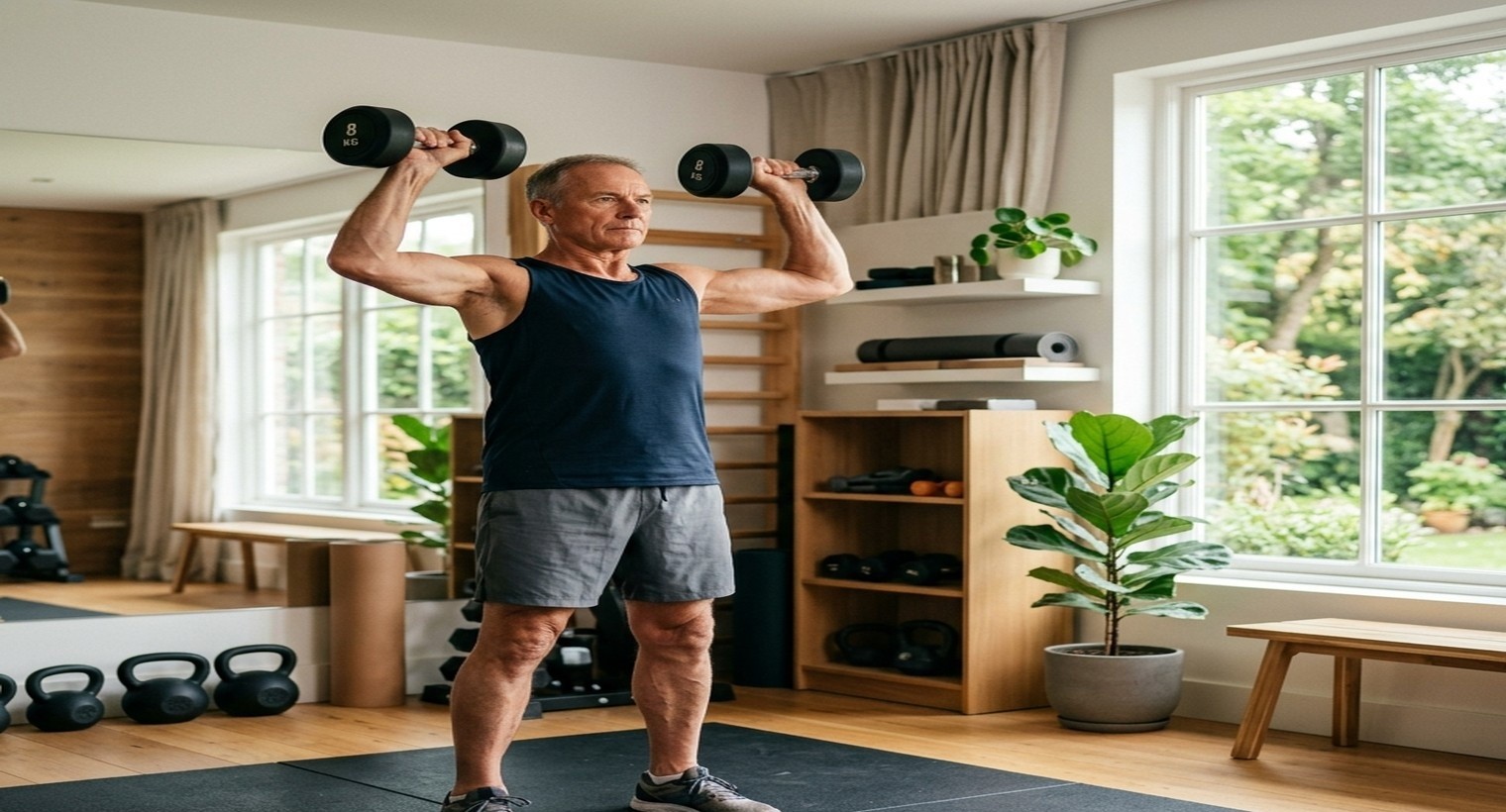
Falls are the leading cause of injury-related death among Canadians over 65, and the published evidence on prevention is unusually clear: balance-and-strength training programs reduce fall rates by 21–39%, with the largest reductions in programs that challenge balance and are sustained over time. The Sherrington et al. 2017 meta-analysis (the definitive synthesis of the evidence) found that exercise programs combining balance challenge with progressive lower-body strengthening produce the largest effect, particularly when performed for more than three hours a week, on an ongoing basis. The Otago Exercise Program (a New Zealand-developed home-based protocol) is the specific program with the strongest evidence base, but the underlying principles — single-leg balance work, gradual difficulty progression, sit-to-stand strength, ankle and hip stability — can be implemented at home, in a gym, or as part of a structured class. For Wasaga residents, multiple local resources offer balance-focused exercise programs, and the protocol below works as a self-directed home program for adults motivated to start.
Educational journalism, not medical advice. Every claim here is checked against its cited sources by editor Timothy Bunce — a health writer, not a physician. It isn’t specific to your situation: for health decisions, talk to your own clinician. How we work →
Some links in this article are affiliate links. If you buy through one, The Beachside Reader earns a commission at no extra cost to you. It never changes which products we pick, or what we say about them. Full affiliate disclosure →
The problem: falls in older adults are common, costly, and largely preventable
The Public Health Agency of Canada and Statistics Canada data combine to a stark picture: roughly 1 in 3 Canadians over 65 falls each year, and falls account for 85% of injury-related hospitalisations in the 65+ demographic Public Health Agency of Canada. Hip fractures specifically are associated with substantial morbidity and a 20–30% one-year mortality rate. The economic cost to the Canadian healthcare system from falls is in the billions annually.
The good news: most falls are preventable through targeted exercise. Falls are not inevitable consequences of ageing; they are the predictable outcomes of declining balance and strength that can be reversed with appropriate training. The published evidence is large and consistent.
Sherrington et al. 2017 (a systematic review and meta-analysis of 88 trials with 19,478 participants) is the definitive synthesis. Key findings:
- Exercise programs reduce the rate of falls by 21% on average (rate ratio 0.79), rising to a 39% reduction in the highest-dose, balance-challenging programs (more than 3 hours weekly) Sherrington et al. 2017.
- The most effective programs combine balance challenge with progressive lower-body strengthening, performed for more than three hours a week on an ongoing basis.
- Programs specifically focused on balance produce larger effects than general aerobic exercise alone.
- Effects are largest in adults at moderate fall risk; very-high-risk (multiple-fall history) and very-low-risk groups show smaller effects from exercise alone.
- Tai chi, Otago Exercise Program, and FaME (Falls Management Exercise) all have strong evidence bases.
What balance actually is, physiologically
Balance is the integration of three sensory systems: vestibular (inner ear), visual (eyes), and proprioceptive (joint and muscle position sense). The brain combines these inputs in real time, then produces motor commands to maintain centre of mass over the base of support.
What changes with ageing:
- Vestibular function declines after age 60; hair cells in the inner ear are lost progressively.
- Visual acuity declines, and the visual system becomes slower at processing peripheral movement.
- Proprioception degrades as joint receptors and nerve conduction slow.
- Lower-body strength declines (sarcopenia), reducing the speed and force of corrective movements.
- Reaction time slows, lengthening the time between balance perturbation and corrective response.
- Cognitive load increases the time and attention required for balance, leading to falls when the person is multitasking.
Effective balance training addresses several of these changes simultaneously. Single-leg standing exposes the vestibular and proprioceptive systems to challenge, building reserve capacity. Progressive strength training rebuilds the lower-body force capacity. Reactive movement work shortens the reaction time. Dual-task training (balance plus a cognitive task) addresses the cognitive-load issue.
The Otago Exercise Program: the gold standard
The Otago Exercise Program (OEP) was developed in New Zealand in the late 1990s as a home-based balance-and-strength program for adults 65+. It has been studied extensively and adopted globally as a fall-prevention standard Campbell 1997 (Otago). The program structure:
- 3× weekly sessions of approximately 30 minutes each.
- 17 specific exercises covering lower-body strength, balance challenge, and walking practice.
- Progressive difficulty: each exercise has graded variations that increase as competence builds.
- Home-based: no gym or special equipment required (initially), though some resistance bands and ankle weights help with strength progression.
- 1–year minimum duration: the published trials show effect sizes that grow over the first year.
The OEP exercises by category:
Strength exercises (3 sets of 10 repetitions, progressing to ankle weights as competence builds)
- Knee extensor (sitting leg lift, weighted progression)
- Knee flexor (standing knee curl, weighted progression)
- Hip abductor (standing side leg lift, weighted progression)
- Ankle plantar flexor (calf raise, single-leg progression)
- Ankle dorsiflexor (toe lift, single-leg progression)
Balance exercises (held for 30 seconds, progressing to 2 minutes)
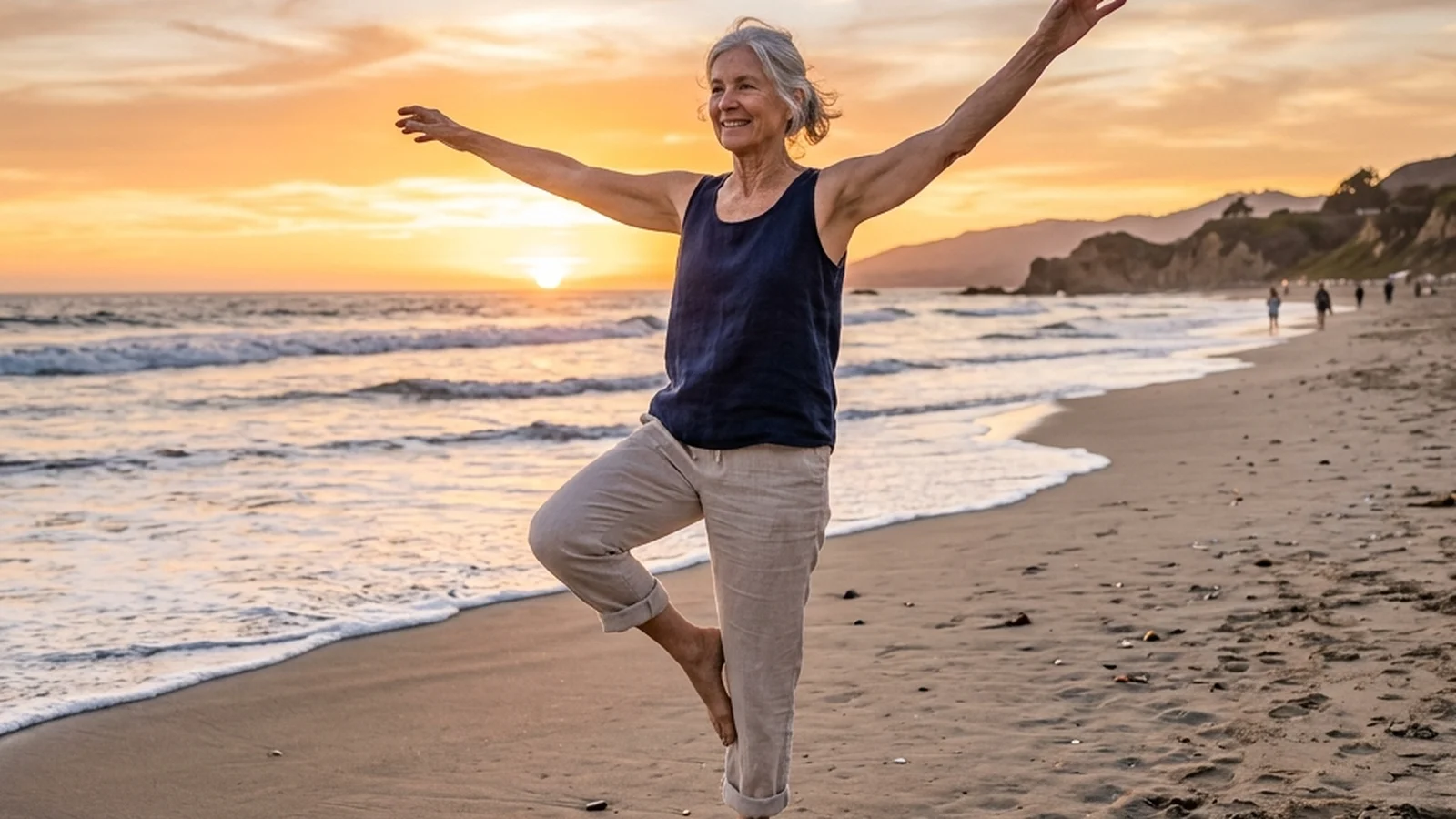
- Single-leg stand (eyes open, then eyes closed)
- Tandem stand (heel-to-toe, eyes open then closed)
- Heel-to-toe walking (with then without support)
- Sideways walking
- Backward walking
- Sit-to-stand (without using hands, multiple repetitions)
Walking practice (30+ minutes, 2× weekly)
Outdoor walking at a pace that produces moderate exertion, with progression to longer distances and varied terrain.
The full Otago protocol is freely available through the New Zealand Accident Compensation Corporation and various health agency websites. The program has been translated and adapted for many languages and cultural contexts.
A self-directed beginner balance protocol
For Wasaga residents who want to start a balance-training routine without joining a formal class, the following 12-week progression captures the essential elements of the evidence-based programs:
Weeks 1–2: foundation
- Sit-to-stand practice: 10 reps without using hands, 3 sets, 3× weekly.
- Single-leg stand (with support nearby): each leg, 30 seconds eyes open, holding a chair or counter for safety. 3× per side, daily.
- Heel-toe walking: 10 steps along a hallway with one hand on the wall for support. Daily.
- Walking practice: 20 minutes 3× weekly at a comfortable pace.
Weeks 3–6: progression
- Sit-to-stand: 12–15 reps per set, 3 sets.
- Single-leg stand: 60 seconds with light fingertip support, then unsupported.
- Tandem stance: 30–60 seconds, eyes open then closed.
- Heel-toe walking: 10 steps unsupported.
- Sideways walking: 5 metres each direction, daily.
- Backward walking: 5 metres, daily, with care for safety.
- Walking: 30–40 minutes 3× weekly.
Weeks 7–12: increasing difficulty
- Sit-to-stand: continuous 25–30 reps; consider light hand weights to add load.
- Single-leg stand with eyes closed: 30–60 seconds per side, with safety support nearby.
- Single-leg stand on unstable surface: foam pad, cushion, or balance disc. 30 seconds per side.
- Walking with head turns: 5 metres looking left, 5 metres looking right, while walking forward.
- Tandem walking: 20 steps continuous, no support.
- Calf raises: 15 reps per set, 3 sets, progressing to single-leg version.
- Walking: 40 minutes 3× weekly, varied terrain.
Beyond 12 weeks
Maintain the progression: continue increasing difficulty (eyes closed, unstable surfaces, dual-task patterns like talking while balancing), add resistance to the strength exercises, and integrate the work into daily life (single-leg stand while brushing teeth, calf raises while waiting for the kettle).
Dual-task training: the cognitive dimension
Many real-world falls happen when balance is combined with cognitive demands — navigating stairs while carrying groceries, walking while talking, navigating a busy environment. Dual-task balance training is the practice of pairing balance challenge with cognitive demands. Plummer and Eskes (2015) propose a research framework for measuring how such training affects dual-task performance Plummer et al. 2015, and clinical experience suggests dual-task practice may carry over to safer real-world movement beyond static balance training alone, though the evidence base for that transfer is still developing.
Examples of dual-task balance work:
- Standing on one leg while reciting the alphabet backward.
- Walking heel-to-toe while subtracting 7s from 100.
- Walking while listing animals starting with each letter of the alphabet.
- Single-leg stand while catching a tossed ball.
- Walking through a crowded indoor space (the natural cognitive-distraction environment).
The cognitive task should be challenging enough to require attention but not so hard that physical safety is compromised. Many balance-class instructors integrate dual-task training as a regular component.
Local Wasaga resources for balance training
- Town of Wasaga Beach Recreation: many municipalities offer specific senior balance and fall-prevention programs through their recreation department. Check the current programming guide for “Balance,” “Fall Prevention,” or “Active Living for Older Adults” class names.
- Local fitness centres: Beachside Fitness and other regional gyms occasionally offer balance-focused classes; ask about programming.
- Physiotherapy clinics: in-clinic balance assessment and progressive program design from a registered physiotherapist is the gold-standard option, particularly for adults at higher fall risk.
- Tai chi groups: tai chi has strong evidence for fall prevention. Check for local tai chi practice groups in the Wasaga-Collingwood area.
- Yoga classes: gentle yoga at appropriate levels often includes balance challenges suitable for older adults. Ask the instructor about balance focus before joining a class.
- Online resources: the Otago Exercise Program is freely available online through New Zealand health resources and Canadian fall-prevention organisations.
Self-assessment: should I be concerned about my fall risk?
The simplest validated screen for fall risk is the “30-Second Sit-to-Stand Test” CDC STEADI:
- Sit in a sturdy chair (about 43 cm seat height, no arms).
- Cross arms over chest.
- Stand fully and sit back down as many times as you can in 30 seconds.
- Compare to age-and-sex norms.
Approximate norms (lower scores indicate higher fall risk):
- Women 60–64: below 12 reps suggests increased risk; 12–17 average; 17+ above average.
- Women 65–69: below 11; 11–16; 16+.
- Women 70–74: below 10; 10–15; 15+.
- Men 60–64: below 14; 14–19; 19+.
- Men 65–69: below 12; 12–18; 18+.
- Men 70–74: below 12; 12–17; 17+.
If your score is below the “average” range for your age and sex, balance-and-strength training is particularly important. If you’ve had a fall in the past year, consult a physician and consider physiotherapy assessment.
Beyond exercise: other fall-prevention factors
Exercise is the strongest evidence-based intervention, but several other factors matter:
- Vision: annual eye exams; updated prescription lenses; address cataracts when they affect functional vision.
- Medication review: many medications (sedatives, antihypertensives, anticonvulsants) increase fall risk. Annual medication review with a physician or pharmacist is sensible.
- Vitamin D: deficiency is associated with falls; supplementation in deficient older adults reduces fall rates. Most older Canadians benefit from 1,000–2,000 IU daily.
- Home environment: remove loose rugs, install grab bars in bathrooms, ensure adequate lighting, eliminate tripping hazards. Local occupational therapists can do home-safety assessments.
- Footwear: well-fitting shoes with non-slip soles; avoid loose slippers indoors. The right shoe is a small intervention with measurable effect.
- Glasses: bifocals can affect depth perception on stairs; some older adults benefit from a separate single-prescription set for walking.
Practical takeaways
- Falls are common (1 in 3 adults 65+ falls annually) but largely preventable: exercise programs reduce fall rates by 21–39%.
- The Otago Exercise Program is the gold-standard evidence-based approach: 3× weekly home-based exercises combining strength and balance.
- Effective programs combine sit-to-stand strength, single-leg balance, walking practice, and progressive difficulty.
- Dual-task training (balance plus cognitive task) extends the transfer to real-world fall reduction.
- The 30-Second Sit-to-Stand Test is a simple home self-assessment of lower-body strength and fall risk.
- Other fall-prevention factors: vision care, medication review, vitamin D, home-safety modifications, appropriate footwear.
Frequently asked questions
At what age should I start balance training?
Earlier is better. The published evidence supports starting balance work in the 50s, before the major declines in vestibular and proprioceptive function. By 65+, balance training shifts from preventive to remedial; the protocols still work, but the changes you’re reversing are larger. The optimal answer for any individual reading this: now.
Is tai chi as effective as the Otago Exercise Program?
Both have strong evidence. The Sherrington 2017 meta-analysis suggests modestly larger effects from balance-and-strength programs like Otago, but tai chi is well-validated and has the advantage of being a structured group activity for many practitioners. Both are appropriate; the right choice is the one you’ll do consistently for 12+ months.
What if I’m worried about falling during the balance exercises themselves?
Reasonable concern. Practice initial balance work near a sturdy support (counter, sturdy chair, wall corner) where you can quickly recover. Progress to unsupported balance only when you’re confident with the supported version. For higher-risk individuals, supervised initial sessions with a physiotherapist or qualified fitness instructor reduce the risk of falls during training.
Are there exercises I should avoid?
Avoid balance work that puts you at risk if you fall: don’t practice eyes-closed single-leg stand on a hard floor without support nearby; don’t practice on stairs or uneven outdoor surfaces until you’ve mastered the level-floor version. Activities involving sudden direction changes or rotation should be added gradually after baseline balance is solid.
How long until I notice improvements?
Subtle changes appear within 2–4 weeks (subjective “feeling more stable” on stairs); measurable changes on the 30-Second Sit-to-Stand Test by week 8–12; meaningful real-world fall risk reduction emerges over the first year of consistent practice. The protocol works, but the time horizon is months to years, not days to weeks.
References
Sherrington et al. 2017Sherrington C, Michaleff ZA, Fairhall N, et al. Exercise to prevent falls in older adults: an updated systematic review and meta-analysis. Br J Sports Med. 2017;51(24):1750-1758. View source →Campbell 1997 (Otago)Campbell AJ, Robertson MC, Gardner MM, Norton RN, Tilyard MW, Buchner DM. Randomised controlled trial of a general practice programme of home-based exercise to prevent falls in elderly women. BMJ. 1997;315(7115):1065-1069. View source →Plummer et al. 2015Plummer P, Eskes G. Measuring treatment effects on dual-task performance: a framework for research and clinical practice. Front Hum Neurosci. 2015;9:225. View source →Public Health Agency of CanadaPublic Health Agency of Canada. Seniors’ Falls in Canada: Second Report. View source →CDC STEADICenters for Disease Control and Prevention. STEADI: Stopping Elderly Accidents, Deaths, and Injuries. View source →