The 60-second version
Alternating short runs and swims (a “beach biathlon”) is one of the best summer cardio sessions you can do. Thirty minutes of 5-minute run segments alternating with 5-minute swim segments delivers a high-quality workout no gym treadmill can match.
The format borrows from triathlon training principles — the abrupt switch between two cardio modes forces your body to adapt to multiple energy demands Bentley 2002. Triathlon research on well-prepared, well-supplied athletes concludes the format is generally safe and sustainable — a reasonable baseline for a much shorter recreational version Vleck 2014.
One real safety floor: heat. Athletic-medicine heat-illness guidelines call for progressively cutting back outdoor intensity as wet-bulb globe temperature (WBGT) climbs through the high-to-extreme range, with full cancellation reserved for the most extreme readings Casa 2015. Wet-bulb temperature accounts for humidity — a humid, hot day is much harder on the body than a dry day at the same air temperature. On the hottest, most humid days, scale back or train at dawn.
For the right conditions and a swimmable shoreline, this is one of the highest-quality conditioning workouts available outside organised training.
Educational journalism, not medical advice. Every claim here is checked against its cited sources by editor Timothy Bunce — a health writer, not a physician. It isn’t specific to your situation: for health decisions, talk to your own clinician. How we work →
Some links in this article are affiliate links. If you buy through one, The Beachside Reader earns a commission at no extra cost to you. It never changes which products we pick, or what we say about them. Full affiliate disclosure →
The conditioning case for run-swim intervals
Run-to-swim transitions are biomechanically and metabolically distinct from continuous running or continuous swimming, loading the cardiovascular system differently than either pure modality. Triathlon transition-physiology research shows that switching disciplines carries real physiological consequences worth building into training practice Bentley 2002; the alternating heat and biomechanical demands specific to run-swim training are documented separately in the emerging swimrun literature Geromont 2021. The muscular and metabolic recruitment shifts between modalities produce adaptations that pure single-modality training does not.
The case for the format as summer conditioning rests on several reinforcing factors. The water provides thermoregulation that pure running cannot — 5 minutes of swimming dissipates roughly 3–5 times the heat that 5 minutes of running does, allowing higher overall training intensity in hot weather. The variety of modality keeps the central-nervous-system stimulus high, which lines up with Vleck 2014 Vleck 2014’s broader conclusion that triathlon’s cross-training structure is generally safe and sustainable for a well-prepared, well-supplied athlete. The session is also psychologically engaging in a way that 30 minutes of pure running on a hot beach is not.
The conditioning adaptation is principally aerobic with a meaningful anaerobic component during the transitions. The work-to-rest ratio across a 5-minute-on, 5-minute-on, 5-minute-on protocol is about 1:0 with the modality switch acting as the recovery for each segment’s muscular demand. This produces a continuous high-aerobic-output session of 30 minutes that few alternatives can match for total stimulus.
Heat and hydration considerations
Casa 2015’s exertional-heat-illness position statement is a widely used reference for the heat-stress framework, though it explicitly cautions that WBGT-based schedules should be set regionally rather than applied as one universal cutoff. The practical takeaway for beach biathlon: as WBGT climbs into the high range, shorten intervals, lengthen rest breaks, and add pre-cooling; in the most extreme heat, postpone the session or substitute a pure swimming workout instead. WBGT integrates air temperature, humidity, radiant heat, and wind — the standard heat-stress index for outdoor athletic activity.
The practical application: most July and August Wasaga afternoons sit in the 26–30°C WBGT range when air temperatures are 28–32°C with typical lakeside humidity. The morning window (6–9 AM) and evening window (after 6 PM) typically sit 3–5°C lower in WBGT and are the recommended training times. Mid-day sessions are reasonable when WBGT is below 28°C but should default to shorter total session length.
Fluid replacement during a 30-minute session in the 26–30°C WBGT range is about 500–800 mL of water with electrolytes; longer sessions or higher temperatures push that requirement higher. The practical pattern is a 750 mL pre-session bottle, a 500 mL during-session bottle staged at the run-to-swim transition zone, and a post-session 500–750 mL replacement — total of ~2 L across the session and post-session window. This isn’t triathlon-grade hydration, but it’s the floor below which heat-stress symptoms become more likely.
The 30-minute beach biathlon protocol
The protocol that produces a clean conditioning stimulus for most fit adults: 5-minute beach warmup (light jogging, dynamic stretches), then six 5-minute work segments alternating between running and swimming. Segments 1, 3, and 5 are run segments at moderate-hard pace (zone 3–4 of 5, perceived exertion 6–7 of 10); segments 2, 4, and 6 are swim segments at sustained moderate effort. Total work time: 30 minutes. Total session including warmup and cooldown: ~40 minutes.
For unfit or beginner trainees, the protocol scales to 4×5-minute segments for a 20-minute work session, gradually building to the 6×5 over 4–6 weeks. Consistent execution at a moderate-hard pace across every segment beats an all-out effort that fades before the session is complete.
The transition zone is a single point on the beach where the swim segment ends and the run segment begins. A pre-positioned water bottle, a small towel, and (if needed) a wetsuit are staged at this point. The transitions themselves take 30–60 seconds — long enough to dry the goggles, drink water, and start the next segment’s breathing pattern. Treating the transition as part of the session rather than as recovery is the key cognitive frame.
Executing the swim segments well
The swim segment is typically the limiting variable for adults whose primary conditioning history is running. As a general training principle, the discipline you’re weakest in tends to have the most room to improve with practice, which is exactly the case here. For most run-trained adults, the swim segment is the segment to focus on for technique improvement, not for time-based pacing.
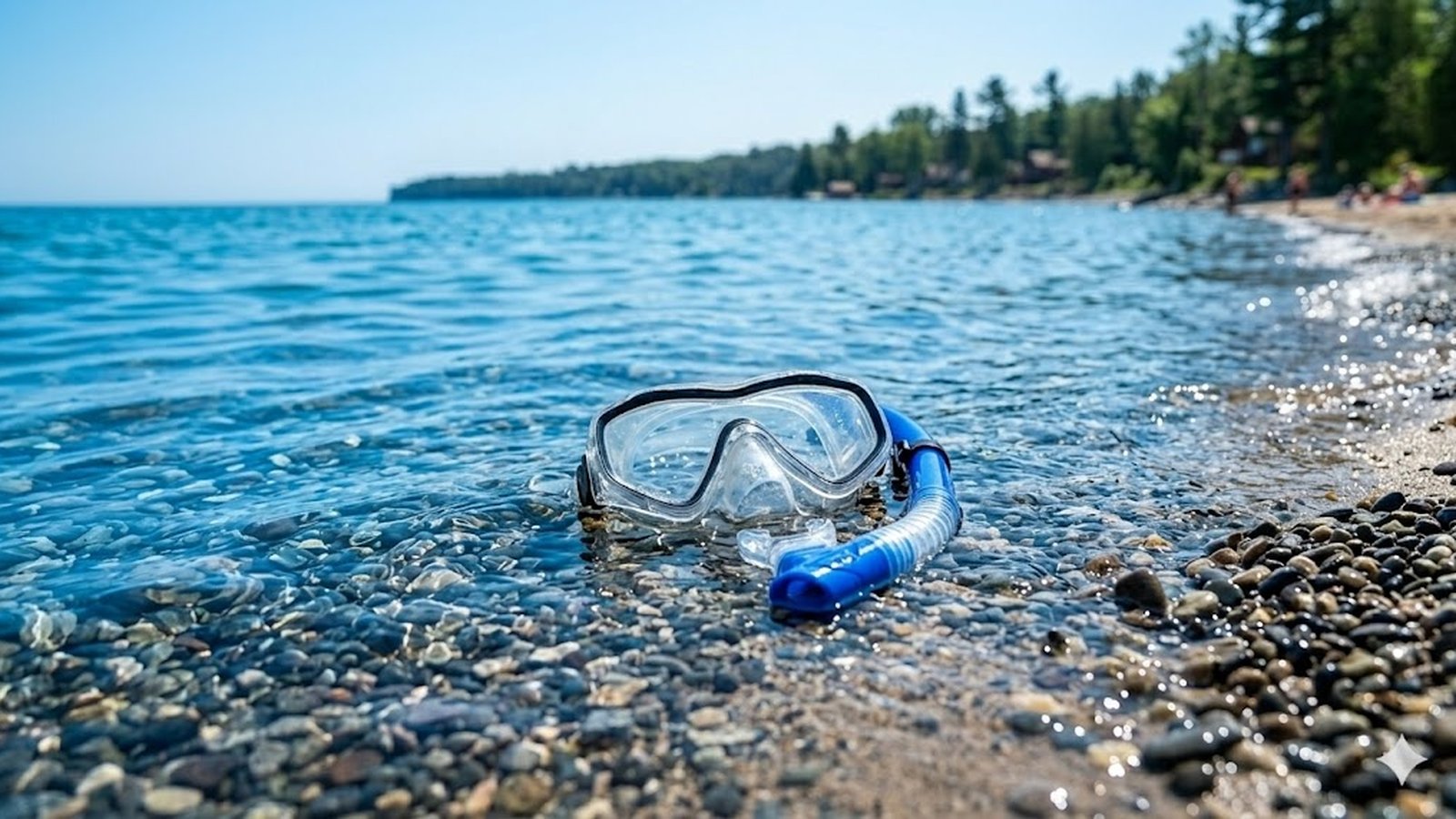
The practical swim-segment guidance: maintain a controlled freestyle stroke rate (16–20 strokes per side per minute for moderate-effort cruising), breathe bilaterally if possible to balance the stroke, sight every 6–8 strokes for waterline navigation. The objective is sustained moderate effort for the full 5 minutes, not a sprint that produces 90 seconds of work and 3 minutes of recovery. Building this swimming-economy capacity is what the training produces.
Open-water-specific skills matter for the beach biathlon context. Learning to sight efficiently without breaking stroke rhythm; learning to swim in a straight line without lane lines; learning to manage the small chop of a lake on a windy day. These are skills that pool training does not develop and that 4–6 weeks of beach biathlon practice will produce. The transferability to general swimming fitness is high.
Executing the run segments well
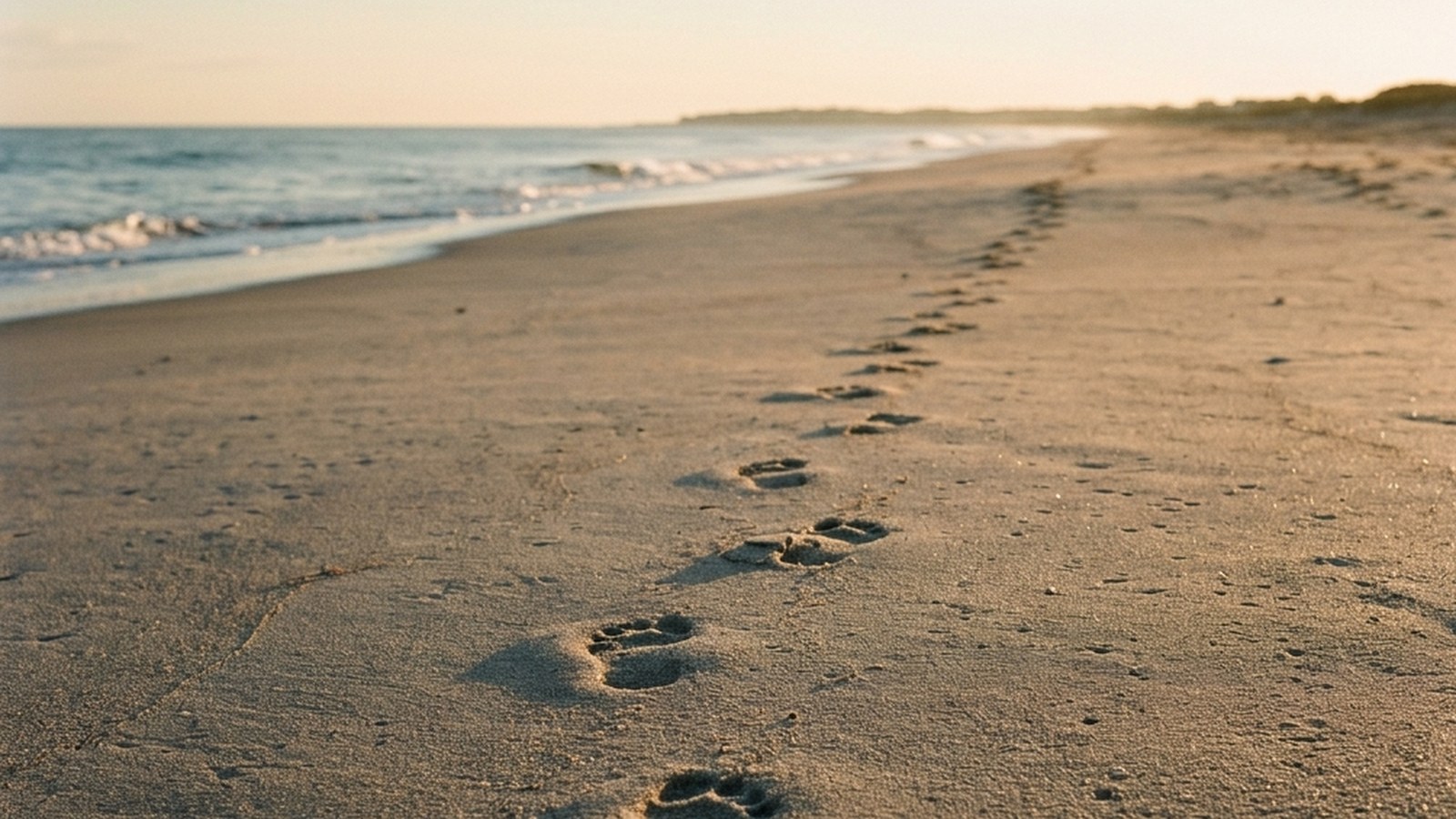
The run segments on the beach biathlon are typically run on packed wet sand at the waterline. This surface is forgiving (lower impact than concrete or hard-packed dirt) and consistent (much more so than dry loose sand) — a productive running surface for most adults. The pace target is moderate-hard, perceived exertion 6–7 of 10, similar to a sustained tempo run.
The most-common execution error is starting the first run segment too fast and burning out the cardiovascular reserve before the protocol is complete. The Le Meur 2009 pacing research Le Meur 2009 found that elite triathletes typically show the opposite pattern in competition — a fast start followed by a gradual decline in pace across the swim and run legs — which is exactly the pacing error a shorter recreational session should avoid. For beach biathlon specifically: target a steady moderate effort across all three run segments rather than attempting a sprint pattern that produces inconsistent execution.
The transition from swim to run is the segment that demands the most attention. The first 30–60 seconds of the run segment after a swim segment will feel disproportionately hard — the cardiovascular system is rebalancing, the muscular recruitment is shifting, the sense of effort is elevated. This alternating-modality demand is distinct from the bike-to-run “brick” effect studied in conventional triathlon Bentley 2002; swimrun-specific literature confirms the sport’s transition demands are physiologically real but still under-researched Geromont 2021, and in practice most recreational athletes find the disorientation eases with repeated exposure.
Seasonal and water-temperature considerations
Lake Huron and Georgian Bay water temperatures vary widely across the swimmable season. Late June water at Wasaga is typically 18–20°C; July and August water is typically 21–24°C; September water cools back to 18–21°C. Below 18°C, cold-water shock is a meaningful safety concern for unsuited swimmers; a 3mm shorty wetsuit is the practical solution for early-season and late-season sessions.
The Casa 2015 framework Casa 2015 addresses heat illness specifically; the cold-water-shock literature is a separate body of work but the safety implications overlap. The practical safety floor for un-wetsuited swimming is 18–19°C water with the swimmer in good cardiovascular condition; below that, the wetsuit becomes the safety variable, not the comfort variable.
The wind-and-chop variable also matters. Lake Huron and Georgian Bay typically run a 0.3–0.6 m wave height in light wind conditions and 0.6–1.2 m in moderate wind. Above 1 m wave height, the swim segment becomes a lot harder (and the transition more difficult); above 1.5 m it becomes safety-questionable for most recreational swimmers. The morning windows are typically calmer than the afternoon windows on prevailing-wind days.
The adaptation timeline
The progression timeline for a 30-minute beach biathlon protocol is reasonably consistent for adults coming from a running-fitness baseline. Weeks 1–3: 4×5 protocol at conservative pacing; the swim segment will feel disproportionately hard. Weeks 4–6: extension to 5×5 with the swim-segment economy beginning to build. Weeks 7–9: full 6×5 protocol with reasonably matched effort across all six segments.
The broader safety picture for well-prepared, well-supplied triathletes — the sport is relatively safe when training and racing demands are appropriately managed Vleck 2014 — translates here at a smaller, recreational scale: modest, general gains in aerobic capacity, running economy, and swimming economy rather than a precisely quantified performance boost. The adaptation is real and productive for general fitness; it’s smaller than the adaptation seen in athletes who’d use this as primary conditioning, but meaningful for most adult readers.
The frequency dose is twice weekly during the summer training block. Three sessions per week is sustainable for committed athletes but elevates injury and overtraining risk for general-fitness adults; one session per week produces meaningful but slower adaptation. The Saturday-and-Wednesday or Sunday-and-Tuesday pattern works well for most readers; the spacing allows recovery between sessions while maintaining the stimulus.
Bottom line: a high-yield summer conditioning option
The honest bottom line for adult readers is that the beach biathlon is one of the highest-yield summer conditioning options available to anyone within driving distance of a swimmable lake or shoreline. The 30-minute protocol produces a large cardiovascular stimulus, develops swimming and running capacity simultaneously, and uses the water’s thermoregulation to permit higher overall training intensity than pure-running alternatives can sustain in summer heat.
For Wasaga and Georgian Bay readers specifically, the access pattern is excellent: Beach Area 1, 2, 3, 5, and 6 all support the protocol; the Provincial Park beaches add additional options; the morning and evening training windows align with low-traffic beach hours. The Casa 2015 heat-safety framework Casa 2015 is the safety ceiling that requires respect; the Le Meur 2009 pacing principles Le Meur 2009 are the execution guidance. Combined, the modality is one that the literature genuinely supports and that the geography makes accessible.
Practical takeaways
- The 30-minute beach biathlon protocol is 6×5-minute alternating run and swim segments at moderate-hard pace.
- The run-to-swim transition is itself a training stimulus. Brick-training principles from triathlon apply; the first 30–60 seconds of each post-transition segment normalises with practice.
- As WBGT climbs into the high-to-extreme range, cut back intensity and add rest; postpone the session in the most extreme heat. Casa 2015’s heat-illness framework is the safety floor.
- Below 18°C lake temperature, a 3mm shorty wetsuit is the practical safety floor. Cold-water shock is a real concern for early-season and late-season sessions.
- Twice-weekly sessions across an 8–12 week summer block produce modest, meaningful improvements in aerobic capacity, swimming economy, and running economy.
- The transition zone with pre-positioned water and small towel is the practical workflow that keeps the session moving.
Frequently asked questions
How is a beach biathlon different from a triathlon brick session?
Brick training in triathlon is bike-then-run; the beach biathlon swaps in run-then-swim-then-run — a pattern closer to the emerging sport of swimrun, whose alternating heat and biomechanical demands are documented separately from standard triathlon transitions (Geromont 2021). The water's cooling effect during the swim segments is what makes beach biathlon especially valuable in summer training.
What heat conditions make beach biathlon unsafe?
Casa 2015's heat-illness guidelines call for progressively cutting back intensity as wet-bulb-globe-temperature (WBGT) rises through the high-to-extreme range, with full cancellation reserved for the most extreme readings. Lake-water temperature below 18°C also flags cold-water shock risk for the swim segments — both ends of the thermal range matter.
How long should the swim segment be?
For recreational fitness, 5–10 minutes per swim segment is the practical sweet spot. The Vleck 2014 triathlon-training literature suggests segment durations matched to your weakest discipline produce the cleanest overall fitness adaptation; for most beach-bia athletes, the run is the dominant capacity, so the swim becomes the limiting variable to train.
Do I need a wetsuit for Lake Huron beach biathlon?
Below 18°C lake temperature, yes. June and September Georgian Bay water typically sits in the 16–20°C range — a 3mm shorty is a useful safety and thermal investment. July and August water (typically 21–24°C at Wasaga) is generally fine for unsuited swims of 5–15 minute duration.
References
Casa 2015Casa DJ, DeMartini JK, Bergeron MF, et al. National Athletic Trainers’ Association position statement: exertional heat illnesses. J Athl Train. 2015;50(9):986-1000. View source →Bentley 2002Bentley DJ, Millet GP, Vleck VE, McNaughton LR. Specific aspects of contemporary triathlon: implications for physiological analysis and performance. Sports Med. 2002;32(6):345-359. View source →Vleck 2014Vleck V, Millet GP, Alves FB. The impact of triathlon training and racing on athletes’ general health. Sports Med. 2014;44(12):1659-1692. View source →Le Meur 2009Le Meur Y, Hausswirth C, Dorel S, Bignet F, Brisswalter J, Bernard T. Influence of gender on pacing adopted by elite triathletes during a competition. Eur J Appl Physiol. 2009;106(4):535-545. View source →Geromont 2021Geromont CH, Lambert M, Bosch AN. Swimrun race, athletes, safety and performance: a brief review. Sports Med Health Sci. 2021;3(4):207-211. View source →