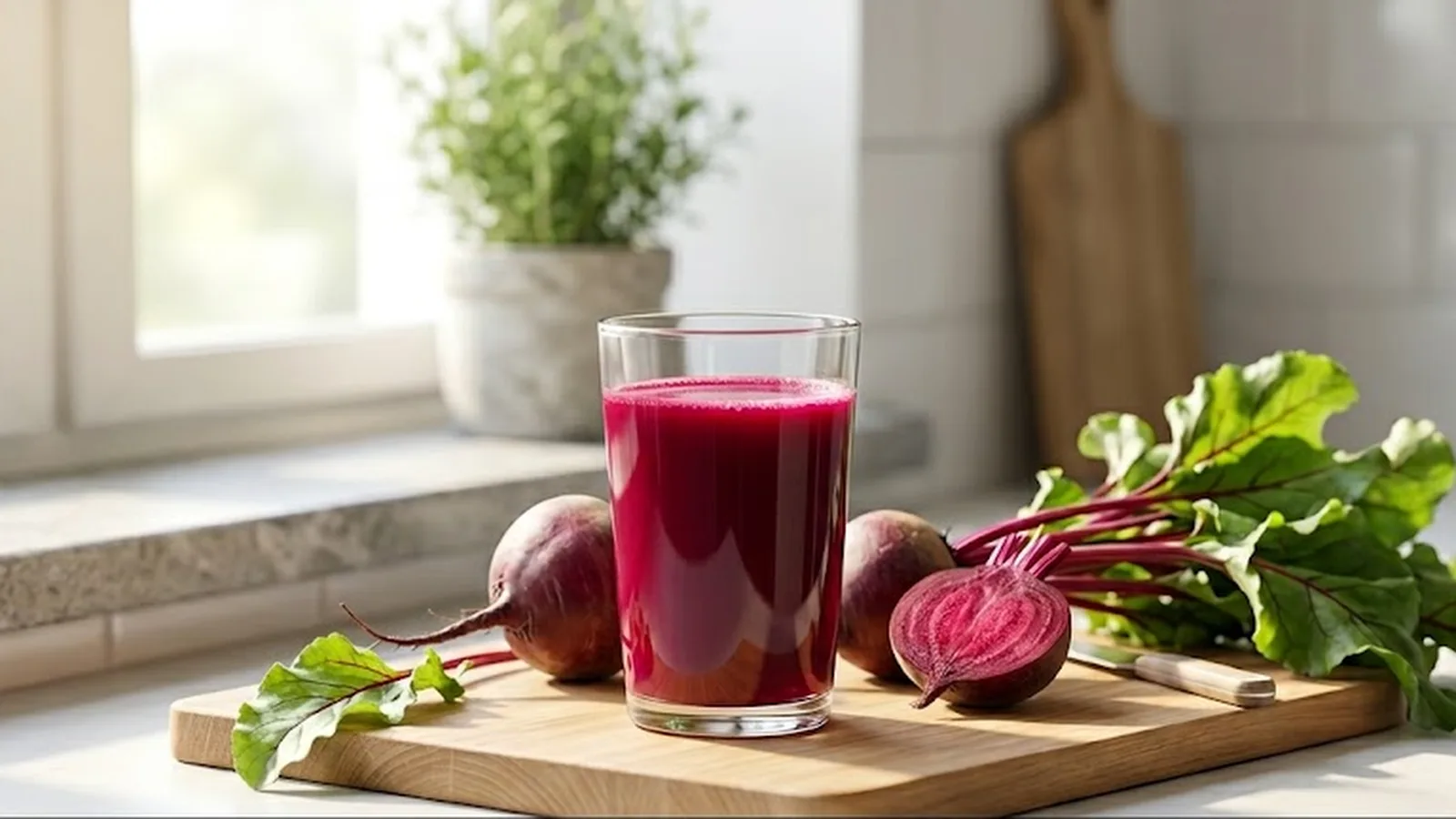
The 60-second version
Beetroot juice is one of the few “natural pre-workouts” with replicated, peer-reviewed performance data. The mechanism is its high nitrate content, which converts in the body to nitric oxide and improves the oxygen cost of exercise. Meta-analyses show 1–3% performance improvements in time-trial cycling and running — small in absolute terms but meaningful for endurance athletes. The optimal dose is roughly ~6.4–12.8 mmol nitrate (about 400–800 mg, or 1–2 small bottles of concentrated “shots”) taken 2–3 hours before exercise. The effect is strongest in untrained or moderately trained people doing exercise lasting 5–30 minutes; less reliable in elite athletes and in events under 1 minute or over 60 minutes. It is not a strength supplement and not a substitute for caffeine. Side effects: temporary red urine, occasional GI upset. Watch for medication interactions (nitrates, blood pressure drugs).
Educational journalism, not medical advice. Every claim here is checked against its cited sources by editor Timothy Bunce — a health writer, not a physician. It isn’t specific to your situation: for health decisions, talk to your own clinician. How we work →
Some links in this article are affiliate links. If you buy through one, The Beachside Reader earns a commission at no extra cost to you. It never changes which products we pick, or what we say about them. Full affiliate disclosure →
Why beetroot is taken seriously
Most “natural pre-workout” claims are unsupported. Beetroot juice is the rare exception: there are now over 200 peer-reviewed performance trials on dietary nitrate, with consistent though modest effects. The mechanism makes biological sense, the doses are well-defined, and the side-effect profile is mild.
The effect is mediated by inorganic nitrate (NO3−), of which beetroot is one of the densest dietary sources. Oral nitrate is reduced in the mouth by commensal bacteria to nitrite (NO2−), which the body further reduces to nitric oxide (NO) under low-oxygen, low-pH conditions — precisely what occurs in working muscle Lundberg 2008. Nitric oxide is a vasodilator and signaling molecule that improves mitochondrial efficiency, oxygen delivery, and contractile function Jones 2014.
“Dietary nitrate supplementation reduces the oxygen cost of submaximal exercise by 3–5% and improves time-trial performance by 1–3% in untrained-to-moderately-trained adults. The effect is most consistent for events lasting 5–30 minutes.”
— Jones, Sports Med., 2014 view source
What the evidence shows
Two seminal studies established the field. Bailey 2009 (a randomized crossover in healthy men) showed that 6 days of 500 mL/day beetroot juice reduced the oxygen cost of cycling by ~5% and increased time-to-exhaustion by 16% Bailey 2009. Lansley 2011 then showed that a single 0.5 L beetroot juice dose containing ~6.2 mmol nitrate, taken 2.5 hours before a 4 km and 16.1 km cycling time-trial, improved performance by ~2.8% and ~2.7% respectively Lansley 2011.
The 2017 Domínguez systematic review examined 23 studies in trained endurance athletes — cyclists, kayakers, runners, swimmers, and triathletes — and found that beetroot juice supplementation can improve cardiorespiratory endurance and exercise economy across a range of time-trial and time-to-exhaustion protocols, though the review was qualitative and did not pool the studies into a single statistical effect size Domínguez 2017. The 2017 Mc Mahon umbrella review reached the same conclusion Mc Mahon 2017.
What it doesn’t do, or doesn’t reliably do:
- Sprint events under ~1 minute: mixed; some studies show small benefit, most show null.
- Ultra-endurance over ~60 minutes: signal weakens; nitrate stores deplete and other limiters dominate.
- Pure strength: 1RM bench press, squat — mostly null. Beetroot is not a strength aid.
- Elite athletes: smaller and more variable response. The world-class endurance athlete has already optimized many of the same pathways through training.
- High-intensity intermittent (team sports): emerging positive data, but less consistent than cycling/running TTs.
Dose, timing, and form
| Variable | Optimal range | Notes |
|---|---|---|
| Nitrate dose | 6.4–12.8 mmol (~400–800 mg) | Below 4 mmol typically ineffective; above 12.8 mmol no further benefit |
| Timing | 2–3 hours pre-exercise | Plasma nitrite peaks at this window |
| Form | Concentrated “shot” (70 mL with ~6–8 mmol) or 500 mL juice | Equivalent if matched on nitrate content |
| Loading | Single dose works; 3–6 days of daily dosing slightly better | Multi-day loading may help in elite athletes |
| Acute vs chronic | Acute single dose: ~1–2% effect. Chronic 6 days: ~2–3% effect. | Effect plateaus at ~6 days |
Don’t use antibacterial mouthwash before training
The conversion of nitrate to nitrite happens in the mouth by oral bacteria. Antibacterial mouthwash (chlorhexidine, alcohol-based mouthwashes) blocks this step and abolishes the performance benefit Govoni 2008. Athletes loading beetroot for an event should avoid antibacterial mouthwash for the loading period.
Whole-food nitrate sources
You don’t have to drink beetroot juice. Comparable nitrate doses can come from food, though it takes more volume:
| Source | Approximate nitrate per serving | Notes |
|---|---|---|
| Beetroot shot (70 mL concentrate) | ~6–8 mmol (~400 mg) | Most efficient by volume |
| Beetroot juice (500 mL) | ~5–7 mmol (~310–430 mg) | Sweet; high volume |
| Cooked beets (200 g) | ~3–5 mmol | Cooking reduces nitrate ~10–20% |
| Spinach (100 g raw) | ~3–5 mmol | One of the highest non-beet sources |
| Arugula (rocket, 50 g) | ~4–5 mmol | Highest nitrate per gram of any common food |
| Lettuce (100 g) | ~1–2 mmol | Variable by variety |
| Celery (100 g) | ~1–2 mmol | Useful additive |
| Radish, fennel | ~1–2 mmol | Variable |
Who benefits most
| Profile | Likely effect |
|---|---|
| Recreational runner / cyclist (10K–half marathon) | Most reliable benefit; ~1–3% time improvement at 6.4 mmol dose |
| Recreational cyclist (TT, criterium, 4–25 km) | Strong evidence; ~2–3% improvement |
| CrossFit / HIIT athlete | Mixed evidence; small benefit possible |
| Sprinter (under 60 sec) | Small or null effect |
| Powerlifter / 1RM strength athlete | No meaningful effect |
| Marathoner / ultra runner | Smaller effect than middle-distance; tank depletes |
| Elite endurance athlete (Tour, Olympic) | Smaller and more variable response |
| Older adult (60+) doing functional training | Improves walking economy and submaximal cycling efficiency |
Other (non-performance) effects worth knowing
- Blood pressure: dietary nitrate modestly reduces resting systolic blood pressure (~3–5 mmHg). Useful side benefit for healthy adults; relevant interaction concern for those on antihypertensives Siervo 2013.
- Endothelial function: improves flow-mediated dilation in adults with cardiovascular risk factors.
- Cognitive performance: some studies suggest small acute improvements in reaction time and executive function; data less robust than performance literature.
- Beeturia: red urine and stool from betacyanin pigments. Harmless but startling on first use. Doesn’t indicate efficacy.
Safety, side effects, and interactions
- GI upset: occasional bloating, mild diarrhea at higher doses (~10+ mmol/day). Usually resolves with dose reduction.
- Lower blood pressure: be cautious if already hypotensive or on medications that lower BP. Beetroot can additively reduce BP.
- Drug interactions: nitrate medications (isosorbide, nitroglycerin), PDE-5 inhibitors (sildenafil/Viagra family), and aggressive antihypertensives can compound vasodilation. Discuss with prescriber before chronic use.
- Pregnancy: dietary amounts (a beet salad) are fine; supplemental high-dose juice is understudied. Default to dietary sources only.
- Kidney stones: beets are high in oxalate. People with calcium-oxalate stone history should not load with concentrated beet juice daily.
- Children: high-nitrate vegetables fine in normal dietary amounts; supplemental beet shots are not studied for children.
A practical protocol for a recreational endurance athlete
| When | What |
|---|---|
| Race week, day −6 to −1 | 1 beetroot shot (70 mL, ~6–8 mmol) daily |
| Race day, 2–3 hours pre-start | 1 beetroot shot |
| Race day mouth care | No antibacterial mouthwash; toothpaste OK; chlorhexidine NO |
| Recovery | Spinach/arugula salads or cooked beets in normal meals |
Test it in training first. Not on race day. Some people have GI sensitivity; a 5K time trial or training session is the right place to find out.
Practical takeaways
- Beetroot juice is a real, evidence-backed ergogenic aid — one of few “natural pre-workouts” with replicated peer-reviewed support.
- Effect size: 1–3% time improvement for endurance events 5–30 minutes long. Modest but real.
- Optimal dose: 6.4–12.8 mmol nitrate, 2–3 hours before exercise. One concentrated “shot” or 500 mL juice.
- Most reliable in recreational endurance athletes; weaker in elites, sprinters, and pure-strength athletes.
- Don’t use antibacterial mouthwash during loading — it abolishes the effect.
- Side effects mild: red urine, occasional GI upset, modest BP reduction. Caution on nitrate medications.
- Whole-food alternatives: arugula, spinach, beets deliver comparable nitrate at higher volume.
Frequently asked questions
Does beetroot juice actually work, or is it placebo?
It works, modestly. Over 200 peer-reviewed trials including the 2017 Domínguez and Mc Mahon meta-analyses show 1–3% improvement in endurance time-trial performance for events 5–30 minutes long. The mechanism (nitrate to nitric oxide via oral bacteria) is well-established. The benefit is small in absolute terms but reliable in moderately trained recreational athletes.
How much do I need and when?
Roughly 6.4–12.8 mmol of nitrate (about 400–800 mg), taken 2–3 hours before exercise. That's one concentrated 'beet shot' (70 mL bottle) or 500 mL of beetroot juice. Below ~4 mmol there's no effect; above ~12.8 mmol no added benefit. Daily loading for 3–6 days slightly improves response over a single dose.
Can I just eat beets and spinach instead?
Yes. Cooked beets (200 g) deliver ~3–5 mmol; raw arugula (50 g) ~4–5 mmol; raw spinach (100 g) ~3–5 mmol. Hitting the full 6.4–12.8 mmol dose from food alone takes more volume than a shot, but it's entirely doable in a salad.
Is it safe to take long-term?
Generally yes for healthy adults. Side effects are mild: red urine (harmless), occasional GI upset at high doses, and a modest reduction in blood pressure. The blood-pressure effect is a benefit for most people and a caution for those on antihypertensives, nitrate medications, or PDE-5 inhibitors like sildenafil. Discuss with your doctor if you take any of those.
Why does mouthwash matter?
Nitrate from food has to be reduced to nitrite by bacteria living on your tongue before your body can use it. Antibacterial mouthwash (chlorhexidine, alcohol-based formulations) kills those bacteria and abolishes the performance benefit (Govoni 2008). For 24–48 hours before an event, skip the antibacterial mouthwash and use plain toothpaste.
References
Bailey 2009Bailey SJ, Winyard P, Vanhatalo A, et al. Dietary nitrate supplementation reduces the O2 cost of low-intensity exercise and enhances tolerance to high-intensity exercise in humans. J Appl Physiol. 2009;107(4):1144-1155. View source →Lansley 2011Lansley KE, Winyard PG, Bailey SJ, et al. Acute dietary nitrate supplementation improves cycling time trial performance. Med Sci Sports Exerc. 2011;43(6):1125-1131. View source →Jones 2014Jones AM. Dietary nitrate supplementation and exercise performance. Sports Med. 2014;44 Suppl 1:S35-S45. View source →Lundberg 2008Lundberg JO, Weitzberg E, Gladwin MT. The nitrate-nitrite-nitric oxide pathway in physiology and therapeutics. Nat Rev Drug Discov. 2008;7(2):156-167. View source →Domínguez 2017Domínguez R, Cuenca E, Maté -Muñoz JL, et al. Effects of beetroot juice supplementation on cardiorespiratory endurance in athletes. A systematic review. Nutrients. 2017;9(1):43. View source →Mc Mahon 2017Mc Mahon NF, Leveritt MD, Pavey TG. The effect of dietary nitrate supplementation on endurance exercise performance in healthy adults: a systematic review and meta-analysis. Sports Med. 2017;47(4):735-756. View source →Govoni 2008Govoni M, Jansson EA, Weitzberg E, Lundberg JO. The increase in plasma nitrite after a dietary nitrate load is markedly attenuated by an antibacterial mouthwash. Nitric Oxide. 2008;19(4):333-337. View source →Siervo 2013Siervo M, Lara J, Ogbonmwan I, Mathers JC. Inorganic nitrate and beetroot juice supplementation reduces blood pressure in adults: a systematic review and meta-analysis. J Nutr. 2013;143(6):818-826. View source →Hoon 2013Hoon MW, Johnson NA, Chapman PG, Burke LM. The effect of nitrate supplementation on exercise performance in healthy individuals: a systematic review and meta-analysis. Int J Sport Nutr Exerc Metab. 2013;23(5):522-532. View source →Wylie 2013Wylie LJ, Kelly J, Bailey SJ, et al. Beetroot juice and exercise: pharmacodynamic and dose-response relationships. J Appl Physiol. 2013;115(3):325-336. View source →Larsen 2011Larsen FJ, Schiffer TA, Borniquel S, et al. Dietary inorganic nitrate improves mitochondrial efficiency in humans. Cell Metab. 2011;13(2):149-159. View source →Kelly 2014Kelly J, Vanhatalo A, Bailey SJ, et al. Dietary nitrate supplementation: effects on plasma nitrite and pulmonary O2 uptake dynamics during exercise in hypoxia and normoxia. Am J Physiol Regul Integr Comp Physiol. 2014;307(7):R920-R930. View source →Ferguson 2013Ferguson SK, Hirai DM, Copp SW, et al. Impact of dietary nitrate supplementation via beetroot juice on exercising muscle vascular control in rats. J Physiol. 2013;591(2):547-557. View source →