The 60-second version
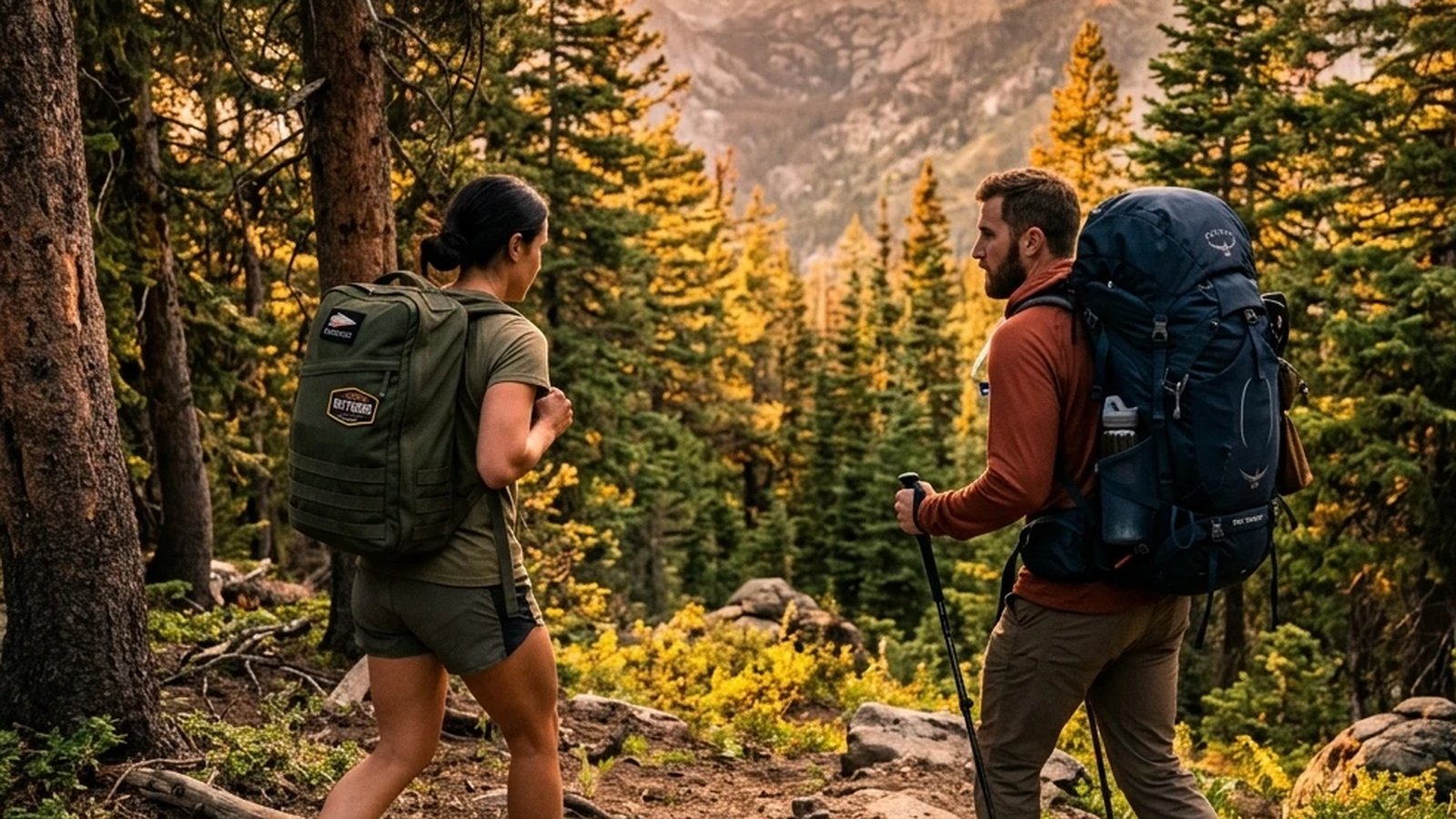
Hiking stamina — the ability to walk uphill on uneven terrain for hours while carrying a pack — combines several distinct fitness qualities: aerobic endurance, leg strength under load, core and trunk stability, and foot/ankle resilience. The 2004 Knapik et al. military-relevant load-carriage research found the metabolic cost of carrying a pack rises progressively as its weight increases, and where the load sits on the body matters as much as how heavy it is: each kilogram carried at the foot raises energy expenditure 7–10%, versus roughly 4% per kilogram at the thigh Knapik 2004. Practical findings: weekly long hikes are the foundation; strength training (especially single-leg work) reduces fatigue and injury; progressive pack-loading prepares the body for trail demands; downhill is harder than uphill for most untrained hikers (eccentric quad load on descents is what produces day-after soreness). This article covers the four-fold preparation, the 12-week ramp for a multi-day hike, and the gear and footwear basics that prevent the cascade of avoidable injuries.
Educational journalism, not medical advice. Every claim here is checked against its cited sources by editor Timothy Bunce — a health writer, not a physician. It isn’t specific to your situation: for health decisions, talk to your own clinician. How we work →
Some links in this article are affiliate links. If you buy through one, The Beachside Reader earns a commission at no extra cost to you. It never changes which products we pick, or what we say about them. Full affiliate disclosure →
What hiking demands
- Sustained low-to-moderate aerobic work: 4–8+ hours of moderate-intensity activity.
- Hill capacity: ascending grades from gentle to steep over hours.
- Eccentric leg load on descents: often the most-soreness-producing component.
- Pack carriage: 5–25+ kg depending on trip length.
- Foot/ankle stability: uneven trails, rocks, roots demand reactive proprioception.
- Core stability: pack-loaded carrying recruits trunk muscles continuously.
Training priorities
1. Aerobic base (3–4 sessions/week)
- Long walks and easier hikes — 60–90+ minutes.
- Heart rate zone 2 (~65–75% max).
- Build to ~150–200 minutes per week before sustained hiking trips.
2. Strength training (2 sessions/week)
- Squat, deadlift, lunge variations.
- Single-leg work: Bulgarian split squats, single-leg Romanian deadlifts, step-ups.
- Loaded carries: farmer carries simulate pack carrying.
- Calf raises (heavy and high-rep): protect Achilles and calf during descents.
3. Hill-specific training (1 session/week, ramping)
- Hill walks (1–3 hours) on actual terrain.
- Stair climbing for those without trail access.
- Treadmill incline work as substitute (12–15% grade).
- Both ascent and descent practice.
4. Pack progressive loading (last 6–8 weeks before trip)
- Start with 5–10 lb backpack on regular walks.
- Build to expected trip weight over 4–6 weeks.
- Test full kit on a long training hike.
Why descents hurt more
The eccentric (lengthening) quad work of descending hills produces more muscle damage than concentric (uphill) work at equivalent metabolic cost. The 2017 Vernillo et al. study showed downhill running produced 3–5x the post-exercise creatine kinase elevation vs uphill running at matched effort. Train descents specifically; don’t just train climbs.
Footwear and gear basics
- Boots vs trail runners: trail runners are lighter and faster; boots offer ankle support and stability for heavy packs / rough terrain. Most multi-day hikers prefer mid-cut boots or sturdy trail runners with stiffer midsoles.
- Break-in period: never start a multi-day trip with new footwear. Minimum 50 km of break-in.
- Sock layering: wicking liner + wool/synthetic outer reduces blister rate substantially.
- Pack fit: hip belt should bear ~70% of pack weight; shoulders ~30%. Poorly-fitted packs create back and shoulder pain quickly.
- Trekking poles: shift some braking load from the knees to the arms on descents; useful for technical or steep trails.
12-week multi-day hike prep
Weeks 1–4: Aerobic base
- 3 walks/hikes per week (1 long, 2 moderate). No pack.
- 2 strength sessions/week.
Weeks 5–8: Specificity
- 3–4 walks/hikes per week. Long walk now 2–4 hours.
- Add 5–10 lb pack to long walks.
- One hill-emphasis session per week.
- 2 strength sessions/week.
Weeks 9–11: Loaded volume
- 4 walks/hikes per week.
- Pack load progresses to ~80% of trip weight.
- Long hike: 4–6 hours with pack on real terrain.
- 1–2 strength sessions/week.
Week 12: Taper
- Reduced volume; full kit test 7–10 days before trip.
- Last 3 days: rest, hydration, sleep.
Common myths
- “If you can run, you can hike.” Partly. Aerobic capacity transfers but the loaded leg endurance and eccentric capacity for descents are different.
- “Boots prevent ankle sprains.” Mixed evidence. Mid-cut boots provide some support; hi-cut boots have small additional benefit. Strong ankles and good proprioception matter more than boot height.
- “Pack weight doesn’t matter much.” Wrong. Each kilogram of pack adds ~3–5% to metabolic cost. 5 kg saved on gear is meaningful over a multi-day trip.
- “You can train for hiking just by hiking.” Mostly works for endurance; strength work (especially single-leg) reduces injury and fatigue noticeably.
Practical takeaways
- Hiking stamina = aerobic + leg strength + core + foot/ankle resilience.
- Train uphill AND downhill; descents produce more soreness.
- Progressive pack-loading in the last 6–8 weeks before a multi-day trip.
- Strength priorities: single-leg work, calf raises, loaded carries.
- Footwear must be broken in ≥50 km before any serious trip.
- Trekking poles reduce knee strain on descents by shifting load to the arms.
Frequently asked questions
Why am I so much more sore the day after going downhill than uphill?
Downhill movement loads the quadriceps eccentrically (the muscle lengthens under load). Eccentric work produces more muscle damage and DOMS than concentric work at equivalent effort. The 2017 Vernillo review showed downhill running produces 3 to 5 times the post-exercise creatine kinase elevation as uphill running at matched intensity. Train descents specifically — don't just train climbs.
Should I use trekking poles?
Especially on descents. Trekking poles are widely recommended in hiking and orthopedic guidance to shift some braking load from the knees to the arms on steep descents, which many hikers experience as noticeably less knee and quad fatigue. Useful for steep terrain, heavy packs, or knee-arthritic hikers. Less necessary for short flat trails or experienced hikers on easy grades.
How heavy a pack can I carry?
Healthy untrained adults can manage 10 to 15 percent of body weight without injury risk increasing significantly. Trained hikers handle 20 to 25 percent for multi-day trips. Above 30 percent, injury rates rise substantially. Lighten the pack before chasing harder training — gear weight reduction is often easier than carrying more.
Boots or trail runners?
Personal preference plus terrain. Trail runners (lighter, more breathable, faster) work for most non-technical trails and lighter packs. Mid-cut boots (more support, more protection) suit heavy packs, rough terrain, or hikers with weak ankles. Hi-cut boots have small additional benefit over mid-cut. Strong ankles and good proprioception matter more than boot height.
How do I prepare for a multi-day hike if I've never done one?
12 weeks of progressive training. First 4 weeks: build aerobic base with regular walking and hiking. Weeks 5 to 8: add strength training (single-leg, calf raises) and start light pack work. Weeks 9 to 11: progressive loaded volume, including a long hike with full kit on real terrain. Week 12: taper. Don't forget downhill practice and break-in your footwear at least 50 km before the trip.
References
Knapik 2004Knapik JJ, Reynolds KL, Harman E. Soldier load carriage: historical, physiological, biomechanical, and medical aspects. Mil Med. 2004;169(1):45-56. View source →Vernillo 2017Vernillo G, Giandolini M, Edwards WB, et al. Biomechanics and physiology of uphill and downhill running. Sports Med. 2017;47(4):615-629. View source →Nottle 2005Nottle C, Nosaka K. The magnitude of muscle damage induced by downhill backward walking. J Sci Med Sport. 2005;8(3):264-273. View source →Hreljac 2004Hreljac A. Impact and overuse injuries in runners. Med Sci Sports Exerc. 2004;36(5):845-849. View source →Luttmann 2003Luttmann A, Jäger M, Griefahn B. Preventing musculoskeletal disorders in the workplace. WHO Geneva. 2003. View source →Attwells 2006Attwells RL, Birrell SA, Hooper RH, Mansfield NJ. Influence of carrying heavy loads on soldiers' posture, movements and gait. Ergonomics. 2006;49(14):1527-1537. View source →Malliaras 2015Malliaras P, Cook J, Purdam C, Rio E. Patellar tendinopathy: clinical diagnosis, load management, and advice for challenging case presentations. J Orthop Sports Phys Ther. 2015;45(11):887-898. View source →Gabbett 2016Gabbett TJ. The training-injury prevention paradox: should athletes be training smarter and harder? Br J Sports Med. 2016;50(5):273-280. View source →Burke 2011Burke LM, Hawley JA, Wong SH, Jeukendrup AE. Carbohydrates for training and competition. J Sports Sci. 2011;29 Suppl 1:S17-27. View source →Watson 2017Watson AM. Sleep and athletic performance. Curr Sports Med Rep. 2017;16(6):413-418. View source →