The 60-second version
Morning heart-rate variability (HRV) is now measurable on consumer wearables, and the published evidence supports its use as a single-number proxy for autonomic nervous system recovery. The practical use case is simple: HRV that drops 10-15% below your rolling average suggests under-recovery — back off the planned hard session, do easy work instead. HRV that stays high or rises suggests well-recovered — train hard. The catch: your personal baseline matters more than absolute numbers. A baseline of 35 ms in one person can mean the same readiness state as 80 ms in another. Training your interpretation takes 6-8 weeks of consistent morning measurements before the readings become actionable. Long-term HRV trend (weeks, not days) is the better signal than day-to-day fluctuation.
Educational journalism, not medical advice. Every claim here is checked against its cited sources by editor Timothy Bunce — a health writer, not a physician. It isn’t specific to your situation: for health decisions, talk to your own clinician. How we work →
Some links in this article are affiliate links. If you buy through one, The Beachside Reader earns a commission at no extra cost to you. It never changes which products we pick, or what we say about them. Full affiliate disclosure →
What HRV actually measures
HRV is the variation in the time interval between heartbeats. Counter-intuitively, more variability is better — a healthy autonomic nervous system constantly adjusts heart rate in response to breathing, blood pressure, and other inputs. A heart that beats with metronomic regularity is usually a stressed or fatigued one. The standard morning HRV measurement — typically the rMSSD metric, taken supine for 2-3 minutes — reflects parasympathetic (recovery-side) nervous system activity Shaffer 2017.
The published athletic-monitoring research, mostly from endurance-sport teams, finds rMSSD tracks training adaptation — but not in a simple more-is-better way. In elite athletes already near their physiological ceiling, HRV can rise or fall with negative adaptation (a “saturation” effect not seen in less-trained populations), so single-day readings need careful long-term averaging to interpret correctly Plews 2013.
How to actually use it
The practical protocol for recreational and competitive athletes:
- Measure first thing in the morning, before getting out of bed. Sleep, posture, food, caffeine, and stress all confound the reading. Same time, same posture, same equipment, every day.
- Build a 4-8 week baseline before interpreting daily readings. Your personal range is what matters; population norms are nearly useless because individual variation is so large.
- Use the 7-day rolling average as the comparison. Daily readings bounce around for many reasons (sleep, hydration, alcohol, late meals). The 7-day rolling average smooths the noise.
- Decision rules:
- Today’s HRV within ±5% of 7-day average → train as planned
- Today >5% below average → consider a lighter session
- Today >10-15% below average → switch to easy work or rest
- Today significantly above average → train hard if planned
- Long-term trends matter more than single days. A 7-day average that falls below the 28-day average for two weeks running is a stronger signal of overtraining than any single day.
In elite endurance athletes, both a rise and a fall in HRV can signal negative adaptation — rising HRV tended to track gains in fitness, while a further rise or an outright drop could also mark non-functional overreaching. The authors argue this “saturation” pattern means a single day’s HRV reading has to be interpreted against an athlete’s own longer-term trend, not read as a fixed good/bad signal on its own.
— Plews et al., Sports Med, 2013 view source
What can throw off the reading
- Alcohol the night before. Even moderate alcohol (2 drinks) lowers next-morning HRV substantially, regardless of training load.
- Late or large meals. Eating within 3 hours of bed elevates sympathetic activity overnight.
- Travel and time-zone shifts. Expect a multi-day disruption.
- Illness onset. HRV often drops 24-48 hours before symptoms appear — a useful early-warning signal.
- Hot weather or dehydration. Both depress HRV. Hot training environments need their own baseline.
- Caffeine before measurement. Don’t have coffee before the morning reading.
What devices work
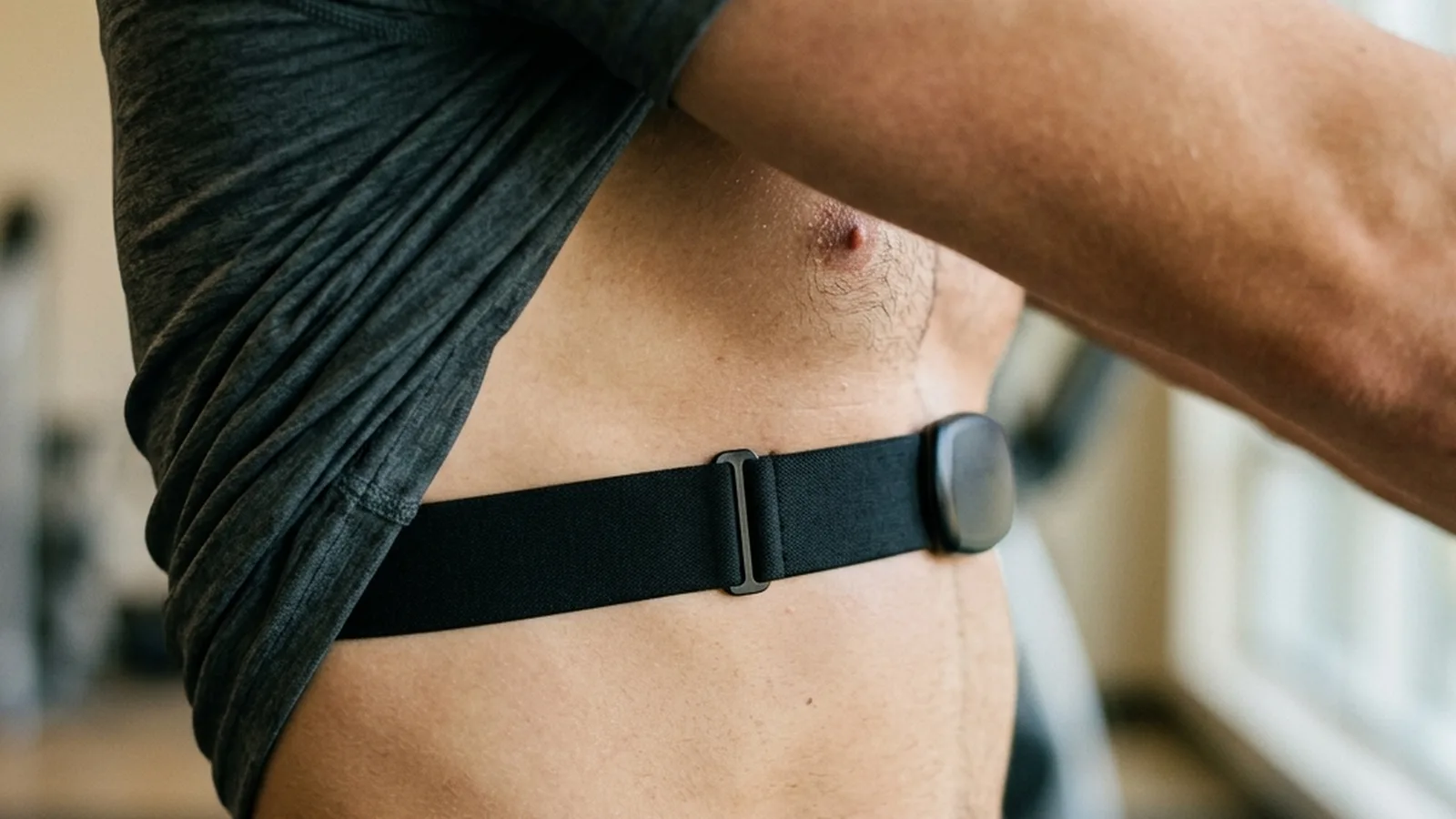
- Dedicated chest straps (Polar, Garmin H10): The gold standard for HRV measurement. Most accurate; the published research uses these. Highest cost-benefit for serious users.
- Wrist-based wearables (Apple Watch, Garmin watches, Whoop): Less accurate than chest straps but adequate for tracking personal trends. Watch for differences between brands — HRV between two devices isn’t comparable.
- Ring devices (Oura): Convenient overnight measurement. Tends to capture longer-term trends well.
- Smartphone apps with finger-on-camera (HRV4Training, EliteHRV): Reasonable accuracy if the protocol is followed consistently. Cheapest entry point.
Practical takeaways
- HRV is a reliable proxy for autonomic recovery state when measured consistently at the same time, posture, and conditions.
- Personal baseline matters more than absolute values. Build a 4-8 week baseline before acting on daily readings.
- The actionable signal is today’s reading vs. 7-day rolling average. Below 5% → consider lighter. Below 10-15% → switch to easy or rest.
- Long-term trends (7-day avg vs 28-day avg) matter more than single days — that’s where overtraining shows up.
- HRV often drops 24-48 hours before illness symptoms — a useful early-warning signal.
Frequently asked questions
What HRV number is good?
Your number relative to your own baseline. Absolute HRV varies enormously between individuals — a 35 ms baseline in one person is the same fitness/recovery state as 80 ms in another. Build a 4-8 week personal baseline before any number is meaningful.
How accurate are wrist wearables for HRV?
Less accurate than chest straps but consistent enough to track personal trends. The absolute number from a wrist device may differ 20-30% from a chest strap reading, but the day-to-day deviations track similarly. Don’t compare numbers between devices.
Should I skip a planned hard workout if my HRV is down?
If today’s reading is >10-15% below your 7-day rolling average, yes. Switch to easy work. The published evidence shows hard training on a suppressed autonomic state produces less adaptation per unit of effort and more accumulated fatigue.
Can HRV predict illness?
Often. HRV typically drops 24-48 hours before subjective symptoms appear. A multi-day drop without an obvious explanation (no hard training, no alcohol, no travel) is a reasonable cue to back off training and increase rest.
Is morning the only time to measure?
Morning supine is the standard for comparable readings. Mid-day or post-exercise readings can be useful but they reflect different things and can’t be combined with the morning baseline.
References
Shaffer 2017Shaffer F, Ginsberg JP. An overview of heart rate variability metrics and norms. Front Public Health. 2017;5:258. View source →Plews 2013Plews DJ, Laursen PB, Stanley J, Kilding AE, Buchheit M. Training adaptation and heart rate variability in elite endurance athletes. Sports Med. 2013;43(9):773-781. View source →