The 60-second version
Iron deficiency is often under-recognised in female athletes. The standard clinical haemoglobin test misses the early stages because it only flags anaemia — the late-stage manifestation. Ferritin — the iron storage protein — falls first, and falls measurably while haemoglobin still looks normal. A widely cited sports-medicine review proposes ferritin below 30 µg/L as functional iron deficiency in trained women, rather than the lab-standard 15 µg/L Clenin 2015. Below that level, even with normal haemoglobin, fatigue and reduced performance become more likely. If testing confirms low iron, treatment, often iron supplementation plus dietary changes, should be guided by your doctor. Don’t self-diagnose; get a ferritin test through your doctor and treat under their guidance.
Educational journalism, not medical advice. Every claim here is checked against its cited sources by editor Timothy Bunce — a health writer, not a physician. It isn’t specific to your situation: for health decisions, talk to your own clinician. How we work →
Some links in this article are affiliate links. If you buy through one, The Beachside Reader earns a commission at no extra cost to you. It never changes which products we pick, or what we say about them. Full affiliate disclosure →
Why iron status is a specific concern for female athletes
Several factors stack:
- Menstrual blood losses. The single biggest contributor to iron depletion. Even normal menstrual losses (30-40 mL/cycle) translate to substantial iron loss over a year.
- Endurance training increases iron losses through gastrointestinal microbleeds, foot-strike haemolysis in runners, and sweat losses — recognized mechanisms of sport-related iron depletion Clenin 2015.
- Plant-based and low-meat diets deliver non-heme iron, which is generally absorbed less efficiently than heme iron from animal sources.
- The hepcidin pathway — the hormone that controls iron absorption — spikes after hard exercise for ~6 hours, suppressing iron absorption from any meal taken during that window Domínguez 2018.
Why haemoglobin alone misses early deficiency
Iron status progresses through stages:
- Stage 1: iron storage depletion. Ferritin drops. Haemoglobin remains normal. Performance and fatigue effects begin to appear.
- Stage 2: iron-deficient erythropoiesis. Ferritin is low; transferrin saturation falls; reticulocyte haemoglobin drops. Haemoglobin still often within reference range but at the low end.
- Stage 3: iron-deficiency anaemia. Haemoglobin now low. By this point, performance has been compromised for months or longer.
The clinical reference range for ferritin (15-200 µg/L) was derived from general-population samples, not athletes. Clenin 2015 proposes a cut-off of 30 µg/L for functional iron deficiency in trained women (below 15 µg/L, iron stores are considered empty), even with normal haemoglobin. The same review notes elite athletes preparing for altitude training should aim higher, targeting a ferritin value of at least 50 µg/L before departure, since altitude increases iron demands.
Getting tested
- Tests commonly used: ferritin, serum iron, transferrin saturation, complete blood count. Your doctor will decide which are appropriate.
- Timing: mention your training to your doctor, because inflammation after a hard session can transiently raise ferritin and mask true depletion.
- Frequency: how often to retest is a decision for your doctor, particularly if you are taking iron.
- Interpretation belongs with your doctor. For reference, the Clenin review treats ferritin below 30 µg/L in a trained woman as functional deficiency and below 15 µg/L as empty stores. A high ferritin can reflect inflammation or, rarely, iron overload, and needs medical follow-up.
If ferritin is low
If testing confirms low iron, your doctor will advise on whether to supplement, with which product and how much. The research on how supplemental iron is absorbed has shifted meaningfully in the last 10 years:
- Every-other-day dosing may improve absorption. The Moretti 2015 trial found that lower daily doses (40-80 mg) maximize fractional iron absorption in iron-depleted women and that twice-daily dosing should be avoided, since a single dose of 60 mg or more raises hepcidin for about 24 hours and suppresses absorption from a second dose taken too soon Moretti 2015. That hepcidin-timing mechanism is the rationale for spacing supplemental doses every other day, rather than a head-to-head alternate-day-versus-daily comparison from this particular trial.
- Vitamin C. Vitamin C helps keep iron in the better-absorbed ferrous form and enhances non-heme iron absorption from food; whether it adds much to a supplement is less clear.
- Coffee and tea. Both contain compounds that inhibit non-heme iron absorption substantially. Iron is often better absorbed on an empty stomach but can upset it; your doctor or pharmacist can advise.
- Training timing. Because hepcidin rises in the hours after hard exercise, timing relative to training is worth discussing with your doctor or a sports-medicine clinician.
- Forms differ in tolerability. Ferrous sulphate is common and inexpensive but often causes GI side effects; a pharmacist can advise on alternatives.
- Ferritin rises slowly. Your doctor will usually retest to check the response; don’t supplement indefinitely without monitoring, and keep iron supplements out of children’s reach, since accidental iron overdose is dangerous for young children.
Dietary changes that help
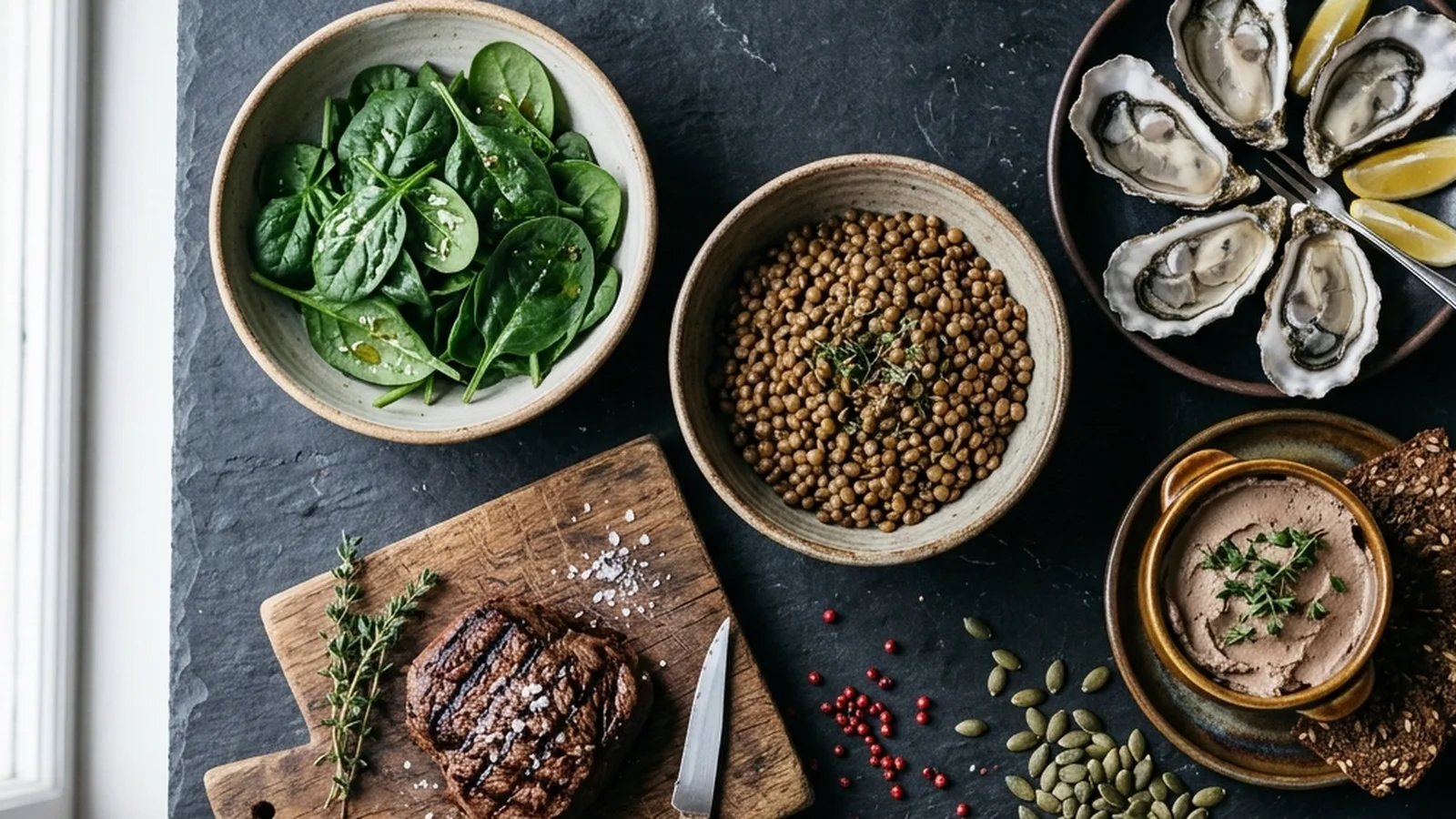
- Include heme-iron sources weekly if possible: red meat, dark poultry, oysters, sardines.
- Pair non-heme sources with vitamin C. Beans + bell peppers + tomatoes. Spinach + lemon. Lentil soup with a squeeze of lemon.
- Cook in cast iron. Adds modest but real amounts of iron to food.
- Separate iron-rich meals from coffee, tea, calcium, or zinc by 2+ hours when possible.
Practical takeaways
- The clinical haemoglobin reference range misses early iron deficiency in athletes. Ask for ferritin too.
- The sports-medicine threshold for functional iron deficiency in trained women is ferritin <30 µg/L, not the lab-standard 15 µg/L.
- If your doctor recommends iron: ask about dosing schedule and timing (alternate-day dosing is one option that has been studied), and keep it away from coffee and tea.
- Retest as your doctor advises. Don’t supplement indefinitely without monitoring — iron overload is harmful in the other direction.
- Don’t self-diagnose. Get a ferritin test through your doctor and treat under their guidance.
Frequently asked questions
Why does my doctor say my iron is fine when I feel constantly tired?
Possibly because they ran haemoglobin, which only flags overt anaemia — the late stage. Functional iron deficiency (low ferritin, normal haemoglobin) can cause fatigue and performance issues in athletes. Ask whether a ferritin test is appropriate and explain that you’re training for endurance; fatigue has many possible causes, so it is worth investigating either way.
Should I just start taking iron supplements?
No. Get tested first. Iron overload is harmful in the other direction, and a small percentage of people have undiagnosed hemochromatosis where supplementation accelerates organ damage. Test, treat under medical guidance, retest.
Why every-other-day instead of daily?
Each iron dose raises hepcidin for about 24 hours, and hepcidin is the hormone that blocks iron absorption. Taking a dose the next day, or twice in one day, means that dose is absorbed less because hepcidin from the previous dose is still elevated. Spacing doses every other day lets hepcidin fall back down in between, which is the mechanism-based reason for alternate-day schedules. Whether one suits you is a decision for your doctor.
Does coffee really block iron absorption?
Yes, substantially — polyphenols in coffee and tea reduce non-heme iron absorption. Separate iron supplements and iron-rich meals from coffee/tea by at least 2 hours.
How long does it take iron supplements to work?
Ferritin typically takes weeks to months to rise meaningfully. Your doctor will usually retest to confirm the response and decide how long treatment should continue.
Are vegetarian athletes at higher risk?
Often, yes. Non-heme iron is generally absorbed less efficiently than heme iron, and vegetarian diets often pair iron sources with absorption inhibitors (coffee with breakfast, tea with afternoon snacks). Vegetarian endurance athletes may want to ask their doctor about periodic ferritin testing.
References
Clénin 2015Clénin G, Cordes M, Huber A, et al. Iron deficiency in sports — definition, influence on performance and therapy. Swiss Med Wkly. 2015;145:w14196. View source →Domínguez 2018Domínguez R, Sánchez-Oliver AJ, Mata-Ordoñez F, Feria-Madueno A, Grimaldi-Puyana M, López-Samanes Á, Pérez-López A. Effects of an acute exercise bout on serum hepcidin levels. Nutrients. 2018;10(2):209. View source →Moretti 2015Moretti D, Goede JS, Zeder C, et al. Oral iron supplements increase hepcidin and decrease iron absorption from daily or twice-daily doses in iron-depleted young women. Blood. 2015;126(17):1981-1989. View source →