The 60-second version
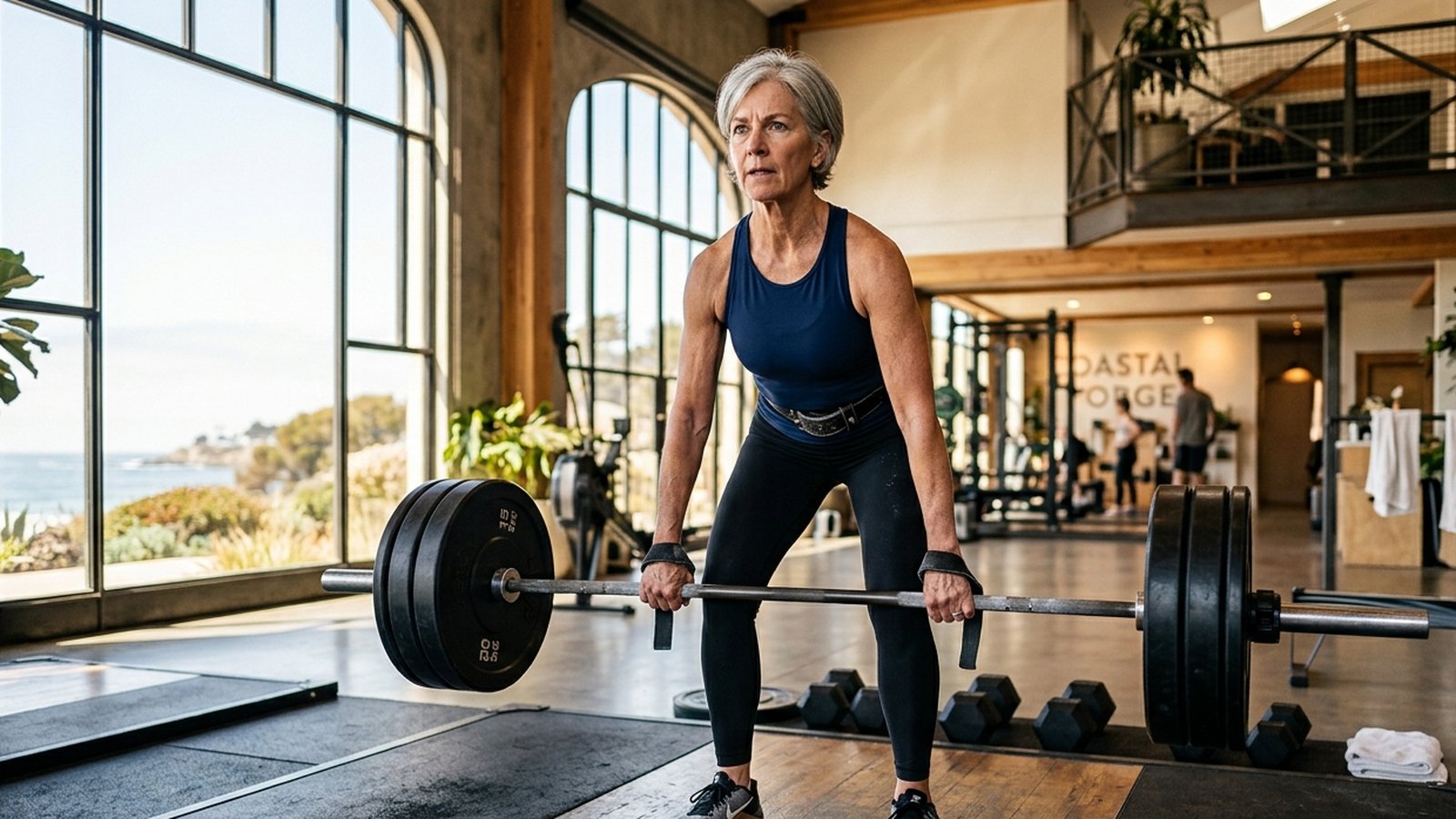
The lifting belt is one of the most-debated pieces of gym equipment. The peer-reviewed biomechanics evidence is clearer than the bro-science suggests: a properly used belt increases intra-abdominal pressure (IAP) by ~25–40%, modestly reduces spinal compression, and allows ~5–15% more reps at near-1RM loads. It does not “protect” the lower back the way the marketing implies, and it does not compensate for poor bracing technique. The cleanest practical conclusion: a belt is a performance tool for working at >80% 1RM in the squat and deadlift, not a safety device for everyday lifting. Beginners should learn to brace without a belt before adopting one. Experienced lifters benefit from a belt on max-effort sets but should not wear one for warm-ups, accessories, or moderate-load work where the bracing skill is the actual training stimulus. This article walks through the mechanism, the evidence, who should and shouldn’t wear one, and the surprisingly large differences in belt quality.
Educational journalism, not medical advice. Every claim here is checked against its cited sources by editor Timothy Bunce — a health writer, not a physician. It isn’t specific to your situation: for health decisions, talk to your own clinician. How we work →
Some links in this article are affiliate links. If you buy through one, The Beachside Reader earns a commission at no extra cost to you. It never changes which products we pick, or what we say about them. Full affiliate disclosure →
What a belt actually does
The mechanism is intra-abdominal pressure (IAP). When you brace and breathe against a stiff belt, the abdominal contents pressurize against the belt’s rigid surface, creating a hydraulic column that stiffens the spine and reduces shear and compression on the lumbar discs. The 1989 Harman et al. study quantified the effect: a stiff belt increased IAP by ~25–40% during heavy deadlifts at 90% of 1RM compared to no belt Harman 1989. The 1990 McGill et al. EMG analysis found the opposite: belt use produced no significant change in erector spinae or abdominal muscle (rectus abdominis, obliques) activation, even though IAP rose substantially — the pressure gain comes from bracing against the belt’s rigid surface, not from any measurable increase in the muscles’ own electrical activity McGill 1990.
This is the key counter-intuitive finding: a belt isn’t a passive support. It’s an active force multiplier that lets you brace harder. The lifter does the work; the belt makes the work more effective.
“The muscle activity and IAP results of this study during short duration lifting tasks make it difficult to justify the prescription of abdominal belts to workers.”
— McGill et al., Ergonomics, 1990 view source
What the performance evidence shows
| Outcome | Effect of belt | Notes |
|---|---|---|
| Maximum squat 1RM | +5–15% | Most-replicated finding; consistent across studies |
| Maximum deadlift 1RM | +3–10% | Smaller effect than squat; depends on lift style and starting position |
| Reps at sub-maximal load (e.g., 80% 1RM) | +10–20% reps | Belt helps endurance through fewer reps lost to bracing fatigue |
| Lifting velocity at submaximal loads | +5–10% peak velocity | Allows more aggressive concentric drive |
| Bench press 1RM | Negligible | Bench is not bracing-limited the way squat/deadlift are |
| Overhead press | Small | Some lifters brace harder with belt; effect smaller than squat/dead |
| Olympic lifts (snatch, clean & jerk) | Variable | Belt allowed by IWF rules; some lifters use, many don’t |
| Spinal compression at matched load | Modest reduction | ~10% reduction found in a biomechanical trunk-model study of weightlifters, but only when inhaling before lifting; clinically modest |
| Acute injury risk during max efforts | Small reduction | Mechanism: more uniform spinal loading; does not eliminate risk |
| Long-term injury rate | No clear evidence | Population studies haven’t shown belt use prevents long-term back issues |
The 2006 Renfro et al. narrative review of industrial and strength-training belt research concluded that although individual study findings are mixed, the preponderance of evidence supports some use of lifting belts in resistance training, with no clear evidence either for or against long-term safety benefit Renfro 2006.
When the belt earns its place
| Situation | Belt recommendation |
|---|---|
| Squat or deadlift at ≥80% 1RM | Yes — clear benefit |
| Top working sets (top 1–3 sets) of compound lifts | Yes |
| Powerlifting meet preparation | Yes — train how you compete |
| Strongman / loaded carry events | Often yes for very heavy efforts |
| Returning to training after a layoff | Maybe — reduce load before adding belt |
| Rehabbing from a low-back injury | Discuss with physiotherapist; not a self-prescribe situation |
When the belt is the wrong tool
| Situation | Why not |
|---|---|
| Warm-up sets (under ~70% 1RM) | Bracing skill is the training stimulus; belt removes it |
| Accessory work (rows, pulls, RDLs at moderate load) | Same; under-bracing is what trains the core |
| Beginner’s first 6–12 months | Learn to brace without it first; otherwise the skill never develops |
| Bench press | No bracing benefit; belt-press is largely a comfort/“feel” thing |
| Conditioning circuits | Belt restricts breathing; not appropriate |
| Bodyweight training | Pointless |
| Yoga, Pilates, mobility work | Restricts the breathing the activity is built around |
| Light farmer’s carries | Skip; trains the trunk |
| Pregnancy or recent post-partum | Specialist advice required; not standard belt use |
| Bench press / overhead in physical therapy | Therapist-directed only |
Belt use requires brace technique first
The most common mistake is treating the belt as a passive lumbar support. The actual technique:
- Wear the belt at a working tightness: snug but not crushing. You should be able to fit a flat hand under it.
- Take a deep diaphragmatic breath (belly out, not chest up).
- Brace 360°: contract abdominal wall, obliques, and lower back as if preparing for a punch.
- Push your abdominals out into the belt: the belt’s rigid surface gives you something to brace against.
- Hold the breath through the difficult portion of the lift (Valsalva manoeuvre).
- Exhale at the top or after the rep; reset for the next.
If you can’t do steps 2–5 without a belt, the belt is masking a bracing-skill gap that you should fix first. The Valsalva manoeuvre has cardiovascular implications — transient spike in blood pressure — that warrant medical clearance for adults with hypertension or cardiovascular risk factors.
Belt types and what they actually deliver
| Type | Material | Use case |
|---|---|---|
| 10 mm leather belt (4-inch wide, prong buckle) | Stiff bull-hide leather; single-prong or double-prong buckle | Powerlifting standard; durable; takes weeks to break in |
| 13 mm leather belt | Even stiffer leather | Maximal-effort powerlifters; harder to break in; not recommended for most |
| Lever belt | 10 mm leather + lever closure | Faster on/off than prong; same support; preferred by many competitive lifters |
| Velcro / nylon belt | Reinforced nylon, hook-and-loop closure | Beginner-friendly; less stiff than leather; OK for non-competitive use; cheaper |
| Strongman belt | Wider in front, narrower in back; some include suspenders | For atlas stones, log press, yoke walks; not standard for powerlifting |
| Olympic weightlifting belt | Tapered, 4 inches in front and 2–3 inches in back | For Olympic lifters; allows hip flexion at the receive position |
| Bodybuilding tapered belt | Leather or vinyl; tapered shape | Aesthetic; less stiff than 10 mm; mainstream gym belt |
| 10 mm belt with single-prong | Standard powerlifting; most-validated | Default recommendation if buying one belt |
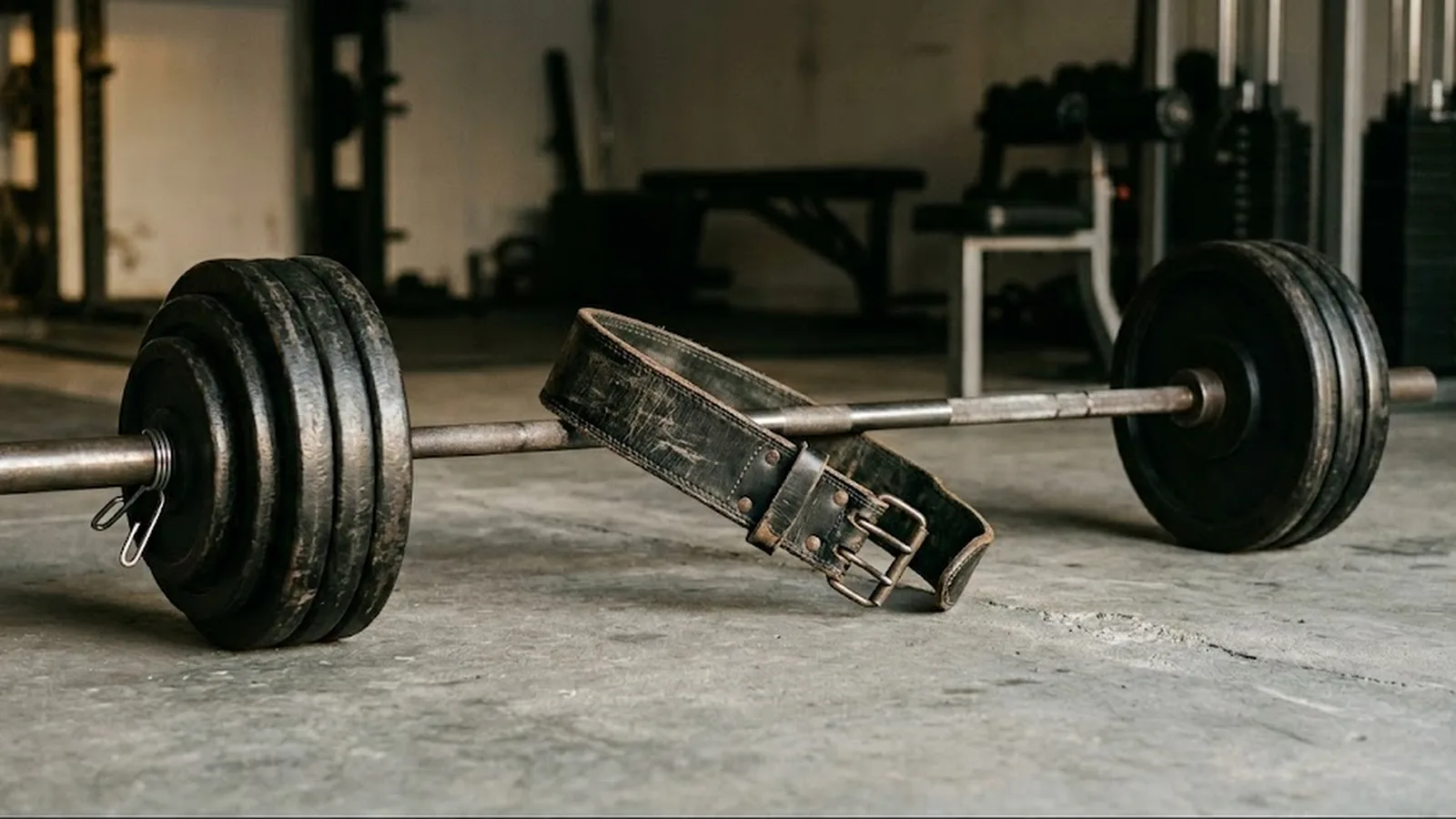
For a recreational lifter who decides they need a belt, a 10 mm leather, 4-inch-wide, single-prong belt from a reputable brand (Inzer Forever, SBD, Pioneer Cut, A7) at $80–130 is the correct buy. It will last decades.
Common myths
- “A belt protects your lower back.” Half-true. It allows you to brace harder, which reduces compression and shear. It does not passively prevent injury if your technique is bad.
- “Wearing a belt all session weakens your core.” Probably true. The bracing skill atrophies with chronic over-reliance on a belt during light work.
- “Belts are dangerous because of blood pressure.” Nuanced. The Valsalva manoeuvre during heavy lifts produces transient blood-pressure spikes; this is true with or without a belt. Adults with cardiovascular concerns should have medical clearance.
- “You should always wear a belt for deadlifts.” Not for warm-ups; not for moderate-load training. For top-set heavy deadlifts, yes.
- “Velcro belts are useless.” They’re less stiff than leather but adequate for non-competitive lifters at moderate loads. Cheap, comfortable, easy on/off.
- “Cheap belts work fine.” Up to a point. Sub-$30 belts often have non-uniform stiffness and short lifespan. The $80–130 leather range is the practical floor.
Decision framework
| Your profile | Belt recommendation |
|---|---|
| Beginner (under 6 months) | No belt. Learn to brace without it. |
| Beginner (6–12 months) | Optional; belt for top sets only if loads are getting heavy |
| Intermediate (1–3 years) | Belt for top working sets of squat/deadlift; remove for warm-ups and accessories |
| Advanced / competitive lifter | Belt for top sets and meet day; consider lever for fast on/off |
| Bodybuilder (focus on hypertrophy) | Optional; rarely necessary at moderate loads |
| Olympic weightlifter | Belt optional; many top lifters use, many don’t; specialty belt if used |
| CrossFit / functional fitness | Belt for heavy compound lifts only; remove for conditioning |
| Older adult (60+) doing strength training | Discuss with doctor; belt at heavy loads can help; ensure no contraindications |
| Adults with hypertension | Medical clearance for Valsalva manoeuvre regardless of belt; lighter loads recommended |
| Pregnancy | No standard recommendation; consult OB and trained coach |
Practical takeaways
- A belt is a performance tool, not a safety device. It increases intra-abdominal pressure ~25–40% by giving the abdominal wall something to brace against.
- Performance benefit: 5–15% on max squat, 3–10% on max deadlift, 10–20% more reps at sub-max loads.
- Beginners: learn to brace without a belt for the first 6–12 months.
- When to use: top working sets of squat and deadlift at ≥80% 1RM, max-effort training, meet preparation.
- When to skip: warm-ups, accessories, conditioning, bench press, beginner training.
- For one belt: 10 mm leather, 4-inch wide, single-prong from a reputable brand (~$80–130).
- The Valsalva manoeuvre that activates the belt’s mechanism produces blood-pressure spikes; adults with cardiovascular risk factors should have medical clearance.
- The belt amplifies bracing; it doesn’t replace it. If you can’t brace without one, fix that first.
Frequently asked questions
Will a belt actually let me lift more?
Yes, modestly. The peer-reviewed evidence shows ~5–15% increase in max squat and 3–10% in max deadlift with a properly worn belt. The mechanism is that the belt gives your abdominal wall something to brace against, increasing intra-abdominal pressure by ~25–40%. The belt amplifies your bracing; it doesn't replace it.
Should beginners wear lifting belts?
Generally not for the first 6–12 months. The bracing skill is a meaningful part of what compound lifts develop, and a belt mask the skill gap rather than fixing it. Once you can brace effectively without a belt and your loads are approaching 80% 1RM in heavy compound lifts, then a belt becomes a useful tool for top sets.
Does a belt prevent back injuries?
Not directly. The belt doesn't passively support the lower back; it allows your trunk muscles to brace harder. With proper bracing technique, this reduces spinal compression and shear. Without proper technique, a belt doesn't compensate. Long-term injury-rate data showing belt use prevents back problems is weak. Train technique first.
What kind of belt should I buy?
For most lifters: a 10 mm leather, 4-inch wide, single-prong belt from a reputable brand (Inzer Forever, SBD, Pioneer Cut, A7) at $80–130. It will last decades. Velcro/nylon belts are cheaper and adequate for non-competitive use. Skip the 13 mm and lever-buckle belts unless you're competing — they're harder to break in and offer no advantage for recreational lifting.
Can wearing a belt all the time weaken my core?
Probably yes, if you wear it for everything including warm-ups, light accessories, and moderate-load work. The bracing skill atrophies with disuse. Best practice: belt off for warm-ups and accessory work, on for top working sets of compound lifts at 80%+ of 1RM. The 'belt for everything' habit is the most-cited downside in coaching literature.
References
Harman 1989Harman EA, Rosenstein RM, Frykman PN, Nigro GA. Effects of a belt on intra-abdominal pressure during weight lifting. Med Sci Sports Exerc. 1989;21(2):186-190. View source →McGill 1990McGill SM, Norman RW, Sharratt MT. The effect of an abdominal belt on trunk muscle activity and intra-abdominal pressure during squat lifts. Ergonomics. 1990;33(2):147-160. View source →Renfro 2006Renfro GJ, Ebben WP. A review of the use of lifting belts. Strength Cond J. 2006;28(1):68-74. View source →Lander 1990Lander JE, Simonton RL, Giacobbe JK. The effectiveness of weight-belts during the squat exercise. Med Sci Sports Exerc. 1990;22(1):117-126. View source →Lander 1992Lander JE, Hundley JR, Simonton RL. The effectiveness of weight-belts during multiple repetitions of the squat exercise. Med Sci Sports Exerc. 1992;24(5):603-609. View source →Escamilla 2001Escamilla RF. Knee biomechanics of the dynamic squat exercise. Med Sci Sports Exerc. 2001;33(1):127-141. View source →Hagins 2004Hagins M, Pietrek M, Sheikhzadeh A, Nordin M, Axen K. The effects of breath control on intra-abdominal pressure during lifting tasks. Spine (Phila Pa 1976). 2004;29(4):464-469. View source →Kingma 2006Kingma I, Faber GS, Suwarganda EK, et al. Effect of a stiff lifting belt on spine compression during lifting. Spine (Phila Pa 1976). 2006;31(22):E833-E839. View source →Ivancic 2002Ivancic PC, Cholewicki J, Radebold A. Effects of the abdominal belt on muscle-generated spinal stability and L4/L5 joint compression force. Ergonomics. 2002;45(7):501-513. View source →Hackett 2013Hackett DA, Chow CM. The Valsalva maneuver: its effect on intra-abdominal pressure and safety issues during resistance exercise. J Strength Cond Res. 2013;27(8):2338-2345. View source →Granhed 1987Granhed H, Jonson R, Hansson T. The loads on the lumbar spine during extreme weight lifting. Spine (Phila Pa 1976). 1987;12(2):146-149. View source →Calatayud 2017Calatayud J, Vinstrup J, Jakobsen MD, et al. Influence of different attentional focus on EMG amplitude and contraction duration during the bench press at different speeds. J Sports Sci. 2018;36(10):1162-1166. View source →