The 60-second version
For experienced open-water swimmers, the Wasaga shoreline beyond the lifeguarded zone offers training routes that recreational swimmers underuse. Specific shoreline sections from Beach Area 1 east toward Beach Area 6, plus the Allenwood Beach corridor, plus the Schoonertown river-mouth zone, provide swim distances of 500 m to 2+ km with predictable conditions, gradual depth, and meaningful training stimulus. Open-water swimming complements pool training for good physiological and practical reasons: thermoregulatory adaptation, sighting and navigation skill development, mental engagement of the changing-conditions environment. The protocol that works: graduated distance progression building from a single Beach Area shoreline parallel swim to longer routes; buddy-system always; tow-float buoy and bright cap mandatory; respect for the safety considerations that the Georgian Bay swim safety guide details. Critical: open-water swimming after lifeguard hours is at swimmer’s own risk; appropriate experience, equipment, and weather assessment are non-negotiable.
Educational journalism, not medical advice. Every claim here is checked against its cited sources by editor Timothy Bunce — a health writer, not a physician. It isn’t specific to your situation: for health decisions, talk to your own clinician. How we work →
Some links in this article are affiliate links. If you buy through one, The Beachside Reader earns a commission at no extra cost to you. It never changes which products we pick, or what we say about them. Full affiliate disclosure →
Why open-water training matters as a category
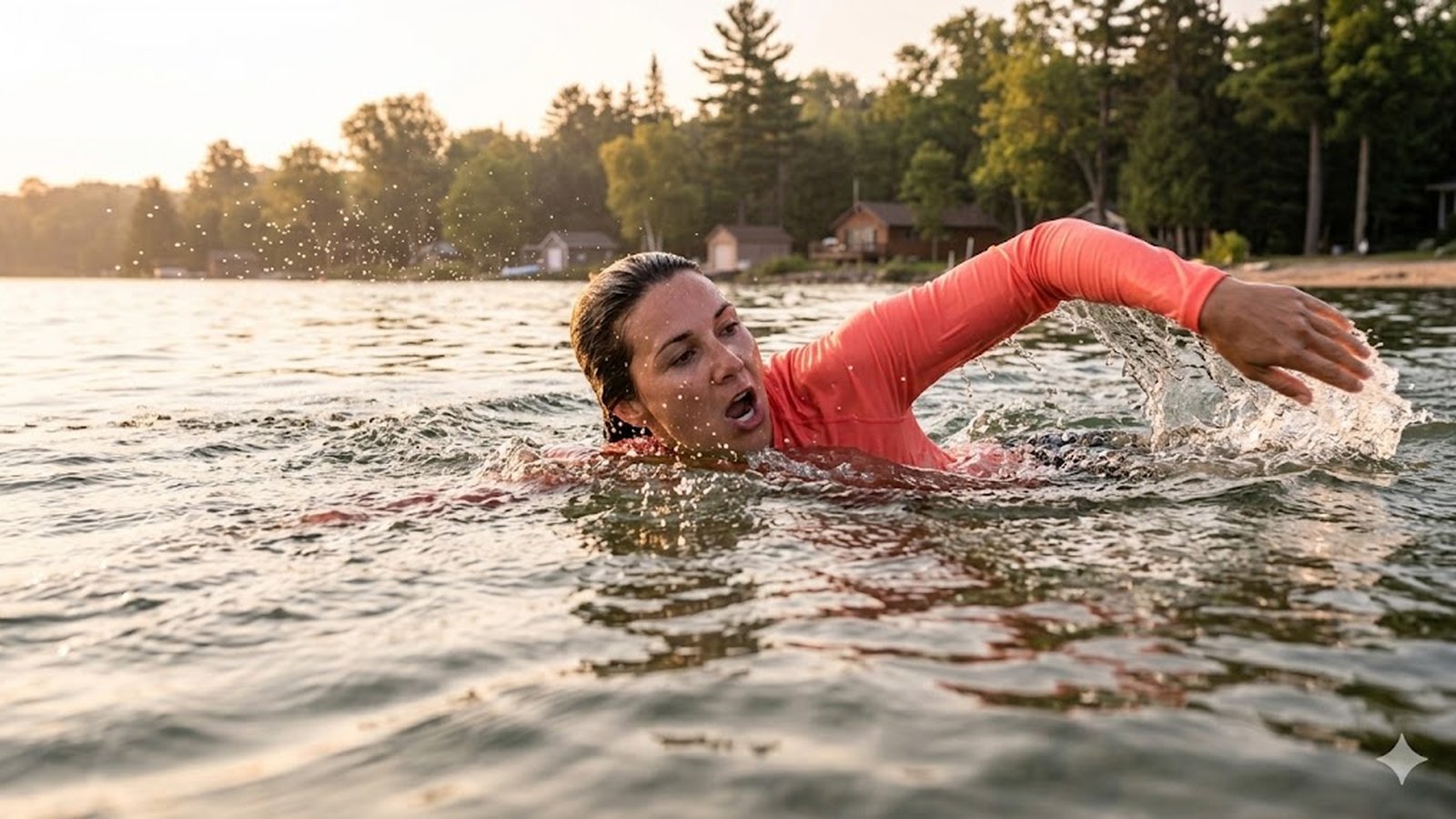
For competitive swimmers, triathletes, and increasingly recreational fitness swimmers, open-water training is distinctly different from pool training. The published research identifies several specific adaptations:
- Thermoregulation: open water is consistently cooler than indoor pools (typically 18–25°C in summer vs. 26–28°C indoor). Body adapts to thermoregulatory load over 4–8 weeks of regular open-water exposure.
- Sighting and navigation: open-water swimmers must occasionally lift the head to sight buoys or shoreline references. This breath/stroke pattern is a specific skill not trained in pool lap swimming.
- Bilateral breathing: open-water often demands breathing on both sides depending on wave direction and sun position. Bilateral breathing is a useful skill that pool swimmers can neglect.
- Cognitive engagement: open water changes constantly — wave height, current direction, water temperature, visibility. The mental engagement is a feature, not a bug; many swimmers find open water more sustaining than pool laps.
- Pace variation: open-water sessions naturally include pace variation as conditions shift. Pure pool training can be too metronome-like for race-pace open-water performance.
- Confidence in conditions: open-water familiarity reduces race-day anxiety for triathletes and event swimmers.
For Wasaga residents who want to develop as open-water swimmers, the long shoreline provides the training environment that few inland Ontario locations match.
Specific shoreline training zones
The Wasaga shoreline can be divided into training zones with distinct characteristics:
- Beach Area 1 to Beach Area 2 corridor (~1.5 km): the most-trafficked beach section; lifeguarded zone in summer hours. Beyond lifeguard hours, this is where most local swimmers do open-water training. Conditions are well-known; rescue support is closest.
- Beach Area 2 to Beach Area 4 corridor (~2.5 km): progressively quieter; longer continuous swim distance. Suitable for intermediate swimmers; depth gradient is gradual.
- Beach Area 4 to Beach Area 6 corridor (~2.5 km): the eastern beach; quietest of the main Beach Areas. Bay water character is somewhat different (more wave activity from prevailing winds; shore profile is shallower).
- The river-mouth zone (Schoonertown / Nottawasaga River): river-mouth swimming has different characteristics — current, brackish water mixing, tidal-like variation. Useful for technique training and short-distance work, but not for long-distance training due to current.
- Allenwood Beach (north of Wasaga): ~30-minute drive, smaller beach community, quieter conditions. Suitable for swimmers wanting to escape Wasaga crowds.
- Pretty River and Bay Connector (smaller swim destinations): less-developed beach access in the broader region; for variety and exploration.
Specific route options
Short out-and-back: 500–1000 m
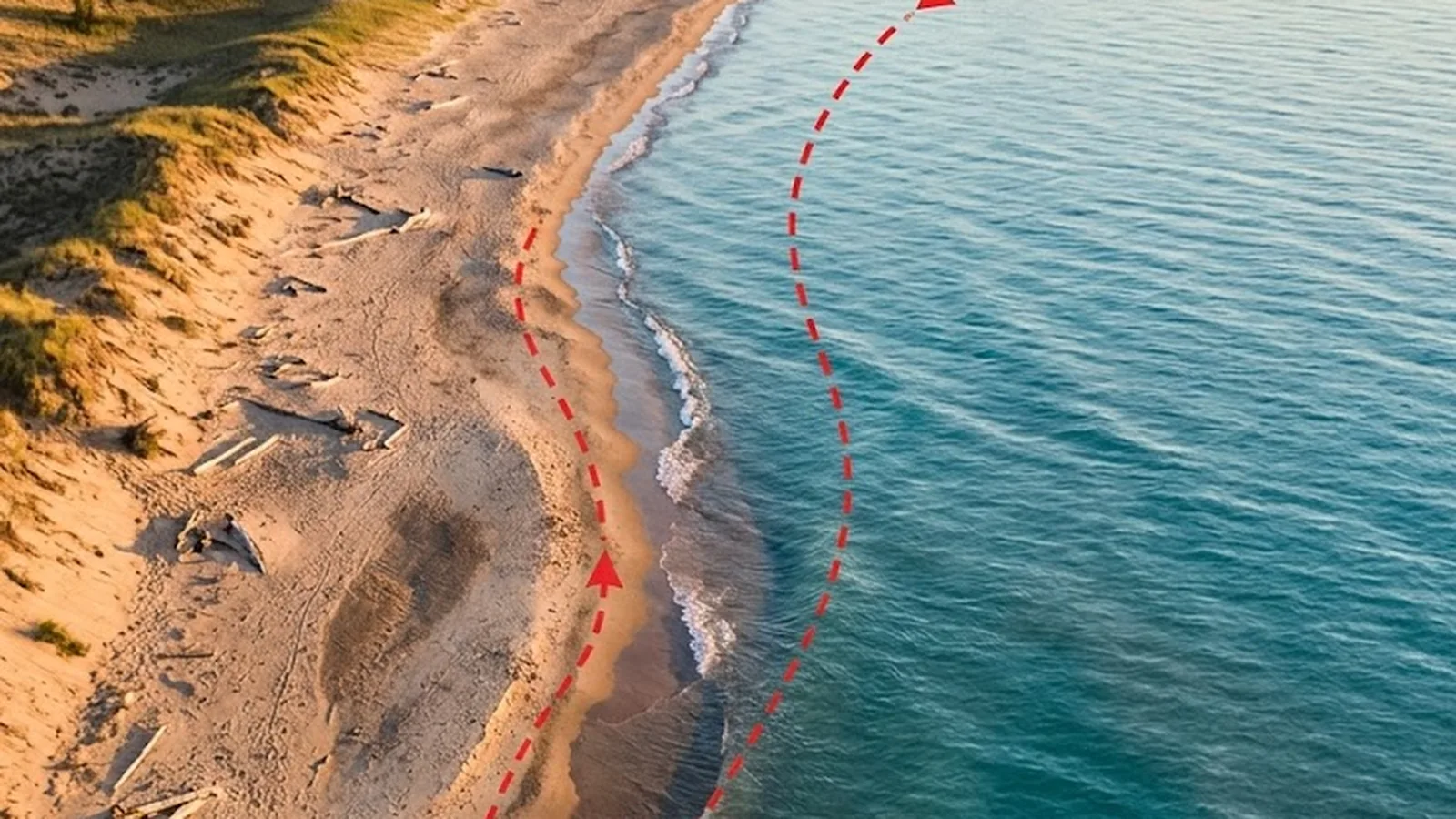
Start at Beach Area 1 boardwalk; swim parallel to shore in the direction with prevailing wave assistance (typically east); turn around at a visible landmark (e.g., a specific lifeguard tower or beach access point); return. Total distance approximately 500–1000 m depending on landmark selection. Suitable for first open-water sessions of the season or for technique-focused practice.
Standard parallel-shore swim: 1500–2000 m
Start at one Beach Area; swim parallel to shore at a constant 30–100 m offshore distance; finish at a different Beach Area parking area; walk back along the boardwalk. Logistics: leave a vehicle at the finish area, or have a partner pick you up. The Beach Area 1 to Beach Area 4 corridor is the typical example, ~2 km swim with car shuttle.
Long-distance route: 3+ km
The full Beach Drive corridor swim (Beach Area 1 to Beach Area 6) is approximately 5–6 km depending on route. This is a serious-distance swim suitable for race-distance preparation. Requires partner support (kayak escort or boat support is recommended), strong cold-water tolerance, and thorough weather assessment.
Triangle or out-and-back loops
For event-specific training, swim a triangular loop using two visible landmarks as buoy-equivalent corners. Practice sighting and turn techniques. Loops can be sized 200 m to 800 m per leg, repeated multiple times for total distance.
Specific session protocols
The base session (45 minutes total)
- 10 minutes of light swimming or walking warm-up.
- 5 minutes of technique focus: sighting, breathing pattern, stroke cadence.
- 20–25 minutes of continuous swimming at conversational pace.
- 5 minutes of cool-down: easy swim or wade.
The interval session (60 minutes total)
- 10 minutes warm-up.
- 10 minutes technique work.
- 30 minutes of intervals: 4–6× 3–5 minute hard segments with 1–2 minute rest. Pace target: race pace + 5%.
- 10 minutes cool-down.
The long-distance session (90+ minutes total)
- 15 minutes warm-up.
- 60+ minutes of continuous swimming at sustainable pace.
- 15 minutes cool-down.
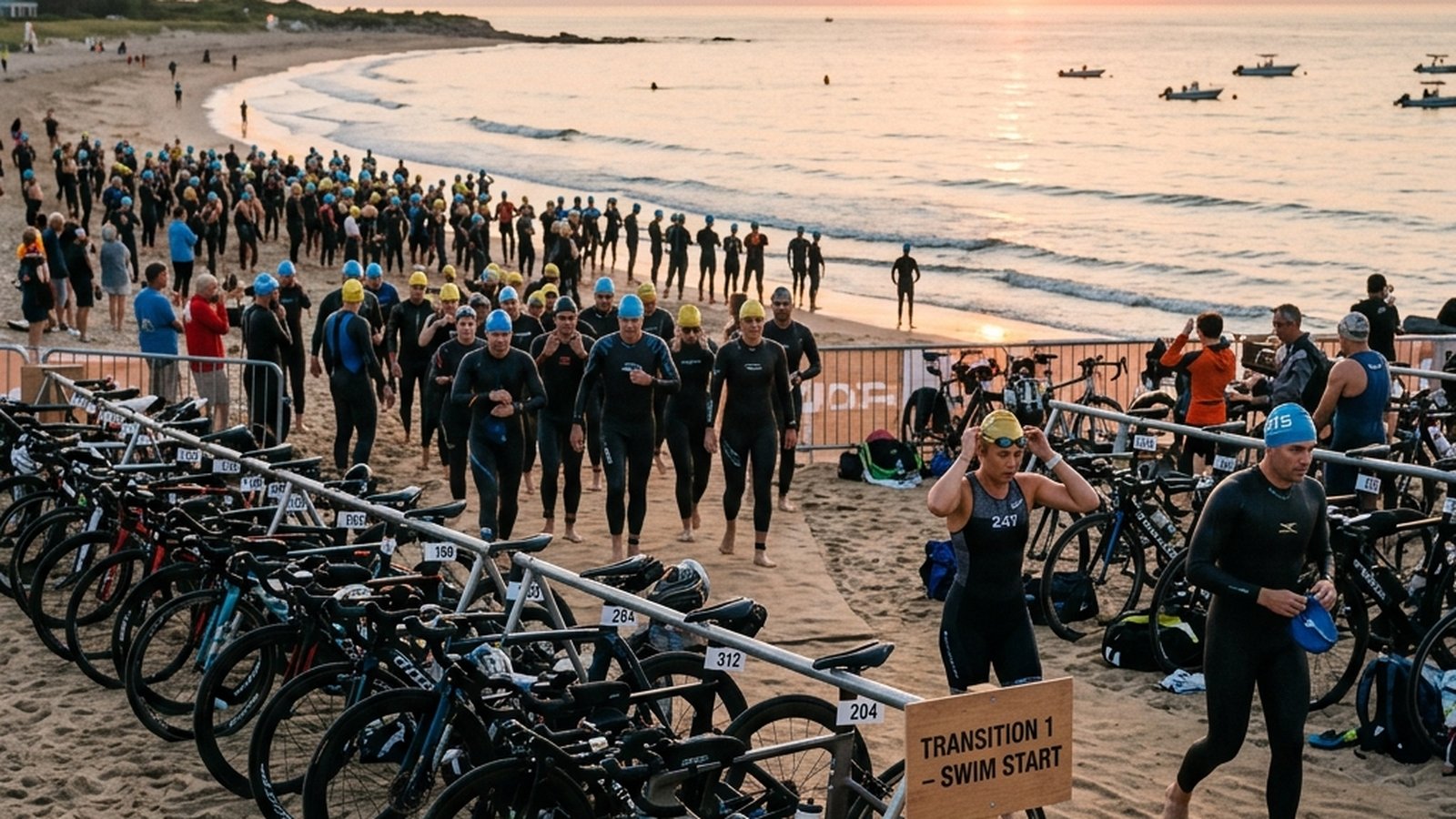
The long session benefits from kayak or boat support for safety and fueling. Most local triathletes building toward Olympic or longer events do 1–2 long-distance sessions per week through summer.
Safety considerations: critical for open-water training
Open-water swimming carries real risk that pool swimming does not. Specific considerations:
- Buddy system always: never swim alone. Either swim with a partner or have a kayak/boat support. Solo open-water swimming is the leading factor in fatal incidents.
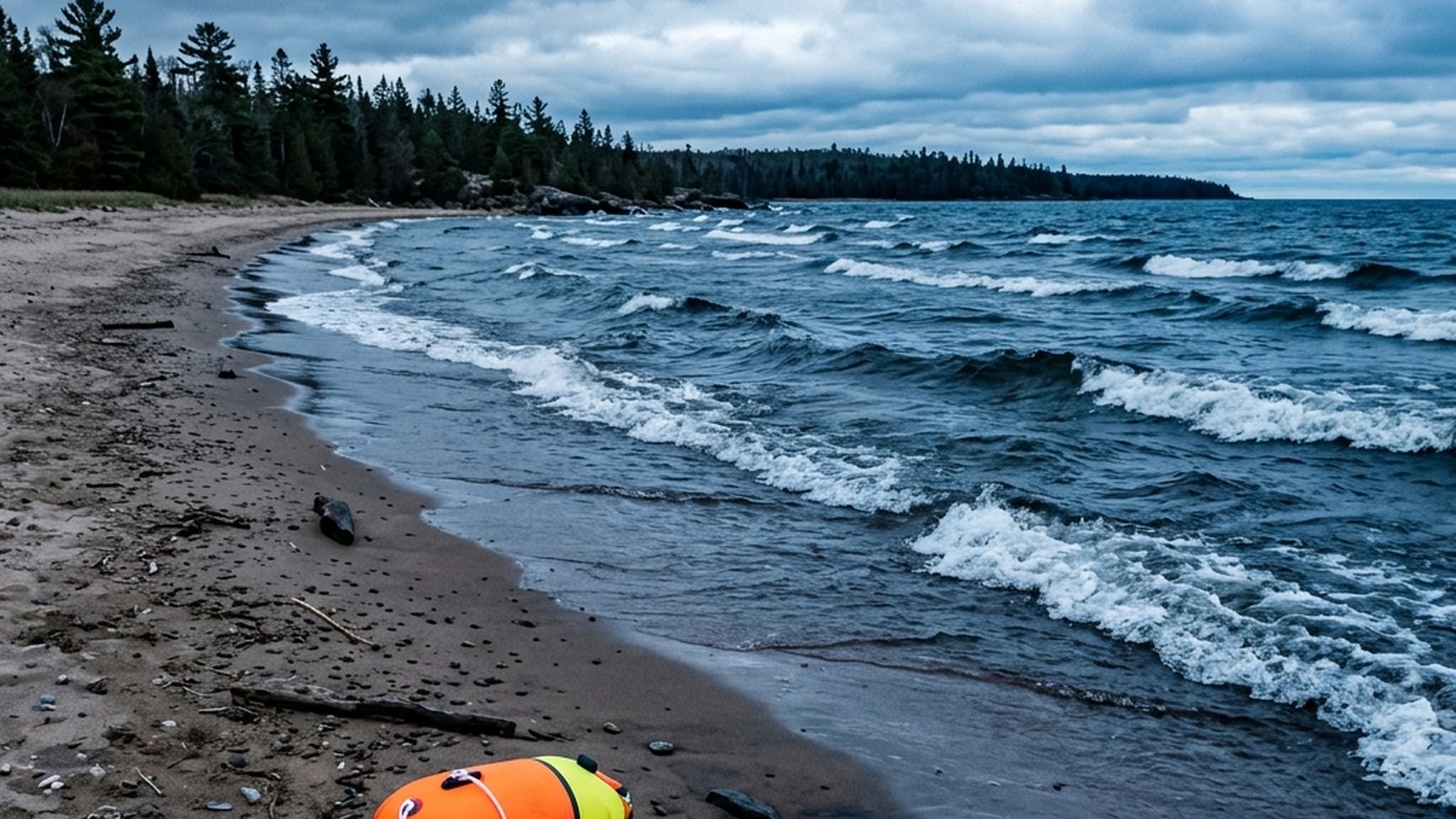
- Tow-float buoy: bright-coloured tow-float visible to lifeguards, watercraft, and emergency responders. Doubles as a flotation device if needed.
- Bright-coloured cap: visibility from a distance. Most swimmers wear orange, pink, or fluorescent yellow.
- Whistle: attached to tow-float or wetsuit zipper. For emergency signaling.
- Cell phone in waterproof case: in tow-float; for emergency calls.
- Weather assessment: never swim in deteriorating weather. Watch the sky for thunderstorm development; exit immediately at first sign.
- Water temperature: respect cold-water risk; swim within thermoregulatory tolerance. Wetsuit useful below 20°C.
- Exit discipline: stop and exit at first sign of fatigue, cold, cramps, or distance disorientation. Don’t push through.
- Boat traffic: in the river-mouth zone and outer-shoreline waters, motorboats and jet-skis are present. Stay close to shore where possible.
- Communication plan: tell someone your swim plan, expected return time, and what to do if you don’t check in.
- Course knowledge: swim in known waters first; don’t explore new sections without preparation.
- Lifeguard awareness: in lifeguarded zones during posted hours, the safety differential is significant. Outside those hours, you’re self-rescue.
For the broader Georgian Bay swim safety protocol — cold-water shock, rip currents, exit discipline — review the local Georgian Bay swim safety guide.
Open-water swim equipment
- Wetsuit: triathlon or surfing wetsuit, 3–5 mm thickness depending on water temperature and swimmer cold tolerance.
- Goggles: anti-fog, with appropriate lens tint for the conditions. Bring spare goggles.
- Cap: bright colour for visibility; silicone for warmth in cold water.
- Tow-float buoy: visibility plus emergency flotation.
- Anti-chafe lubricant: applied at neck and arm openings to prevent wetsuit chafe.
- Earplugs: prevent water-in-ear, particularly useful for swimmers prone to ear infections.
- Swim watch: GPS-enabled watch tracks distance and pace; useful for training data.
- Towel and dry clothes: for after the swim, particularly important in cool conditions.
- Snacks and warm drink: for post-swim warming and refueling.
Seasonal considerations
- May-early June: water 12–18°C. Wetsuit-mandatory for serious training; short sessions only without wetsuit.
- Mid-June through mid-September: peak open-water season. Water temperatures support comfortable longer sessions; wetsuit optional in mid-summer.
- Mid-September through October: continuing season for cold-water-tolerant swimmers; wetsuit returns to mandatory.
- November onward: typical end of recreational open-water season; only highly cold-water-tolerant swimmers continue.
Local resources for open-water swimmers
- Local triathlon clubs: organise group training swims; provide kayak escort during scheduled sessions.
- Lifesaving Society Ontario: open-water swim safety courses and certifications Lifesaving Society.
- Local masters swim clubs: indoor pool training during off-season; may organise open-water sessions in summer.
- Coaching: open-water-specific coaches in the broader region.
- Online community: Facebook groups for Ontario open-water swimmers organise informal meet-ups and share conditions reports.
Combining open-water training with other modalities
- Cross-training: pool sessions for technique work; outdoor sessions for race-specific preparation.
- Strength training: shoulder, lat, and core work supports stroke power and injury resistance.
- Cycling and running: triathletes integrate all three; the swim leg benefits from the other modalities’ cardiovascular base.
- Flexibility and mobility: shoulder and hip mobility supports stroke economy.
- Visualisation: mental rehearsal of race conditions; familiarity reduces race-day anxiety.
Practical takeaways
- Wasaga shoreline offers genuinely good open-water training routes: 500 m short loops to 5+ km long-distance options.
- Open-water training is meaningfully different from pool training: thermoregulation, sighting, mental engagement.
- Buddy system and visibility equipment are mandatory: tow-float buoy, bright cap, whistle.
- The Beach Area 1–6 corridor provides the bulk of training opportunities; secondary destinations include Schoonertown river mouth and Allenwood Beach.
- Three session types: base session, interval session, long-distance session for different training emphases.
- Open-water swimming safety is non-negotiable: weather assessment, water temperature respect, exit discipline.
Frequently asked questions
Can I swim parallel to shore alone if I’m a strong swimmer?
Strongly discouraged. Even strong swimmers face cramps, injuries, sudden weather changes, or boat traffic that they cannot self-rescue from in some scenarios. The buddy system is the single highest-leverage safety practice for open-water swimming. If you must swim alone, swim very close to shore (within wading distance) and tell someone your plan with check-in times.
How do I find a swim partner if I don’t know other swimmers?
Local triathlon and masters swim clubs are the best entry. Most clubs welcome new members and organise group training sessions. Online groups (Facebook for Ontario open-water swimmers) coordinate informal meet-ups. Consider taking an open-water clinic or course to meet other swimmers.
Should I wear a wetsuit even in mid-summer?
Optional. Most local swimmers go without wetsuits in 22°C+ water; wetsuits add buoyancy and warmth but also cost speed and comfort. For longer training swims (60+ minutes), the warmth benefit may outweigh the speed cost. Triathletes typically use wetsuits for events that allow them.
What about jellyfish or other creatures?
Lake Huron has no marine jellyfish (freshwater). Occasional encounters with leeches, small fish, or aquatic insects; nuisance-level, not safety-level. Avoid swimming where seaweed mats are heavy (uncomfortable, not dangerous).
Can I do open-water swim training alone with good safety equipment?
The tow-float buoy, bright cap, and whistle help but don’t replace a partner. The published evidence on open-water fatalities consistently identifies solo swimming as a major risk factor. The minimum partner option: someone on shore or in a kayak who can call 911 and provide rescue support.
References
Lifesaving SocietyLifesaving Society of Canada — Open-water swimming safety guidance. View source →Great Lakes Surf Rescue ProjectGreat Lakes Surf Rescue Project — Open-water and surf rescue education. View source →Triathlon CanadaTriathlon Canada — Open-water swimming and event resources. View source →