Educational journalism, not medical advice. Every claim here is checked against its cited sources by editor Timothy Bunce — a health writer, not a physician. It isn’t specific to your situation: for health decisions, talk to your own clinician. How we work →
Some links in this article are affiliate links. If you buy through one, The Beachside Reader earns a commission at no extra cost to you. It never changes which products we pick, or what we say about them. Full affiliate disclosure →
The 60-second version
Does the organic label buy more nutrition? Two systematic reviews of composition studies concluded there was no evidence that organic foods are more nutritious than conventional ones, with a few small differences in individual minerals. A later meta-analysis of 343 publications reported higher antioxidant concentrations and lower cadmium in organic crops, but its vitamin C estimate carried a confidence interval spanning zero, and the same analysis reported significantly lower vitamin E. A review of the human-health evidence called the compositional differences limited and likely of marginal nutritional significance. On cancer, two prospective cohorts point in opposite directions, and a 2025 review that pooled three cohorts found no association overall, at what its authors graded very low certainty. The clearer differences between the two systems are in contamination: pesticide residues, and antibiotic-resistant bacteria in meat.
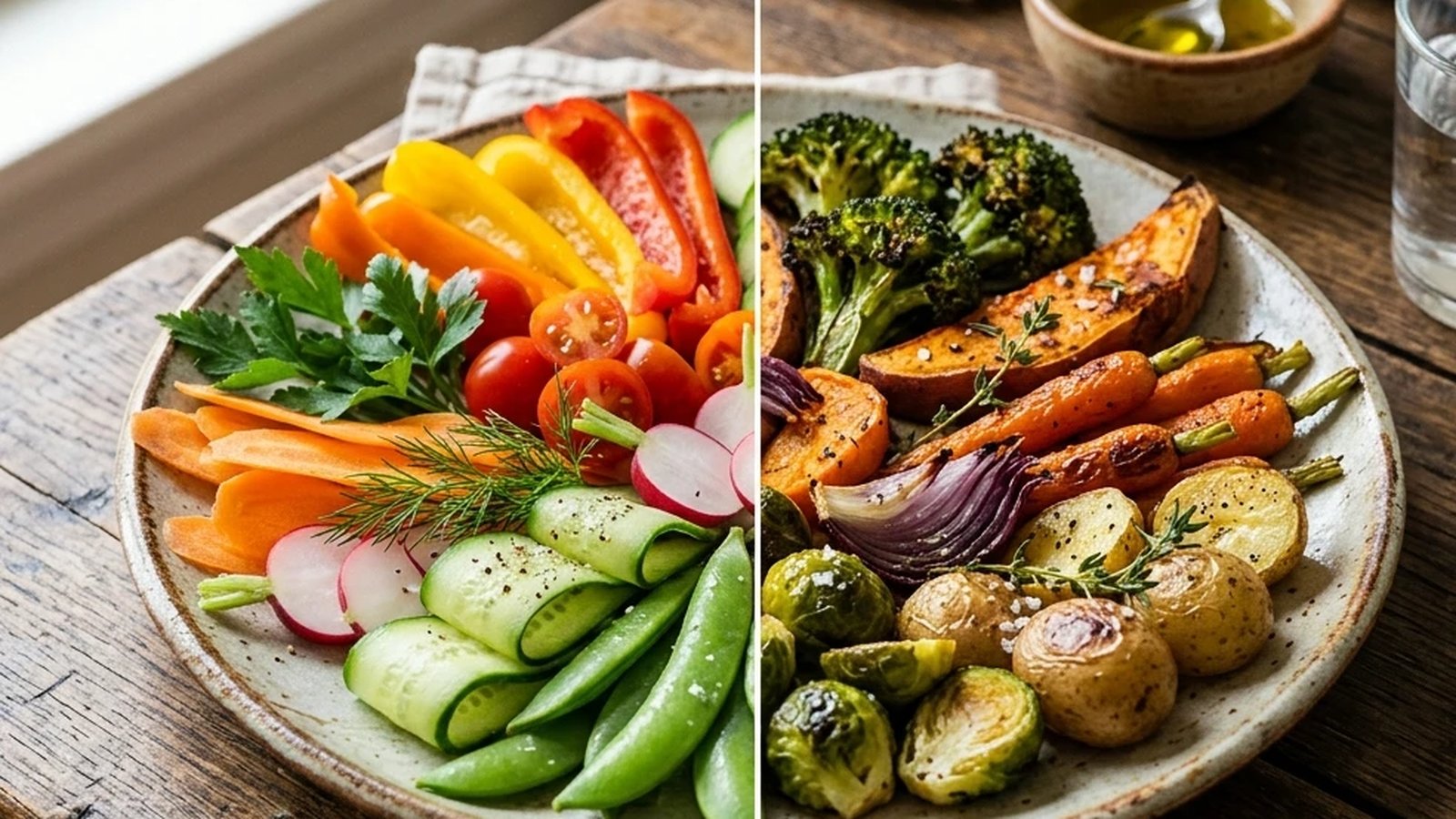
Two bins of carrots sit side by side. Same climate, same harvest week, same truck. One of them carries an organic label, and the claim usually attached to that label is that the food inside is more nourishing. That is a factual claim rather than a matter of taste, it has been measured repeatedly, and what follows is what the measurements in the studies cited here actually say, including the places where they contradict each other and the places where they contradict the tidy version of this argument that circulates in both directions.
The claim, stated so it can be tested
The intuition behind organic nutrient superiority is not silly. Without synthetic nitrogen fertiliser, plants grow more slowly, and slower growth might mean less water and starch diluting everything else. Turned into a testable question it becomes narrow and answerable: if you measure the same crop grown both ways, do the organic samples contain more of the things we care about?
Individual comparisons disagree constantly, because variety, soil, weather, ripeness at harvest and storage time all move nutrient concentrations around. So the informative evidence is the pooled evidence, meaning reviews that gather many comparisons and look for a signal under the noise. Three such reviews carry most of the weight in this article, and they retained 55, 240 and 343 studies respectively. They do not fully agree with each other, and where they diverge is as useful as where they line up.
What the composition reviews found
An early systematic review searched fifty years of comparison studies, identified 162, and restricted its analysis to the 55 it judged of satisfactory quality Dangour 2009. According to the institutional release issued with the paper, the work was commissioned and funded by the UK Food Standards Agency. Among the satisfactory-quality studies, conventionally produced crops had significantly higher nitrogen content, while organically produced crops had significantly higher phosphorus and higher titratable acidity; no evidence of a difference was detected for the remaining 8 of the 11 crop nutrient categories analysed Dangour 2009. The more limited livestock database, a part of that review rarely quoted, found no evidence of a difference in nutrient content between organically and conventionally produced livestock products Dangour 2009. The authors' own conclusion was that on the basis of satisfactory-quality studies there is no evidence of a difference in nutrient quality between organically and conventionally produced foodstuffs, and that the small differences detected are biologically plausible and mostly relate to differences in production methods Dangour 2009. Lead author Alan Dangour put it more bluntly in the release: there is currently no evidence to support the selection of organically over conventionally produced foods on the basis of nutritional superiority.
A wider review three years later included 17 studies in humans and 223 studies of nutrient and contaminant levels in foods Smith-Spangler 2012. Its own summary of the composition data is worth quoting rather than paraphrasing: all estimates of differences in nutrient and contaminant levels in foods were highly heterogeneous except for the estimate for phosphorus, which was significantly higher in organic produce, although the authors add that this difference is not clinically significant Smith-Spangler 2012. The vitamin-specific version of that finding, the one most often quoted, comes from Stanford's release accompanying the paper rather than from the abstract: no consistent differences were seen in the vitamin content of organic products, and only phosphorus was significantly higher. The review's stated conclusion is that the published literature lacks strong evidence that organic foods are significantly more nutritious than conventional foods, while consumption of organic foods may reduce exposure to pesticide residues and antibiotic-resistant bacteria Smith-Spangler 2012. Co-author Dena Bravata's summary in the release was that there isn't much difference between organic and conventional foods if you're an adult making a decision based solely on your health.
Two things about that review deserve to travel with the headline. Of its 17 human studies, only 3 examined clinical outcomes, and those found no significant differences by food type for allergic outcomes, meaning eczema, wheeze and atopic sensitisation, or for symptomatic Campylobacter infection Smith-Spangler 2012. And the authors flag their own limitation: the studies were heterogeneous and limited in number, and publication bias may be present Smith-Spangler 2012.
The meta-analysis that complicates it
A later set of meta-analyses drew on 343 peer-reviewed publications and reached a markedly different emphasis, describing statistically significant and meaningful differences in composition between organic and non-organic crops Barański 2014. Concentrations of several polyphenol groups were substantially higher in organic crops: phenolic acids by an estimated 19% (95% CI 5, 33), flavanones by 69% (95% CI 13, 125), stilbenes by 28% (95% CI 12, 44), flavones by 26% (95% CI 3, 48), flavonols by 50% (95% CI 28, 72) and anthocyanins by 51% (95% CI 17, 86) Barański 2014. The same analyses reported the frequency of pesticide residues as four times higher in conventional crops, significantly lower concentrations of the toxic metal cadmium in organic crops, and lower nitrogen (−10%, 95% CI −15, −4) and protein (−15%, 95% CI −27, −3) Barański 2014.
Now the vitamin question, stated with the precision the argument requires. The often-quoted figure is a mean percentage difference of 6% more vitamin C in organic crops, but its confidence interval runs from −3 to 15, so that estimate spans zero and is not statistically significant on its own terms Barański 2014. Separately, both the weighted and the unweighted meta-analyses in the same paper did detect significantly higher concentrations of xanthophylls and l-ascorbic acid in organic crops, and in the very same sentence, significantly lower concentrations of vitamin E Barański 2014. That pairing is why a flat claim that organic has more vitamins does not survive contact with the paper it is usually sourced to. Nitrate is similar: lower concentrations of nitrate and nitrite in organic crops were detected only by the unweighted meta-analysis, and the nitrate estimate itself (−30%, 95% CI −144, 84) spans zero Barański 2014.
Two further points belong beside that result rather than in a footnote. The first is that the authors of this paper do not treat the polyphenol finding as trivia: they note that many of these compounds have previously been linked to reduced risk of chronic diseases, including cardiovascular and neurodegenerative diseases and certain cancers, in dietary intervention and epidemiological studies Barański 2014. That is their reading, and it is not the reading of the human-health review discussed below, which makes this a genuine disagreement in the literature rather than a settled point. The second is funding, which the paper discloses: the authors thank the European Community for financial participation under its Sixth Framework Programme through the QualityLowInputFood project, and thank the Sheepdrove Trust for providing financial and technical support for the meta-analyses of composition data themselves Barański 2014. The paper describes the Trust as supporting independent R&D underpinning the development of organic and sustainable farming and food systems, and states that its financial support was provided without conditions and that the Trust had no influence on the design and management of the research project or the preparation of publications from it Barański 2014. Readers can weigh that as they see fit; the disclosure is the relevant fact.
What the paper attributes the differences to
The meta-analysis does offer an explanation for its own pattern, and it is agronomic rather than nutritional. It states that there is evidence that higher antioxidant concentrations and lower cadmium concentrations are linked to specific agronomic practices, respectively the non-use of mineral nitrogen and mineral phosphorus fertilisers prescribed in organic farming systems Barański 2014. On cadmium specifically, it notes that differences in contamination levels between organic and conventional winter wheat have been shown to be mainly linked to differences in fertilisation regimens, especially the high mineral phosphorus inputs used in conventional systems Barański 2014.
That is an explanation of chemistry, not of health. It tells you why a fertiliser decision moves a phenolic concentration or a cadmium concentration. It does not tell you what either does to a person, and it does not extend to the vitamins and minerals, where these three reviews disagree among themselves.
The review that looked specifically at human-health implications treated the compositional gap as small. Its own words: differences in the composition between organic and conventional crops are limited, such as a modestly higher content of phenolic compounds in organic fruit and vegetables, and likely also a lower content of cadmium in organic cereal crops Mie 2017. It adds that organic dairy products, and perhaps also meats, have a higher content of omega-3 fatty acids, and that these differences are likely of marginal nutritional significance Mie 2017.
What happens when you follow organic eaters for years
If organic food were nutritionally superior in a way that mattered, cohorts of people who eat it should eventually show something. The cohort evidence cited here points in both directions before resolving into an unhelpfully wide null.
In a prospective cohort of 623,080 middle-aged women in the United Kingdom, followed for a mean 9.3 years and accruing 53,769 incident cancers, consumption of organic food was not associated with a reduction in the incidence of all cancer (relative risk for usually or always versus never, 1.03; 95% CI 0.99–1.07) Bradbury 2014. Alongside all cancers combined, the study examined 16 of the most common cancer sites or types of cancer, plus soft tissue sarcoma. Two of those site-specific results reached significance: non-Hodgkin lymphoma was lower among organic consumers (0.79; 95% CI 0.65–0.96) and breast cancer was slightly higher (1.09; 95% CI 1.02–1.15); soft tissue sarcoma showed no association (1.37; 95% CI 0.82–2.27) Bradbury 2014. Both of those results come with the authors' own warning attached: they performed multiple tests and therefore cannot rule out chance as an explanation, and they note that women who reported consuming organic food were of higher socioeconomic status and consumed more alcohol, factors associated with an increased risk of breast cancer, so that the relative risk of 1.09 could well be because of residual confounding even after adjustment for nine potential confounders Bradbury 2014. The authors' conclusion is carefully hedged: little or no decrease in the incidence of cancer associated with consumption of organic food, except possibly for non-Hodgkin lymphoma Bradbury 2014. Exposure was a single coarse self-reported frequency item, analysed as usually or always against never.
A French cohort of 68,946 adult volunteers, with 1,340 first incident cancers over roughly 4.56 years of follow-up, used a more detailed 16-product organic consumption score and reported the opposite direction: a hazard ratio of 0.75 (95% CI 0.63–0.88) for the highest versus the lowest quartile, with a trend across quartiles, and 0.92 (95% CI 0.88–0.96) per 5-point increase in the score Baudry 2018. In absolute terms the difference was 0.6% Baudry 2018. Three qualifications matter. It is a self-selected volunteer cohort rather than a population sample. An erratum was subsequently published correcting data in the paper's first table and rewording its conclusions. And the authors themselves do not present the result as established: if these findings are confirmed, they write, further research is necessary to determine the underlying factors involved in this association Baudry 2018.
The most useful development is that someone has pooled the cohort evidence. A 2025 systematic review and meta-analysis combined three cohort studies totalling 733,954 individuals and found no association between the frequency of organic food consumption and cancer risk: overall cancer hazard ratio 0.93 (95% CI 0.78–1.12), breast cancer 1.01 (95% CI 0.81–1.26), colorectal cancer 1.01 (95% CI 0.93–1.10), and non-Hodgkin lymphoma 0.70 (95% CI 0.17–2.94) Theodoridis 2025. Note what happens to the UK cohort's lymphoma estimate, the one its own authors would not stand behind because they had performed multiple tests: pooled, it is compatible with a large benefit or a large harm. And the review's own certainty assessment is the most important sentence in it, because using the GRADE approach the certainty of the evidence for all endpoints was judged to be very low Theodoridis 2025. So the honest summary is neither that organic prevents cancer nor that it does nothing; it is that the pooled cohort evidence shows no association, and that this evidence is too weak to settle the question either way.
Part of the reason is unavoidable: these are observational studies of a purchasing habit. The human-health review makes the general point directly, noting that organic food consumption may reduce the risk of allergic disease and of overweight and obesity, but that the evidence is not conclusive due to likely residual confounding, as consumers of organic food tend to have healthier lifestyles overall Mie 2017. Statistical adjustment reduces that problem without eliminating it.
Residues, and the finding usually left out
The contamination comparison is where these papers agree with each other most readily. The risk for contamination with detectable pesticide residues was lower among organic than conventional produce, a risk difference of 30% (95% CI −37% to −23%), though the same review adds a qualifier that rarely travels with the number: differences in risk for exceeding maximum allowed limits were small Smith-Spangler 2012. The frequency of residue occurrence was reported as four times higher in conventional crops in the larger meta-analysis Barański 2014. Two studies in the review found significantly lower urinary pesticide levels among children consuming organic rather than conventional diets, while studies of biomarker and nutrient levels in serum, urine, breast milk and semen in adults did not identify clinically meaningful differences Smith-Spangler 2012.
And here is the finding that gets dropped from most versions of this comparison, in a review often cited by organic sceptics: the risk for isolating bacteria resistant to three or more antibiotics was higher in conventional than in organic chicken and pork, a risk difference of 33% (95% CI 21% to 45%) Smith-Spangler 2012. That is a larger risk difference than the one reported for pesticide residues, and it points at meat rather than at vegetables.
The human-health review reaches a similar ranking from the other end. It notes that pesticide use is restricted in organic agriculture while residues in conventional fruits and vegetables constitute the main source of human pesticide exposures, and that epidemiological studies have reported adverse effects of certain pesticides on children's cognitive development at current levels of exposure, findings which it says have so far not been applied in formal risk assessments of individual pesticides Mie 2017. Its specifics concern organophosphates: maternal urinary concentrations of organophosphate metabolites in pregnancy associated with abnormal reflexes in neonates, adverse mental development at two years, attention problems at three and a half and five years, and poorer intellectual development at seven; and chlorpyrifos concentrations in umbilical cord blood associated with delayed psychomotor and mental development, poorer working memory and lower full-scale IQ at seven Mie 2017. Its judgement is that exposure during pregnancy, at levels commonly found in the general population, likely has negative effects on children's neurodevelopment Mie 2017. Yet that same review places something above dietary residues in its own hierarchy of concern: of greater concern, it says, is the prevalent use of antibiotics in conventional animal production as a key driver of antibiotic resistance in society, with antibiotic use less intensive in organic production Mie 2017.
Its Conclusions section says organic food production has several documented and potential benefits for human health; its abstract puts the same point as several documented and likely human health benefits associated with organic food production — either way a formulation that sits alongside its own hedge about residual confounding Mie 2017. And its recommendation is not a shopping recommendation at all. What the authors advocate is that wider application of these production methods in conventional agriculture, for example in integrated pest management, would most likely benefit human health Mie 2017. That is a recommendation about how food is farmed, not about which bin you reach into.
The variables with the better evidence
Whatever the label does, the dietary variables with more outcome evidence behind them sit upstream of it. A dose–response meta-analysis of 95 studies, reported in 142 publications, found that each additional 200 g per day of fruit and vegetables combined was associated with a relative risk of 0.92 (95% CI 0.90–0.94) for coronary heart disease, 0.84 (95% CI 0.76–0.92) for stroke, 0.92 (95% CI 0.90–0.95) for cardiovascular disease, 0.97 (95% CI 0.95–0.99) for total cancer and 0.90 (95% CI 0.87–0.93) for all-cause mortality Aune 2017. Read those numbers honestly rather than as a slogan: the total-cancer estimate is about a 3% relative reduction per 200 g per day, individual outcomes rest on 10 to 15 studies each, heterogeneity was high for stroke and for all-cause mortality, and every included study is prospective observational Aune 2017. Reductions in risk were observed up to 800 g per day for all outcomes except cancer, where the ceiling was 600 g Aune 2017. The authors' recommendation is straightforward: their results support public health recommendations to increase fruit and vegetable intake for the prevention of cardiovascular disease, cancer and premature mortality Aune 2017. That paper contains nothing about organic versus conventional production.
Dietary pattern is the other upstream variable, and its most-quoted piece of evidence needs its own asterisk. A multicentre trial in Spain assigned 7,447 participants aged 55 to 80 at high cardiovascular risk to a Mediterranean diet supplemented with extra-virgin olive oil, a Mediterranean diet supplemented with mixed nuts, or a control diet of advice to reduce dietary fat; after a median 4.8 years the trial was stopped on the basis of a prespecified interim analysis, with 288 primary end-point events Estruch 2018. The reported hazard ratios were 0.69 (95% CI 0.53–0.91) for the olive-oil arm and 0.72 (95% CI 0.54–0.95) for the nut arm, against the control diet Estruch 2018. The asterisk is large, and the authors put it in their own abstract: they identified protocol deviations including enrolment of household members without randomisation and assignment to a study group without randomisation at one of eleven sites, withdrew their previously published report, and now present estimates from an intention-to-treat analysis adjusting for baseline characteristics and propensity scores that does not rely exclusively on the assumption that all participants were randomly assigned; results were similar after omitting the 1,588 participants whose assignments were known or suspected to have departed from the protocol Estruch 2018. We read that trial's numbers in more detail in our piece on the Mediterranean diet; the point here is that what it tested was a pattern defined by foods, not by farming method.
Preparation is a third variable, and a separate question from provenance, which we take up in raw versus cooked vegetables. Keeping these arguments apart is the practical takeaway. On the evidence cited here, the nutritional case for the organic label is thin, and the analysis that supports any compositional advantage does so with intervals that often cross zero. The contamination case is different in kind: it concerns reducing exposure to pesticide residues and to antibiotic-resistant bacteria, which is a coherent reason to choose organic and a different reason from the one usually printed on the shelf-talker. Neither exposure finding quantifies your personal risk from a conventionally grown apple, and a detected residue is not the same as a dose shown to have harmed a particular person. If the label matters to you for reasons of exposure, farming practice or taste, nothing above argues against it. What the evidence above does not support is the nutrition argument specifically.
Frequently asked questions
Does organic produce contain more vitamins and minerals than conventional?
The reviews disagree, and the differences are small either way. A review that restricted its analysis to 55 satisfactory-quality comparison studies found no evidence of a difference for 8 of the 11 crop nutrient categories analysed, with conventional crops higher in nitrogen and organic higher in phosphorus and titratable acidity, and concluded there was no evidence of a difference in nutrient quality Dangour 2009. A wider review of 17 studies in humans and 223 of nutrient and contaminant levels in foods found all composition estimates highly heterogeneous except phosphorus, which was higher in organic produce but not clinically significantly so Smith-Spangler 2012. A larger meta-analysis reported a vitamin C difference of 6% (95% CI −3 to 15), an estimate that spans zero, alongside significantly higher l-ascorbic acid and xanthophylls and significantly lower vitamin E in organic crops Barański 2014. A review of the human-health evidence called such compositional differences limited and likely of marginal nutritional significance Mie 2017.
Do organic vegetables have more antioxidants?
A meta-analysis of 343 publications reported substantially higher concentrations of several polyphenol groups in organic crops, including flavonols 50% higher (95% CI 28, 72) and anthocyanins 51% higher (95% CI 17, 86) Barański 2014. Its authors link the difference to the non-use of mineral nitrogen fertiliser, and note that many such compounds have previously been linked to reduced chronic-disease risk in dietary intervention and epidemiological studies Barański 2014. A review of the human-health evidence reads the same gap differently, describing a modestly higher phenolic content in organic fruit and vegetables and judging the differences likely of marginal nutritional significance Mie 2017. That disagreement is unresolved in the evidence cited here.
Do organic foods have fewer pesticide residues?
Yes. The risk of contamination with detectable pesticide residues was lower in organic than conventional produce, a risk difference of 30% (95% CI −37% to −23%), though differences in the risk of exceeding maximum allowed limits were small Smith-Spangler 2012, and residue frequency was reported as four times higher in conventional crops in a larger meta-analysis Barański 2014. The same review reported a larger risk difference for bacteria resistant to three or more antibiotics, which were higher in conventional chicken and pork (33%, 95% CI 21% to 45%) Smith-Spangler 2012. A review of the human-health evidence treats residues in conventional fruits and vegetables as the main source of human pesticide exposures and reports epidemiological findings on prenatal organophosphate exposure and children's cognitive development, while placing antibiotic use in conventional animal production above dietary residues in its own order of concern Mie 2017.
Does eating organic lower cancer risk?
The pooled cohort evidence says no, at very low certainty. A 2025 systematic review and meta-analysis of three cohorts totalling 733,954 individuals found no association with overall cancer (hazard ratio 0.93; 95% CI 0.78–1.12), breast cancer (1.01), colorectal cancer (1.01) or non-Hodgkin lymphoma (0.70; 95% CI 0.17–2.94), and graded the certainty of evidence for all endpoints very low Theodoridis 2025. The individual cohorts point in different directions: 623,080 UK women followed a mean 9.3 years showed a relative risk of 1.03 (95% CI 0.99–1.07) for all cancer, and across 16 common cancer sites plus soft tissue sarcoma two results reached significance, non-Hodgkin lymphoma lower (0.79; 95% CI 0.65–0.96) and breast cancer slightly higher (1.09; 95% CI 1.02–1.15), though its authors caution that they performed multiple tests and cannot rule out chance, and that the breast-cancer figure could well be residual confounding by socioeconomic status and alcohol intake Bradbury 2014, while 68,946 French volunteers scored across 16 products showed a hazard ratio of 0.75 (95% CI 0.63–0.88) in the highest versus lowest quartile, an absolute difference of 0.6% Baudry 2018. All are observational, and consumers of organic food tend to have healthier lifestyles overall, leaving likely residual confounding Mie 2017.
If the nutrition case is thin, what does choosing organic actually change?
On the evidence cited here it changes exposure rather than nutrition: a lower risk of detectable pesticide residues and a lower risk of multi-drug-resistant bacteria in chicken and pork Smith-Spangler 2012, and lower cadmium concentrations in crops Barański 2014. The variable with more outcome evidence behind it is how much produce you eat: each additional 200 g per day of fruit and vegetables was associated with a relative risk of 0.90 (95% CI 0.87–0.93) for all-cause mortality, and the authors of that meta-analysis recommend increasing intake Aune 2017. The authors of the human-health review make an agronomic recommendation rather than a shopping one, arguing that wider application of organic production methods within conventional agriculture would most likely benefit human health Mie 2017.
References
Dangour 2009Dangour AD, Dodhia SK, Hayter A, Allen E, Lock K, Uauy R. Nutritional quality of organic foods: a systematic review. The American Journal of Clinical Nutrition. 2009;90(3):680-685. doi:10.3945/ajcn.2009.28041 View source →Smith-Spangler 2012Smith-Spangler C, Brandeau ML, Hunter GE, et al. Are organic foods safer or healthier than conventional alternatives? A systematic review. Annals of Internal Medicine. 2012;157(5):348-366. doi:10.7326/0003-4819-157-5-201209040-00007 View source →Barański 2014Barański M, Średnicka-Tober D, Volakakis N, et al. Higher antioxidant and lower cadmium concentrations and lower incidence of pesticide residues in organically grown crops: a systematic literature review and meta-analyses. British Journal of Nutrition. 2014;112(5):794-811. doi:10.1017/S0007114514001366 View source →Mie 2017Mie A, Andersen HR, Gunnarsson S, et al. Human health implications of organic food and organic agriculture: a comprehensive review. Environmental Health. 2017;16(1):111. doi:10.1186/s12940-017-0315-4 View source →Bradbury 2014Bradbury KE, Balkwill A, Spencer EA, et al. Organic food consumption and the incidence of cancer in a large prospective study of women in the United Kingdom. British Journal of Cancer. 2014;110(9):2321-2326. doi:10.1038/bjc.2014.148 View source →Baudry 2018Baudry J, Assmann KE, Touvier M, et al. Association of frequency of organic food consumption with cancer risk: findings from the NutriNet-Santé prospective cohort study. JAMA Internal Medicine. 2018;178(12):1597-1606. doi:10.1001/jamainternmed.2018.4357 View source →Theodoridis 2025Theodoridis X, Papaemmanouil A, Papageorgiou N, et al. The level of adherence to organic food consumption and risk of cancer: a systematic review and meta-analysis. Life. 2025;15(2):160. doi:10.3390/life15020160 View source →Aune 2017Aune D, Giovannucci E, Boffetta P, et al. Fruit and vegetable intake and the risk of cardiovascular disease, total cancer and all-cause mortality: a systematic review and dose-response meta-analysis of prospective studies. International Journal of Epidemiology. 2017;46(3):1029-1056. doi:10.1093/ije/dyw319 View source →Estruch 2018Estruch R, Ros E, Salas-Salvadó J, et al. Primary prevention of cardiovascular disease with a Mediterranean diet supplemented with extra-virgin olive oil or nuts. New England Journal of Medicine. 2018;378(25):e34. doi:10.1056/NEJMoa1800389 View source →