The 60-second version
Plant-based protein for athletes is no longer a niche topic. The published evidence shows that adults eating sufficient total daily protein from plant sources can build muscle and recover from training as effectively as omnivores — with two important caveats: plant proteins are typically lower in leucine and have less complete amino acid profiles than animal proteins, so the daily target is slightly higher (1.8-2.4 g/kg vs 1.6-2.2 g/kg) and per-meal doses must be more attentive to protein quality, not just quantity. The Hevia-Larraín 2021 RCT directly compared whey vs. soy at matched protein doses in previously untrained young men (19 vegan, 19 omnivore) starting a new 12-week program — gains in muscle and strength were essentially identical. The trick is combining sources (legumes + grains, soy + nuts, mycoprotein) so the meal’s amino-acid profile complete; getting 25-40 g of plant protein per meal across 4-5 meals; and treating leucine-rich foods (soy, lentils, mycoprotein, hemp) as the anchor of each plate. This article walks through which plant protein sources rank highest by quality, the practical patterns that work for trained vegans and vegetarians, and what supplements add when food alone falls short.
Educational journalism, not medical advice. Every claim here is checked against its cited sources by editor Timothy Bunce — a health writer, not a physician. It isn’t specific to your situation: for health decisions, talk to your own clinician. How we work →
Some links in this article are affiliate links. If you buy through one, The Beachside Reader earns a commission at no extra cost to you. It never changes which products we pick, or what we say about them. Full affiliate disclosure →
Protein quality, briefly
Protein quality is measured primarily by amino-acid profile and digestibility. Two scoring systems matter:
- PDCAAS (Protein Digestibility-Corrected Amino Acid Score): older standard, scored 0-1.0. Whey, eggs, soy, milk all score 1.0; most other plant proteins score lower.
- DIAAS (Digestible Indispensable Amino Acid Score): newer, more accurate. Animal proteins typically score 100-130; soy ~91; pea ~73; wheat ~40 FAO 2013.
The practical implication: for the same gram of protein, animal sources deliver slightly more usable amino acids, particularly the essential ones for muscle synthesis (leucine, lysine, methionine). Plant-based athletes adjust by eating more total protein and combining sources to fill the gaps.
“Provided that adequate amounts of leucine-rich plant protein sources are consumed across the day, plant-based diets can support muscle protein synthesis and resistance-training adaptations comparably to omnivorous diets.”
— Hevia-Larraín et al., Sports Med, 2021 view source
Highest-quality plant protein sources
| Source | Protein per 100 g | Leucine | Notes |
|---|---|---|---|
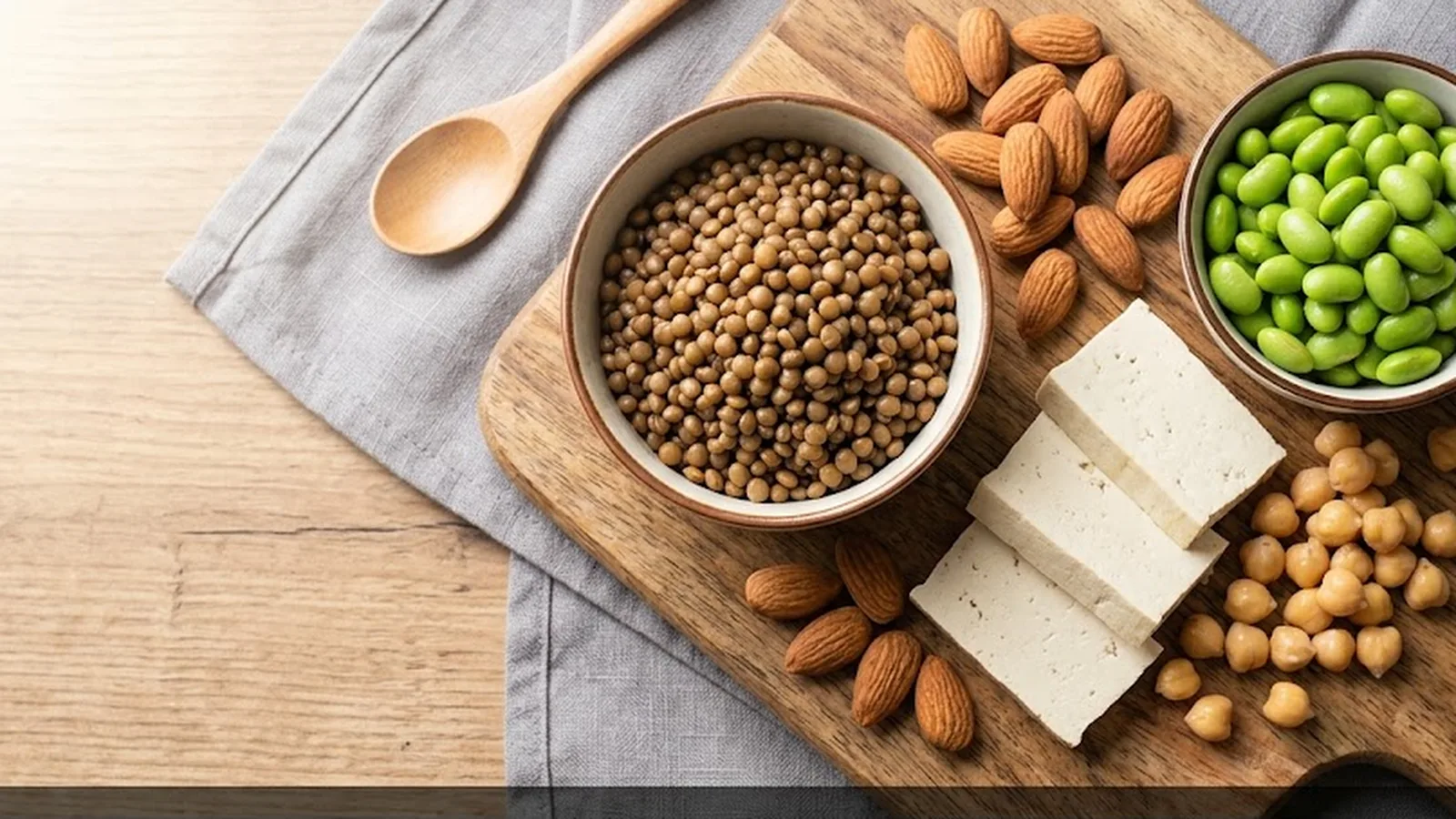
| Soy (tempeh, tofu, edamame, soy milk) | 15-20 g (tempeh), 8-10 g (tofu) | High | The only single-source plant protein with all 9 EAAs in adequate ratios |
| Mycoprotein (Quorn) | 11-14 g | High | 2020 Monteyne trial: matched-leucine MPS rates greater than milk protein |
| Lentils (cooked) | 9 g | Moderate | Combine with grain to complete profile |
| Chickpeas (cooked) | 8-9 g | Moderate | Pair with sesame/tahini or quinoa |
| Quinoa (cooked) | 4 g | Moderate | One of the few grains with complete amino profile |
| Hemp seeds | 32 g (raw seeds) | Moderate | Concentrated source; sprinkle into meals |
| Pea protein isolate | ~80 g (powder, per 100 g) | High | Best plant-protein powder option; close to whey for hypertrophy |
| Black beans / kidney beans | 8-9 g | Moderate | Pair with rice, quinoa, or corn for complete profile |
| Greek-style soy yogurt (e.g., Silk) | 6-8 g | Moderate-High | Convenient plant equivalent of dairy yogurt |
| Seitan (vital wheat gluten) | 25 g | Low | High protein, but lysine-deficient; combine with legumes |
| Spirulina | 57 g (dried) | Moderate | Amounts consumed are small; not a primary source |
The combining-protein principle (less rigid than people think)
The old advice was that vegetarians had to combine grain + legume at the same meal to get a complete amino acid profile. This was overstated. Modern understanding: the body maintains an amino acid pool from meals across the day. Combining sources across the day works as well as combining at each meal — provided you eat varied plant proteins regularly Young 1994.
Practical combinations that complement well in a day:
- Legumes + grains: lentil curry + rice; black beans + corn tortillas; chickpeas + couscous.
- Legumes + nuts/seeds: hummus (chickpeas + tahini); peanut sauce on tofu; trail mix.
- Soy + anything: soy is already complete, so adding it to any meal raises that meal’s amino acid score.
- Quinoa + anything: complete in itself; works with legumes, vegetables, or animal protein for hybrid meals.
Practical plant-based day for a 75 kg athlete
Target: 150-180 g protein/day across 4-5 meals.
- Breakfast (35-40 g): oatmeal cooked in soy milk + 30 g hemp seeds + 30 g pea-protein scoop = 38 g.
- Mid-morning snack (20 g): 250 g Greek-style soy yogurt + handful of almonds = 22 g.
- Lunch (40 g): tempeh stir-fry with quinoa and vegetables + edamame side = 42 g.
- Pre-workout (15 g): piece of fruit + small soy/pea protein shake = 16 g.
- Dinner (40 g): lentil curry + brown rice + roasted vegetables + handful of pumpkin seeds = 42 g.
- Optional pre-bed (15 g): cottage-cheese-style soy product with berries = 18 g.
This pattern hits 175 g of protein from a 100% plant-based plate. Without the powder/shake supplementation, the same target is achievable but takes more food volume.
Plant protein powders worth considering
| Type | Protein per scoop | Quality | Notes |
|---|---|---|---|
| Pea protein isolate | 20-25 g | High (DIAAS ~73, leucine-rich) | Best single-source plant protein for hypertrophy |
| Soy protein isolate | 20-25 g | Highest single-source (DIAAS 91) | Complete profile; some prefer to avoid for personal reasons |
| Pea + rice blend | 20-25 g | Highest blend (matches whey DIAAS) | Combination fills lysine and methionine gaps |
| Hemp protein powder | 13-18 g | Moderate | Some find it gritty; full of fibre and minerals |
| Mixed plant blend (Vega, Owyn, Ripple) | 15-25 g | Variable | Read the label; some are sugar-heavy |
| Spirulina powder | 4-5 g per tablespoon | Moderate | Not a primary source; flavour limits use |
Who needs to attend more carefully to plant protein
| Profile | Approach |
|---|---|
| Vegan athlete in resistance training | 1.8-2.4 g/kg/day; soy, mycoprotein, pea-blend powder; track intake for 2-4 weeks |
| Vegetarian (ovo-lacto) | Easier — eggs and dairy fill amino-acid gaps; 1.6-2.0 g/kg sufficient |
| Adult cutting back on meat | Mix sources; soy/tofu 2-3 meals/week; lentils, beans regularly |
| Older vegan adult (60+) | Higher per-meal dose (35-40 g); leucine-rich foods at every meal critical |
| Young athlete on plant-based diet | Coordinate with sports dietitian; growth needs additional attention |
| Pregnant / breastfeeding plant-based | Supplemental B12, omega-3, iron, choline likely needed alongside protein |
| Casual exerciser switching to plant-forward | Variety + total protein matter more than precise tracking |
Common myths and corrections
- “Vegans can’t build muscle”: false. Hevia-Larraín 2021 directly tested this with a 12-week resistance training trial and found whey vs. soy produced equivalent gains in previously untrained vegan and omnivore adults at matched protein doses.
- “Plant protein doesn’t spike MPS”: oversimplified. Per-gram, plant protein produces a smaller MPS spike than whey; with adequate dose and leucine content, the spike reaches anabolic threshold.
- “Soy is bad for testosterone”: not supported by the meta-analyses. Messina 2010’s critical review of the clinical evidence found no clinically meaningful effect on testosterone or estradiol in healthy men Messina 2010.
- “You must combine grains and legumes at every meal”: false. The body pools amino acids across meals; combining across the day suffices.
- “Plant protein is hard to digest”: true for some sources (raw legumes, certain whole grains); cooking, soaking, and sprouting fix this for most.
Implementation playbook
- Anchor each meal with a quality protein source: soy, mycoprotein, pea isolate, or a varied legume + grain combination.
- Aim for 25-40 g per meal; the per-meal dose is what triggers MPS.
- Use a pea or pea+rice protein powder if hitting daily targets is hard with food alone.
- Soak/sprout/ferment beans and grains when possible; improves digestibility and reduces antinutrients.
- Get B12 from supplements or fortified foods; this is non-negotiable for vegans.
- Don’t skip leucine-rich foods: soy, mycoprotein, hemp, lentils, pea protein. Leucine is the trigger; without enough, MPS doesn’t fire reliably.
- Track for 2-4 weeks if performance suffers: most issues trace to total protein being below target.
Practical takeaways
- Plant-based athletes can build muscle and strength equivalently to omnivores when total protein and amino acid quality are managed (Hevia-Larraín 2021).
- Daily target is slightly higher: 1.8-2.4 g/kg/day for vegans vs 1.6-2.2 g/kg for omnivores. The leucine deficit drives the increase.
- Highest-quality single-source plant proteins: soy, mycoprotein, pea isolate. Combine others (legumes + grains) across the day.
- Per-meal dose 25-40 g across 4-5 meals; the per-meal floor matters as much as the daily total.
- Pea+rice protein blends produce DIAAS scores comparable to whey — useful for trainees who don’t want soy.
- The combining-grain-with-legume rule is overstated: the body pools amino acids across the day. Eat varied sources daily; you’re fine.
Frequently asked questions
Can vegan athletes build muscle as well as meat-eaters?
Yes — with attention to total protein and quality. Hevia-Larrain 2021 directly tested this with a 12-week resistance training RCT comparing whey to soy in vegans and omnivores at matched protein. Gains in lean mass and strength were equivalent. The key is hitting 1.8-2.4 g/kg daily and ensuring leucine-rich sources at each meal.
What's the best plant protein source?
Soy and mycoprotein are the two with complete amino acid profiles approaching animal sources. Pea protein isolate is the best supplement option (close to whey for muscle-building outcomes per Babault 2015). Combinations matter for whole-food: legumes + grains across the day, soy with anything, quinoa as a complete grain.
Do I need protein powder if I'm plant-based?
Probably not, but it makes hitting the target easier. Pea or pea+rice blends are the best options — pea+rice produces a DIAAS score comparable to whey. Soy protein isolate is also excellent for those who tolerate it. Whole-food sources alone work but require more eating volume to hit higher targets.
Is the 'combine grains with legumes at every meal' rule still true?
Overstated. Young 1994 and subsequent reviews showed the body pools amino acids across meals, so combining across the day works as well as combining at each meal. Eat varied plant proteins daily and the amino acid profile balances out. Don't stress the per-meal combinations.
Are there nutrients vegans should supplement beyond protein?
Yes — B12 is non-negotiable from supplements or fortified foods (no reliable plant source). Omega-3 (algal DHA/EPA) is recommended for athletes. Iron, zinc, iodine, and choline benefit from attention. Vitamin D in northern latitudes. The Academy of Nutrition and Dietetics 2016 position paper covers these in detail.
References
Hevia-Larrain 2021Hevia-Larraín V, Gualano B, Longobardi I, et al. High-protein plant-based diet versus a protein-matched omnivorous diet to support resistance training adaptations: a comparison between habitual vegans and omnivores. Sports Med. 2021;51(6):1317-1330. View source →Monteyne 2020Monteyne AJ, Coelho MOC, Porter C, et al. Mycoprotein ingestion stimulates protein synthesis rates to a greater extent than milk protein in rested and exercised skeletal muscle of healthy young men. Am J Clin Nutr. 2020;112(2):318-333. View source →FAO 2013FAO. Dietary protein quality evaluation in human nutrition. Report of an FAO Expert Consultation. FAO Food and Nutrition Paper 92. 2013. View source →Young 1994Young VR, Pellett PL. Plant proteins in relation to human protein and amino acid nutrition. Am J Clin Nutr. 1994;59(5 Suppl):1203S-1212S. View source →Messina 2010Messina M. Soybean isoflavone exposure does not have feminizing effects on men: a critical examination of the clinical evidence. Fertil Steril. 2010;93(7):2095-2104. View source →Morton 2018Morton RW, Murphy KT, McKellar SR, et al. A systematic review, meta-analysis and meta-regression of the effect of protein supplementation on resistance training-induced gains in muscle mass and strength in healthy adults. Br J Sports Med. 2018;52(6):376-384. View source →Phillips 2016Phillips SM. The impact of protein quality on the promotion of resistance exercise-induced changes in muscle mass. Nutr Metab (Lond). 2016;13:64. View source →Schoenfeld 2018Schoenfeld BJ, Aragon AA. How much protein can the body use in a single meal for muscle-building? Implications for daily protein distribution. J Int Soc Sports Nutr. 2018;15:10. View source →Babault 2015Babault N, Pâais C, Allaert FA, et al. Pea proteins oral supplementation promotes muscle thickness gains during resistance training: a double-blind, randomized, placebo-controlled clinical trial vs. whey protein. J Int Soc Sports Nutr. 2015;12:3. View source →Joy 2013Joy JM, Lowery RP, Wilson JM, et al. The effects of 8 weeks of whey or rice protein supplementation on body composition and exercise performance. Nutr J. 2013;12:86. View source →ISSN 2017Jäger R, Kerksick CM, Campbell BI, et al. International Society of Sports Nutrition position stand: protein and exercise. J Int Soc Sports Nutr. 2017;14:20. View source →ADA 2016Melina V, Craig W, Levin S. Position of the Academy of Nutrition and Dietetics: Vegetarian Diets. J Acad Nutr Diet. 2016;116(12):1970-1980. View source →Rogerson 2017Rogerson D. Vegan diets: practical advice for athletes and exercisers. J Int Soc Sports Nutr. 2017;14:36. View source →