Educational journalism, not medical advice. Every claim here is checked against its cited sources by editor Tim Bunce — a health writer, not a physician. It isn’t specific to your situation: for health decisions, talk to your own clinician. How we work →
The 60-second version
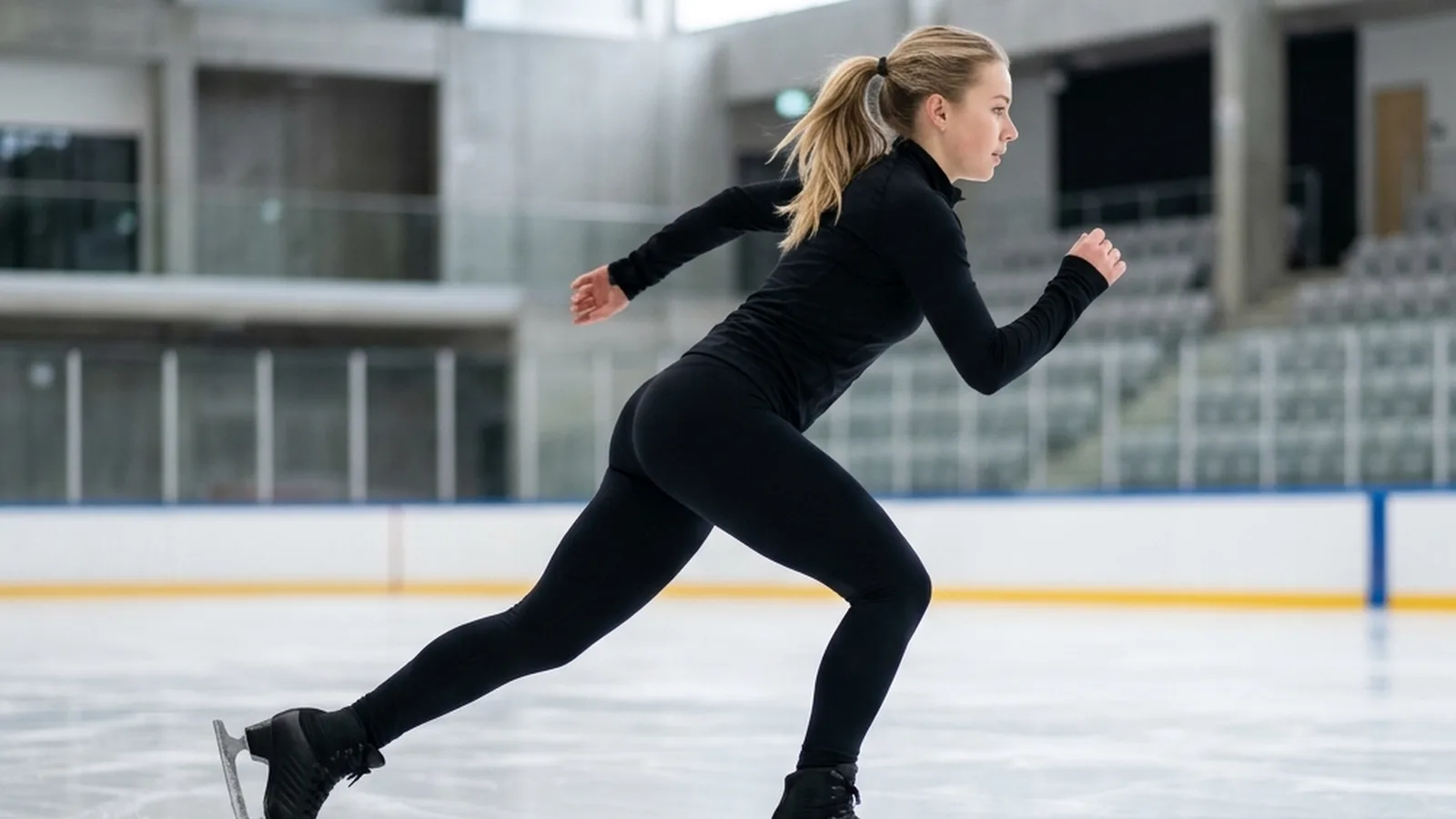
Indoor skating at the Stayner and Wasaga Beach arenas is an exceptional "non-impact" power builder for local athletes. By utilizing the low-friction surface of the ice, skaters can generate significant anaerobic force while bypassing the joint-loading associated with sprinting or jumping. This guide audits the Stayner Community Centre and Wasaga Stars Arena facilities, analyzes the biomechanical load on the gluteus medius and lateral stabilizers (based on Hoshizaki 1989), and provides an 8-week skating power protocol. Whether you are a hockey player seeking technical edge or a fitness enthusiast looking for a high-wattage winter cardio alternative, the local arena is a premier facility for lower-body conditioning.
The Non-Impact Power Alternative
In the context of the **Wasaga Hinge**—our platform’s framework for posterior-chain resilience—skating is a unique outlier. It is one of the few high-power activities that is almost entirely **eccentric-free**. Because the foot glides rather than impacts, the "braking forces" that cause muscle damage and joint strain in running are virtually eliminated. This makes skating an ideal high-intensity interval (HIIT) venue for athletes recovering from lower-body injuries or those seeking to increase their metabolic output without increasing their injury risk.
For the Stayner and Wasaga communities, the local arena is more than a hockey rink; it is a specialized training environment for lateral power and aerobic endurance.
Biomechanics: The Skating Stride & Lateral Stability
Efficiency on the ice is a product of technical precision. We break the skating stride down into three critical phases for fitness development:
1. The Loading Phase (Deep Flexion)
The "skater’s crouch" requires significant isometric strength in the quadriceps and glutes. By maintaining a deep knee-angle (ideally 90 degrees), you maximize the distance over which you can apply force. This "time under tension" is what builds the exceptional leg endurance associated with speed skaters.
2. The Lateral Extension (Power Drive)
Unlike running, where the force is applied backward, skating power is applied **laterally**. This engages the gluteus medius and the adductor group in a way that linear sports cannot replicate. Research by Hoshizaki et al. (1989) shows that the lateral drive of a skating stride produces significantly higher EMG activity in the hip stabilizers than a standard running stride.1
3. The Recovery (Balance & Core)
As the driving leg returns to the center, the athlete must balance on a single 1/8th-inch steel blade. This creates a high-fidelity proprioceptive stimulus, requiring the deep core muscles to stabilize the pelvis during the "glide phase."
Physiological Demands: The Hoshizaki Analysis
Hoshizaki (1989) identified that skating is a "Hybrid Metabolic" sport. A 60-minute public skating session, when approached with intent, combines the heart rate profile of moderate jogging with the muscular fatigue profile of a light leg-press session. For those utilizing the Stayner arena for power-skating intervals, the anaerobic demand can reach 90% of max heart rate, making it one of the most efficient tools for "skating-specific" metabolic conditioning.4
Local Arena Audit: Stayner vs. Wasaga
Local residents have access to two distinct training environments:
Stayner Community Centre (The Classic Training Hub)
The Stayner rink is known for its "harder" ice, which typically results from lower arena temperatures. For the power skater, this means less blade-drag and higher glide-efficiency, making it the ideal venue for high-cadence speed intervals and technical edge-work.
Wasaga Stars Arena (The Modern Facility)
The new Wasaga Beach facility offers superior amenities for the hybrid athlete. We recommend utilizing the walking track for a "Thermal Warm-up" before stepping onto the ice, ensuring the joint capsule is mobile and the muscles are primed for the high-force lateral extensions of the skating protocol.
The 8-Week Skating Power Protocol
Transform your public skating session into a high-output power block with this progression:
| Weeks | Focus | Sample Session (Stayner Arena) |
|---|---|---|
| 1-2 | Edge Stability | 40 min. Focus on "Long Glides"—balancing on one foot for 3 seconds per stride. |
| 3-4 | Lateral Drive | 50 min. 10 x 30-sec "Power Sprints" focusing on full leg extension. 1-min recovery. |
| 5-6 | Crossover Agility | 60 min. Incorporate 15 minutes of figure-eight patterns to build hip rotational strength. |
| 7-8 | Anaerobic Capacity | 60 min total. 5 x 2-min "Game Speed" intervals followed by 3-min active recovery. |
Gear Selection: Fitness vs. Hockey Skates
For the pure fitness athlete, **Fitness Skates** (which combine a soft boot with a hockey blade) are often the best choice. They provide the necessary ankle support for long-duration sessions without the "stiffness fatigue" of a high-end hockey skate. However, if your goal is maximum power and edge control, a traditional hockey skate allows for more precise "bite" into the ice, enabling the high-force extensions described in our power protocol.
Conclusion: The Ice Engine
Indoor skating in Stayner and Wasaga Beach is a high-leverage winter training tool. It solves the "impact fatigue" problem of road running while providing a premier stimulus for the hip stabilizers and cardiovascular system. By mastering the biomechanics of the lateral extension and following a structured power protocol, you can turn your local arena into a world-class lower-body conditioning facility. The ice is waiting—push off with intent.
How jump squats actually work
The article above describes what jump squats deliver, but not the machinery that delivers it. Understanding the mechanism is what lets you train the drill intelligently rather than just copying a rep scheme. The engine behind every jump squat is the stretch-shortening cycle (SSC) — the rapid sequence in which a muscle is lengthened (the dip of the squat) and then immediately shortened (the explosive drive upward). When that reversal happens fast enough, the muscle and its tendon behave like a stretched spring: they store elastic energy during the dip and release it during the jump, adding free force on top of what the muscle fibres generate on their own. This is why a countermovement jump is higher than a jump from a dead stop, and why the pause-rep variations in the progression above are training a genuinely different quality.
Most of the early improvement from plyometric training is not bigger muscles — it is a better-tuned nervous system. Reviews of plyometric adaptation consistently find that the first weeks of training raise force output mainly through neural changes: more motor units recruited, recruited faster, and a reduction in the protective reflexes that normally tap the brakes when a muscle is loaded quickly Markovic & Mikulic 2010. Markovic's meta-analysis confirms that plyometric training produces practically meaningful jump gains — roughly 5 to 9% depending on the jump type, with the largest effects in countermovement (stretch-shortening-cycle) jumps Markovic 2007. In plain terms, you are teaching the body to stop holding itself back — a fast adaptation, which is part of why 6–8 weeks is enough to move the numbers.
Over a longer horizon, the tissues themselves remodel. A 2022 systematic review and meta-analysis of plyometric training found a moderate increase in tendon stiffness (standardised mean difference 0.55), alongside a moderate lengthening of muscle fascicles (0.51) and a smaller change in pennation angle (0.29) Ramirez-delaCruz 2022. A stiffer tendon is not a negative here: it transmits the leg's force to the ground more efficiently and recoils faster, which is exactly the spring quality the SSC depends on. This dual timeline — neural gains in weeks, tendon and muscle remodelling over months — also explains the article's central safety message. The tendon adapts more slowly than the nervous system learns to load it, so the patellar tendon can be asked to absorb forces it has not yet structurally caught up to. Respecting that lag, by capping early volume and watching for bottom-of-kneecap soreness, is not caution for its own sake; it is matching your training to the biology of how the tissue actually changes.
Getting the load right: how heavy, and when to add weight
The progression above introduces light dumbbells at weeks 5–6, and there is good evidence for keeping that load genuinely light. A meta-analysis of the optimal load for maximal power across lower-body exercises found that for the jump squat specifically, peak power is produced at loads of 30% of one-rep-max or less — often at body weight alone Soriano 2015. This is the opposite of the squat, where peak power arrives at much heavier loads. The reason is velocity: a jump squat is a power exercise, and power is force multiplied by speed. Pile on too much weight and the bar slows down so much that total power falls, even though the muscles are working hard. The training goal of a jump squat is to move fast, so the load should be the most you can carry while still leaving the ground crisply. If a "loaded" jump squat starts to look like a slow grinding squat, the weight is wrong.
A more advanced way to sharpen the same drill is to pair it with a heavy strength exercise — the method strength coaches call complex or contrast training. The idea is to perform a heavy set (for example, a back squat) a few minutes before the jump squats, so the explosive set rides a temporary boost in nervous-system output. A systematic review and meta-analysis of complex and contrast training in team-sport athletes found both sequences produced positive gains in lower-body strength, vertical jump, and sprinting Cormier 2020. The catch is timing. The acute boost — sometimes called postactivation potentiation — only helps if the rest interval is right. A meta-analysis of vertical-jump studies found that resting 3 to 7 minutes after the heavy set produced favourable jump performance, while resting under 3 minutes was actively counterproductive because residual fatigue outweighed any potentiation Dobbs 2019. The same review is a useful reality check: averaged across all conditions, the potentiation effect was small and easy to squander, so this is a refinement for the experienced lifter, not a shortcut for a beginner. For the lifter following the eight-week plan, the practical takeaway is simpler — if you do your heavy squats and your jump squats on the same day, do the jumps when you are fresh (early in the session or after a full rest), never as an exhausted afterthought, and keep the added load light enough to stay fast.
Who benefits most — and three groups who need extra care
The headline numbers in this article come largely from athletes and younger trainees, so it is fair to ask how much a recreational adult who only lifts should expect. A 2024 systematic review and meta-analysis looked specifically at untrained participants and found that plyometric training produced a moderate improvement in muscular strength (effect size 0.61) and in cardiorespiratory fitness (0.61), with smaller, less certain effects on body-mass index and flexibility and no meaningful change in body-fat percentage Deng 2024. That last point is worth stating plainly: jump squats are a power and bone-loading tool, not a fat-loss intervention. For the lifter who has never jumped, the realistic prize is more usable power, stronger legs, and a bone-loading stimulus their barbell work does not provide — not a change in the mirror.
Older adults often assume plyometrics are off-limits, but the evidence is encouraging when the progression is sensible. A systematic review of lower-limb plyometric training in adults aged roughly 60 and over concluded the method is feasible and safe, with no studies reporting an increased rate of injuries or adverse events, and with benefits across muscle power, bone health, postural stability, and physical function Vetrovsky 2019. The qualifier is that those studies began from low-impact, well-supervised, gradually progressed entry points — squat-to-stand and small hops long before any real jump — which is exactly the on-ramp the eight-week plan above describes. An older adult, or anyone returning after a long lay-off, should treat the early weeks as the destination for a while, not a phase to rush through, and is wise to clear impact training with a clinician first if they have osteoporosis, joint replacements, or balance concerns.
Women, and pelvic-floor health. A consideration the original article does not raise is that repeated jumping spikes intra-abdominal pressure, and if the pelvic-floor muscles cannot match that pressure, the result can be stress urinary incontinence — leaking with jumps, coughs, or sneezes. This is far more common than most people realise: a review of young, never-pregnant female athletes reported incontinence prevalence rising from about 36% in low-impact sports to 50% in moderate-impact and 64% in high-impact activities, where high training volume and prolonged-impact sports drive the highest rates Joseph 2021. Leaking during jump squats is common, but it is not something to simply train through or accept as inevitable — it is a sign the pelvic floor needs attention. The encouraging part is that the first-line treatment is effective and low-risk: a Cochrane systematic review found that women doing pelvic-floor muscle training were roughly eight times more likely to report cure of stress incontinence than untreated women, and the authors support its inclusion as first-line conservative management Dumoulin 2018. Anyone — particularly during pregnancy or in the postpartum period — who notices leakage with jumping should scale the impact back and speak to a clinician or a pelvic-floor physiotherapist rather than pushing on.
What the evidence does not settle
Good health journalism is honest about the edges of its evidence, and jump-squat research has several. First, most of the strongest data — the meta-analyses on vertical jump, power, and complex training — were generated in athletes and younger adults, not in the middle-aged recreational lifter this article is written for, so the precise magnitude of benefit for that reader is an informed extrapolation rather than a measured certainty Cormier 2020. Second, the bone-density and balance findings, while genuinely promising, rest on a smaller and more heterogeneous body of work than the jump-performance numbers; the older-adult review that supports the safety case was explicit that the included studies were few and varied in quality Vetrovsky 2019. Treat the bone-density gains as a well-supported expectation, not a guarantee.
Third, and most important for safety, almost none of these trials were designed to detect rare adverse events. The reassuring "no increased injuries" conclusion in the older-adult review reflects supervised, carefully progressed programmes — it is not a promise that unsupervised, too-fast progression is harmless, and it cannot speak to the individual with an unstable knee or an irritable tendon Vetrovsky 2019. The tendon-overload caution that runs through this article exists precisely because the structural tissue adapts on a slower clock than performance does, and a continuum model of tendon pathology suggests the early reactive stage is reversible if load is reduced promptly but can progress if ignored Cook 2016. None of this is a reason to avoid jump squats. It is a reason to do them the way the evidence actually supports: progressed slowly, kept fast and light, landed on a forgiving surface, and stopped at the first honest sign that a tendon is complaining. If you have a diagnosed joint or cardiovascular condition, are pregnant or postpartum, or are returning from injury, treat this article as background reading and your clinician as the decision-maker.
References
Hoshizaki TBBiomechanical analysis of the skating stride. View source →Marino GWKinematics of ice skating at different velocities. View source →Upjohn TThree-dimensional analysis of ice hockey skating. View source →Foster CPhysiological profiles of speed skaters. View source →Markovic 2007Markovic G. Does plyometric training improve vertical jump height? A meta-analytical review. Br J Sports Med. 2007;41(6):349-355. doi:10.1136/bjsm.2007.035113 View source →Markovic & Mikulic 2010Markovic G, Mikulic P. Neuro-musculoskeletal and performance adaptations to lower-extremity plyometric training. Sports Med. 2010;40(10):859-895. doi:10.2165/11318370-000000000-00000 View source →Ramirez-delaCruz 2022Ramírez-delaCruz M, Bravo-Sánchez A, Esteban-García P, et al. Effects of plyometric training on lower body muscle architecture, tendon structure, stiffness and physical performance: a systematic review and meta-analysis. Sports Med Open. 2022;8(1):40. doi:10.1186/s40798-022-00431-0 View source →Soriano 2015Soriano MA, Jiménez-Reyes P, Rhea MR, Marín PJ. The optimal load for maximal power production during lower-body resistance exercises: a meta-analysis. Sports Med. 2015;45(8):1191-1205. doi:10.1007/s40279-015-0341-8 View source →Cormier 2020Cormier P, Freitas TT, Rubio-Arias JÁ, Alcaraz PE. Complex and contrast training: does strength and power training sequence affect performance-based adaptations in team sports? A systematic review and meta-analysis. J Strength Cond Res. 2020;34(5):1461-1479. doi:10.1519/JSC.0000000000003493 View source →Dobbs 2019Dobbs WC, Tolusso DV, Fedewa MV, Esco MR. Effect of postactivation potentiation on explosive vertical jump: a systematic review and meta-analysis. J Strength Cond Res. 2019;33(7):2009-2018. doi:10.1519/JSC.0000000000002750 View source →Deng 2024Deng N, Soh KG, Abdullah B, et al. Effects of plyometric training on health-related physical fitness in untrained participants: a systematic review and meta-analysis. Sci Rep. 2024;14(1):11272. doi:10.1038/s41598-024-61905-7 View source →Vetrovsky 2019Vetrovsky T, Steffl M, Stastny P, Tufano JJ. The efficacy and safety of lower-limb plyometric training in older adults: a systematic review. Sports Med. 2019;49(1):113-131. doi:10.1007/s40279-018-1018-x View source →Joseph 2021Joseph C, Srivastava K, Ochuba O, et al. Stress urinary incontinence among young nulliparous female athletes. Cureus. 2021;13(9):e17986. doi:10.7759/cureus.17986 View source →Dumoulin 2018Dumoulin C, Cacciari LP, Hay-Smith EJC. Pelvic floor muscle training versus no treatment, or inactive control treatments, for urinary incontinence in women. Cochrane Database Syst Rev. 2018;10(10):CD005654. doi:10.1002/14651858.CD005654.pub4 View source →Cook 2016Cook JL, Rio E, Purdam CR, Docking SI. Revisiting the continuum model of tendon pathology: what is its merit in clinical practice and research? Br J Sports Med. 2016;50(19):1187-1191. doi:10.1136/bjsports-2015-095422 View source →