The 60-second version
VO2max — the maximum rate at which the body can take in and use oxygen during exhausting exercise — is one of the strongest predictors of all-cause mortality and one of the most-trainable metrics in human physiology. Mandsager et al. 2018 in JAMA showed each unit improvement in VO2max (mL/kg/min) is associated with substantial reductions in long-term mortality risk; Buchheit & Laursen 2013 reviewed the HIIT programming variables (interval length, intensity, and recovery ratio) that drive those gains, and controlled trials using protocols built on those variables have produced 5–15% VO2max improvements in 4–8 weeks. The most-evidence-based protocols use 4×4-minute intervals at 90–95% maximum heart rate (the “Norwegian 4×4”), or shorter 30/30 patterns (Tabata-style at appropriate intensity for trained athletes). The protocols work for adults of all ages and fitness levels, including older adults where VO2max preservation matters most for functional capacity. The honest summary: VO2max-focused training is high-leverage when added to a Zone 2 base, but the high-intensity stimulus needs adequate recovery; 1–2 sessions per week is the sustainable maximum for most adults; pushing beyond produces diminishing returns and elevated injury risk.
Educational journalism, not medical advice. Every claim here is checked against its cited sources by editor Timothy Bunce — a health writer, not a physician. It isn’t specific to your situation: for health decisions, talk to your own clinician. How we work →
Some links in this article are affiliate links. If you buy through one, The Beachside Reader earns a commission at no extra cost to you. It never changes which products we pick, or what we say about them. Full affiliate disclosure →
Why VO2max matters
VO2max measures the maximum rate at which your body can take in oxygen, transport it to working muscles, and use it for energy production. It’s expressed in milliliters of oxygen per kilogram of body weight per minute (mL/kg/min). Typical ranges:
- Untrained adults: 25–35 mL/kg/min (women), 30–40 mL/kg/min (men)
- Recreationally fit: 35–45 mL/kg/min (women), 40–55 mL/kg/min (men)
- Highly trained: 50–70 mL/kg/min
- Elite endurance athletes: 70–90+ mL/kg/min
- World-class: 80–95 mL/kg/min
The clinical relevance: VO2max declines with age (typically 1% per year after 30 in untrained populations; less in trained populations). Below approximately 17.5 mL/kg/min in men or 15 mL/kg/min in women, functional independence becomes compromised. Maintaining VO2max above functional thresholds through middle age and beyond is one of the highest-leverage health interventions available.
Mandsager et al. 2018 (JAMA Network Open) studied 122,007 adults undergoing exercise stress tests. The mortality findings were striking: adults in the elite fitness category had an 80% lower risk of all-cause mortality than those in the low-fitness category (adjusted HR 0.20, 95% CI 0.16–0.24), and even a one-category drop from above-average to below-average fitness was associated with 41% higher mortality risk (adjusted HR 1.41, 95% CI 1.34–1.49). The relationship was dose-responsive across the full fitness range, with no observed upper limit of benefit; even elite performers had lower mortality than high performers (HR 0.77, 95% CI 0.63–0.95) Mandsager et al. 2018.
Evidence-based VO2max-targeting protocols
Norwegian 4×4 protocol
Helgerud et al. 2007 established this protocol Helgerud et al. 2007; subsequent studies have replicated effects across multiple populations:
- 10-minute warm-up: progressive easy to moderate.
- 4 minutes at 90–95% maximum heart rate (or 95% of HR-reserve)
- 3 minutes active recovery at 60–70% maximum HR
- Repeat 4 times (total work: 16 minutes; total session: ~40–45 minutes including warm-up and cool-down)
- Frequency: 2–3 sessions per week
- Duration: 6–12 weeks for measurable VO2max gains; sustained training maintains and continues improving
The 4-minute work interval is long enough that aerobic energy systems are strongly stressed; the 3-minute recovery allows partial but incomplete restoration, ensuring subsequent intervals push the cardiovascular system maximally Buchheit & Laursen 2013.
30/30 (Veronique Billat-style)
Shorter intervals at higher intensity:
- 30 seconds at 100–110% vVO2max (velocity at VO2max; effectively all-out for 30 seconds)
- 30 seconds active recovery
- Repeat 12–16 times (total work: 6–8 minutes; total session: 25–35 minutes)
- Frequency: 1–2 sessions per week
The Billat 30/30 protocol produces high VO2 demand cumulatively across many short intervals Billat 2001. Useful for trained athletes who can maintain high intensity through repeated short bouts.
Tabata protocol
Tabata et al. 1996 original study:
- 20 seconds at 170% VO2max-equivalent intensity
- 10 seconds rest
- Repeat 8 times (total: 4 minutes)
The original Tabata study used trained speed-skaters and stationary bike work Tabata et al. 1996. The intensity is supramaximal; not appropriate for recreational populations at the original prescription. Modified Tabata (1–2 minute rest blocks instead of 10 seconds) is more accessible.
Long intervals (1000m+, 5–8 minutes)
Used by competitive distance runners. 5×1000m at 5K race pace with 2–3 minute recoveries. The longer intervals produce VO2max stimulus while building race-specific pacing tolerance.
Rosko-style cycling intervals
Cyclists often use 5×5 (5 minutes hard, 5 minutes easy) or 4×8 (8 minutes hard at threshold, 8 minutes easy). Cycling allows higher sustainable intensity than running because the stress is distributed across more muscle groups.
How the adaptations actually happen
VO2max improvements come from multiple compounding mechanisms:
- Increased stroke volume: heart pumps more blood per beat. The dominant adaptation in trained athletes; trained hearts can have 50% larger stroke volumes than untrained.
- Improved oxygen extraction: working muscles extract more oxygen from the blood passing through (the “a-vO2 difference”). Driven by mitochondrial density, capillary density, and myoglobin content.
- Plasma volume expansion: more circulating blood volume supports cardiovascular output.
- Hemoglobin mass increase: more oxygen-carrying capacity per blood volume.
- Mitochondrial biogenesis: more energy-producing organelles per muscle cell.
- Capillary density: more blood vessels per gram of muscle for oxygen delivery and waste removal.
The peripheral adaptations (mitochondria, capillaries) come primarily from Zone 2 training. The central adaptations (stroke volume, plasma volume) come primarily from high-intensity intervals. The combination produces the largest VO2max gains; either modality alone produces partial gains.
Programming VO2max work into a weekly schedule
Polarized weekly structure (most evidence-based)
- Monday: Zone 2 easy, 60–90 min
- Tuesday: VO2max session (Norwegian 4×4 or similar)
- Wednesday: Zone 2 easy, 30–60 min
- Thursday: optional second VO2max or threshold session
- Friday: Zone 2 easy or rest
- Saturday: Long Zone 2 session, 90–180 min
- Sunday: rest or active recovery
The 80/20 distribution: 80% of weekly training time at Zone 2 intensity, 20% at high intensity. This pattern is robustly supported across endurance-sport literature.
Time-constrained alternative
For adults with 4–5 hours/week available:
- 2 sessions per week: one VO2max (45 min including warm-up/cool-down), one Zone 2 long (90–120 min)
- Strength training: 2 separate sessions per week, ideally on alternate days from cardio sessions
- Daily walking: 30+ minutes daily as base activity
Older-adult-specific
For adults 60+, VO2max preservation matters disproportionately:
- Modified Norwegian 4×4: 4 minutes at 80–90% of age-predicted max HR (vs. 90–95% for younger), or by RPE at 8–9/10
- Lower frequency: 1 session per week; recovery capacity is lower
- Pair with resistance training: 2 sessions per week per the menopause-strength article’s framework
- Cycling, rowing, or aquatic alternatives: lower joint impact than running
Measuring VO2max
Lab testing (most accurate)
Direct VO2max test on treadmill or cycle ergometer with metabolic cart measures actual oxygen consumption. Cost: $150–500 in Canada. Most accurate; necessary for elite athletes targeting precise training zones.
Field tests (good estimates)
- Cooper 12-minute run: distance covered in 12 minutes correlates with VO2max via a well-established formula.
- Yo-Yo intermittent test: progressive shuttle run with built-in recovery; common in team sports.
- 1.5-mile run time test: predicts VO2max from completion time.
- Bruce protocol stress test: clinical treadmill test; provides VO2max estimate plus cardiac monitoring.
Wearable estimates (convenient but less accurate)
Garmin, Polar, and similar fitness watches estimate VO2max from heart rate and pace patterns. Accuracy: roughly ±3 mL/kg/min. Useful for tracking trends; not precise enough for absolute training-zone calibration.
When to back off VO2max training
The high-intensity work produces high systemic stress. Watch for:
- Resting HR elevated 5+ bpm for multiple days: under-recovery
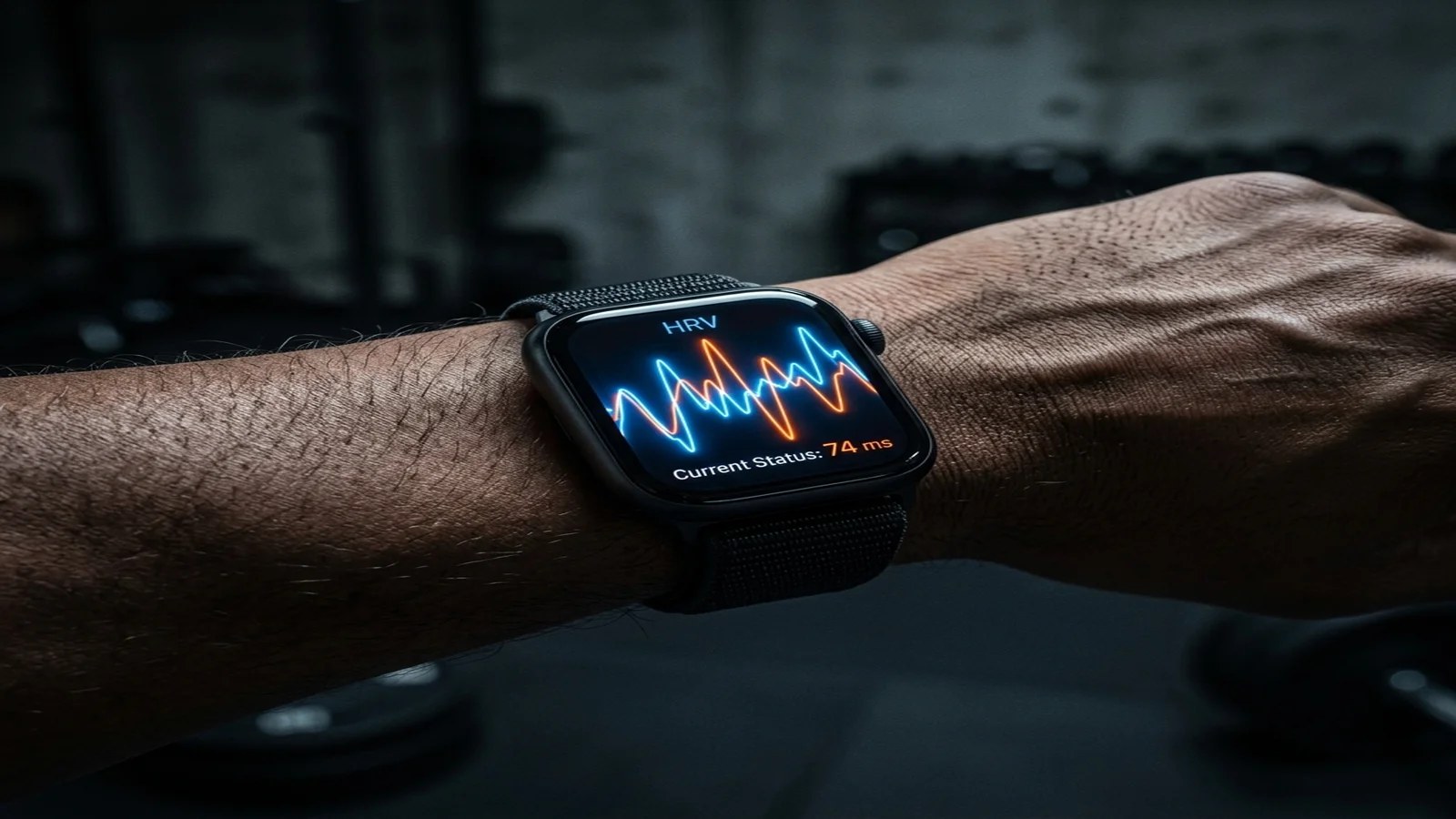
- HRV decline persistently below baseline: autonomic stress
- Persistent fatigue not relieved by 1–2 easy days
- Sleep disruption (particularly difficulty falling asleep)
- Mood changes: irritability, motivation drop, anxiety
- Perceived effort elevated at standard workloads
- Joint or tendon pain developing
The fix: deload week (50% of normal volume; cut high-intensity work) every 4–8 weeks. Most VO2max training plateaus or regresses without periodic recovery weeks built in.
Practical logistics and edge cases
Where to do VO2max work in Wasaga. Track work: most local high schools have outdoor tracks accessible after-hours and on weekends. Hill sprints: the Wasaga dune system (with appropriate environmental respect per the dune-sprints article) provides natural intervals. Bike intervals: indoor trainer or the Georgian Trail. Pool intervals: regional indoor pools.
Indoor cycling and trainer use. Smart trainers (Wahoo, Tacx, Zwift) make precision interval prescription easy. The structured workout files (e.g., 4×4 at threshold + 5%) execute consistently regardless of motivation level. For trained athletes, the indoor trainer is often the most-effective tool for VO2max work.
Heart rate vs. power-based prescription. Cyclists with power meters can prescribe by % of FTP (Functional Threshold Power); runners can use pace zones; everyone can use heart rate. HR has lag (30–60 seconds to reflect intensity changes); pace and power respond instantly. For interval work, HR-based prescription typically uses “90–95% max HR by end of interval” rather than “hit 95% immediately.”
Combining with strength training. Concurrent training (strength + endurance) can blunt strength gains slightly; the “interference effect.” For most fitness-focused adults, the trade-off is worth it for cardiovascular benefits. Hard strength sessions at least 6 hours separated from VO2max work; ideally on different days.
Pregnancy and VO2max work. Maintenance of pre-pregnancy fitness during pregnancy is supported by ACOG and SOGC guidance; intense interval work in second and third trimesters typically reduced based on individual tolerance and prenatal-care provider input. Don’t introduce new high-intensity work during pregnancy.
Hot-weather VO2max work. Heat stress reduces sustainable workload at any given heart rate. Adjust pace down 10–20% on hot days while maintaining target HR. Or shift VO2max work to morning windows when possible.
Practical takeaways
- VO2max is one of the strongest mortality predictors and one of the most-trainable metrics in human physiology.
- Norwegian 4×4 protocol: 4×4 minutes at 90–95% max HR with 3-minute recoveries. The most-evidenced VO2max-targeting interval.
- 30/30 and Tabata as alternatives for shorter sessions; intensity calibration matters.
- 1–2 sessions per week is the sustainable maximum for most adults; combine with Zone 2 base.
- Adaptations: stroke volume, plasma volume, mitochondrial density, capillary density, hemoglobin mass.
- 80/20 weekly distribution: 80% Zone 2, 20% high intensity. Polarized training framework.
- Older adults benefit disproportionately: VO2max preservation supports functional independence into 70s, 80s, 90s.
- Watch for under-recovery: HR/HRV monitoring catches over-training before injury.
Frequently asked questions
How often should I do VO2max sessions?
1–2 sessions per week is the sustainable maximum for most adults. The high-intensity stimulus needs adequate recovery; pushing to 3+ sessions per week typically produces diminishing returns and elevated injury risk. Add a third session only with strong recovery capacity (good sleep, low life stress, training history of multi-year consistency).
How long until I see VO2max improvement?
Measurable changes typically emerge in 4–8 weeks of consistent VO2max work. Improvements continue for 12–26+ weeks before plateauing; advanced trainees experience smaller incremental gains than beginners. The Mandsager 2018 mortality benefit applies even at modest VO2max levels; you don’t need elite values to capture most of the health benefit.
Is the Norwegian 4×4 better than Tabata?
Different tools for different goals. Norwegian 4×4 is more accessible (longer intervals at submaximal intensity) and has more evidence in non-elite populations. Tabata-style is more time-efficient but the original prescription is appropriate only for trained athletes. For most fitness-focused adults, Norwegian 4×4 is the better default.
Can I do VO2max work walking or hiking?
Walking typically can’t reach the intensity needed for VO2max stimulus in trained adults. Hill walking with backpack load can approach it for less-fit adults. For older or deconditioned adults, hill walking with HR monitoring is a feasible entry point that can produce VO2max benefit without the joint stress of running.
What if I don’t know my max heart rate?
The 220-minus-age formula provides a rough estimate but is ±10–15 bpm in many adults. Better: a recent maximal effort (the highest HR you’ve seen during a hard workout) approximates max HR. Best: a graded exercise test with HR monitoring identifies your actual max. For VO2max prescription, RPE (rate of perceived exertion at 8.5–9.5 of 10) approximates the same target.
References
Mandsager et al. 2018Mandsager K, Harb S, Cremer P, Phelan D, Nissen SE, Jaber W. Association of cardiorespiratory fitness with long-term mortality among adults undergoing exercise treadmill testing. JAMA Netw Open. 2018;1(6):e183605. View source →Helgerud et al. 2007Helgerud J, Hoydal K, Wang E, et al. Aerobic high-intensity intervals improve VO2max more than moderate training. Med Sci Sports Exerc. 2007;39(4):665-671. View source →Buchheit & Laursen 2013Buchheit M, Laursen PB. High-intensity interval training, solutions to the programming puzzle. Sports Med. 2013;43(5):313-338. View source →Tabata et al. 1996Tabata I, Nishimura K, Kouzaki M, et al. Effects of moderate-intensity endurance and high-intensity intermittent training on anaerobic capacity and VO2max. Med Sci Sports Exerc. 1996;28(10):1327-1330. View source →Billat 2001Billat LV. Interval training for performance: a scientific and empirical practice. Sports Med. 2001;31(1):13-31. View source →