The 60-second version
Devil’s Glen Provincial Park sits about 35–40 minutes southwest of Wasaga Beach, on the Niagara Escarpment just outside Singhampton, near Glen Huron. It is one of the best vertical-hiking options within an hour of central Wasaga: a non-operating, 61-hectare park — no fees, no facilities — where the Bruce Trail traverses the Mad River gorge and a viewing platform hangs over the valley. For Wasaga residents who want serious leg conditioning without travelling to Blue Mountain or further, Devil’s Glen is the under-used regional standout. The published research on incline hiking as cardiovascular and metabolic stimulus is consistent (Padulo 2013; Sloniger 1997): vertical hiking at moderate effort produces VO2 demand within 70–85% of maximum, with much lower joint impact than running. The practical session most fit adults can manage: the roughly 3.5 km Bruce Trail loop through the glen (about 160 m of cumulative gain), or the Mad River Side Trail out-and-back at around 6.5 km with roughly 240 m of climbing. Critical: there is little flat ground, the terrain is rocky and often muddy, and the descent is harder on the knees than the climb.
Educational journalism, not medical advice. Every claim here is checked against its cited sources by editor Timothy Bunce — a health writer, not a physician. It isn’t specific to your situation: for health decisions, talk to your own clinician. How we work →
Some links in this article are affiliate links. If you buy through one, The Beachside Reader earns a commission at no extra cost to you. It never changes which products we pick, or what we say about them. Full affiliate disclosure →
What Devil’s Glen Provincial Park actually is
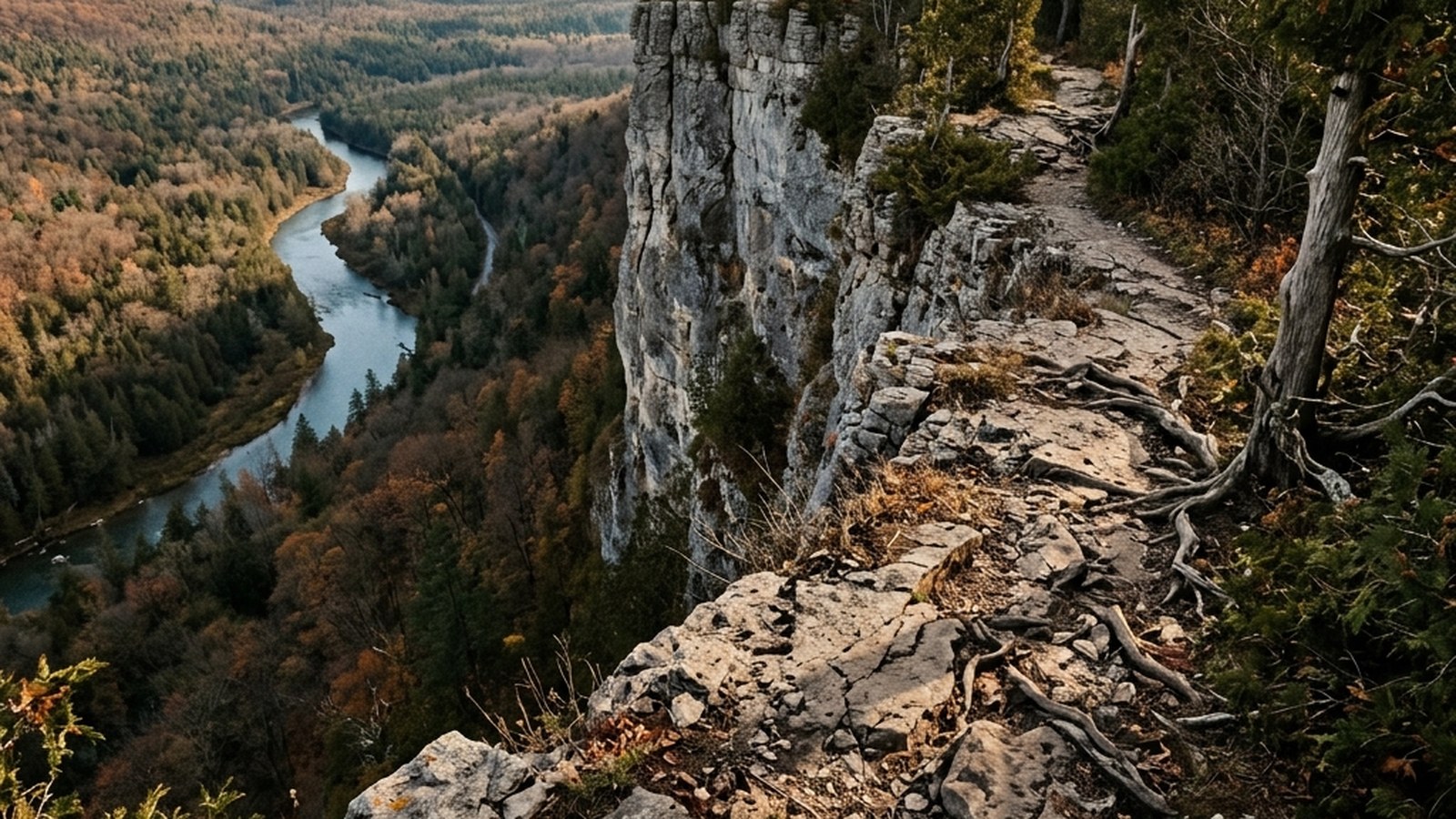
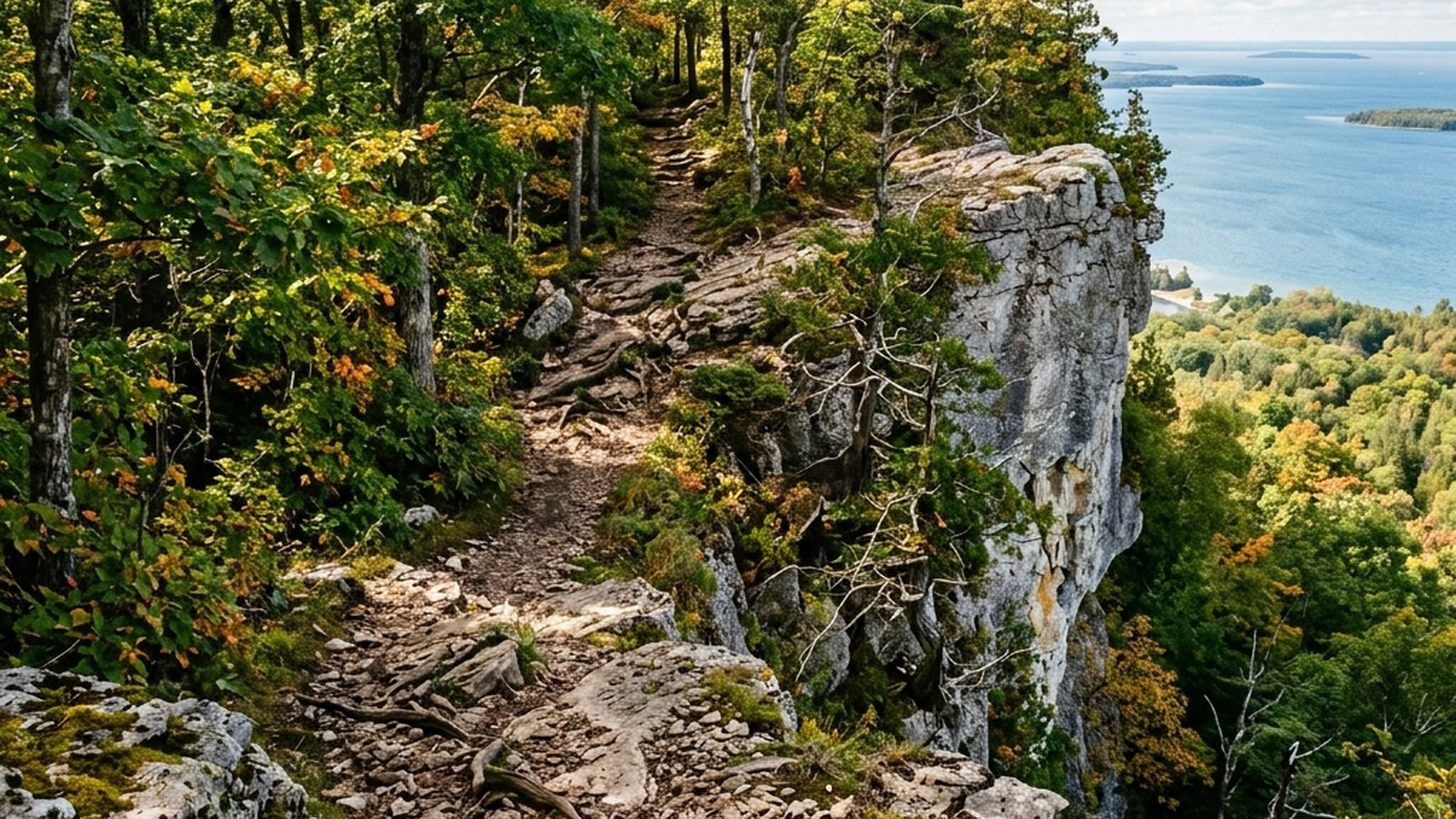
Devil’s Glen Provincial Park is a 61-hectare day-use natural environment park on the Niagara Escarpment in Clearview Township, just outside the village of Singhampton near Glen Huron. The park protects a section of the Mad River gorge, carved by glacial meltwater, where the Mad River winds below steep limestone walls. The park’s main physical features are the steep gorge with the river at the bottom, mature hardwood forest on the upper plateau, a viewing platform over the valley, and the Bruce Trail traversing the elevation differential Ontario Parks.
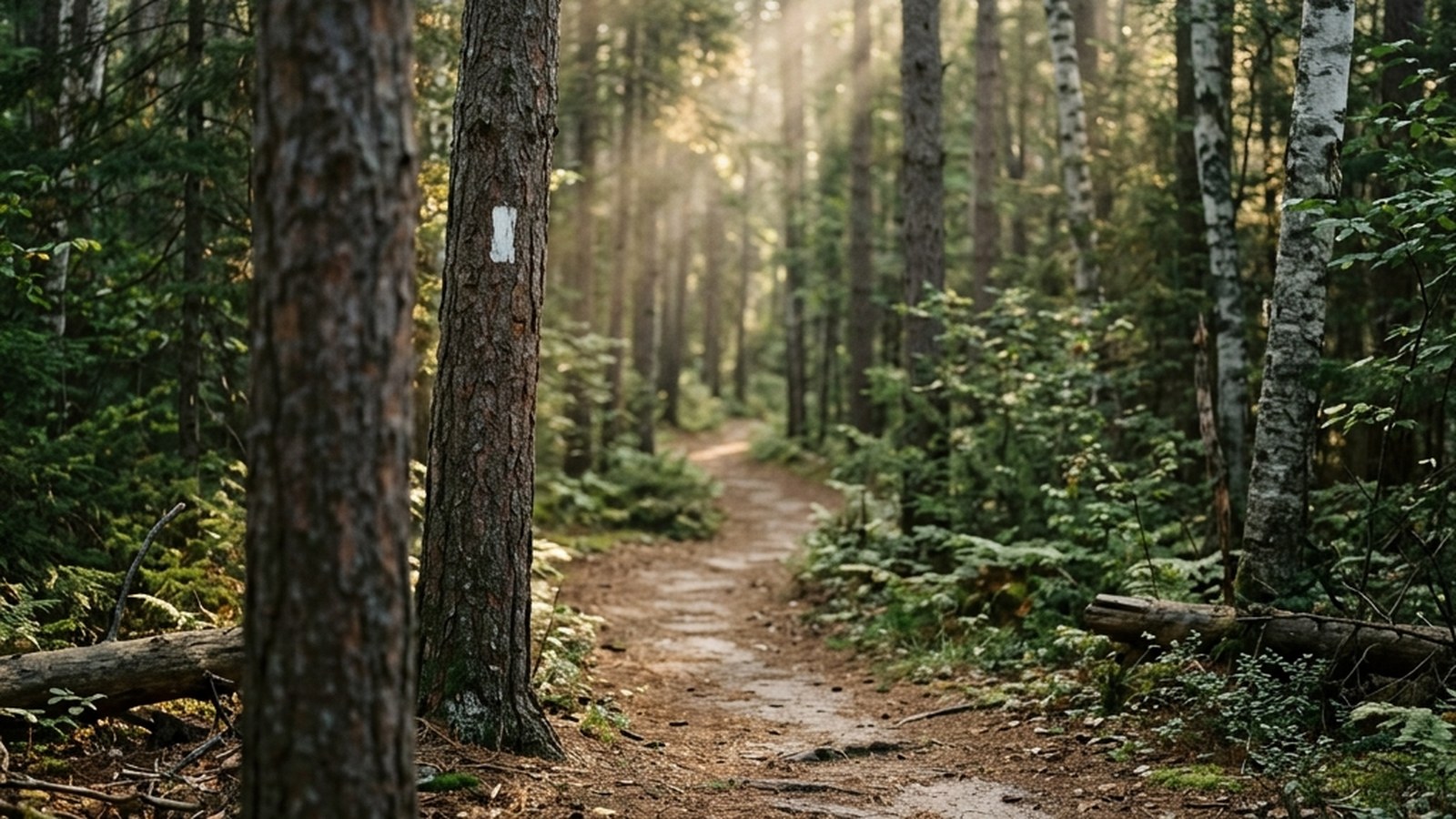
It is a non-operating park: no fees, no gate, and no facilities — no toilets, no water service, no campground. There is just a small parking lot with access to the Bruce Trail; the value is the trail and the geography rather than visitor amenities. Parts of the surrounding trail network cross the private property of the Devil’s Glen Country Club ski area, so stay on the blazed trail.
From central Wasaga Beach, the drive to the Devil’s Glen parking lot is roughly 35–40 minutes, heading through Stayner and Singhampton. The small lot sits off County Road 124 between Singhampton and Glen Huron and is signed from the road. It fills on fine weekends — go early.
The vertical: why it matters as fitness stimulus
The Niagara Escarpment provides genuinely vertical hiking that is rare in central Ontario. Most regional hiking trails — Tiny Marsh, Wasaga Provincial Park, Awenda — are flat or gently rolling. At Devil’s Glen there is little flat ground — you are either climbing or descending. The loop through the glen stacks roughly 160 metres of cumulative elevation in only about 3.5 km, and the longer Mad River Side Trail out-and-back roughly 240 metres.
The cardiovascular and musculoskeletal stimulus of incline hiking has been well-documented. Padulo 2013 (uphill running mechanics) and Sloniger 1997 (anaerobic capacity at incline) are the foundational papers describing how incline work raises oxygen demand and shifts muscle recruitment relative to level walking. The relevant practical points:
- Heart rate sits in zone 3–4 on the uphill segments, comparable to a moderate running session, but with much lower joint impact.
- The posterior chain (glutes, hamstrings, calves) is recruited more heavily than on flat hiking. Multi-day soreness is most often in the calves.
- The descent loads the quadriceps eccentrically, which produces delayed-onset muscle soreness more reliably than the ascent. The descent is also where most hiking knee injuries occur.
- Average energy cost for a 70 kg adult on a steady moderate-grade hike is roughly 500–700 kcal per hour, depending on grade and pace.
- The sustained moderate-to-hard effort across 90–120 minutes is a higher-quality cardiovascular stimulus than most casual gym sessions, particularly for trainees who don’t naturally push to fatigue indoors.
The specific trail sections
The trail system within and adjacent to Devil’s Glen is part of the broader Bruce Trail Bruce Trail Conservancy. The most useful sections for the Wasaga-based hiker:
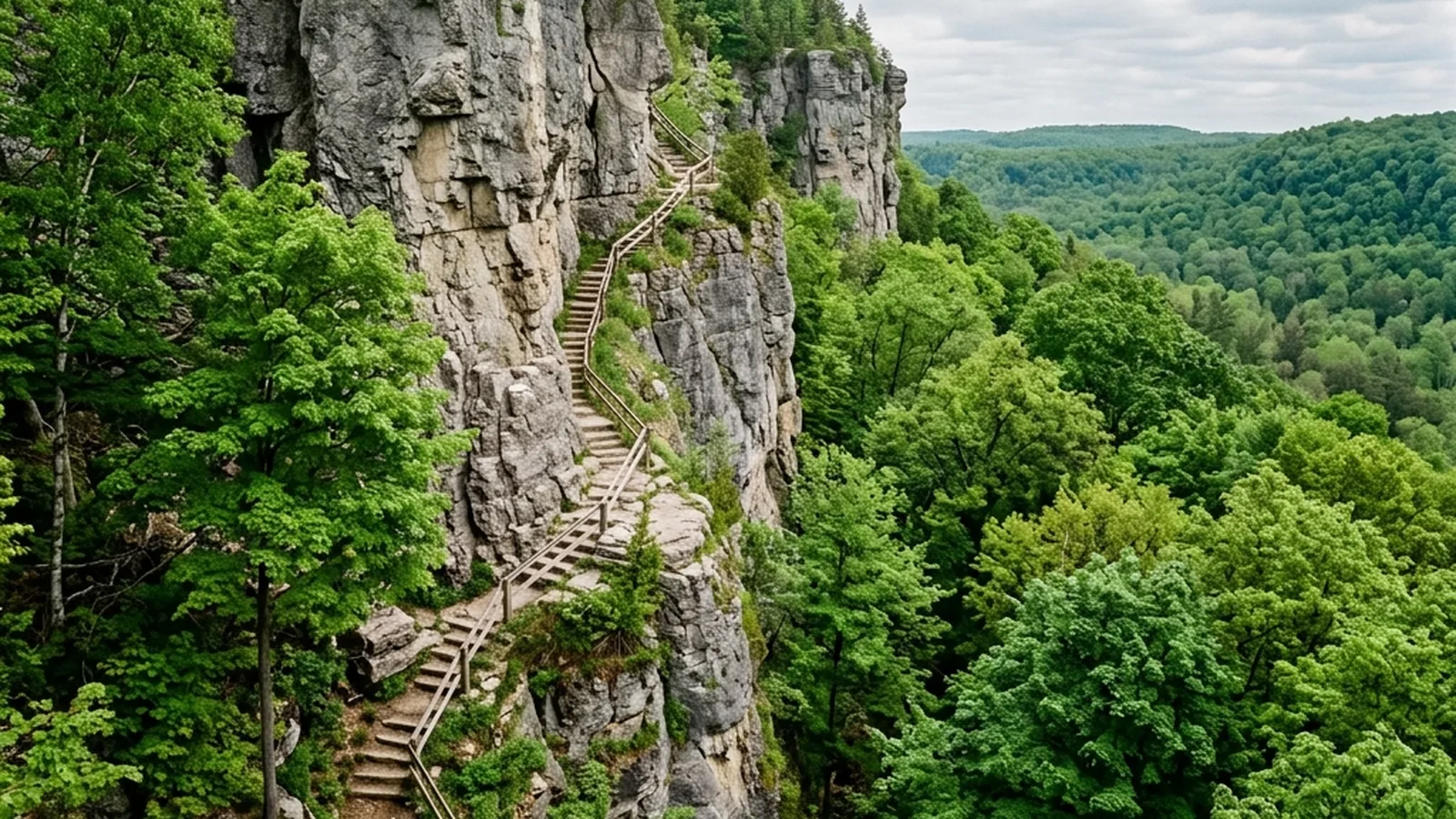
- Devil’s Glen Bruce Trail loop: about 3.5 km, roughly 160 metres of cumulative elevation. From the parking lot, the Bruce Trail passes the viewing platform and drops into the gorge on rocky steps and staircases, with a climb back to the plateau. The descent is the technical section — rocky, often muddy after rain, requiring careful foot placement. Estimated time: 1–1.5 hours.
- Mad River Side Trail: roughly 6.5 km out-and-back, about 240 metres of cumulative gain, descending steeply toward Glen Huron along the Mad River. Allow 2–2.5 hours. In spring melt the river can flood sections of the trail — expect mud.
- The big day: roughly 14 km — locals link the Bruce Trail, the Mad River Side Trail, and a stretch of the Ganaraska Trail into an unofficial circuit of about 14 km. Nearby Nottawasaga Bluffs Conservation Area (about ten minutes away, home of the Keyhole Side Trail) pairs well if you want a second, shorter stop instead.
For a first-time visitor, the roughly 3.5 km Bruce Trail loop is the right starting point. It samples the platform view, the steep descent, and the river bottom, and ends back at the parking lot for an easy exit.
Programming considerations: how this fits a training week
A vigorous Devil’s Glen hike is a substantial training stimulus. The systemic stress is comparable to a hard interval workout or a long-run day, with the descent producing eccentric muscle damage that lingers 48–72 hours.
Practical programming guidelines for a fit but not elite trainee:
- Once per 1–2 weeks is the sustainable frequency for a vigorous full-day hike.
- Schedule 48–72 hours of recovery from heavy lower-body strength training before the hike, and the same recovery interval after.
- Don’t schedule on a day before a long-run; the eccentric quadriceps load lingers and degrades running quality for several days.
- Increase volume gradually: a first visit should target the 3.5 km loop, a second visit can extend by 30–50%, etc. The injury risk on the descent rises sharply with fatigue.
- Pair with a same-day light upper-body strength session if you want a full-body training day; combining with a hard cardio session is typically too much.
Safety considerations
Devil’s Glen is more technical than most local trails, and the consequences of poor decisions are larger.
- Descent injury risk: the rocky descent is where injuries are most likely. Trekking poles dramatically reduce knee load and improve balance on the steep sections. Don’t descend faster than your foot placement is reliable.
- Cell coverage is intermittent in the gorge bottom. Tell someone where you’re going and when to expect you back. Consider a satellite messenger for solo hikers.
- Weather changes the technical difficulty: rain makes the rocky descent dangerous, ice in shoulder-season makes it actively hazardous. Late spring and summer are the safe windows; consult local conditions before fall and winter visits.
- Hydration and food: 1.5–2 hours of vigorous hiking burns 500–1,000 kcal. Carry at least 1 L of water per person, more in summer heat. Bring substantial snacks (nut bars, sandwich, fruit) particularly for the longer extensions.
- Wildlife: black bears are present in the area but rarely seen on the day-use loop. Make noise on blind corners; carry bear spray for the longer extensions if camping or in early morning.
- Tick exposure: the trails pass through grassy and brush sections with documented tick presence. Cover legs, do a tick check at the parking lot, and review the local tick prevention article for the broader protocol.
What to bring
Devil’s Glen rewards a slightly more equipped approach than casual local trail walking:
- Hiking shoes or boots: trail runners with grip work for the day-use loop; mid-cut hiking boots are better for the longer extensions and the descent.
- Trekking poles: worth the small investment. Reduces quad load on descent by ~20%, helps balance on rocky sections.
- Backpack: 15–25 L day-pack for water, food, layers, first-aid kit, headlamp.
- Layers: the gorge bottom is noticeably cooler than the upper plateau, especially in summer afternoons. A light fleece or wind layer covers the differential.
- First-aid kit: minor cuts, blisters, sprain-tape are the realistic incidents. A basic kit fits in a sandwich bag.
- Map or downloaded GPS track: AllTrails or the Bruce Trail Conservancy app both have the routes. Cell coverage is intermittent; download offline before driving.
Expected adaptations from regular Devil’s Glen visits
For Wasaga-based hikers integrating Devil’s Glen as a once-per-1–2-week destination over a 2–3 month season:
- Cardiovascular adaptation: meaningful improvements in resting heart rate and 5K running pace at the same heart rate after 6–8 visits. The sustained zone 3–4 effort is the high-quality stimulus.
- Lower-body conditioning: substantial improvements in single-leg balance, ankle stability, and posterior-chain strength. Multi-day soreness should diminish from session 1 to session 4.
- Joint health: paradoxically, regular trail hiking with appropriate progression is generally well tolerated by the knees and ankles, provided volume increases gradually. The descent loading is the variable to manage carefully.
- Mental health and stress reduction: forest and gorge environments produce measurable cortisol-reduction effects similar to forest-bathing protocols.
- Habit formation: the destination quality (rather than another generic trail) keeps the hike novel enough that adherence over months is strong.
Seasonal considerations
Spring (April-May): excellent conditions once the snowmelt is done. The Mad River is at its highest spring flow, which is dramatic. Trails can be muddy on the descent — bring boots not trail runners.
Summer (June-August): peak season. Trails are dry, gorge is comfortably cool. Trailhead parking fills on weekends — arrive early. Tick season runs through July; cover legs.
Autumn (September-October): the second peak season and arguably the best for photography. The hardwood plateau is exceptional in colour. Cool temperatures make the climb more comfortable; descent visibility is better through fallen leaves.
Winter (November-March): the descent becomes ice-covered and dangerous; as a non-operating park, the trails are not maintained for winter use. Snowshoeing is feasible on the upper plateau in stable snow conditions, but the gorge descent should be avoided unless ice cleats and significant winter-trail experience are present.
Practical takeaways
- 35–40-minute drive from central Wasaga Beach, through Stayner and Singhampton to County Road 124.
- The roughly 3.5 km Bruce Trail loop with about 160 metres of cumulative elevation is the right first visit.
- 150–240 metres of cumulative elevation per session produces a high-quality cardiovascular stimulus comparable to a hard interval workout.
- Trekking poles meaningfully reduce descent injury risk and quad load.
- Once per 1–2 weeks is the sustainable training frequency; recovery interval is 48–72 hours.
- No fees and no facilities — a non-operating park with a small lot that fills on fine weekends; go early.
Frequently asked questions
Is there an entry fee or permit?
No — Devil’s Glen is a non-operating provincial park, which means no facilities and no fees. There is no gate and no pay station; you park at the small lot and walk in. Camping and fires are not permitted.
Is Devil’s Glen a beginner hike?
The main loop is appropriate for fit beginners with some trail experience — the descent is technically demanding but not exposed. Truly beginner hikers should start at Tiny Marsh or Wasaga Provincial Park first and build comfort with rocky-trail surfaces before attempting Devil’s Glen. Children 10+ with hiking experience handle the loop fine.
Can I bring my dog?
Yes, on leash. The rocky descent is challenging for dogs — particularly older or large-breed dogs whose joints will feel the impact. Most local hiking dogs handle the trail well; bring water for them.
Are there overnight options?
Devil’s Glen is day-use only — camping and fires are not permitted in the park. The nearest camping is Wasaga Beach Provincial Park (about 45 minutes north), and Collingwood and the Creemore–Singhampton area have inns and B&Bs.
How does this compare to Blue Mountain hiking?
The Blue Mountain area has a bigger developed trail network and more route options, but it is busier and parking is paid in peak periods. Devil’s Glen concentrates real climbing into a shorter, quieter visit with a more dramatic gorge environment. They’re complementary destinations: Blue Mountain for the longer-day option, Devil’s Glen for the higher-density quality session.
References
Padulo et al. 2013Padulo J, Powell D, Milia R, Ardigo LP. A paradigm of uphill running. PLoS One. 2013;8(7):e69006. View source →Sloniger et al. 1997Sloniger MA, Cureton KJ, Prior BM, Evans EM. Anaerobic capacity and muscle activation during horizontal and uphill running. J Appl Physiol. 1997;83(1):262-269. View source →Ontario Parks — Devil’s GlenOntario Parks. Devil’s Glen Provincial Park — visitor information and trail conditions. View source →Bruce Trail ConservancyBruce Trail Conservancy. Trail information and member resources for the Niagara Escarpment trail. View source →