The 60-second version
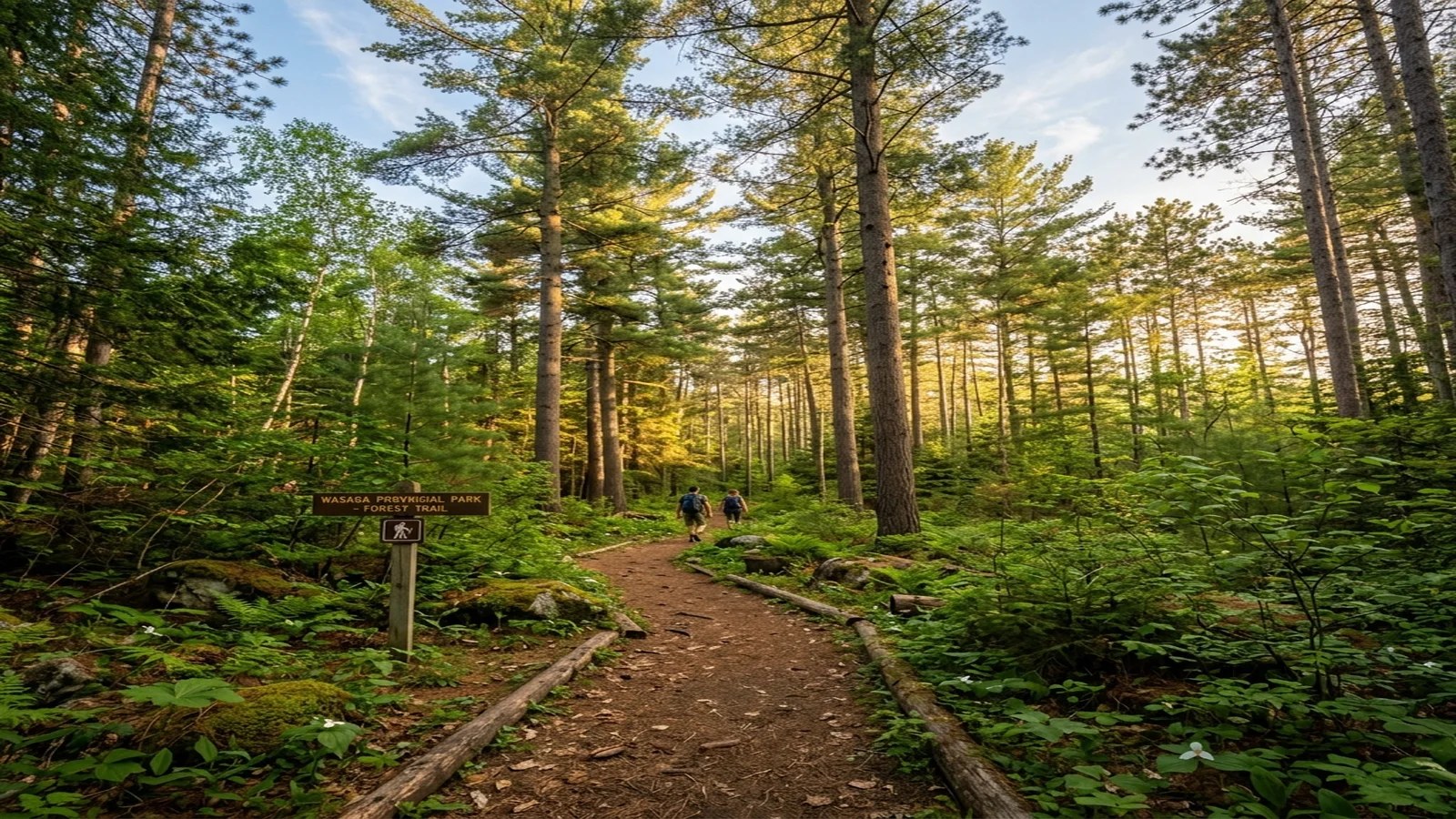
The Ganaraska Hiking Trail’s Wasaga section is a 17 km segment of the larger 480 km Ontario backbone trail. It threads from the Wasaga Beach Nordic Centre south through the Pine Bush conservation area, crosses Highway 26 near Stayner, and connects to the Tiny Marsh portion. The Wasaga section is mostly singletrack through pine forest with two notable elevation features (the “Hill of Despair” just south of the Nordic Centre and the gradual climb to the Pine Bush ridge). Year-round use; deeply rutted and muddy April-May, packed and runnable June-October, ice-cleated December-March. The trail is free, no permit required. The hardest navigation challenge is the Highway 26 crossing — the trail blazing disappears for 200 metres while you walk along the shoulder. For Wasaga residents this is the closest sustained-elevation training surface; for visitors this is the trail-running secret most beach tourists never find.
Educational journalism, not medical advice. Every claim here is checked against its cited sources by editor Timothy Bunce — a health writer, not a physician. It isn’t specific to your situation: for health decisions, talk to your own clinician. How we work →
Some links in this article are affiliate links. If you buy through one, The Beachside Reader earns a commission at no extra cost to you. It never changes which products we pick, or what we say about them. Full affiliate disclosure →
Where the Wasaga section starts and ends
The trail’s Wasaga section runs from the Nordic Centre parking lot off Sunnidale Road south to the connection point with the Tiny Marsh trail network, just north of County Road 92. The full Wasaga segment is 17.4 km point-to-point. Most users do an out-and-back from one of three parking access points: the Nordic Centre lot (north terminus), the Pine Bush Road parking pull-off (mid-trail, 8 km in), or the Stayner Conservation Area lot (south terminus area, near Highway 26).
The trail is white-blazed (a single white rectangle on a tree trunk roughly every 50 metres) per the Ganaraska Hiking Trail Association’s standard GHTA. Side trails branching off are blue-blazed. The blazing is well-maintained on the Wasaga section; lost-trail risk is low except at the Highway 26 crossing.
Terrain and footing through the year
The Wasaga section is mostly packed-dirt singletrack through mixed pine and birch forest, with two extended sections of glacial-till ridge that gives the trail its character. April through mid-May the trail is frequently impassable — the sandy substrate plus snowmelt runoff creates 6-inch-deep mud sections that swallow trail-running shoes and break poles. Locals call this stretch “the bog” even though it’s nominally a high-and-dry trail.
From late May through October the trail packs down to a runnable surface. June through August is peak mosquito; bring DEET or a head net for sustained efforts. Autumn (September-October) is the trail’s best month — firm footing, no bugs, the maple sections turn red in the upper canopy.
December through March the trail freezes solid. With ice cleats over standard trail runners (or a winter trail-specific shoe with a more aggressive lug pattern), the Wasaga section is one of the only consistently-runnable sustained-effort surfaces in the South Georgian Bay region. Snowshoers also use the trail; the etiquette is that runners stay in the runner-packed line and don’t post-hole the snowshoe trough.
The two elevation features
Most of the Wasaga section is rolling, but two features stand out for training purposes:
The “Hill of Despair” — an unofficial local name for a 600-metre climb that starts roughly 1.2 km south of the Nordic Centre. Vertical gain is modest (about 35 metres) but the gradient is sustained 8-10% with no plateau, and the surface is loose root-and-rock. Repeated ascents are how local trail runners do their hill work in winter when stairs are iced over and gym hill repeats aren’t available.
The Pine Bush ridge climb — a longer, gentler 1.4 km climb to the highest point of the Wasaga section (roughly 280 m elevation, about 70 m above the Nordic Centre starting elevation). The surface is firmer and the gradient averages 4-5%. This is the spot where most runners find their cardiovascular ceiling on a 10 km out-and-back; if you can run the Pine Bush climb without walking, you’re in solid trail-running shape.
Three suggested routes
- The Nordic Centre out-and-back (5 km total) — Start at the Nordic Centre lot, run south through the Hill of Despair, turn around at the first major trail junction (you’ll see a wooden bench). Beginner-friendly trail introduction.
- Pine Bush loop (10 km total) — Same start, continue past the Hill of Despair, summit the Pine Bush ridge, descend the far side, return on the same trail. The signature local trail-running training run.
- Full Wasaga section (17.4 km point-to-point) — Requires a car shuttle to the Stayner end, OR run as an out-and-back which makes it 35 km of sustained singletrack. Solid half-marathon-class training day.
The Highway 26 crossing — the navigation hazard
The single hardest navigation point on the Wasaga section is where the trail crosses Highway 26 just south of the Pine Bush ridge. The blazing on the south side of the highway is roughly 200 metres east of the obvious crossing point. Runners doing the trail for the first time often miss the connection, walk along the highway shoulder for a kilometre, and bail back to the Pine Bush parking lot.
The fix: when you exit the woods on the north side of Highway 26, walk EAST (left, if you’re heading southbound) along the highway shoulder for 200 metres. The next white blaze is on a hydro pole on the north side of the highway; cross the highway at that pole. The trail re-enters the woods directly across from the pole. No signage marks this; the GHTA blaze pattern is the only navigation aid.
Practicalities
- Cell coverage: intermittent through the Wasaga section. Bell and Rogers both work at the Nordic Centre and at the Highway 26 crossing; spotty in between.
- Water: no potable water on the trail. Carry your own.
- Bathrooms: at the Nordic Centre lot only; no facilities further south.
- Parking fees: the Nordic Centre lot is free in summer, $8/day in winter (cross-country ski parking applies). Pine Bush Road pull-off is free year-round.
- Dogs: permitted on-leash. Off-leash is unofficially tolerated but bears occasionally use the trail in shoulder seasons; keeping the dog leashed is strongly advised April through October.
- Bears: Black bears use the southern Wasaga section in spring and fall. Make noise on blind corners. Bear spray is sensible if you’re running pre-dawn or post-dusk.
How it compares to the Wasaga Provincial Park trails
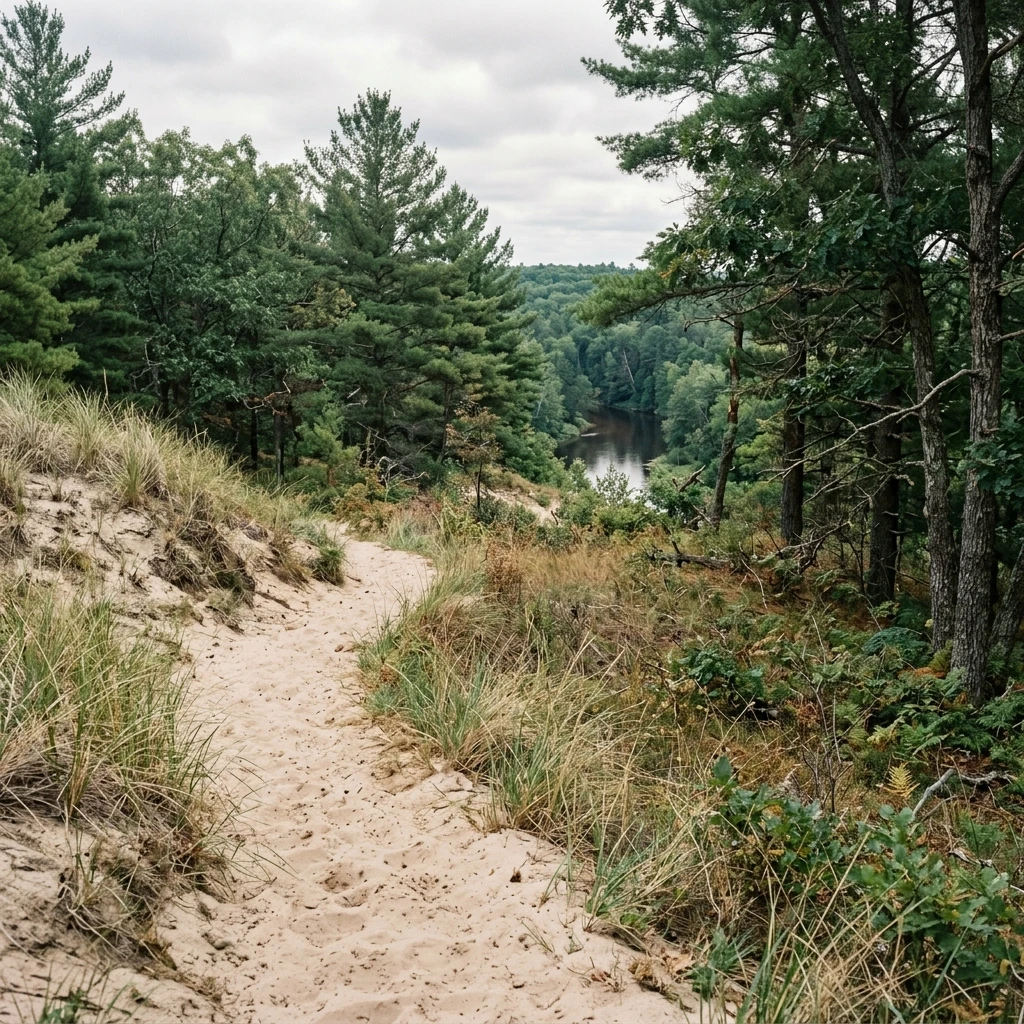
The Wasaga Provincial Park trail system we covered separately is sand-and-dune Ontario Parks; the Ganaraska Wasaga section is forest-and-ridge. They’re complementary, not competitive: the Provincial Park is for surface-stability training (calf, ankle, deep stabilisers); the Ganaraska is for elevation and sustained cardiovascular work. A reasonable weekly local trail-running rotation is one Provincial Park session for stability, one Ganaraska session for elevation.
Practical takeaways
- 17.4 km of singletrack from the Nordic Centre south to Stayner, white-blazed, mostly forested, two elevation features.
- Avoid April-May. The trail is impassable mud. June-October prime, December-March with ice cleats.
- Three routes: 5 km beginner, 10 km Pine Bush loop, 17.4 km / 35 km full section.
- Highway 26 crossing is the navigation hazard — walk 200 m east on the shoulder to find the next blaze.
- Pairs with Provincial Park trails for a complete local rotation: stability there, elevation here.
Frequently asked questions
Is the Wasaga section open year-round?
Yes — with seasonal caveats. April-May is impassable mud. June-October prime trail-running. December-March is firm with ice cleats. Snowshoers and runners share the trail in winter without issue.
Do I need a permit?
No. The Ganaraska Hiking Trail is free public access. Parking at the Nordic Centre is free in summer; cross-country ski parking applies in winter ($8/day).
Are dogs allowed?
Yes, on-leash. Off-leash is unofficially tolerated but bear activity through spring and fall makes leashing strongly advisable.
How fit do I need to be?
The Nordic Centre out-and-back (5 km) is achievable for any moderate-fitness adult. The Pine Bush loop (10 km with the ridge climb) requires sustained running fitness — if you can run a flat 10 km in 60 minutes, the Pine Bush loop in 70-80 minutes is realistic. The full 17.4 km section is half-marathon territory.
Is it safe alone?
Generally yes during daylight in the May-October prime season. Cell coverage is intermittent. Tell someone your route and ETA. Avoid pre-dawn and post-dusk solo for bear-activity reasons.
References
GHTAGanaraska Hiking Trail Association. Trail Guide and Maintenance Standards. Wasaga Section. View source →Ontario ParksOntario Parks. Wasaga Beach Provincial Park: Visitor Resources and Conservation Area Maps. View source →