The 60-second version
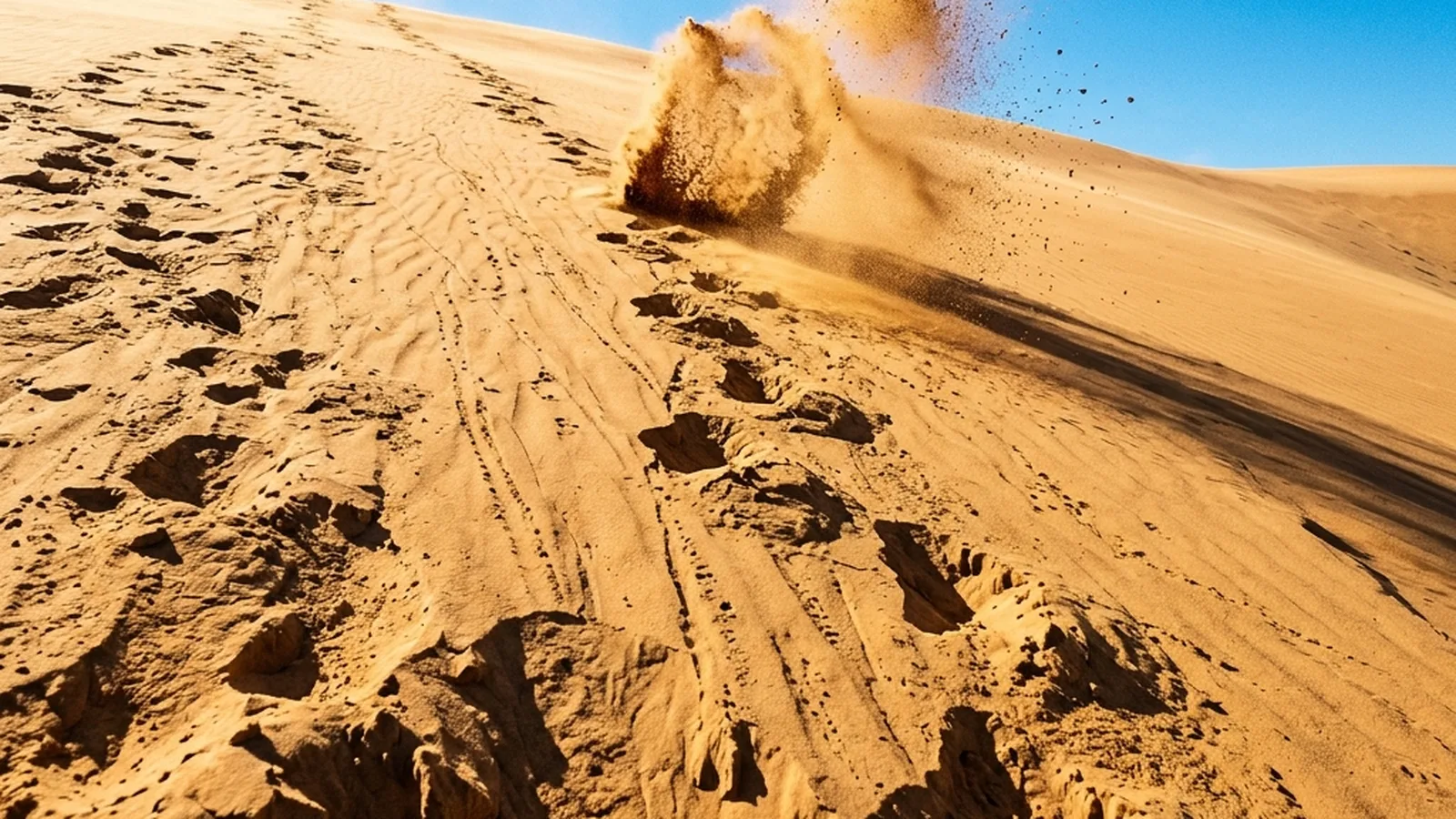
Sand-based hill sprints are one of the highest-quality conditioning stimuli available to anyone within driving distance of Wasaga Beach — provided you do them on the legal beach approach paths and access ramps, not on the protected active dune ecosystems themselves. The metabolic cost of running on dry sand is roughly 1.6× that of running on a firm surface at the same speed (Lejeune et al. 1998; Pinnington & Dawson 2001), and combining the sand surface with a 4–15° incline produces an enormous anaerobic-cardiovascular load with substantially lower joint impact than equivalent asphalt sprints. The protocol that works for most healthy adults: 6–10× 10–30-second sprints at 90–95% effort up a moderate dune access ramp, with 90–180 seconds of walking recovery, performed once weekly as part of a balanced training week. Critical: stay on signed beach access paths and the open beach surface; the active dune ecosystems containing rare species like the Lake Huron Locust are legally protected and ecologically irreplaceable.
Educational journalism, not medical advice. Every claim here is checked against its cited sources by editor Timothy Bunce — a health writer, not a physician. It isn’t specific to your situation: for health decisions, talk to your own clinician. How we work →
Some links in this article are affiliate links. If you buy through one, The Beachside Reader earns a commission at no extra cost to you. It never changes which products we pick, or what we say about them. Full affiliate disclosure →
Why sand sprints are biomechanically special
The energetics of running on sand have been studied since the late 1990s, primarily because the surface produces a uniquely high metabolic cost relative to apparent speed. Lejeune, Willems and Heglund (1998) first quantified this in a controlled treadmill setting with sand surfaces, demonstrating that the energy cost of running on dry sand is approximately 1.6× that of running on a firm surface at the same velocity, and the energy cost of walking is roughly 2.1× harder Lejeune et al. 1998. Pinnington and Dawson (2001) found a similar pattern in field conditions, though with a different baseline and population: soft dry beach sand required significantly more energy than running on grass in recreational runners — a sand-versus-grass comparison, not the sand-versus-firm-surface comparison Lejeune established Pinnington & Dawson 2001.
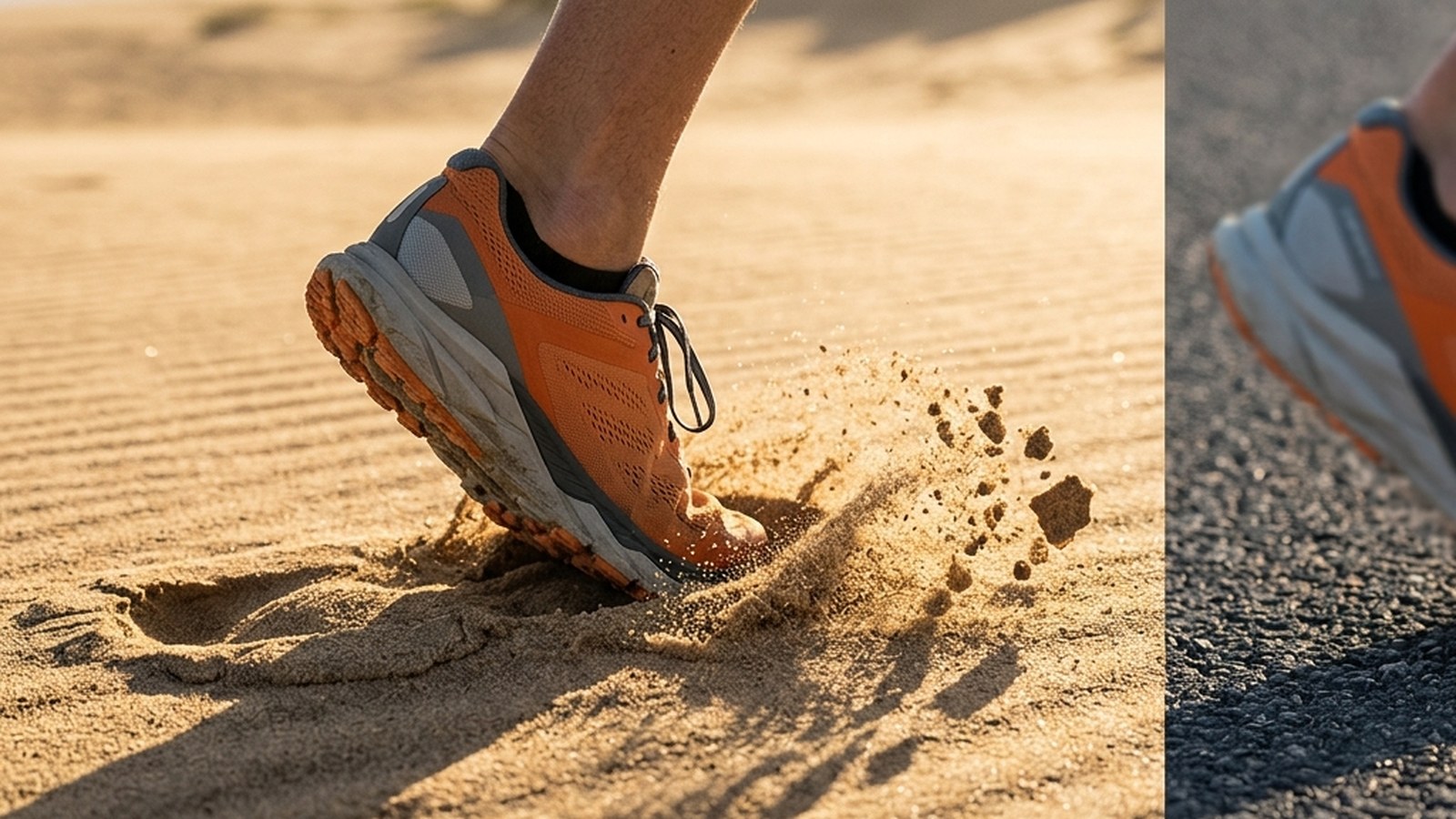
The biomechanical reason is straightforward: sand absorbs and dissipates the elastic energy that, on a firm surface, the lower limb’s tendons and arches would store and return during the stretch-shortening cycle. With a firm surface, the Achilles tendon and plantar fascia function as elastic recoil structures returning roughly 50% of impact energy. With dry sand, the surface deformation absorbs that energy, so the muscles must produce the propulsive force concentrically with no elastic assistance.
The practical implication: a 20-second sprint on dry sand produces approximately the same metabolic stress as a 32-second sprint on track. The cardiovascular system, the anaerobic energy systems, and the involved musculature all perform proportionally more work. For people training cardiovascular fitness or anaerobic capacity, this is exactly the desired training effect.
The compensating advantage is lower impact loading: soft sand deforms underfoot and absorbs ground-reaction forces in a way a hard surface like asphalt cannot. Pinnington and Dawson's study measured energy cost, not ground-reaction forces, so it doesn’t supply a specific loading-reduction figure — but the underlying biomechanical principle, that a compliant, deformable surface cushions impact, is well established independent of that paper. For people with knee or shin sensitivity, this general principle still makes sand sprints a plausible conditioning tool when asphalt or treadmill sprints would aggravate symptoms.
Why adding the hill component multiplies the effect
Hill sprints, on any surface, are a classic conditioning tool because they recruit the posterior chain (glutes, hamstrings, calves) more aggressively than flat sprints, they limit top-end speed (which protects against hamstring strain risk in cold-weather conditions), and they produce a longer time-under-tension at high heart rates than equivalent flat sprints. A 4–15° incline is the typical sweet spot.
The classic incline-running research points the same direction without the specific numbers claimed above: Sloniger et al. (1997) found that supramaximal treadmill running at a 10% grade produced a greater peak oxygen deficit and activated a larger volume of leg muscle than the same effort on the level Sloniger et al. 1997, and Padulo et al. (2013) found that submaximal running (70% of VO2max) grew markedly more metabolically costly as grade increased, with cost rising roughly 53% from flat ground to a 7% grade Padulo et al. 2013. Applied to a dune sprint, the practical takeaway is that even a modest incline meaningfully raises the cardiovascular and muscular demand of an all-out effort beyond what the sand surface alone would produce. The recovery between reps is what sustains the protocol; without adequate recovery, subsequent reps drop in quality and the training stimulus shifts from anaerobic capacity toward something between anaerobic capacity and lactate-tolerance work.
Combined: a sand surface that adds roughly 1.6× metabolic cost, a 4–15° incline that further raises the cardiovascular and muscular demand, and a near-maximal effort pace together produce an anaerobic-cardiovascular stimulus that very few alternatives match in 30 seconds or less. The stimulus is intense enough that it doesn’t need to be repeated more than once weekly; doing it twice weekly typically exceeds most healthy adults’ recovery capacity.
Where this is actually legal in Wasaga: the dune ecology constraint
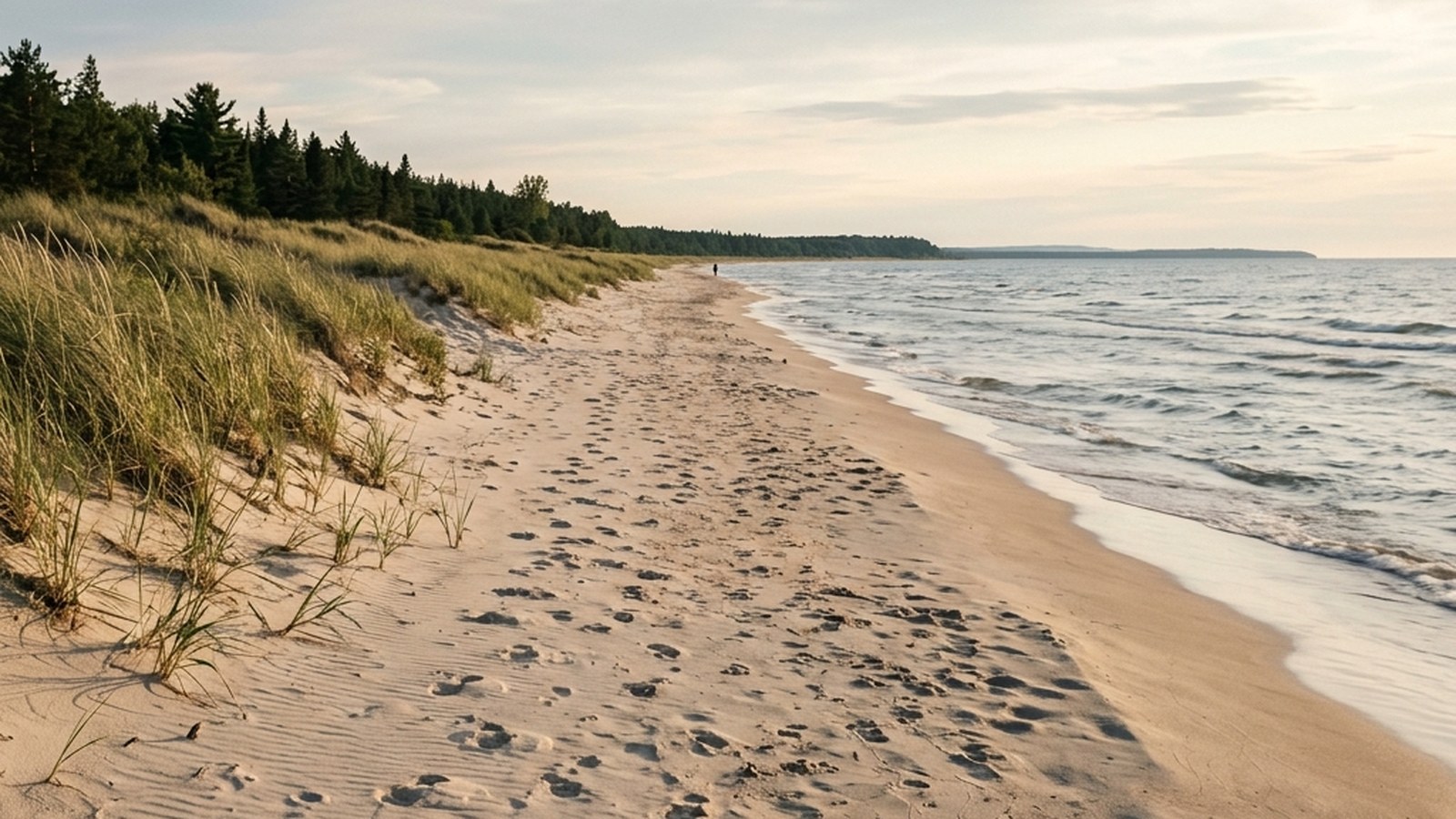
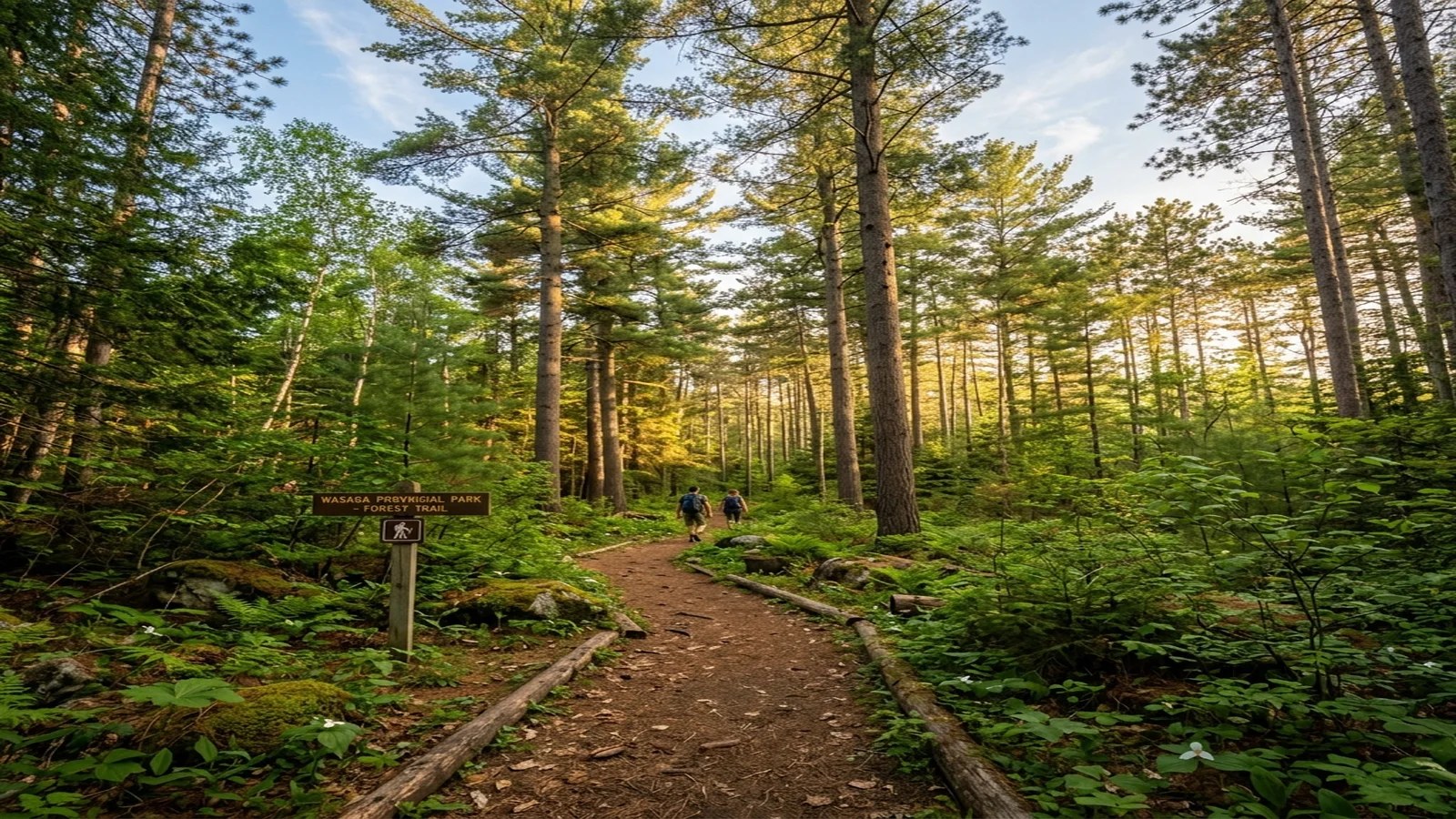
The Wasaga Beach Dune System is a 14 km coastal sand dune complex of substantial ecological significance. The active dunes (those still in motion under wind action) host several at-risk species including the Lake Huron Locust (Trimerotropis huroniana — designated Threatened under Canada’s Species at Risk Act SARA — Lake Huron Locust) and several rare plant species adapted to the active sand environment. The active dune ecosystems are off-limits to recreational use — this is signed throughout the Wasaga Beach Provincial Park, and trampling the active dune surfaces is enforceable as ecological damage under provincial parks regulations Ontario Parks — Wasaga Beach.
What this means for hill sprint protocols: do not sprint on or up the protected active dune surfaces. The legal and ethical sprint surfaces are:
- Designated beach access paths (at each Beach Area parking lot, signed pedestrian routes from parking to beach surface). These typically include short uphill sections of 30–60 metres at 5–15° grade, suitable for sprint repetitions.
- The open beach surface itself, including the gentle slope from the high water mark up to where the vegetation line begins. Stay seaward of any signed dune-protection zone boundaries.
- Boardwalk approach ramps in some Beach Areas, where the wooden ramp itself crosses the active dune zone protectively.
- Stabilised dune zones outside the Provincial Park boundary (some private cottage-development dunes near 6th Street and 7th Street North) where sprinting is permitted but property-owner respect is required.
The signed Provincial Park boundaries are clear; if a path or surface is marked as dune-protection or revegetation zone, treat it as off-limits regardless of how convenient the slope. The training stimulus is achievable on the legal surfaces; choosing illegal surfaces causes ecological damage that is irreversible on a multi-decade timescale.
A specific practical protocol for healthy adults
The protocol below is appropriate for adults with a baseline cardiovascular fitness sufficient to comfortably sustain 30 minutes of moderate aerobic exercise. People who are sedentary, recovering from injury, or with cardiovascular conditions should obtain medical clearance before attempting any maximal-effort sprint protocol.
- Warm up for 8–10 minutes. Light jogging on the firm wet sand near the waterline, plus dynamic mobility (leg swings, ankle circles, hip openers, walking lunges with rotation). Cold sand sprints invite hamstring strain; the warm-up is non-negotiable.
- Pick your sprint zone. A signed beach access path or open beach slope of 30–60 metres at 4–15° grade. Mark the start and finish visually (a piece of driftwood, a beach bag).
- Do 2–3 progressive build-up sprints at 70%, 80%, 85% effort over the same distance. These calibrate the muscles to the sand surface deformation and the incline.
- Perform the working set. 6–10 repetitions of 10–30 seconds at 90–95% effort. Walk down the hill for 90–180 seconds between reps. The recovery interval should be long enough that the next rep matches the quality of the prior rep; if rep 7 is meaningfully slower than rep 1, take longer recovery or stop.
- Cool down for 5–10 minutes. Easy walking on the firm wet sand near the waterline, plus light static stretching focused on calves, hamstrings, and hip flexors.
The session should take 35–50 minutes total. Done once weekly, this is sufficient stimulus to produce measurable cardiovascular and anaerobic improvements in 4–6 weeks for the previously-undertrained, and it serves as a high-quality maintenance stimulus for already-trained individuals.
Programming considerations: how often, when in your week
Hill sprints on sand are a high-stress training stimulus. The session itself takes under an hour, but the systemic recovery cost is similar to a hard interval workout on a track or a race-pace tempo run. Protocol considerations:
- Once weekly is the typical frequency. Twice weekly is feasible for advanced trainees with well-developed recovery, but the second session needs to be reduced volume (4–6 reps instead of 8–10).
- Schedule 48–72 hours of recovery from heavy lower-body strength training before the sprint session, and 24–48 hours of recovery before the next strength session.
- The session combines well with a same-day upper-body strength workout in the evening, but combining sand sprints in the morning with a hard run in the afternoon is generally too much.
- Avoid the day before a long-run or an event. The neuromuscular fatigue lingers 24–48 hours.
- Periodise around the season. Spring and autumn are optimal for hill sprint blocks. Mid-summer beach crowding makes the access paths busy; early morning (before 8 AM) or evening (after 7 PM) sessions are practical.
Safety, surface conditions, and common errors
The most common injury patterns on sand sprint protocols:
- Hamstring strain from inadequate warm-up or an attempt to sprint at full open-stride speed on cold muscles. The hill itself limits top-end speed protectively, but cold-weather sessions still need 10+ minutes of gradual warm-up.
- Calf and Achilles strain from soft-sand surface forcing more concentric calf work than the muscles are accustomed to. People who are new to sand running need a 2–3 week base period of easy sand running before adding sprints.
- Plantar fascia irritation in the same population. The deep sand foot-strike pattern engages plantar fascia differently than firm-ground running; gradual exposure builds tolerance.
- Shoe-related issues: standard road running shoes work; minimalist or barefoot sand sprints require gradual adaptation. Watch for hot spots and blisters from sand intrusion in the shoe; some athletes prefer a lightweight gaiter or just running barefoot on clean wet sand near the waterline.
Surface conditions vary substantially. After heavy rain, the upper sand is firmer and more like compacted-trail running; effort drops and the metabolic cost approaches firm-ground multipliers. In hot mid-day conditions, dry surface sand reaches 50°C and burns bare feet within seconds — another reason for early-morning or evening sessions in summer. After a windstorm, debris (driftwood, occasional broken glass) requires a slow warm-up walk along the chosen sprint zone before starting the workout.
Expected adaptations and timeline
Across the published literature on hill sprint and sand sprint protocols, the typical adaptation timeline for a previously-untrained healthy adult performing one weekly session of the protocol above:
- Weeks 1–2: dramatic neuromuscular fatigue 24–48 hours after each session. Mild calf and hamstring soreness. Performance per rep stable through the workout.
- Weeks 3–4: recovery time shortens. Performance per rep starts dropping less across the workout (rep 8 closer to rep 1). Heart rate response familiarises.
- Weeks 5–6: measurable improvement in 5–10 km running pace at the same heart rate, plus improvement in field tests of anaerobic capacity (e.g. 30-second all-out cycle effort).
- Weeks 7–12: further consolidation. Volume can increase to 10–12 reps; rep duration can extend toward the 30-second end of the range; or the session can be paired with a second weekly hill workout on a firmer surface.
For previously-trained individuals using this as a maintenance stimulus, the timeline is compressed and the magnitude of adaptation is smaller (the trainee starts closer to their genetic ceiling). The maintenance value is real: a single weekly hill sprint session preserves anaerobic capacity that would otherwise erode in athletes who shift entirely to long, slow distance training.
Environmental and ecological responsibility
Repeating the constraint that opens this article: the active dune ecosystems are protected, and the training stimulus is fully achievable on the legal surfaces. A few additional ecological considerations for any visitor doing repeated training visits to the dune system:
- Stay on signed paths between the parking lots and the beach. The signed paths are deliberately routed to minimise dune disturbance.
- Pack out everything. Energy gel wrappers, water bottles, used bandages — nothing stays.
- Avoid the nesting season for shorebirds (mid-May to mid-July). The Provincial Park signs out specific zones to avoid; respect them.
- Don’t introduce bait or food into the dune environment. Wildlife conditioning to humans makes the animals more vulnerable, not friendlier.
The dunes have been a quasi-protected ecosystem for over 60 years and a formally-protected one since 1959 (Wasaga Beach Provincial Park designation). Their continued existence depends on visitors treating them as a fragile rather than indestructible resource.
Practical takeaways
- Sand running is ~1.6× the metabolic cost of firm-ground running at the same speed (Lejeune et al. 1998).
- Adding a 4–15° incline meaningfully increases the cardiovascular and muscular demand of a 20–30 second sprint beyond a flat-surface effort.
- Stay on legal surfaces only. Beach access paths, the open beach, and signed boardwalk approaches — never on the protected active dune ecosystems.
- Once weekly is enough for most healthy adults; twice weekly only for advanced trainees with reduced volume on the second session.
- 6–10 reps of 10–30 seconds at 90–95% effort with 90–180 seconds walk-down recovery is the operating range.
- Adaptations show in 4–6 weeks for previously-untrained adults; sand sprints are also a high-quality maintenance stimulus for trained athletes.
Frequently asked questions
Can I do this if I have a knee or hip issue?
Sand sprints have substantially lower impact than asphalt sprints, but the calf and Achilles loading is higher because of the surface deformation. People with chronic plantar fasciitis or Achilles tendinopathy should ramp slowly: 2–3 weeks of easy sand walking and jogging before adding any sprint work, and stop early if symptoms reappear.
How does this compare to track sprints?
A 20-second sand sprint approximates the metabolic cost of a 32-second track sprint at the same effort, with markedly lower joint impact. The neuromuscular pattern is different (more concentric work, less elastic recoil), so they’re complementary rather than fully interchangeable.
Are running shoes or barefoot better on the beach?
Both work, with different trade-offs. Standard running shoes prevent sand intrusion blisters and provide modest ankle support. Barefoot on clean wet sand near the waterline is fine for already-conditioned feet. Avoid barefoot in unfamiliar sections where broken shells or driftwood are possible.
What about the off-season — can I do this in winter?
The legal sprint surfaces remain accessible year-round, but cold sand has different properties (more compacted, sometimes ice-crusted) and the warm-up requirements are larger. The technique adapts; the stimulus quality drops modestly because the surface energy absorption is less in cold compacted sand.
Can I do this with my kids?
Children naturally tolerate intermittent high-intensity activity well, but the formal protocol above is for adults. With kids, run informal versions: short sprint races (6–15 metres on the legal beach surface), 5–8 reps with full recovery between, framed as a game rather than a workout. Avoid timed maximal efforts in pre-pubertal children.
References
Lejeune et al. 1998Lejeune TM, Willems PA, Heglund NC. Mechanics and energetics of human locomotion on sand. J Exp Biol. 1998;201(13):2071-2080. View source →Pinnington & Dawson 2001Pinnington HC, Dawson B. The energy cost of running on grass compared to soft dry beach sand. J Sci Med Sport. 2001;4(4):416-430. View source →Padulo et al. 2013Padulo J, Powell D, Milia R, Ardigo LP. A paradigm of uphill running. PLoS One. 2013;8(7):e69006. View source →Sloniger et al. 1997Sloniger MA, Cureton KJ, Prior BM, Evans EM. Anaerobic capacity and muscle activation during horizontal and uphill running. J Appl Physiol. 1997;83(1):262-269. View source →Ontario Parks — Wasaga BeachOntario Parks. Wasaga Beach Provincial Park — ecological information and visitor regulations. View source →SARA — Lake Huron LocustGovernment of Canada. Species at Risk Public Registry — Lake Huron Locust (Trimerotropis huroniana) — Threatened. View source →