The 60-second version
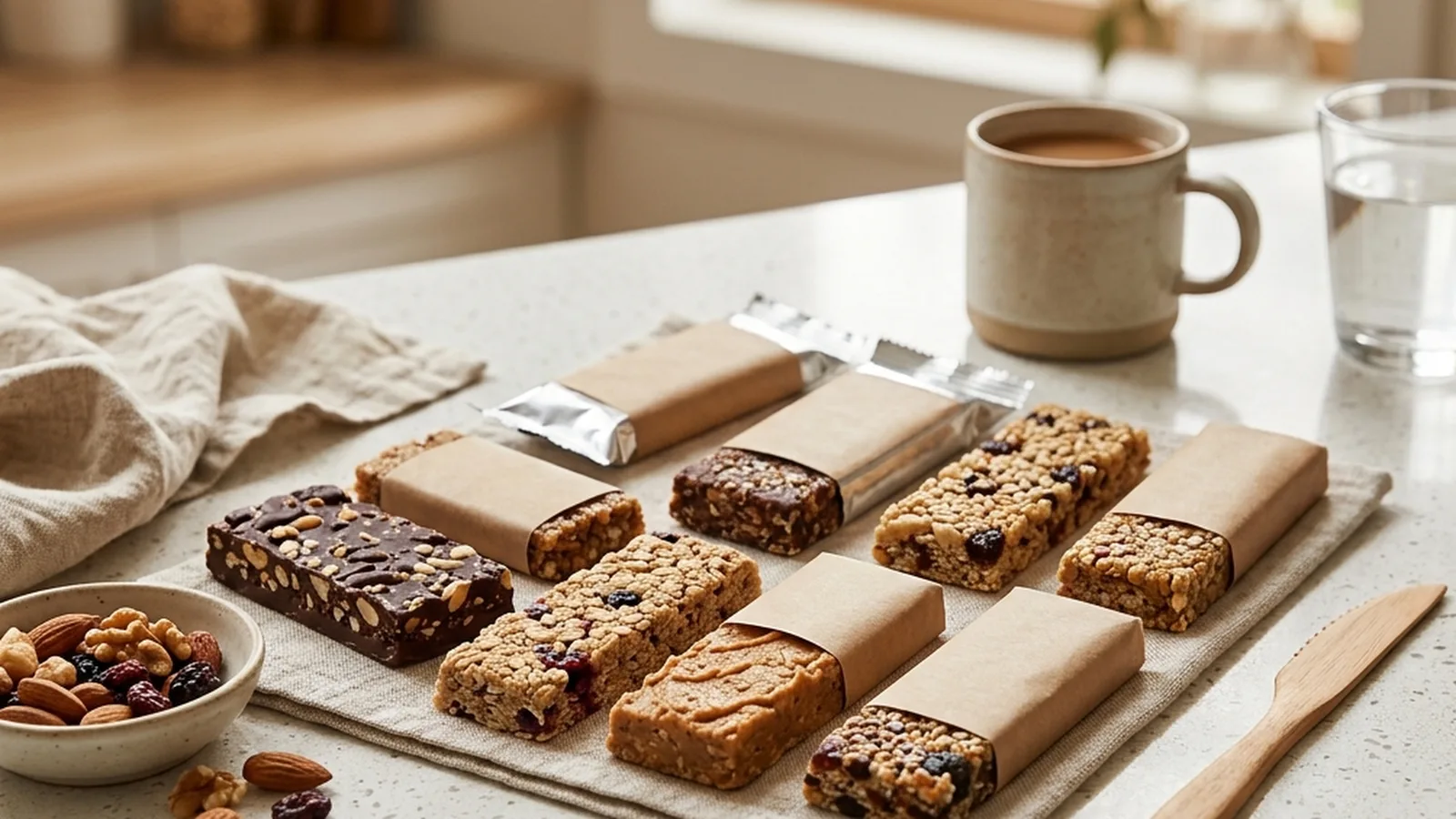
Most of the “protein bars” in the gym-checkout aisle contain more sugar by mass than the candy bars two metres away. The labels work hard to obscure this: 40+ different ingredient names map onto added sugar, and the “net carbs” calculation legally subtracts non-impact carbs the body still partially metabolises. The peer-reviewed nutrition-policy literature, plus FDA / Health Canada label-reform reviews, identify five reliable tells: (1) check “sugars” per gram of protein, (2) read the entire ingredient list, not just the front-of-pack callouts, (3) be skeptical of “net carbs” below 5 g, (4) treat sugar alcohols as their own category, and (5) compare the bar to the simpler alternatives — a 4-oz Greek yogurt + a piece of fruit usually delivers more protein, less added sugar, and a fraction of the cost. This article shows how to read protein-bar labels in 30 seconds and the practical tests for whether a bar is a snack with a halo or just a snack.
Educational journalism, not medical advice. Every claim here is checked against its cited sources by editor Timothy Bunce — a health writer, not a physician. It isn’t specific to your situation: for health decisions, talk to your own clinician. How we work →
Some links in this article are affiliate links. If you buy through one, The Beachside Reader earns a commission at no extra cost to you. It never changes which products we pick, or what we say about them. Full affiliate disclosure →
Why this matters
Protein bars in North America are a $6+ billion category and grow ~7% annually. Most of the growth is from products marketed as functional or health-positioning — gym-adjacent, fitness-store-shelf, athlete-endorsed. The peer-reviewed analyses of the actual nutrition profile aren’t flattering. Many of these products carry more added sugar per serving than their “health-positioned” marketing implies, and a single bar can use a large share of a day’s added-sugar allowance under the AHA’s recommended limits of roughly 25 g (women) to 36 g (men) Johnson 2009.
Front-of-pack claims like “protein,” “natural,” “low-sugar,” and “keto” reliably shift how healthy a product appears without necessarily changing its actual sugar or energy content — a halo effect well documented in food-marketing research.
The 40+ names for added sugar
The FDA and Canada’s CFIA require “added sugars” to be disclosed but do not restrict the names manufacturers can use. The same ingredient can appear as 6–12 different listings. Watch for these on protein-bar ingredient lists:
| Family | Common names |
|---|---|
| Cane sugar | cane sugar, evaporated cane juice, raw sugar, turbinado, demerara, muscovado |
| Corn syrup | high-fructose corn syrup (HFCS), corn syrup solids, glucose syrup, dextrose |
| Brown-rice / agave / fruit | brown rice syrup, agave nectar, agave syrup, fruit-juice concentrate, apple-juice concentrate, date paste |
| Honey-class | honey, golden syrup, treacle, molasses, sorghum syrup, maple syrup |
| Malt | malt syrup, barley-malt extract, maltodextrin (high glycemic, treated as carb), brown malt syrup |
| Coconut / palm | coconut sugar, coconut nectar, palm sugar, jaggery |
| Inulin / chicory | chicory root, chicory fibre, inulin (technically fibre but causes GI distress at high doses) |
| Sugar alcohols | maltitol, sorbitol, xylitol, erythritol, lactitol, isomalt, glycerol |
| Allulose / monk fruit / stevia | allulose, monk-fruit extract, stevia leaf extract, rebaudioside A |
Inulin and chicory root are technically dietary fibre, but at the 8–15 g doses common in “low-sugar” bars they reliably cause GI distress in many people. Sugar alcohols are not added sugars but contribute calories (1.5–2.6 kcal/g vs 4 kcal for sugar) and have a laxative threshold (~25 g/day for most adults).
The “net carbs” trick
“Net carbs” is a marketing term, not a nutritional standard. Manufacturers calculate it as:
Net carbs = Total carbs − Fibre − Sugar alcohols (sometimes − allulose)
The biology doesn’t fully support the math. Some “non-impact” ingredients (especially maltitol) have glycemic indexes of 30–45 and partially raise blood glucose. Lactitol and isomalt are similar. The 2002 Livesey review showed sugar-alcohol caloric availability of 50–75% of glucose in most cases Livesey 2003. So a bar advertising “3 g net carbs” with 12 g maltitol is delivering meaningful glycemic impact.
Allulose and erythritol (and stevia/monk fruit) are exceptions; they have minimal glycemic impact at typical bar doses.
The 30-second label test
For a quick screen, work through the bar’s nutrition panel in this order:
- Protein vs sugar ratio: a respectable bar has at least 2× as much protein as sugar (e.g. 20 g protein, ≤10 g sugar). 1:1 protein-to-sugar is a candy bar with extra steps.
- Added sugar in grams: under 6 g added sugar is good; 6–12 g is typical of bars that aren’t pretending; 12+ g is candy-bar territory.
- Calorie density: most bars are 180–280 calories. A bar over 280 cal usually has high added fat (cocoa butter, palm fat) plus sugar.
- Fibre source: 5–8 g of true fibre from oats, nuts, or seeds is good. 12–16 g listed as “chicory root” or “inulin” almost guarantees GI distress.
- Ingredient list length: bars with under 8 ingredients tend to be cleaner. 25-ingredient bars with 5 different sugars and 3 emulsifiers should set a flag.
- First three ingredients: protein source first is good. Sugar/syrup/sugar-alcohol first is bad.
Health-halo phrases that don’t mean what you think
| Front-of-pack claim | What it actually means / doesn’t mean |
|---|---|
| “Made with real fruit” | Often 1–3% fruit; rest is fruit-juice concentrate (sugar) and flavouring |
| “Natural sweeteners” | Usually means honey, agave, coconut sugar, or fruit-juice concentrate — metabolically nearly identical to white sugar |
| “Keto-friendly” | Often relies on sugar alcohols and inulin; may still raise blood glucose for some users |
| “No added sugar” | May still contain naturally-occurring sugars (honey, agave, fruit purees) that count nutritionally |
| “Low glycemic” | Often based on the bar studied, not your meal context. Eating with empty stomach changes response. |
| “Plant-based” | Tells you about protein source, not sugar content. Plant bars can be sugar-heavy. |
| “Non-GMO” / “Organic” | Tells you about cultivation, not sugar content |
| “Gluten-free” | Tells you about wheat content, not sugar content |
Practical alternatives
For most situations, the bar is the wrong tool. Cheaper, lower-sugar, higher-protein options:
| Snack | Approx protein | Approx added sugar | Cost |
|---|---|---|---|
| Greek yogurt (200g, plain) | ~20 g | 0 g | ~$1.50 |
| Cottage cheese (1 cup) | ~25 g | ~0 g | ~$1.75 |
| Hard-boiled eggs (3) | ~18 g | 0 g | ~$1.20 |
| Tuna pouch + crackers | ~22 g | 0–2 g | ~$2.50 |
| Plain whey/pea protein scoop in water/milk | ~24 g | ~1–3 g | ~$1.00 |
| Beef jerky (1 oz) | ~9 g | ~3–5 g | ~$2.50 |
| Edamame (1 cup, shelled) | ~17 g | ~3 g (natural) | ~$1.00 |
| Average gym “protein bar” | 15–22 g | 5–18 g | $3.50–$5 |
The bars are good for travel, hiking, and convenience-driven situations — not as a daily snack default.
When a bar is the right tool
- Travel — airports, road trips, no fridge access.
- Pre-event fuel for endurance — some carb-heavy bars are designed for this and the sugar load is intentional and useful (e.g., during a 3-hour ride).
- Emergency hunger — better than a vending machine.
- Targeted post-workout — if no kitchen access for 2+ hours after training; a 20 g protein bar bridges the gap fine.
A note on bars marketed to kids
Many “kids’ protein bars” or “teen athlete” bars contain 12–20 g added sugar per bar. That’s 50–80% of the daily WHO/AHA limit for added sugar in a single snack. The protein content is often modest (~7–10 g). For kids, plain milk, yogurt, fruit + nut butter, or hard-boiled eggs are vastly better default snacks. The protein-bar marketing is largely targeting parental health-halo perception, not kid nutritional needs.
Practical takeaways
- Protein:sugar ratio of 2:1 minimum. Lower is essentially a candy bar.
- Added sugar <6 g per bar is good; 12+ g is candy-bar territory.
- “Net carbs” is a marketing term, not a nutritional standard. Sugar alcohols (especially maltitol) still affect blood glucose.
- 40+ ingredient names map to added sugar — the FDA “added sugars” line is the most reliable single number.
- Halo claims (“natural,” “keto,” “made with real fruit”) tell you very little.
- Greek yogurt, cottage cheese, eggs, and tuna pouches are cheaper, simpler, and almost always better.
- Bars belong in travel and emergency-snack categories, not as a daily default.
- Kids’ protein bars often contain a candy-bar’s worth of sugar; default to whole-food snacks.
Frequently asked questions
How much sugar is too much in a protein bar?
More than half the protein content (in grams) is the practical line. A bar with 20 g protein and 6 g sugar is fine. 20 g protein and 18 g sugar is essentially a candy bar with whey. WHO and AHA recommend less than 25–36 g total added sugar per day; one heavy protein bar can use a third of that allowance.
What about sugar alcohols and 'net carbs'?
Sugar alcohols (especially maltitol, sorbitol) are NOT free of glycemic impact. Maltitol has a glycemic index of ~35–45 and partially raises blood glucose. They also have a laxative threshold around 25 g/day. Erythritol, allulose, and stevia/monk fruit are the cleanest sugar substitutes; they have minimal glycemic impact at typical bar doses.
Is the 'no added sugar' label trustworthy?
Sometimes. It typically means no white sugar, HFCS, or syrups added. But the bar may still contain honey, agave, fruit-juice concentrate, or coconut sugar — metabolically equivalent to added sugar. The 'added sugars' line on the FDA nutrition panel is more reliable than the front-of-pack claim.
Are 'natural' or 'plant-based' bars actually healthier?
Not automatically. 'Plant-based' tells you the protein source, not the sugar content. 'Natural' is unregulated and tells you very little. Plant-based protein bars frequently contain agave, date paste, or coconut sugar at high doses. Read the back-of-pack added-sugar number, not the front-of-pack tagline.
What's the best ratio to look for?
Protein:sugar of at least 2:1, ideally 3:1 or better. So a 20 g protein bar should have 10 g sugar or less, ideally 6 g or less. Combined with reasonable calorie density (180–280 cal) and a short ingredient list, that's the practical filter.
References
Talati 2017Talati Z, Pettigrew S, Kelly B, Ball K, Dixon H, Shilton T. Consumers' responses to front-of-pack labels that vary by interpretive content. Appetite. 2016;101:205-213. View source →Livesey 2003Livesey G. Health potential of polyols as sugar replacers, with emphasis on low glycaemic properties. Nutr Res Rev. 2003;16(2):163-191. View source →Johnson 2009Johnson RK, Appel LJ, Brands M, et al. Dietary sugars intake and cardiovascular health: a scientific statement from the American Heart Association. Circulation. 2009;120(11):1011-1020. View source →Malik 2010Malik VS, Popkin BM, Bray GA, Després JP, Hu FB. Sugar-sweetened beverages, obesity, type 2 diabetes mellitus, and cardiovascular disease risk. Circulation. 2010;121(11):1356-1364. View source →Te Morenga 2014Te Morenga LA, Howatson AJ, Jones RM, Mann J. Dietary sugars and cardiometabolic risk: systematic review and meta-analyses of randomized controlled trials of the effects on blood pressure and lipids. Am J Clin Nutr. 2014;100(1):65-79. View source →Livesey 2008Livesey G, Taylor R, Hulshof T, Howlett J. Glycemic response and health -- a systematic review and meta-analysis: relations between dietary glycemic properties and health outcomes. Am J Clin Nutr. 2008;87(1):258S-268S. View source →Hardy 2020Hardy DS, Garvin JT, Xu H. Carbohydrate quality, glycemic index, glycemic load and cardiometabolic risks in the US, Europe and Asia: A dose-response meta-analysis. Nutr Metab Cardiovasc Dis. 2020;30(6):853-871. View source →Imamura 2015Imamura F, O'Connor L, Ye Z, et al. Consumption of sugar sweetened beverages, artificially sweetened beverages, and fruit juice and incidence of type 2 diabetes: systematic review, meta-analysis, and estimation of population attributable fraction. BMJ. 2015;351:h3576. View source →Popkin 2016Popkin BM, Hawkes C. Sweetening of the global diet, particularly beverages: patterns, trends, and policy responses. Lancet Diabetes Endocrinol. 2016;4(2):174-186. View source →Monteiro 2018Monteiro CA, Cannon G, Moubarac JC, Levy RB, Louzada MLC, Jaime PC. The UN Decade of Nutrition, the NOVA food classification and the trouble with ultra-processing. Public Health Nutr. 2018;21(1):5-17. View source →