The 60-second version
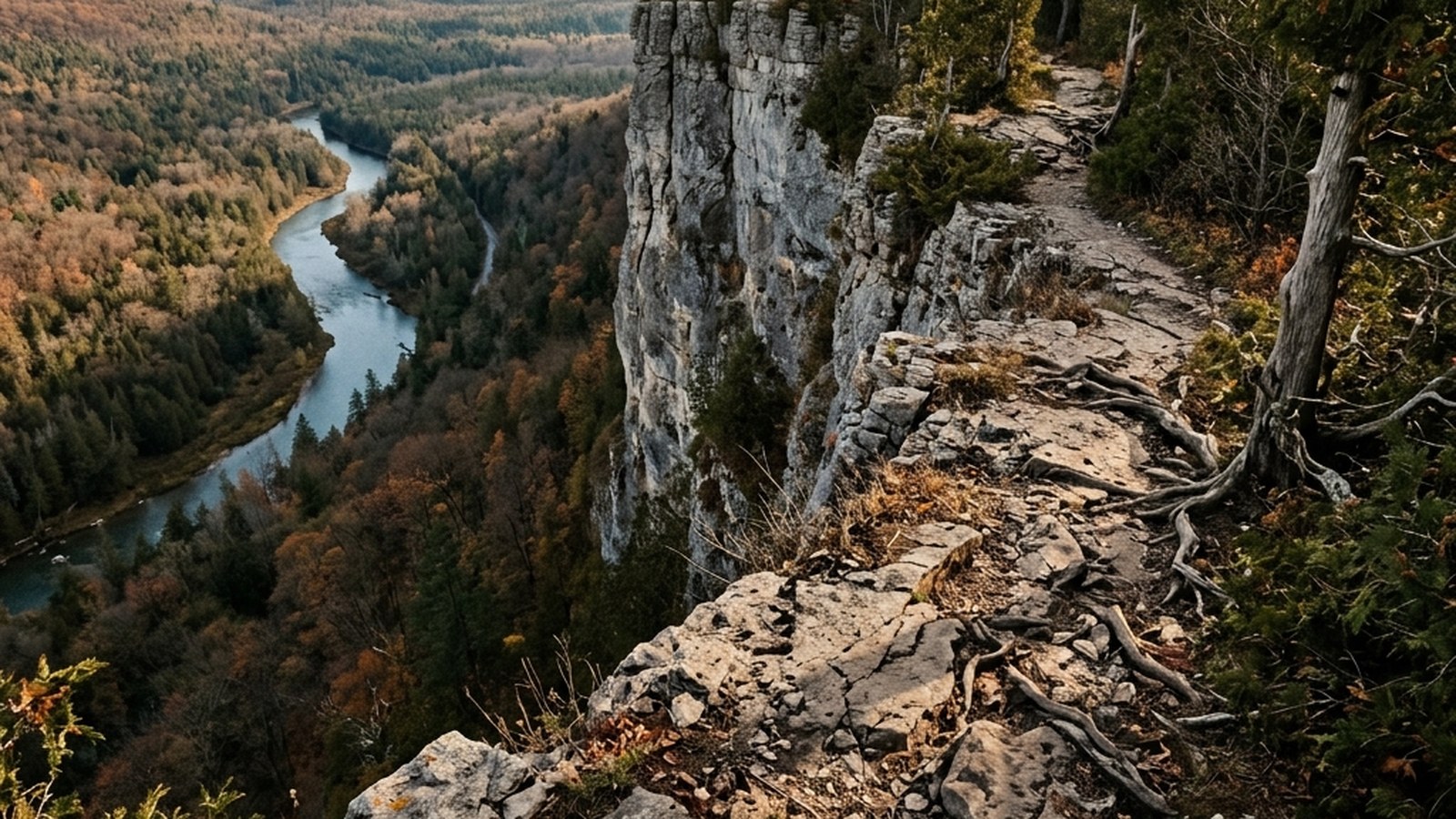
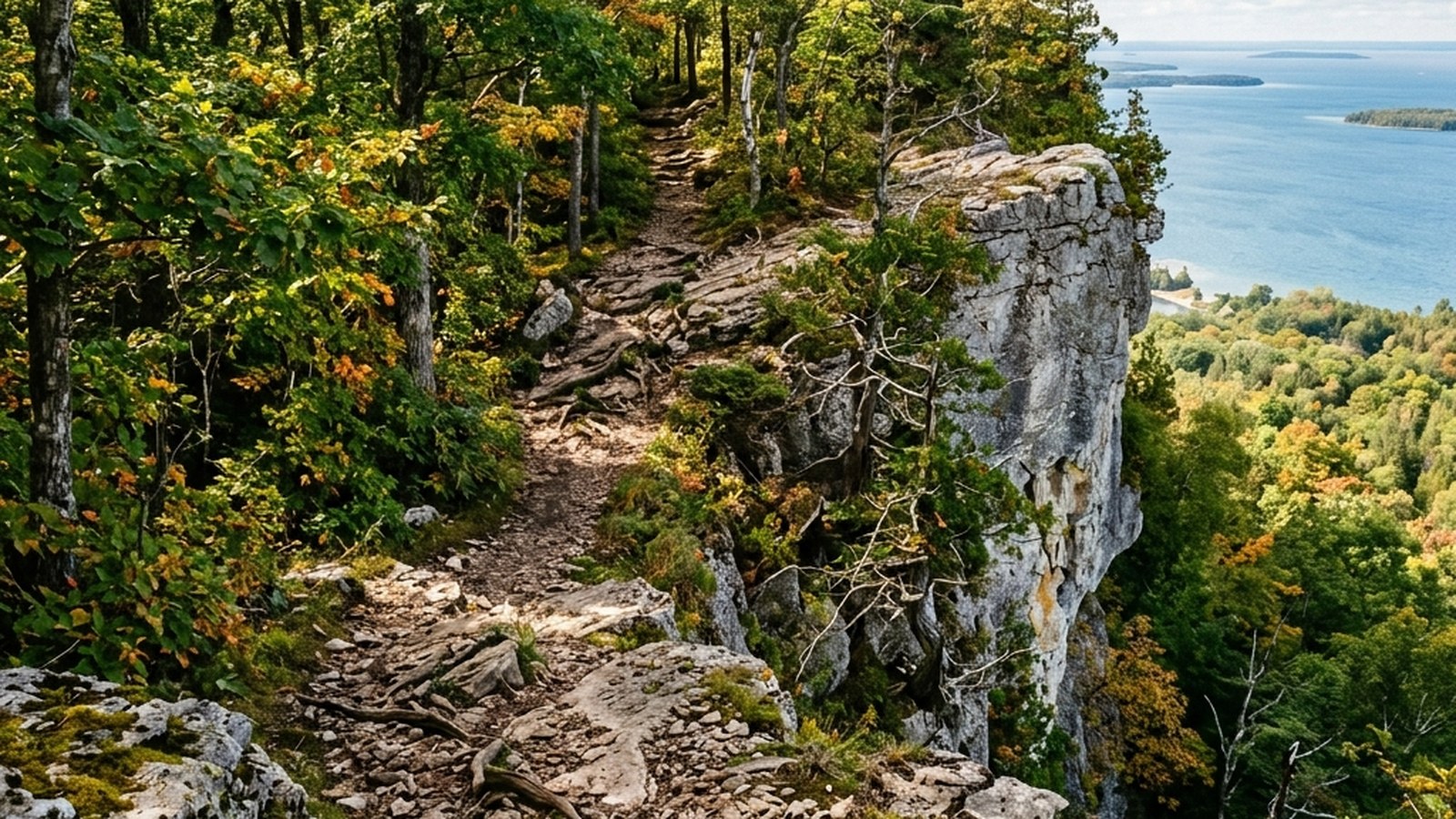
The Len Gertler Memorial Loree Forest south of Thornbury carries the Main Bruce Trail and the Loree Side Trail in a 5 km loop that Grey County describes as relatively flat Loree Forest. From walking the loop ourselves, though, “relatively flat” describes the overall grade rather than a paved path: in our own observation on the trail, unpaved forest stretches still include exposed roots, uneven ground and short step-downs where eccentric braking and ankle stability matter.
Educational journalism, not medical advice. Every claim here is checked against its cited sources by editor Timothy Bunce — a health writer, not a physician. It isn’t specific to your situation: for health decisions, talk to your own clinician. How we work →
Some links in this article are affiliate links. If you buy through one, The Beachside Reader earns a commission at no extra cost to you. It never changes which products we pick, or what we say about them. Full affiliate disclosure →
What the loop actually is
Located south of Thornbury on County Road 2, east of Victoria Corners, The Len Gertler Memorial Loree Forest — named after the man who helped develop the Niagara Escarpment Plan — combines the Main Bruce Trail and the Loree Side Trail into a 5 km loop Loree Forest. Parking is available at the top of the hill on Sideroad 21, where paid parking may be necessary, and the trail runs across lands owned by the MNRF, private landowners and The Bruce Trail; visitors are asked to stay on the trails Loree Forest.
Grey County describes the terrain as relatively flat and notes that the loop is used in winter for backcountry cross-country skiing — while not maintained in winter, it is described as excellent for beginners and moderate skiers Loree Forest. From our own walks on the loop, that “relatively flat” label holds for the overall elevation profile, not for the surface underfoot: in our observation, the unpaved forest singletrack still carries rooty stretches, uneven ground and short step-downs that ask your legs to brake and stabilise. Those localized footing interruptions — rather than sustained vertical elevation gain — are why trail-mechanics and braking physiology still matter on a modest forest circuit.
Even short downward pitches load muscles eccentrically
Stepping uphill or striding along flat hard-pack is mainly a concentric problem: muscles shorten to move you forward, your breathing signals the workload, and you recover fairly quickly. Stepping down off uneven shelves, exposed roots or short trail pitches — the kind of brief downward steps we have run into along stretches of the loop in our own walks — is a mechanical problem. Walking downhill loads the quadriceps eccentrically — fibres lengthen under tension to brake each footfall — which sports-medicine research treats as the core mechanical split between uphill and downhill locomotion Sports Med 2017. Unlike smooth pavement where stride symmetry stays constant, rough singletrack repeatedly catches one leg stepping lower onto roots or soil dips.
Eccentric contractions at long muscle lengths reliably trigger delayed soreness and measurable muscle-fibre strain Newham 1988, and you do not have to run for that stimulus to appear: downhill walking alone produces measurable eccentric muscle damage Nottle 2005. That physiological mechanism explains why walkers whose breathing stayed relaxed during an easy outing can still notice heavy, tender quadriceps two days later if repeated brief step-downs occurred across uneven singletrack while their legs were only accustomed to flat pavement.
What uneven trail steps ask of your knees — and what poles change
Knee joints absorb a substantial share of braking force whenever you step down across trail ledges, root steps or short downhill pitches like those we observe on the unpaved parts of the circuit. Direct biomechanical measurements show that downhill walking elevates knee joint forces, and hiking poles measurably lower them Schwameder 1999. The same offloading pattern holds when walkers carry a pack: trekking poles reduce lower-limb joint demands during loaded downhill hiking Bohne 2007.
Even on an outing with mild overall terrain, that gives knee-sensitive walkers a practical lever. Carry light collapsible poles in hand along level stretches and plant them deliberately before any short step-down or slick patch — using poles to share braking load on downward steps rather than saving them solely for long hills. Walkers returning from winter inactivity or managing mild anterior knee discomfort often find that two poles noticeably soften repetitive braking jars without slowing down a relaxed forest pace.
The primary footing hazard on roots and uneven ground
Where overall elevation stays modest and cardiopulmonary fatigue rarely dictates pace, our own observation on Loree Forest’s unpaved sections is that footing demands concentrate at the foot and ankle across exposed roots, ruts and wet singletrack. Across active populations broadly, ankle sprains remain the single most common acute injury Sports Med 2007, with persistent recurrence documented across prospective cohorts Doherty 2014.
Two practical rules from sports medicine carry straight onto rooty forest trails. First, a past sprain rarely resolves completely on its own: sensorimotor and proprioceptive deficits linger long after pain fades, raising repeat injury risk on uneven footing Hertel 2008. Second, that balance deficit responds to prospective training: controlled trials show single-leg and proprioceptive balance programmes lower ankle-sprain incidence McGuine 2006, including sport-specific regimens tracked against injury outcomes Cumps 2007.
Who should prepare carefully for the loop
Grey County describes the terrain as relatively flat and notes winter suitability for beginner and moderate backcountry cross-country skiers, while reminding visitors that trails are on MNRF, private landowner and Bruce Trail properties and to stay on the trails Loree Forest. Because “relatively flat” can sound like a paved rail bed, casual walkers sometimes show up in smooth street footwear. In our own walks on the trail, three groups benefit from a little extra preparation on its rooty and uneven sections.
Anyone carrying a prior ankle sprain should respect lingering sensorimotor deficits Hertel 2008 when stepping across exposed roots and wet hollows, where one awkward plant can provoke recurrent ankle instability. Anyone whose knees flare on stairs should pack trekking poles for measured braking relief Schwameder 1999 across the brief downward steps we encounter on the loop. And anyone heading outdoors after flat indoor winters should leave two easy recovery days before their next hard leg workout in case short trail step-downs trigger first-of-season eccentric stiffness Newham 1988.
Planning the loop around footing and braking
- Wear lugged trail shoes and bring payment for Sideroad 21. Grey County notes that paid parking may be necessary at the top of the hill on Sideroad 21 Loree Forest, and from our walks, trail treads handle mud and exposed roots far better than smooth street soles.
- Bring poles if stepping down irritates your knees. Downhill step-downs and short downward pitches are where hiking poles deliver their measured knee-force reduction Schwameder 1999.
- Shorten your stride across rooty stretches and damp singletrack. Shorter, lighter placements keep your centre of mass stacked over your ankles and limit sudden braking spikes on uneven sections we observe along the loop.
- Leave two easy days after your first trail loop of the season. Even short downhill pitches can elicit delayed quad tenderness Newham 1988 if you have only walked flat pavement.
- Do single-leg balance drills during the week before hiking. Balance work lowers sprain incidence prospectively McGuine 2006 rather than on trail day.
Seasonality, in durable terms
From our seasonal walks in the woods, fallen autumn leaves routinely hide exposed tree roots and damp depressions along unpaved trails — the exact footing hazard explored in our piece on running in fall leaves. In winter, Grey County notes that Loree Forest is used for backcountry cross-country skiing and explicitly states that the trails are not maintained in winter, while still considering the relatively flat loop excellent for beginners and moderate skiers Loree Forest. Without winter trail maintenance, surface speed and grip depend directly on ambient snow cover and refreezing rather than groomed corduroy.
If your knees or ankles want a uniformly graded crushed-stone surface without exposed roots or unmaintained winter snowpack, compare surface trade-offs in our guide on trail surfaces versus the Georgian Trail.
Practical takeaways
- Located south of Thornbury on County Road 2, east of Victoria Corners, The Len Gertler Memorial Loree Forest pairs the Main Bruce Trail and Loree Side Trail into a 5 km loop Loree Forest.
- Parking sits at the top of the hill on Sideroad 21 (where paid parking may be necessary), and visitors must stay on the trails crossing MNRF, private landowner and Bruce Trail lands Loree Forest.
- Grey County describes the terrain as relatively flat and notes unmaintained winter backcountry cross-country skiing for beginners and moderate skiers Loree Forest.
- From our own walks on the loop, rooty stretches and short step-downs remain part of the unpaved footing, and hiking poles measurably lower knee joint forces on downward steps Schwameder 1999.
- With prior ankle sprains, single-leg balance training reduces repeat sprain risk prospectively before heading onto uneven roots and autumn leaves McGuine 2006.
Frequently asked questions
How long is Loree Forest and what does Grey County say about parking and terrain?
Grey County describes The Len Gertler Memorial Loree Forest south of Thornbury (on County Road 2, east of Victoria Corners) as a five-kilometre loop of the Main Bruce Trail and Loree Side Trail on relatively flat terrain. Parking is at the top of the hill on Sideroad 21 where paid parking may be necessary, and visitors are asked to stay on the trails across MNRF, private landowner and Bruce Trail lands.
Is Loree Forest maintained in winter?
No. Grey County notes that the trails are not maintained in winter, though the loop is used for backcountry cross-country skiing and describes the relatively flat terrain as excellent for beginners and moderate skiers.
If Grey County calls the terrain relatively flat, why watch footing and knees?
In our own walks on the loop, relatively flat applies to overall elevation change rather than smooth pavement. Unpaved singletrack sections still include exposed roots, uneven ground and short step-downs that load the quadriceps eccentrically when braking.
Are trekking poles helpful on an easy-grade forest trail like Loree Forest?
Yes if your knees dislike stairs or short downward steps, or if trails turn slick or muddy. Downhill walking with poles helps offload braking forces at the knee, as detailed in the pole biomechanics section cited above.
How can I cut ankle-sprain risk before walking rooty forest singletrack?
Practise simple single-leg balance drills barefoot on flat ground during the weeks leading up to your walk. Balance training works best prospectively ahead of uneven-terrain walks (outlined in the ankle-inversion section above), combined with grippy footwear and shorter steps over roots.
References
Loree ForestGrey County Tourism. Loree Forest (The Len Gertler Memorial Loree Forest) — Main Bruce Trail and Loree Side Trail 5 km loop south of Thornbury (County Road 2, east of Victoria Corners; Sideroad 21 parking); relatively flat terrain; winter backcountry cross-country skiing (not maintained in winter). View source →Sports Med 2017Vernillo G, Giandolini M, Edwards WB, Morin JB, Samozino P, Horvais N, Millet GY. Biomechanics and physiology of uphill and downhill running. Sports Medicine. 2017;47(4):615-629. View source →Newham 1988Newham DJ, Jones DA, Ghosh G, Aurora P. Muscle fatigue and pain after eccentric contractions at long and short length. Clin Sci (Lond). 1988;74(5):553-557. View source →Nottle 2005Nottle C, Nosaka K. The magnitude of muscle damage induced by downhill backward walking. J Sci Med Sport. 2005;8(3):264-273. View source →Schwameder 1999Schwameder H, Roithner R, Müller E, Niessen W, Raschner C. Knee joint forces during downhill walking with hiking poles. J Sports Sci. 1999;17(12):969-978. View source →Bohne 2007Bohne M, Abendroth-Smith J. Effects of hiking downhill using trekking poles while carrying external loads. Medicine & Science in Sports & Exercise. 2007;39(1):177-183. View source →Sports Med 2007Fong DT, Hong Y, Chan LK, Yung PS, Chan KM. A systematic review on ankle injury and ankle sprain in sports. Sports Medicine. 2007;37(1):73-94. View source →Doherty 2014Doherty C, Delahunt E, Caulfield B, Hertel J, Ryan J, Bleakley C. The Incidence and Prevalence of Ankle Sprain Injury: A Systematic Review and Meta-Analysis of Prospective Epidemiological Studies. Sports Medicine. 2014;44(1):123-140. View source →Hertel 2008Hertel J. Sensorimotor Deficits with Ankle Sprains and Chronic Ankle Instability. Clinics in Sports Medicine. 2008;27(3):353-370. View source →McGuine 2006McGuine TA, Keene JS. The Effect of a Balance Training Program on the Risk of Ankle Sprains in High School Athletes. American Journal of Sports Medicine. 2006;34(7):1103-1111. View source →Cumps 2007Cumps E, Verhagen E, Meeusen R. Efficacy of a sports specific balance training programme on the incidence of ankle sprains in basketball. Journal of Sports Science & Medicine. 2007;6(2):212-219. View source →