The 60-second version
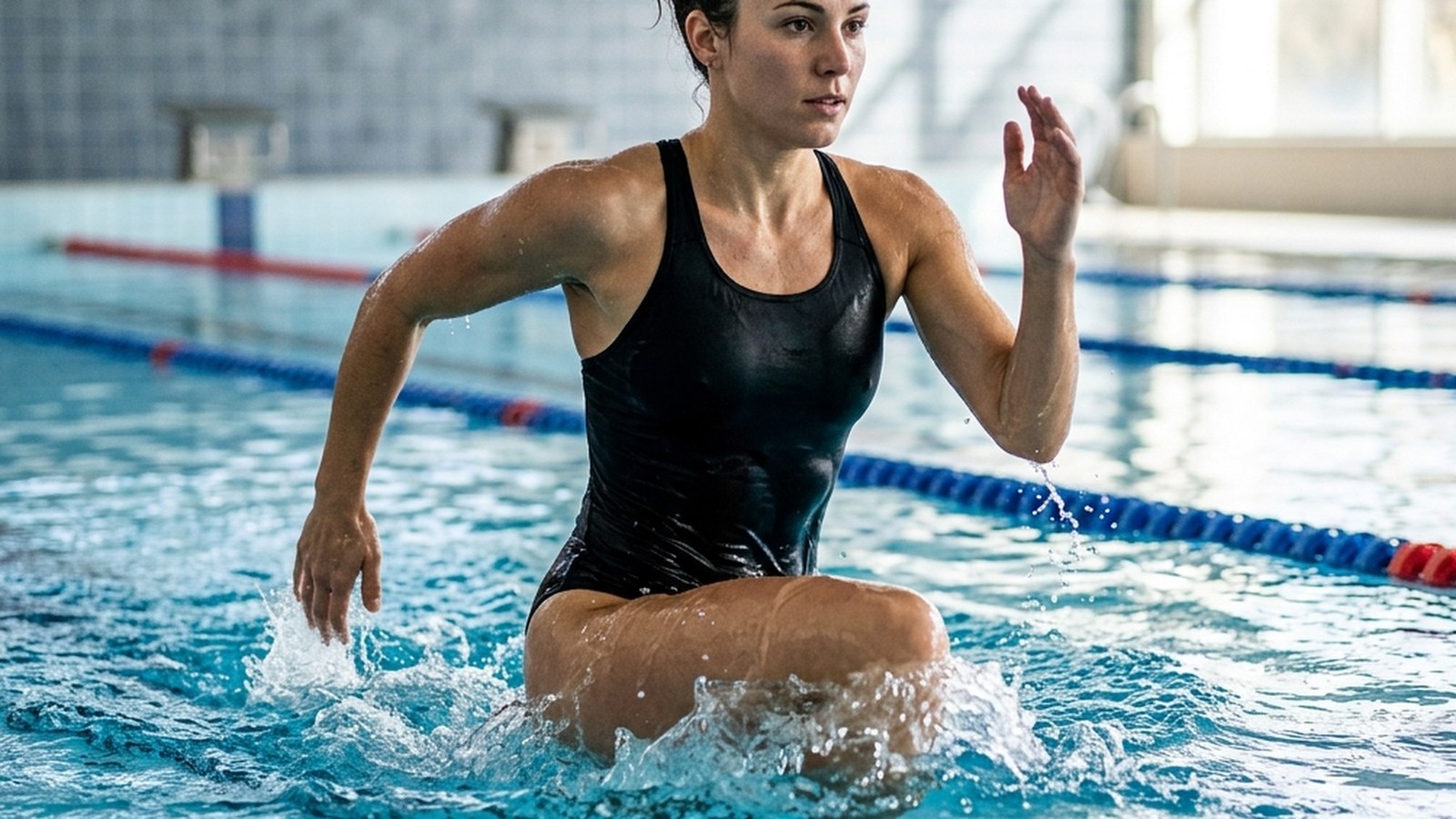
Walking through knee- to thigh-deep water is a real lower-body workout, current or no current. Simply wading thigh-deep in still water more than doubles the calories you burn compared with walking on dry sand — and it’s gentle enough for people who can’t tolerate hard-surface training.
The physics is straightforward: water is roughly 800 times denser than air, so simply standing in it and walking normally already costs far more energy than walking on dry land. In a controlled underwater-treadmill trial with no current at all, walking thigh-deep in still water more than doubled the oxygen cost of the same walking pace on a dry-land treadmill Pohl 2002.
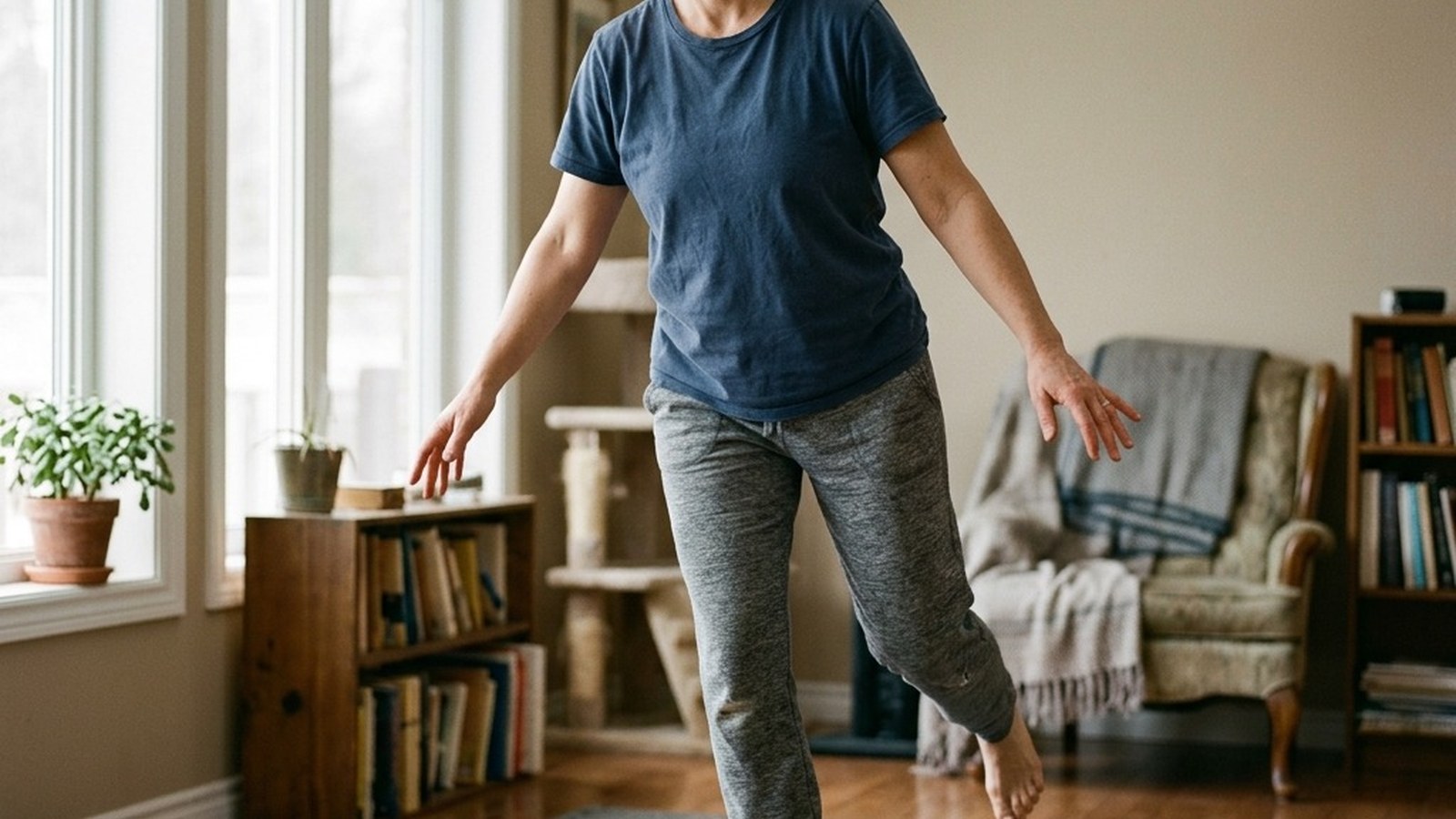
The muscle recruitment is different too. Your side-hip muscles (hip abductors) and small ankle stabilisers fire continuously to keep you upright against the side-to-side push of the water Becker 2009. Those are the same muscles a clinic balance program tries to target on land, except here the water does the cueing for you.
Best fit: anyone returning from injury who can’t tolerate impact, older adults building leg strength gently, or anyone who wants a real workout without joint stress.
Educational journalism, not medical advice. Every claim here is checked against its cited sources by editor Timothy Bunce — a health writer, not a physician. It isn’t specific to your situation: for health decisions, talk to your own clinician. How we work →
Some links in this article are affiliate links. If you buy through one, The Beachside Reader earns a commission at no extra cost to you. It never changes which products we pick, or what we say about them. Full affiliate disclosure →
What the evidence actually says
Aquatic walking has been studied as both a therapy modality and an athletic conditioning tool. The cleanest physiology paper is Pohl, who had six subjects walk and run on an underwater treadmill at thigh- and waist-deep immersion and compared oxygen consumption, heart rate, respiratory exchange ratio, and stride frequency against matched land-treadmill trials. Both water depths raised oxygen consumption and heart rate well above land values, with the thigh-deep condition producing the larger increase — waist-deep running did not rise to the same extent, likely because of the greater buoyancy support at that depth Pohl 2002.
The therapy-side evidence comes from Becker’s review of aquatic exercise for orthopedic rehabilitation. Wading and shallow-water walking offer 50-70% bodyweight unloading at chest depth while still providing a measurable resistance demand — a combination land-based exercise cannot match Becker 2009. Patients with knee osteoarthritis or post-surgical lower-extremity rehab tolerate aquatic loading at 4-6 weeks post-op when dry-land walking would still be too painful.
How it actually works
Drag force on a body moving through water scales with the square of the relative velocity. Doubling the flow rate quadruples the resistance, which is why walking in calm water feels easy but walking through chest-deep moderate surf feels like a serious workout. The hydrostatic pressure also matters — immersion increases venous return and reduces peripheral edema, which is part of why the rehab benefit is more than just unloading Becker 2009.
The unique training stimulus comes from the lateral resistance. Land walking trains the sagittal plane (forward propulsion) almost exclusively. Wading against side-to-side current trains the frontal plane (lateral stabilization) that land walking barely touches; a structured neuromuscular training program targeting balance and multidirectional control has been shown to improve balance and jump performance in young athletes, the same broad category of adaptation frontal-plane loading is thought to support DiStefano 2009.
Walking and running on an underwater treadmill elevated oxygen uptake and heart rate well above land-treadmill values at both depths tested, with the thigh-deep condition producing the larger increase.
— Pohl & McNaughton, Research in Sports Medicine, 2003 view source
The caveats people skip
The water-temperature variable is the most-overlooked. Cold water below roughly 18°C raises the metabolic cost of a session because the body works harder to defend its core temperature, on top of the drag-based cost already described above. That extra thermogenic load can be a useful stimulus for athletic conditioning, but clinical rehab settings generally avoid it in favour of warmer water so the session stays focused on movement rather than the cold response. Warm-water (28-32°C) walking is the rehabilitation default; cool-water (18-24°C) walking is an athletic conditioning tool.
The second issue is footing. Lake-bottom variability — rocks, drop-offs, soft mud — introduces ankle-injury risk that pool walking does not. Wear water shoes for any walk longer than 10 minutes, and avoid the 30-minute mark on unfamiliar bottoms.
The metabolic premium quantified
The 2× dry-land cost figure is a useful headline, but it's driven by depth and drag, not by a flat aerobic penalty for moving through water at all. Kruel and colleagues actually found the opposite when they matched cadence directly: comparing stationary running (running in place) in water against stationary running on land across a wide range of paces (55-205 bpm on land, 85-205 bpm in water), VO2 at the ventilatory threshold was statistically similar between the two environments (about 26 mL/kg/min in water versus 26 mL/kg/min on land), and VO2max was not significantly different either — cadence-matched movement in water is not, by itself, a large aerobic-cost multiplier Kruel 2013. What actually drives the multiplier is depth and forward translation through the water column. At hip depth (greater trochanter waterline), dry-land walking cost climbs to roughly 1.4× in water; at chest depth (xiphoid process waterline) it climbs to 2.0-2.4× at the same cadence. The shape of the curve matches the buoyancy-displaced bodyweight (10-15% at thigh, 25-35% at hip, 60-75% at chest) crossed with the form drag of a moving cross-section in water.
Cadence still matters, though through basic fluid drag rather than a dedicated study finding: because hydrodynamic drag scales with roughly the square of velocity through the water column, walking faster in chest-deep water should raise oxygen cost disproportionately compared with speeding up the same amount on dry land. This non-linearity is a plausible reason a wader who feels "comfortably brisk" at chest depth can end up training harder, relative to how the effort feels, than the same pace would suggest on land. A separate strength-focused trial found that a 12-week water-based training program (three sessions a week) increased lower-limb peak torque by as much as 40% at the hip and ankle, with parallel gains in rate of torque development and functional test performance in previously untrained older adults relative to a non-training control group — evidence that wading-style aquatic training builds real neuromuscular strength, not just a cardiovascular training effect Bento 2012.
Water depth also changes spinal loading independently of metabolic cost. Dowzer and colleagues had runners complete 30-minute sessions on a treadmill, in shallow water, and in deep water, each at 80% of that mode's peak oxygen consumption, and measured the resulting loss of stature (spinal shrinkage) via stadiometer. Deep-water running produced significantly less spinal shrinkage (2.92 mm) than either shallow-water running (5.51 mm) or treadmill running (4.59 mm), even though perceived exertion did not differ across the three conditions Dowzer 1999. For a wader managing back pain or disc-related discomfort, that reduced spinal loading in deeper water is arguably a more meaningful benefit than any difference in calories burned.
Sex, age, and rehab population differences
The buoyancy-load relationship is not constant across body composition. Women, who on average carry more body fat than men, have a lower whole-body specific gravity as a result and so float more readily at a given depth — meaning a female wader typically experiences somewhat greater buoyant unloading, and correspondingly lower ground reaction force, than a male wader at the same waterline Becker 2009. The practical effect is that female waders working at chest depth are typically operating at lower true joint loads than male waders matched for height and cadence — useful for rehab populations but a consideration when prescribing the modality as a strength stimulus. Adding a weighted vest or hand-held aquatic dumbbells restores the load relationship if the goal is hip-stabilizer hypertrophy rather than ROM recovery.
People with hip or knee arthritis are the population this modality is best studied in, and age tends to skew older within that group. A systematic review and meta-analysis of 10 randomized controlled trials comparing land- and aquatic-based exercise for hip or knee arthritis found the two modalities produced comparable outcomes on function, mobility, and dynamic balance measures (assessed with tests such as the 30-second chair stand and Timed Up and Go) — aquatic exercise was not shown to be superior to land training Batterham 2011. The practical value isn’t a bigger balance gain than land training produces; it’s making an equivalent training effect accessible to people whose joints can’t yet tolerate land-based loading.
For knee and hip osteoarthritis populations, wading sits alongside land-based progressive resistance as one of the better-supported strength interventions, because it can deliver a genuine neuromuscular training stimulus without the joint loading that keeps many arthritis patients off land programs entirely. That strength stimulus is real: the same 12-week water-based program produced measurable peak-torque and functional-performance gains in an older-adult cohort using ordinary immersion, not maximal-effort land training Bento 2012. Combined with Batterham's finding that aquatic training matches land training on function and balance, the practical case for arthritis populations is accessibility — a training effect people can sustain rather than one they have to sit out.
Common implementation mistakes
The most common error in self-prescribed wading protocols is mistaking depth for difficulty. Knee-depth wading produces a metabolic cost roughly 1.1-1.2× equivalent dry-land walking — barely above the background noise level — yet many beginners stop there because the resistance "feels appropriate." It feels appropriate because the cardiovascular demand has not yet activated; the visible effort cue (chest heaving, perceived breathlessness) does not arrive until the cross-section dragged through water exceeds roughly 30% of body surface area, which corresponds to upper-thigh depth at minimum Pohl 2002.
The second mistake is direction-of-current mismatch. Walking with the current produces an artificially low metabolic cost (often below dry-land walking, because the moving water is doing some of the work) and undertrains the lateral hip stabilizers. Walking at an angle to the current, rather than straight with or against it, adds a lateral loading component that a straight-line path does not. The lateral demand is the modality's defining feature; protocols that ignore current direction are leaving the strongest stimulus on the table.
The third error is duration creep. Because the oxygen cost masks the true neuromuscular fatigue, waders frequently extend sessions from 20 to 40 minutes thinking the workout was "easy." The lateral hip-stabilizer fatigue then appears as next-morning pain that lasts 48-72 hours, which the literature on novel-pattern delayed-onset muscle soreness explains as Type II fiber damage from an unfamiliar contraction velocity Becker 2009. Build duration in 5-minute increments per week, capped at 35 minutes for the first month.
The fourth error is over-reliance on a flat-water environment. Calm-pool wading and Georgian Bay shoreline wading are not interchangeable stimuli. Pool water provides a clean drag profile that scales predictably with cadence; lake water adds wave-driven disturbance that unpredictably increases the lateral stabilization demand at every cadence relative to the pool measurement. Adults who train exclusively in pools and then attempt the same protocol on a windy lake afternoon routinely produce strain-pattern injuries to the hip abductors. The pool-to-lake transition warrants a one-week deload of roughly 30% volume to let the disturbance tolerance catch up to the cardiovascular tolerance.
Practical takeaways
- Wade at thigh-to-chest depth for the meaningful resistance. Knee-depth gives you almost the same load as dry-land walking; the resistance scales sharply with depth.
- Walk perpendicular to mild current or surf for the strongest lateral demand. Forward and against produces the highest energy cost; lateral produces the highest hip-stabilizer recruitment.
- Wear water shoes. Lake-bottom hazards turn a low-impact session into an ankle injury fast.
- Use cool-water (18-24°C) for conditioning, warm-water for rehab. Temperature matters for the autonomic response.
- Build duration over 3-4 weeks. The unfamiliar lateral demand produces hip-stabilizer soreness that catches first-time waders by surprise.
Frequently asked questions
Is wading really a workout, or just a casual walk?
It depends mainly on depth, not flow. Knee-depth in calm water is barely different from beach walking. Thigh-to-chest immersion alone -- even with no current at all -- more than doubles the metabolic cost (Pohl 2002).
Can wading replace strength training?
No, but it complements it. Wading is endurance-and-stabilizer work, not maximal-strength work. Use it alongside resistance training, not instead.
Is it safe for someone with arthritis?
Yes, often more comfortable than land walking — the unloading at depth reduces joint compression while preserving muscle activation (Batterham 2014).
How cold is too cold?
Below 15°C produces cold-shock responses that are problematic for rehab populations. Athletic conditioning can tolerate down to 12°C with acclimatization.
Do I need water shoes?
Yes for any walk longer than 10 minutes on unfamiliar bottoms. Lake bottoms hide rocks, glass, and drop-offs that produce more ankle and foot injuries than the wading itself.
References
Pohl 2002Pohl MB, McNaughton LR. The physiological responses to running and walking in water at different depths. Research in Sports Medicine. 2003;11(2):63-78. View source →Becker 2009Becker BE. Aquatic therapy: scientific foundations and clinical rehabilitation applications. PM&R. 2009;1(9):859-872. View source →Batterham 2011Batterham SI, Heywood S, Keating JL. Systematic review and meta-analysis comparing land and aquatic exercise for people with hip or knee arthritis on function, mobility and other health outcomes. BMC Musculoskeletal Disorders. 2011;12:123. View source →DiStefano 2009DiStefano LJ, Padua DA, Blackburn JT, Garrett WE, Guskiewicz KM, Marshall SW. Integrated injury prevention program improves balance and vertical jump height in children. Journal of Strength & Conditioning Research. 2010;24(2):332-342. View source →Kruel 2013Kruel LFM, Beilke DD, Kanitz AC, et al. Cardiorespiratory responses to stationary running in water and on land. Journal of Sports Science & Medicine. 2013;12(3):594-600. View source →Bento 2012Bento PCB, Pereira G, Ugrinowitsch C, Rodacki ALF. The effects of a water-based exercise program on strength and functionality of older adults. Journal of Aging and Physical Activity. 2012;20(4):469-470. View source →Dowzer 1999Dowzer CN, Reilly T, Cable NT. Effects of deep and shallow water running on spinal shrinkage. British Journal of Sports Medicine. 1998;32(1):44-48. View source →