The 60-second version
The Tiny Marsh Provincial Wildlife Area is a 1,500-hectare wetland complex managed by the Ministry of Natural Resources, accessed from County Road 6 about 20 minutes east of Wasaga Beach. It’s the largest accessible cattail marsh in southern Ontario, with a network of dyke-top trails (about 11 km total) that loop around the open water and through the surrounding upland forest. Topographically variable: long flat stretches on the dyke tops, short steep transitions where the dyke meets the surrounding terrain. The headline draw is bird life — over 230 species documented, with peak diversity during May spring migration and August-September fall migration. Free year-round access; observation tower; simple but functional infrastructure. Best for hiking, slow-paced running, and serious birding rather than fast trail running.
Educational journalism, not medical advice. Every claim here is checked against its cited sources by editor Timothy Bunce — a health writer, not a physician. It isn’t specific to your situation: for health decisions, talk to your own clinician. How we work →
Some links in this article are affiliate links. If you buy through one, The Beachside Reader earns a commission at no extra cost to you. It never changes which products we pick, or what we say about them. Full affiliate disclosure →
The trail network and dyke topography
Tiny Marsh sits in a glacial-era basin that the Ministry of Natural Resources expanded with engineered dykes in the 1960s to create a controlled wetland for waterfowl management MNR Tiny Marsh. The result is a marsh complex with three open-water cells separated by dyke berms, surrounded by upland forest on the higher ground.
The trail system loops on top of these dykes and through the surrounding forest. The four primary routes:
- Main Marsh Loop (4.2 km) — the central dyke loop around the largest open-water cell. Flat, gravel-topped, mostly exposed. The standard birding route.
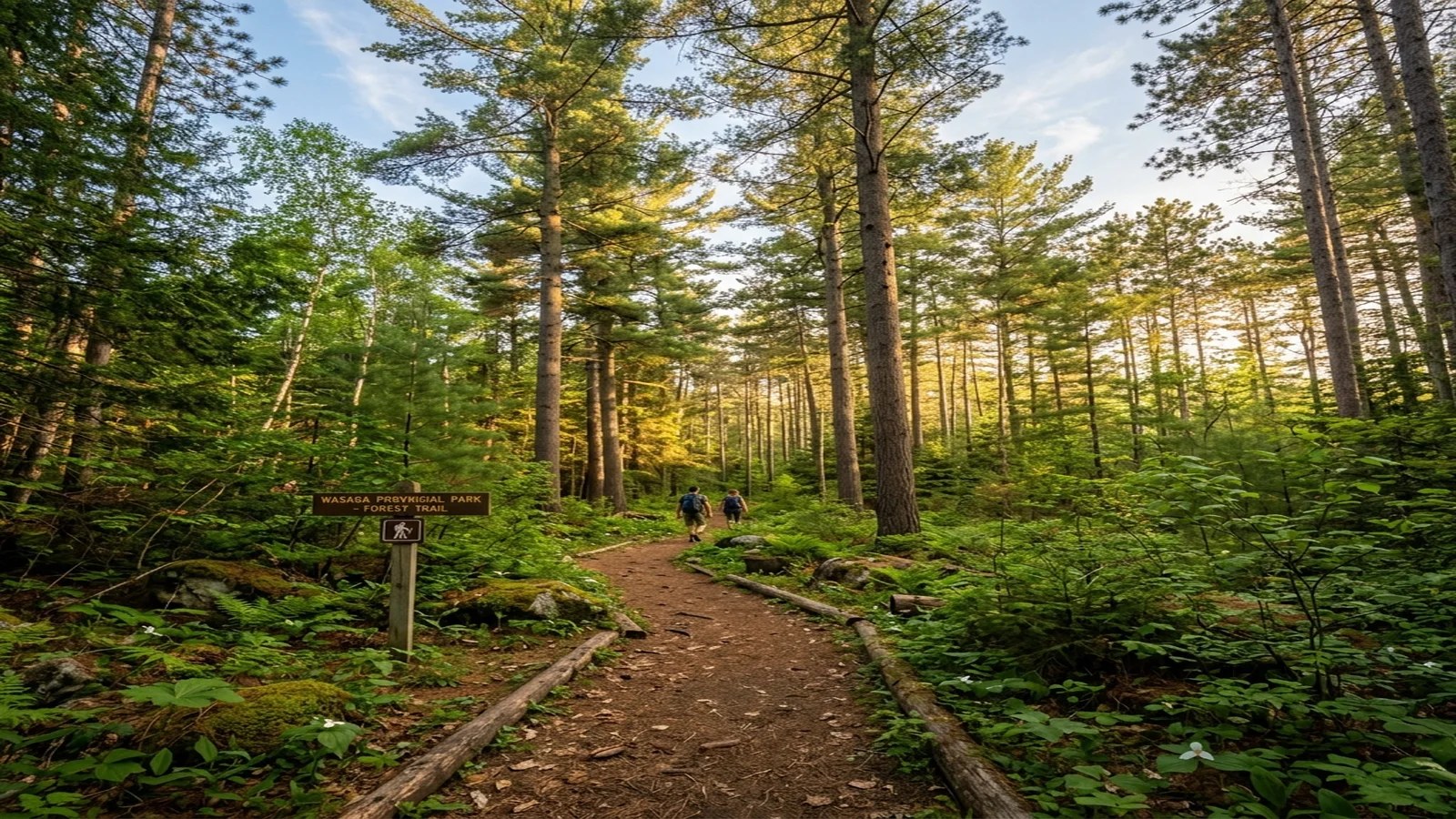
- Forest Loop (3.6 km) — mixed cedar-and-maple forest on the higher ground east of the marsh. Some shade, slightly hilly, more sheltered in summer.
- Observation Tower Spur (0.8 km out-and-back) — ascent to a 5-metre wooden observation tower with a 360-degree view of the marsh complex. The highest-value vantage point in the system.
- Full Perimeter (10.8 km) — the longest route, combining all dyke and forest sections. Half-day commitment.
All routes are blazed and signed at junctions. Free maps are available at the trailhead kiosk year-round.
What “topographical variation” really means here
The Tiny Marsh trails are not technical trails. The dyke tops are flat and gravel-topped — effectively a wide rural pathway. What gives them training value is the contrast between the dyke sections and the dyke-to-forest transitions: short, steep ramps where the dyke ends and the trail drops or climbs into the surrounding forest. These transitions are 5-10 metres of elevation change over 30-50 horizontal metres — gradients of 15-25% concentrated in short bursts.
For runners doing interval work, these dyke-edge transitions function as natural hill repeats. Run the dyke at moderate pace, hit the ramp at 5K race effort, recover on the next flat dyke section. The Main Marsh Loop has 8 such transitions per loop; running it as a tempo session builds the kind of variable-effort capacity that flat-trail running can’t produce.
For walkers and birders, the same transitions are barely noticeable — the flat dyke top is what gets used for slow-paced wildlife observation. The trail’s value depends on which mode you’re in.
The bird-watching case (the reason most visitors come)
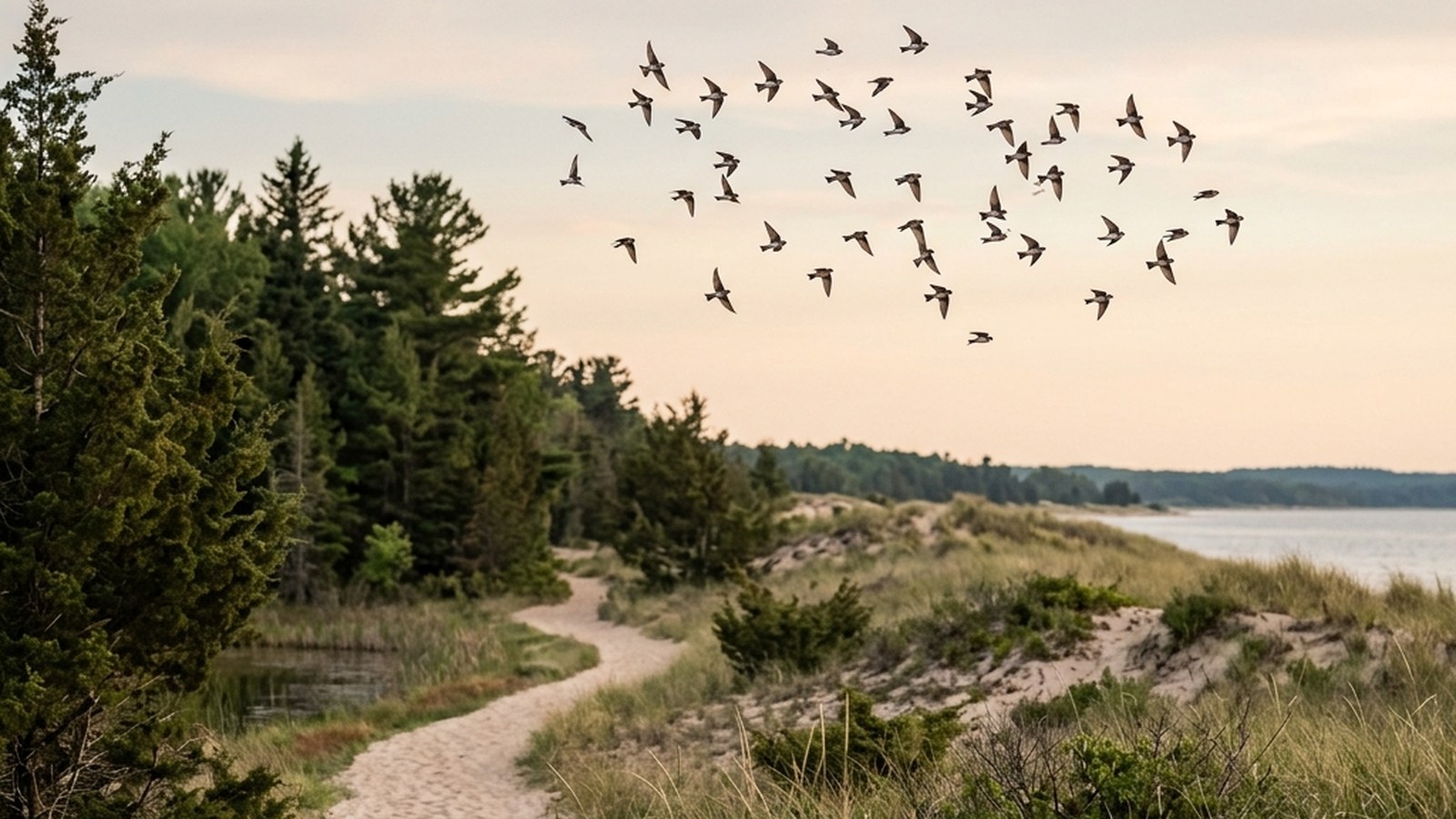
Tiny Marsh is one of southern Ontario’s premier birding sites. Over 230 species documented in eBird records eBird, with peak diversity in:
Spring migration (early May): waterfowl and warblers move through in waves. Yellow warbler, common yellowthroat, prothonotary warbler (rare but documented), American bittern, sora, and Virginia rail all show up in the first two weeks of May. The Friends of Tiny Marsh organise guided dawn-walks weekly during peak migration; they’re free, drop-in, and worth attending if you’re building bird-ID skills Friends of Tiny Marsh.
Fall migration (August-September): shorebird passage along the marsh edges, plus the largest concentration of staging waterfowl in the local region. Often easier to ID than spring birds because they’re moulting into more distinctive plumages.
Winter (December-February): bald eagles, snowy owls (irruption years), and rough-legged hawks use the open marsh as hunting territory. The trails are runnable in winter with traction; the marsh-edge eagle activity is the most reliable winter draw.
For visitors building bird-ID skills, the eBird hotspot for Tiny Marsh has months of recent observations searchable; reviewing the past two weeks’ records before visiting tells you what’s realistic to expect that day.
When to go for which purpose
- Birding (peak): first two weeks of May; mid-August through mid-September. Be there at sunrise.
- Running training: April-May and September-October for cool weather and firm trail surface. The dyke gravel is comfortable underfoot in shoulder seasons.
- Family hiking: June-August for the open-water visibility and waterfowl activity. Bring bug spray; the wetland edges are mosquito-heavy in still summer evenings.
- Photography: golden-hour light at the observation tower in late July through August produces the marsh’s strongest visual season; the cattail seed-heads turn russet-gold in late August.
Pace expectations
For trained runners (50-minute 10 km road pace), the four routes in dry summer conditions:
- Main Marsh Loop (4.2 km): 22-25 minutes at moderate effort. Tempo session venue.
- Forest Loop (3.6 km): 20-23 minutes; the small forest hills add 2-3 minutes vs flat dyke pace.
- Full Perimeter (10.8 km): 60-70 minutes; the dyke-to-forest transitions accumulate to about 80 m total elevation gain across the loop.
For birders and slow-paced walkers, multiply running times by 3-4×. The Main Marsh Loop at birding pace is a 90-minute outing.
Practicalities
- Parking: trailhead lot off County Road 6 (signed). About 25 cars capacity. Free.
- Washrooms: seasonal pit toilet at the trailhead (April-November).
- Water: none. Carry your own.
- Cell coverage: reliable Bell and Rogers across the dyke loops; spotty in the deep forest sections.
- Dogs: permitted on-leash. Off-leash is prohibited because of waterfowl nesting and migrant-bird roosting.
- Drones: not permitted within the Provincial Wildlife Area.
- Hunting: waterfowl hunting is permitted in some marsh cells in fall; the trails remain open but check the Ministry-posted notice at the trailhead during October-November before walking the perimeter.
Where it fits in the local rotation
Tiny Marsh is not in the same category as the trail-running venues. It’s a wildlife-and-flat-tempo venue. The Main Marsh Loop’s value for runners is interval work using the dyke transitions; for everyone else it’s a bird-watching destination with a runnable surface.
Pairs naturally with the Allenwood Beach Conservation Loop (also a wildlife-observation venue) and the Schoonertown Wetland (forest bathing, also low-impact). For a weekend with visiting family or a slower-paced day, the three together build a strong “quiet outdoors” rotation distinct from the harder trail-running options at Pretty River and Blue Mountain.
Practical takeaways
- 1,500-hectare cattail marsh complex 20 minutes east of Wasaga. 230+ bird species documented.
- Four routes: 4.2 km Main Marsh Loop, 3.6 km Forest Loop, 0.8 km Tower Spur, 10.8 km Full Perimeter.
- Dyke-edge transitions function as natural hill repeats for runners doing interval work. Mostly flat otherwise.
- Birding peak windows: first two weeks of May; mid-August through mid-September. Sunrise visits.
- Pairs with Allenwood and Schoonertown as a quiet-outdoors rotation distinct from the harder trail-running venues.
Frequently asked questions
Is it open year-round?
Yes — trails are accessible 12 months a year. Pit toilet at the trailhead is closed November-March. The trails are runnable with traction in winter; the dyke gravel base packs solid under snow.
Are guided walks really free?
Yes during peak migration weeks (early May, late August through mid-September). The Friends of Tiny Marsh run them on Saturday mornings starting at sunrise. Drop-in; bring binoculars; the experienced volunteer leaders are excellent at building bird-ID skills.
What about hunting season?
Waterfowl hunting is permitted in some marsh cells from mid-October through mid-November. The trails remain open but the experience changes — gunshot noise, dogs working in the marsh, hunting dogs and recreational dogs in the same parking lot. Avoid October-November weekends if hunting activity bothers you.
Is it good for kids?
Excellent. The Main Marsh Loop is flat and stroller-friendly (4.2 km is doable for ages 5+). The observation tower is a hit with kids. Wildlife visibility (turtles, frogs, herons) is high enough to maintain attention.
How does it compare to other regional birding sites?
Tiny Marsh is the largest accessible cattail marsh in the region. For diverse upland species visit the Carden Alvar (90 minutes east); for shorebirds during fall migration visit Long Point (2 hours south). For closer-to-Wasaga everyday birding, Tiny Marsh is the strongest option.
References
MNR Tiny MarshOntario Ministry of Natural Resources. Tiny Marsh Provincial Wildlife Area: management plan and visitor resources. View source →eBirdCornell Lab of Ornithology. eBird hotspot summary for Tiny Marsh Provincial Wildlife Area. View source →Friends of Tiny MarshFriends of Tiny Marsh volunteer association. Guided walk schedule and seasonal updates. View source →