The 60-second version
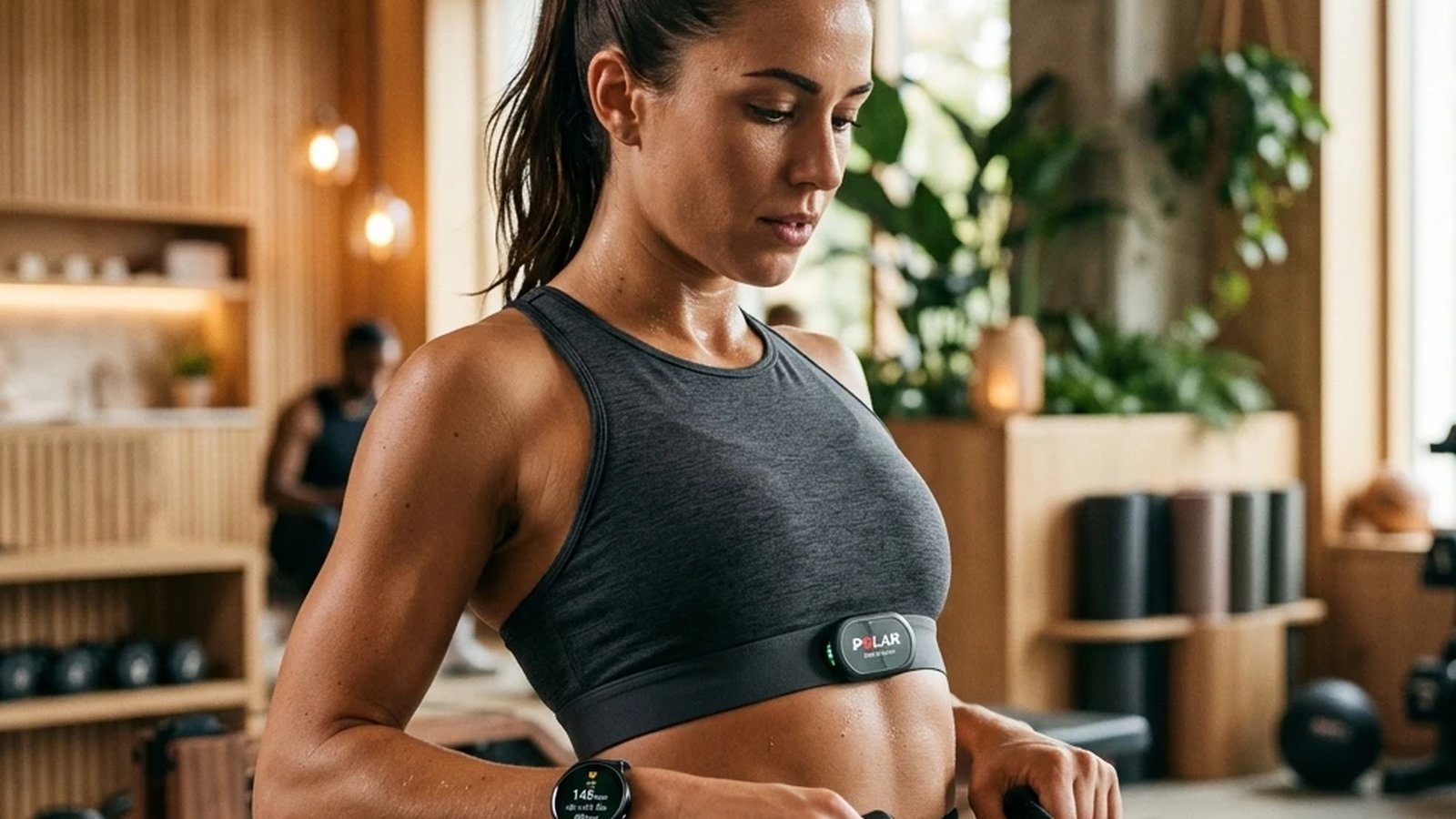
Fitness trackers (Apple Watch, Garmin, Whoop, Fitbit, Oura) are now worn by ~30% of North American adults. The peer-reviewed evidence on their psychological effects is more mixed than the marketing suggests. For most users, trackers produce small-to-moderate increases in physical activity (~1,000–1,800 daily steps) and modest improvements in self-reported wellbeing — but a meaningful subset develop anxiety, sleep obsession, or compulsive checking behaviour that the device made worse, not better. The pattern is similar to the broader quantified-self literature: data-driven feedback works for self-determined users with clear goals; it backfires for users with anxiety, perfectionist tendencies, or pre-existing eating-disorder history. Across the peer-reviewed literature, wearables show real average benefits for activity and wellbeing alongside a documented minority who are actively harmed. This article walks through who benefits, who is at risk, the warning signs that the tracker is making things worse, and the practical question of when to take it off.
Educational journalism, not medical advice. Every claim here is checked against its cited sources by editor Timothy Bunce — a health writer, not a physician. It isn’t specific to your situation: for health decisions, talk to your own clinician. How we work →
Some links in this article are affiliate links. If you buy through one, The Beachside Reader earns a commission at no extra cost to you. It never changes which products we pick, or what we say about them. Full affiliate disclosure →
Why this question matters
Wearable adoption has tracked a quiet population-level mental-health concern: does turning bodily processes into 24/7 numerical feedback help or hurt? Until ~2020 the literature was dominated by intervention trials showing wearables increased physical activity and were broadly safe. Since then, a parallel literature on orthorexia, sleep anxiety, and HRV-driven over-monitoring has documented real harms in a subset of users. Both stories are true.
There is no single trial that settles this cleanly — the evidence is a patchwork of intervention and cross-sectional studies pointing in different directions for different people. What the literature does show:
- Physical activity: consumer wearables reliably increase step counts and activity participation across trials Brickwood 2019.
- Sleep tracking: helpful for most users on average, but can trigger “orthosomnia” — obsessive sleep-score chasing that worsens sleep in people with pre-existing insomnia anxiety Baron 2017.
- HRV-guided training: some technical benefit in trained athletes, but only 9 of 36 commercially available wearables have been scientifically validated Düking 2016 — a shaky basis for recreational athletes to override how they actually feel.
- Eating-disorder risk: people who track food and activity for weight-and-shape reasons score meaningfully higher on eating-disorder and compulsive-exercise measures than non-users Plateau 2018.
Put together, the pattern is a documented minority who are actively harmed sitting alongside a majority who see modest, real benefit — which is why the right answer to “should I use one” depends on who is asking.
Who benefits
| Profile | Likely benefit |
|---|---|
| Sedentary adult starting an activity habit | High — the “reach 10,000 steps” goal is meaningfully motivating; +1,000–1,800 daily steps over 6 months |
| Recreational endurance athlete (running, cycling) | Moderate — pace and HR data inform pacing and recovery decisions |
| Adult managing chronic conditions (diabetes, hypertension) | Moderate — objective data informs medication and lifestyle decisions |
| Adult with consistent training habit, low anxiety | Small — data is interesting; behaviour change is incremental |
| Older adult monitoring activity for fall prevention | Moderate — activity baselines correlate with health; some smart-fall-detection features add safety |
| Athlete preparing for a specific event | Moderate-to-high — HRV-guided training has small but real performance benefits in trained populations |
Who is at risk
| Profile | Risk pattern |
|---|---|
| Perfectionist or high-anxiety personality | Tracker becomes a constant source of failure-rumination (“not enough deep sleep,” “HRV down today”) |
| History of eating disorder (anorexia, bulimia, OSFED) | Calorie tracking features re-activate restrictive thought patterns; documented harm signal |
| Insomnia or sleep-anxiety history | Sleep score becomes the cause of worse sleep; cycle reinforces itself |
| Adolescent or young-adult body-image concerns | Body-composition and step features feed comparison and inadequacy patterns |
| Pre-existing OCD or compulsive-checking patterns | Watch becomes the new compulsion |
| Athletes with overtraining history | HRV obsession; readiness-score-driven over-restriction; training detrimental to mental health |
| People who use social-comparison features | Leaderboards and shared-data features increase anxiety in vulnerable users |
Warning signs the tracker is making things worse
- Checking the watch repeatedly throughout the day for HR, steps, or readiness score.
- Feeling anxious when the watch shows a “low” metric (sleep score, HRV, recovery).
- Adjusting eating, sleep, or training based primarily on watch data rather than how you feel.
- Sleep getting worse as you focus on it more.
- Feeling guilty about not closing rings or hitting goals on rest days.
- Avoiding social events (long dinners, late nights) because they will affect tomorrow’s metrics.
- Wearing the device during recovery from illness and finding the data demotivating.
- Calorie counting becoming compulsive; weighing food becoming distressing.
- Significant other or family notes you talk about your watch data more than feels normal.
Any 2–3 of these regularly is a real signal. Not all "high engagement" with a wearable is healthy.
The sleep-score paradox
One of the most-documented harm patterns is what the sleep-medicine literature calls orthosomnia — the obsessive pursuit of perfect sleep, often driven by wearable data. The 2017 Baron et al. case series in J Clin Sleep Med. documented the pattern: users with prior insomnia became more anxious about sleep after starting wearable monitoring, with sleep self-rating worsening despite no change in objective sleep architecture Baron 2017.
The mechanism: the watch’s “sleep score” is an algorithmic composite (movement detection + HR + HRV) with limited validation against polysomnography. A user with anxious tendencies who sees a 68/100 sleep score develops a self-fulfilling prophecy of poor sleep regardless of whether the score reflects truth.
If sleep scores are making your sleep worse, take the watch off at night for 4–6 weeks. Most users report sleep improving within 1–2 weeks of removing the metric.
The HRV-readiness trap
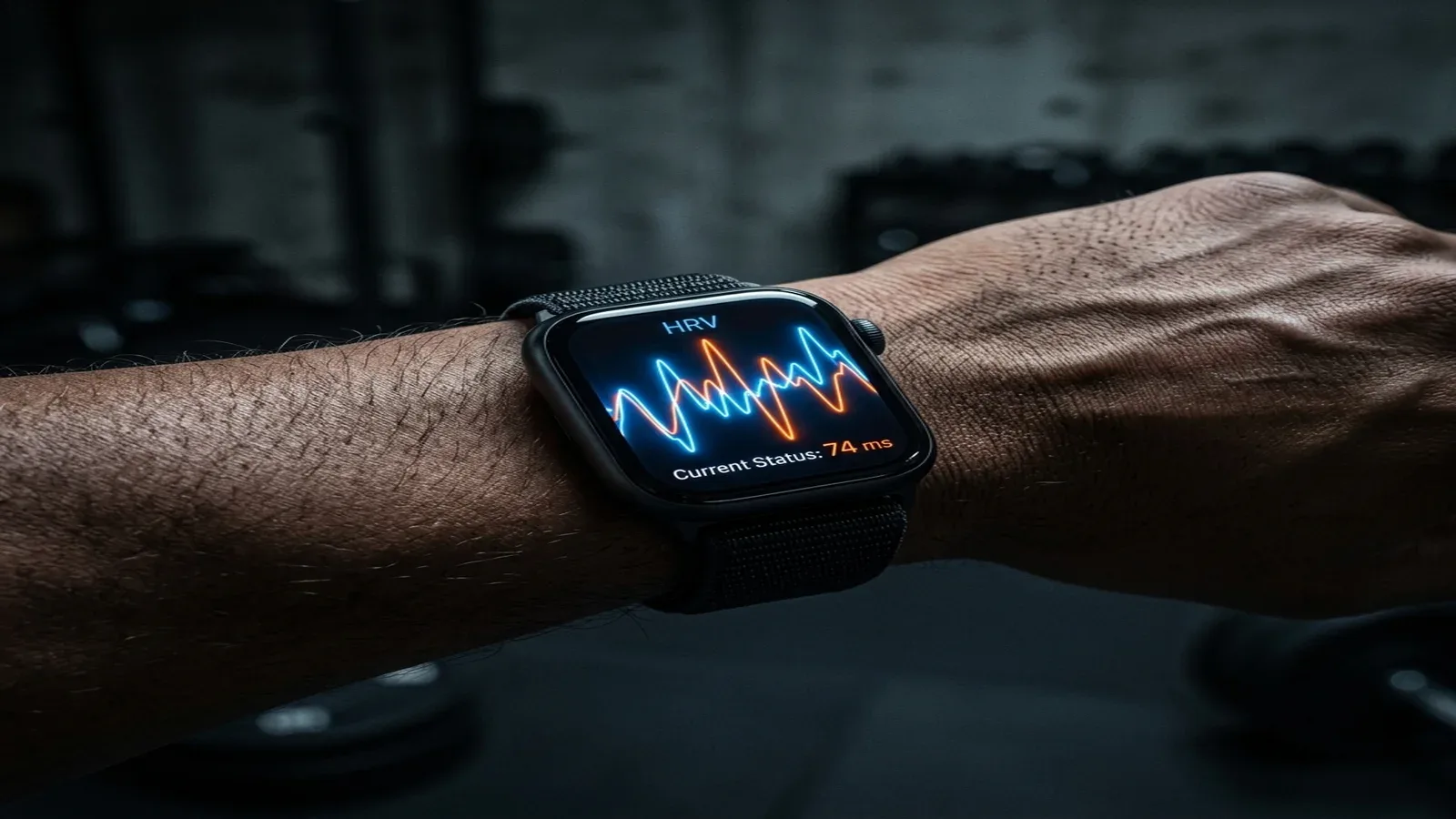
Heart-rate variability (HRV) is a real physiological marker of autonomic nervous system balance. Trained populations can use HRV-guided training to slightly improve adaptation. But for recreational athletes, the day-to-day HRV signal is dominated by sleep, alcohol, illness, and life stress — not by training readiness in any actionable sense.
Düking and colleagues’ 2016 review compared 36 commercially available wearables and found that only 9 had been scientifically validated, with factors like hydration status routinely left unmeasured Düking 2016. That validation gap matters here: an unvalidated readiness score is a shaky basis for overriding how you actually feel. If letting the score drive your training is making you anxious or causing you to skip sessions you would have completed fine, the metric is hurting you.
When to take the watch off
| Situation | Recommendation |
|---|---|
| You check it more than 5 times/hour | Take it off for a week; reassess |
| It’s ruining your sleep | Remove at night minimum; consider all-day removal |
| You’re skipping sessions because of recovery score | Disable readiness-score notifications |
| Calorie tracking is becoming compulsive | Disable calorie features or remove watch entirely |
| You’re anxious before checking it | Take it off for 30 days; see if quality of life improves |
| You’re comparing your data to friends/strangers obsessively | Disable social and leaderboard features |
| It interferes with eating decisions | Discuss with a clinician familiar with eating disorders |
| You’re recovering from illness/injury | Take it off; the data will be misleading and demotivating |
The watch is a tool, not a master. If it’s making you feel worse, the right answer is often to remove it — not to chase the metric harder.
A healthier-use pattern
- Check the watch 1–3 times per day max, at fixed times: morning summary, post-workout review, end-of-day total. Not throughout the day.
- Don’t open the app multiple times daily; data review can be weekly or monthly for trend.
- Disable notifications for closed-rings, sleep scores, and readiness messages. The notification habit is the addiction.
- Take the watch off at night if sleep tracking causes anxiety.
- Take it off entirely on rest days, vacations, or illness recovery; you don’t need the data and the demotivation is real.
- Don’t use calorie tracking if you have eating-disorder history; talk to your doctor.
- Don’t use social-comparison features; leaderboards make most users feel worse.
- Train on RPE (rate of perceived exertion) sometimes, especially during base-building blocks; rebuild the body-listening skill the watch atrophies.
A note on adolescents and kids
Pediatric and adolescent populations are more vulnerable to the harms above, and are also a growing target for monitoring technology: a 2020 scoping review documented a proliferation of wearable and mobile tools aimed at tracking depressive symptoms specifically in children and adolescents Sequeira 2020, even as evidence for their clinical benefit in this age group remains limited. Separately, the Plateau et al. analysis of 352 young adults found that people who tracked food and activity for weight-and-shape reasons scored significantly higher on eating-disorder and compulsive-exercise measures than non-users Plateau 2018. Best-practice consensus from the Academy for Eating Disorders is to not gift step counters or activity trackers to children or adolescents with body-image concerns.
When trackers do help mental health
The literature is not all negative. Wearables produce real benefits for:
- Adults rebuilding a movement habit after a sedentary period or illness: the gentle nudge plus visual feedback of progress is genuinely motivating without being compulsive.
- Cardiac rehab and post-event recovery: HR data helps users stay within prescribed ranges and gives clinicians objective data.
- Older adults: activity baselines correlate with quality-of-life and mortality outcomes; fall detection adds real safety value.
- People with chronic conditions who benefit from objective monitoring (atrial fibrillation, post-surgical recovery).
- Endurance athletes with structured training plans who use the watch primarily for pace and HR-zone targets.
The common thread: wearables work best as a tool for moving toward a clear goal, and worst as a tool for monitoring everything in case something is wrong.
Practical takeaways
- Average effect of fitness trackers on mental health is small-to-moderate positive, but with wide individual variability.
- Approximately 1 in 6 users develops measurable increased anxiety, sleep obsession, or compulsive-checking behaviour.
- Risk factors: perfectionism, anxiety, eating-disorder history, sleep-anxiety, OCD, body-image concerns, adolescence.
- Sleep score > sleep itself is a real harm pattern (orthosomnia); take the watch off at night if it’s making sleep worse.
- HRV/readiness-score-driven training can backfire for recreational athletes; train on RPE sometimes.
- Healthy use: check 1–3 times/day, disable notifications, no social comparison features, off on rest days and illness.
- Take it off if it’s making you anxious, ruining sleep, driving compulsive checking, or causing eating-decision distress.
- Don’t gift trackers to adolescents with any body-image vulnerability.
If wearable use is contributing to disordered eating, anxiety, or sleep concerns, please reach out to a healthcare provider. NEDIC (Canada): 1-866-NEDIC-20. National Alliance for Eating Disorders (US): 1-866-662-1235.
Frequently asked questions
Should I worry about getting addicted to my fitness tracker?
If you check it more than a few times per hour, feel anxious about its metrics, or skip social events to protect tomorrow's data, those are real warning signs. A meaningful minority of users develop measurable anxiety or compulsive checking behaviour related to wearables. The healthy pattern is 1–3 checks per day at fixed times, with notifications disabled.
Is sleep-tracking actually helpful?
For most users, yes — modestly. For users with prior insomnia or sleep anxiety, it often makes things worse via 'orthosomnia' — obsessive sleep-score chasing that disrupts sleep more than the original problem. The Baron 2017 case series documented this pattern in clinical sleep medicine. If your sleep gets worse after starting sleep-tracking, take the watch off at night for 4–6 weeks.
My HRV says I'm 'not recovered' but I feel fine. Should I skip my workout?
Trust how you feel. Wearable HRV/readiness scores vary widely in validation quality — a 2016 review of 36 commercial wearables found only 9 had been scientifically validated, so an unvalidated readiness number is a shaky basis for skipping a workout you'd otherwise complete fine. Day-to-day HRV is dominated by sleep, alcohol, and life stress; for recreational training, RPE is more reliable than HRV alerts.
Are there people who shouldn't use fitness trackers?
Yes. People with eating-disorder history (current or past), perfectionist tendencies, sleep anxiety, OCD, or significant body-image concerns are at higher risk of harm than benefit. People who track food and activity for weight-and-shape reasons show elevated disordered-eating and compulsive-exercise scores compared to non-users. For these populations, the Academy for Eating Disorders recommends against gift-giving fitness trackers.
How do I tell if my tracker is helping or hurting?
Quick test: if you took it off for 30 days, would your quality of life improve, stay the same, or get worse? If 'improve' is the honest answer, take it off. If 'stay the same,' you're probably not getting much value either way. If 'get worse' (you'd genuinely miss the activity prompts and progress feedback), the tracker is working for you.
References
Sequeira 2020Sequeira L, Perrotta S, LaGrassa J, et al. Mobile and wearable technology for monitoring depressive symptoms in children and adolescents: a scoping review. J Affect Disord. 2020;265:314-324. View source →Baron 2017Baron KG, Abbott S, Jao N, Manalo N, Mullen R. Orthosomnia: are some patients taking the quantified self too far? J Clin Sleep Med. 2017;13(2):351-354. View source →Düking 2016Düking P, Hotho A, Holmberg HC, Fuss FK, Sperlich B. Comparison of non-invasive individual monitoring of the training and health of athletes with commercially available wearable technologies. Front Physiol. 2016;7:71. View source →Simpson 2017Simpson CC, Mazzeo SE. Calorie counting and fitness tracking technology: associations with eating disorder symptomatology. Eat Behav. 2017;26:89-92. View source →Plateau 2018Plateau CR, Bone S, Lanning E, Meyer C. Monitoring eating and activity: links with disordered eating, compulsive exercise, and general wellbeing among young adults. Int J Eat Disord. 2018;51(11):1270-1276. View source →Kerner 2017Kerner C, Goodyear VA. The motivational impact of wearable healthy lifestyle technologies: a self-determination perspective on Fitbits with adolescents. Am J Health Educ. 2017;48(5):287-297. View source →Brickwood 2019Brickwood KJ, Watson G, O'Brien J, Williams AD. Consumer-based wearable activity trackers increase physical activity participation: systematic review and meta-analysis. JMIR Mhealth Uhealth. 2019;7(4):e11819. View source →Rosenberger 2016Rosenberger ME, Buman MP, Haskell WL, McConnell MV, Carstensen LL. Twenty-four hours of sleep, sedentary behavior, and physical activity with nine wearable devices. Med Sci Sports Exerc. 2016;48(3):457-465. View source →Kaewkannate 2016Kaewkannate K, Kim S. A comparison of wearable fitness devices. BMC Public Health. 2016;16:433. View source →Etkin 2016Etkin J. The hidden cost of personal quantification. J Consumer Res. 2016;42(6):967-984. View source →Yang 2015Yang R, Shin E, Newman MW, Ackerman MS. When fitness trackers don't 'fit': end-user difficulties in the assessment of personal tracking device accuracy. Proc UbiComp. 2015:623-634. View source →