The 60-second version
The trails behind Wasaga Beach Provincial Park are not run by a private ski club — they’re managed by Ontario Parks as the Wasaga Nordic and Trail Centre, at 101 Blueberry Trail. The real network has two named routes, the beginner-friendly Blueberry Trail and the more demanding High Dunes Trail, set inside roughly 24.2 km of groomed cross-country ski trail plus a separate 10 km snowshoe network. Outside ski season, those same corridors reopen for hiking through the park’s dune forest. The genuine Ganaraska Trail also passes through the park a short distance away, giving fit hikers a real way to extend the day — no invented “connector trail” required. Fee and hours listings for this specific facility are thin online, so a quick call to the park office before you drive out is worth it.
If you searched for the “Wasaga Nordic Club” and landed here, it’s worth saying plainly: no such club exists. The domain some older write-ups cite for it doesn’t even resolve. What’s actually behind Wasaga Beach Provincial Park is smaller, plainer, and government-run — and, for what it's worth, still a genuinely good local trail resource once you know what it is.
Educational journalism, not medical advice. Every claim here is checked against its cited sources by editor Timothy Bunce — a health writer, not a physician. It isn’t specific to your situation: for health decisions, talk to your own clinician. How we work →
Some links in this article are affiliate links. If you buy through one, The Beachside Reader earns a commission at no extra cost to you. It never changes which products we pick, or what we say about them. Full affiliate disclosure →
What it actually is
The Wasaga Nordic and Trail Centre is Explore Wasaga Beach 2026 confirms, managed by Ontario Parks as part of Wasaga Beach Provincial Park — not an independent club that sets its own membership tiers, day-pass prices, or grooming rules. It sits at 101 Blueberry Trail, Wasaga Beach (Wasaga Beach Provincial Park 2026), a location you can find on any mapping app under that street name. There's no verified acreage or hectare figure published for the property, so treat any specific size claim you see elsewhere with skepticism.
The facility has a warm-up shelter, equipment rentals, and light refreshments during the winter season (Explore Wasaga Beach 2026). Trail conditions, rentals, and current rates run through the Centre itself — call 705-429-0943 — or the park office at 705-429-2516, not a club office.
The two real named trails
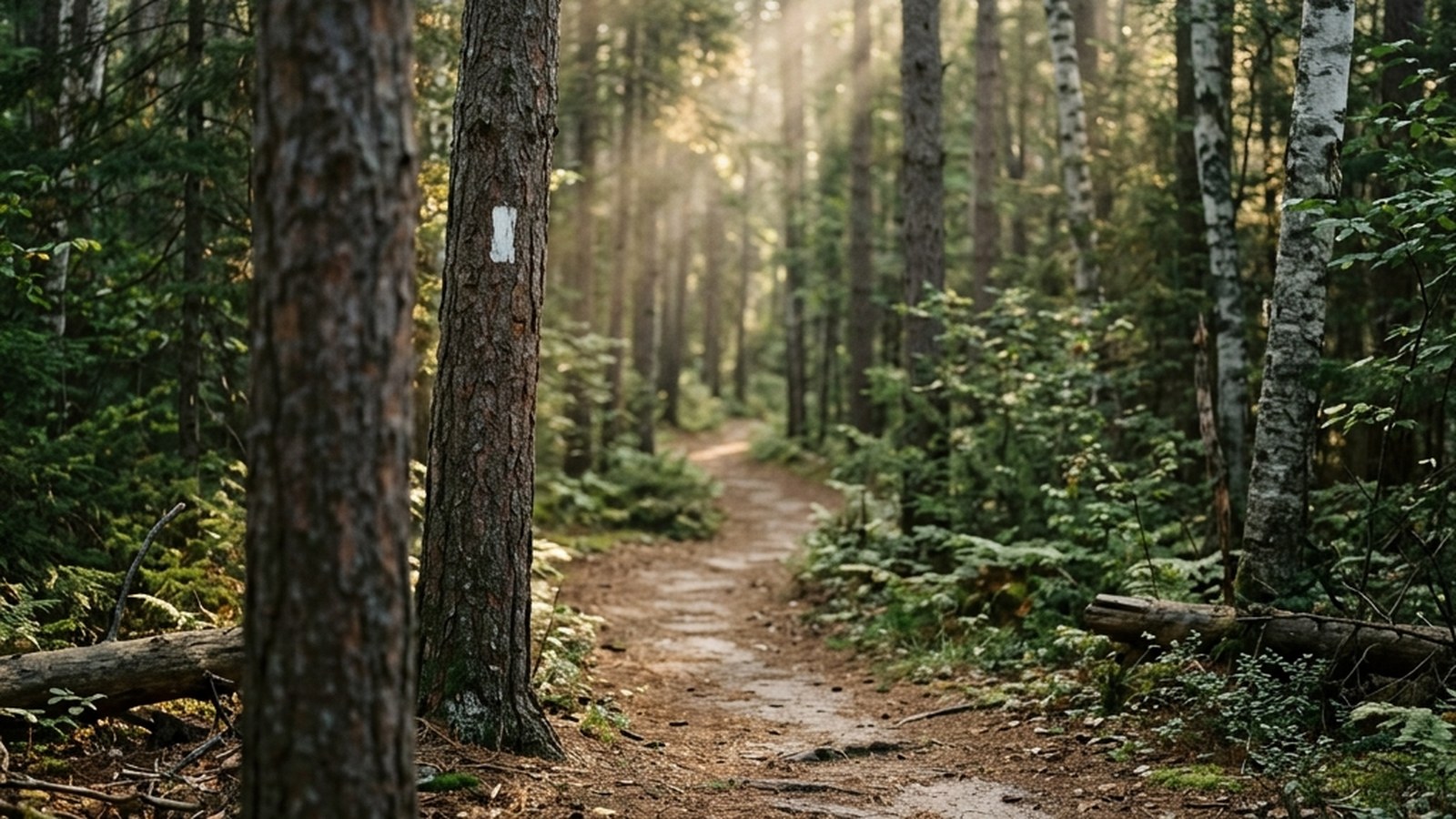
Rather than a taxonomy of five signed loops, the Centre's groomed network is built around two named trails. The Blueberry Trail is the beginner route, a loop of roughly 4 km through mature pine-oak and dune forest, described by Ontario Trails Council 2026 as “a more leisurely ski” compared to its counterpart. The High Dunes Trail is the expert-level route, tackling the steeper dune terrain the park is named for.
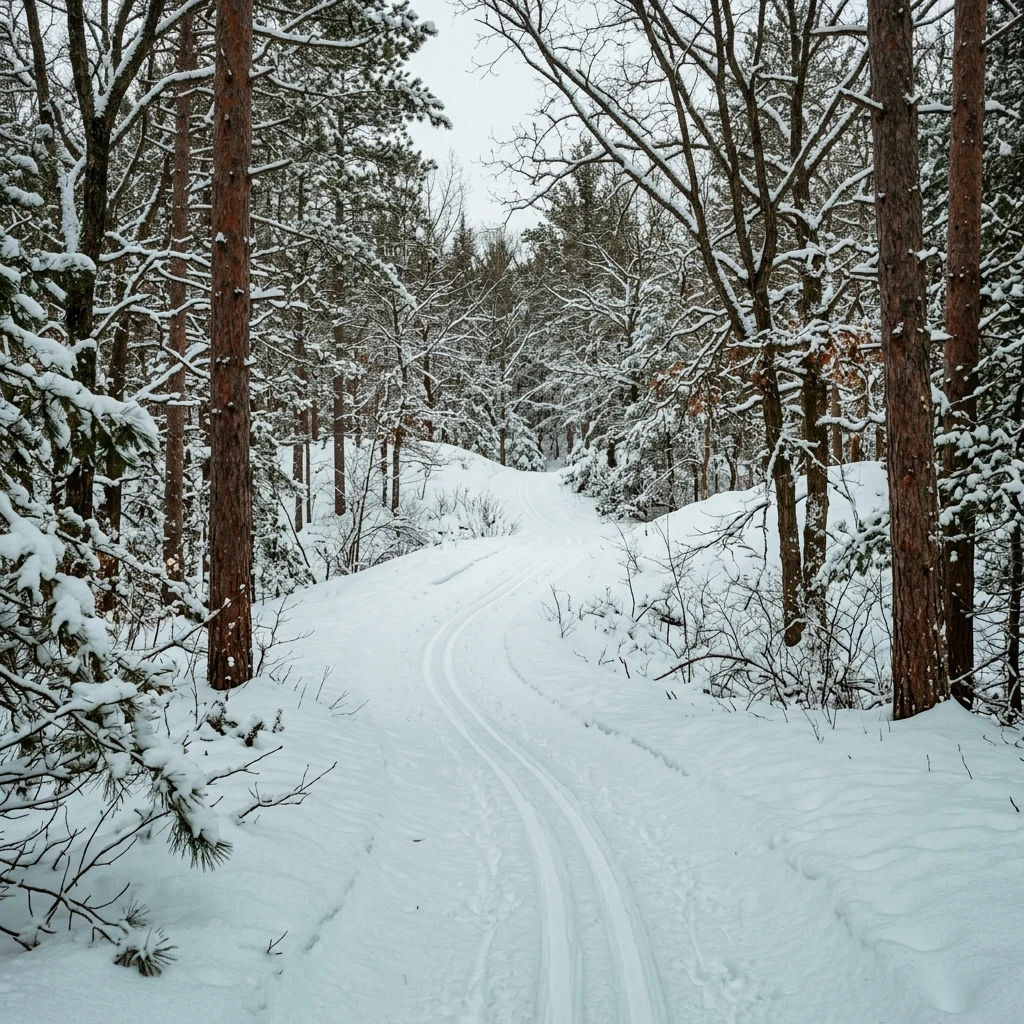
Those two named trails sit inside a larger groomed system: about 24.2 km of cross-country ski trail in total, plus a separate 10 km snowshoe-only network that radiates from the Centre (Explore Wasaga Beach 2026). Wildlife sightings — white-tailed deer and winter birds — are common along both. Free parking is available at the trailhead.
What isn't confirmed anywhere official: a five-loop naming scheme (Beginner, Birch, Hemlock, Cedar Ridge, Backcountry), precise per-loop distances beyond the Blueberry Trail's roughly 4 km, or a 250-hectare property size. If you've seen those numbers elsewhere, they don't trace to Ontario Parks, the Town of Wasaga Beach, or the Ontario Trails Council listing for this facility.
Using it outside ski season
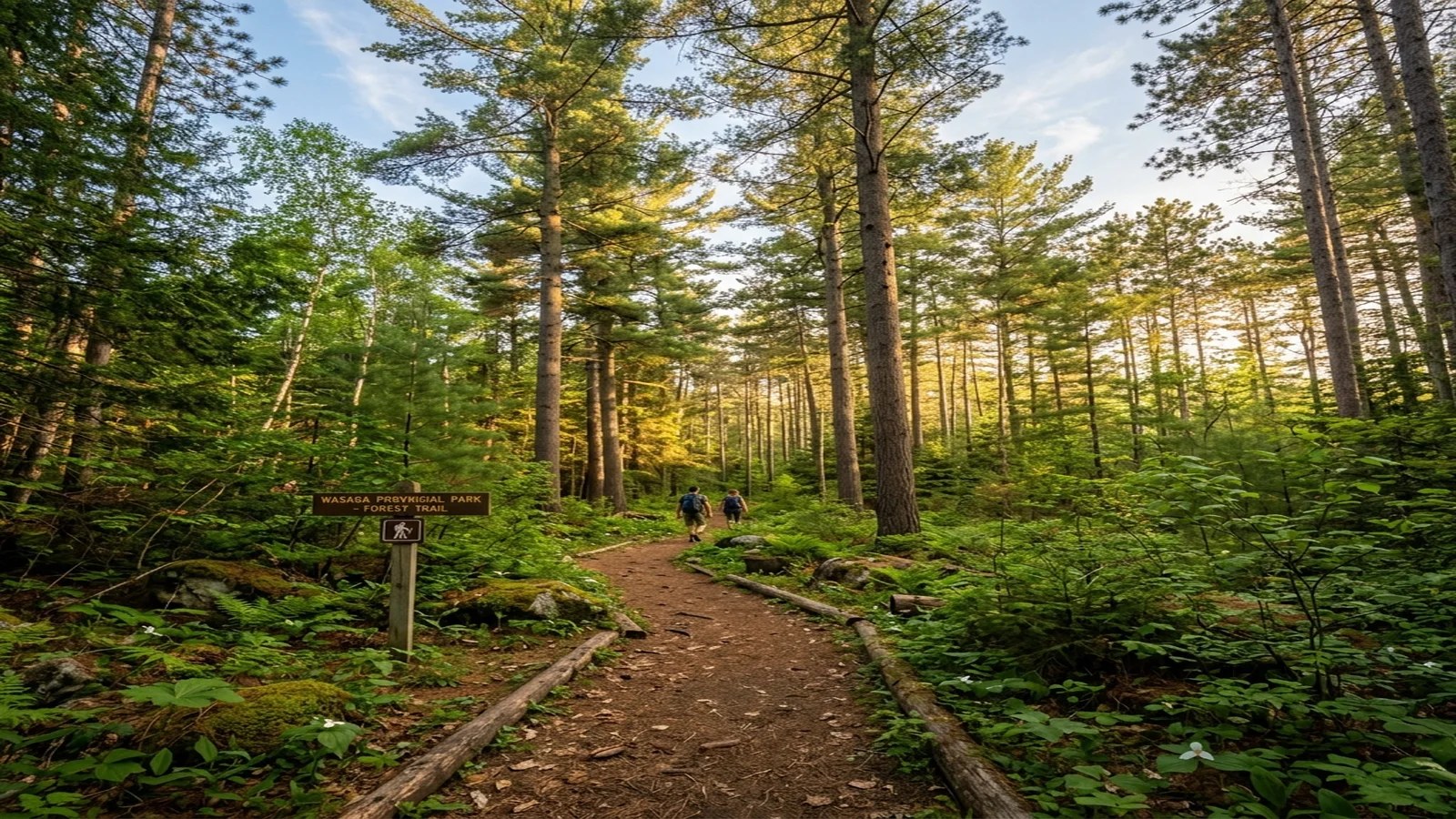
The groomed ski network runs roughly mid-December through mid-March, weather permitting, with the parking-lot gate locked at 5 pm daily during that window (Wasaga Beach Provincial Park 2026). Outside those months, the same corridors are available for hiking through the dune forest — a quieter, flatter alternative to the park's beach-side dune climbs, and a reasonable stand-in if you want tree cover and shade on a hot day.
What's genuinely unverified for this facility: a published dog policy, a bike policy, and a day-use or membership fee schedule. None of those show up in any official Town of Wasaga Beach, Ontario Parks, or Nordic Centre material as of this writing. Rather than guess, the honest answer is to call the park office (705-429-2516) or the Centre (705-429-0943) for current rules and rates before you plan a visit. If you specifically want a confirmed on-leash trail network nearby, the off-leash dog beaches and trails guide covers the spots where the leash rules are actually published.
The real Ganaraska Trail connection
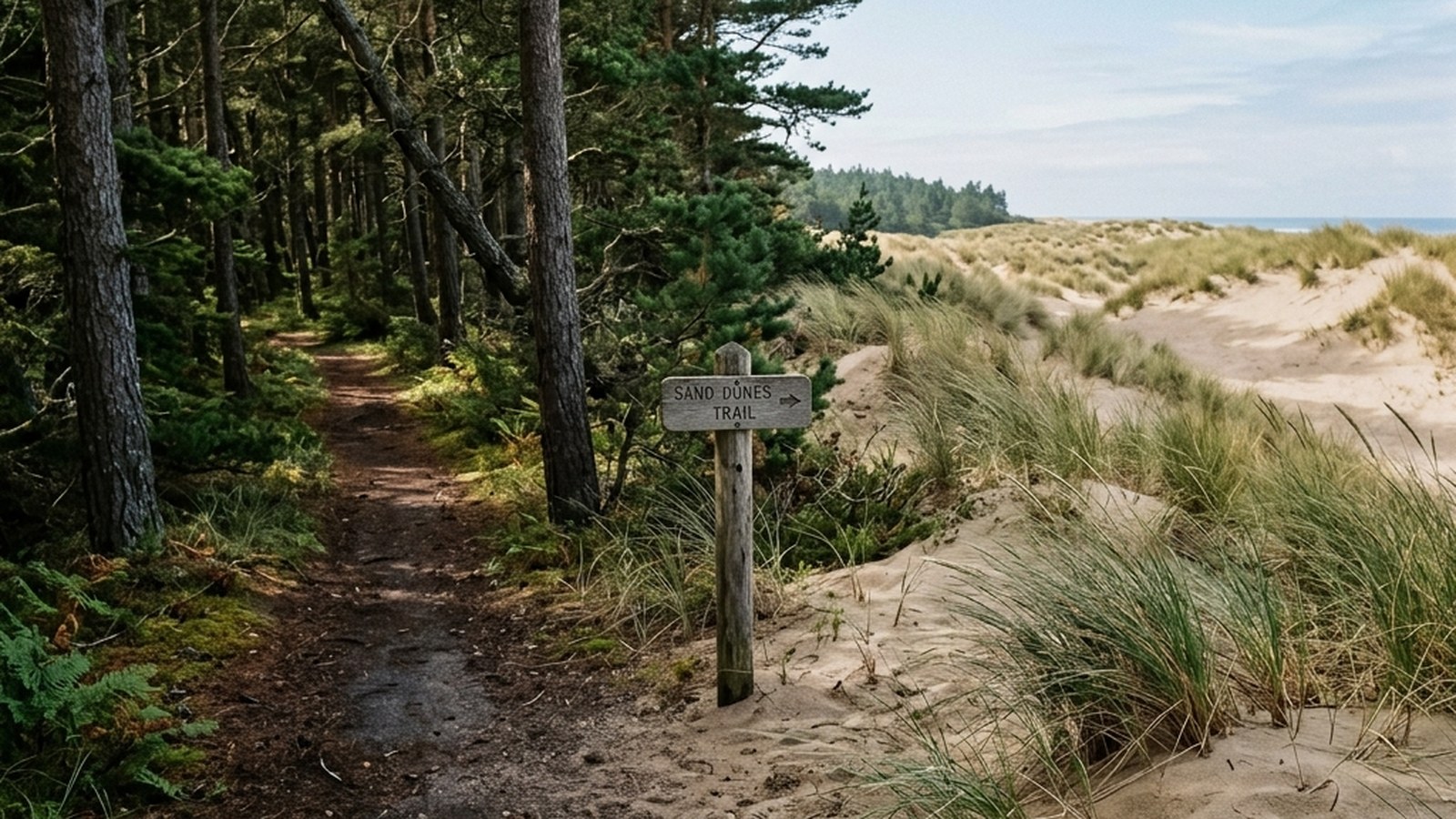
One thing the old fabricated version of this article got half-right is that there is a genuine long-trail option nearby: the Ganaraska Trail's Wasaga Section, which begins near Archer Road on River Road East and runs about 48.5 km through the park's dune system along the Nottawasaga River valley (Ganaraska Hiking Trail Association 2026). What isn't real is a signed “600-metre connector trail” stitching a specific Nordic Centre loop to a landmark called the “Pine Bush ridge.” No official map documents either of those. If you're planning to combine the two networks into a longer day, treat them as separate trailheads reached by separate parking areas unless posted signage at the Centre says otherwise, and read the full Ganaraska Trail Wasaga Section guide before you go for the real distances and access points.
Planning your visit
The practical, verifiable version: address is 101 Blueberry Trail, Wasaga Beach; the facility is Ontario Parks-run, not membership-based; the two named trails are Blueberry (beginner) and High Dunes (expert); the total groomed network is about 24.2 km of ski trail plus a 10 km snowshoe trail; winter season runs roughly mid-December to mid-March with a 5 pm gate lock. Everything else — specific fees, dog rules, bike rules, exact loop-by-loop distances beyond Blueberry's ~4 km — needs a direct call to the park office or Centre, because it isn't consistently published anywhere online. If you'd rather skip the phone call and just want a trail with clearly posted, confirmed access rules, the paved accessible trails guide and the Tiny Marsh trail network write-up are both good alternatives with less ambiguity around the edges.
Related reading
The Ganaraska Trail's Wasaga Section — the real long-trail option near the Nordic Centre, with actual distances and access points. Off-leash dog beaches and trails in Wasaga — for a confirmed, published leash policy instead of the unverifiable claims made about the Nordic Centre's dog rules. Petun Conservation Area — another Ontario-Parks-adjacent trail network worth comparing if you're building out a rotation of local hikes.
Frequently asked questions
Who actually runs the Wasaga Nordic and Trail Centre?
Ontario Parks does, as part of Wasaga Beach Provincial Park. There is no independent Wasaga Nordic Club that sells memberships or sets its own trail rules, whatever some older listings may claim.
What are the real trail names and distances?
The two named routes are the Blueberry Trail, a beginner-level loop of roughly 4 kilometres, and the more demanding High Dunes Trail. Together they sit inside about 24.2 kilometres of groomed cross-country ski trail plus a separate 7.6-kilometre snowshoe network.
Can I use the trails outside ski season?
Yes. The same groomed corridors reopen for hiking once the snow is gone. Hours, gate times, and any seasonal restrictions are best confirmed directly with the park office before you drive out, since they are not consistently published online.
How much does it cost to use the trails?
Current day-use and season pass pricing is not consistently published online for this specific facility, so call the park office at 705-429-2516 or the Nordic Centre directly at 705-429-0943 for up-to-date rates.
Does the Nordic Centre connect to the Ganaraska Trail?
The real Ganaraska Trail's Wasaga Section runs through the same provincial park a short distance away, starting near Archer Road on River Road East. There is no official signed connector linking the two networks, so treat them as separate trailheads unless posted signage at the Centre says otherwise.
References
Cross Country CanadaCross Country Canada. Trail standards and grooming guidelines for member Nordic centres. View source →Explore Wasaga Beach 2026Explore Wasaga Beach (Town of Wasaga Beach tourism site). Nordic Ski & Snowshoe — Wasaga Nordic and Trail Centre. View source →Wasaga Beach Provincial Park 2026Ontario Parks — Wasaga Beach Provincial Park. Nordic and Trail Centre / Winter Cross-Country Ski. View source →Ontario Trails Council 2026Ontario Trails Council. Blueberry Trail — Wasaga Beach Provincial Park. View source →Ganaraska Hiking Trail Association 2026Ganaraska Hiking Trail Association. Trail Sections With Maps — Wasaga Section. View source →