The 60-second version
Geocaching is the global GPS-based outdoor treasure hunt that has roughly 3 million active caches worldwide and a documented 200+ caches within a 30 km radius of Wasaga Beach. For people who don’t respond well to "go for a 5 km walk" but DO respond well to "find these 8 hidden boxes," it’s the most under-used cardio gamification available. Most local caches are within 1-3 km of accessible trailheads, so a typical day’s caching produces 4-8 km of walking with 30-60 minutes of light bushwhacking and trail navigation as the cognitive engagement. Free; the official Geocaching.com app is free for basic users; the premium subscription ($35/year) unlocks higher-difficulty caches and offline maps. Family-friendly with kids 6+; works year-round; pairs naturally with other Wasaga trail visits to layer extra activity onto a hike.
Educational journalism, not medical advice. Every claim here is checked against its cited sources by editor Timothy Bunce — a health writer, not a physician. It isn’t specific to your situation: for health decisions, talk to your own clinician. How we work →
Some links in this article are affiliate links. If you buy through one, The Beachside Reader earns a commission at no extra cost to you. It never changes which products we pick, or what we say about them. Full affiliate disclosure →
What geocaching actually is, in plain English
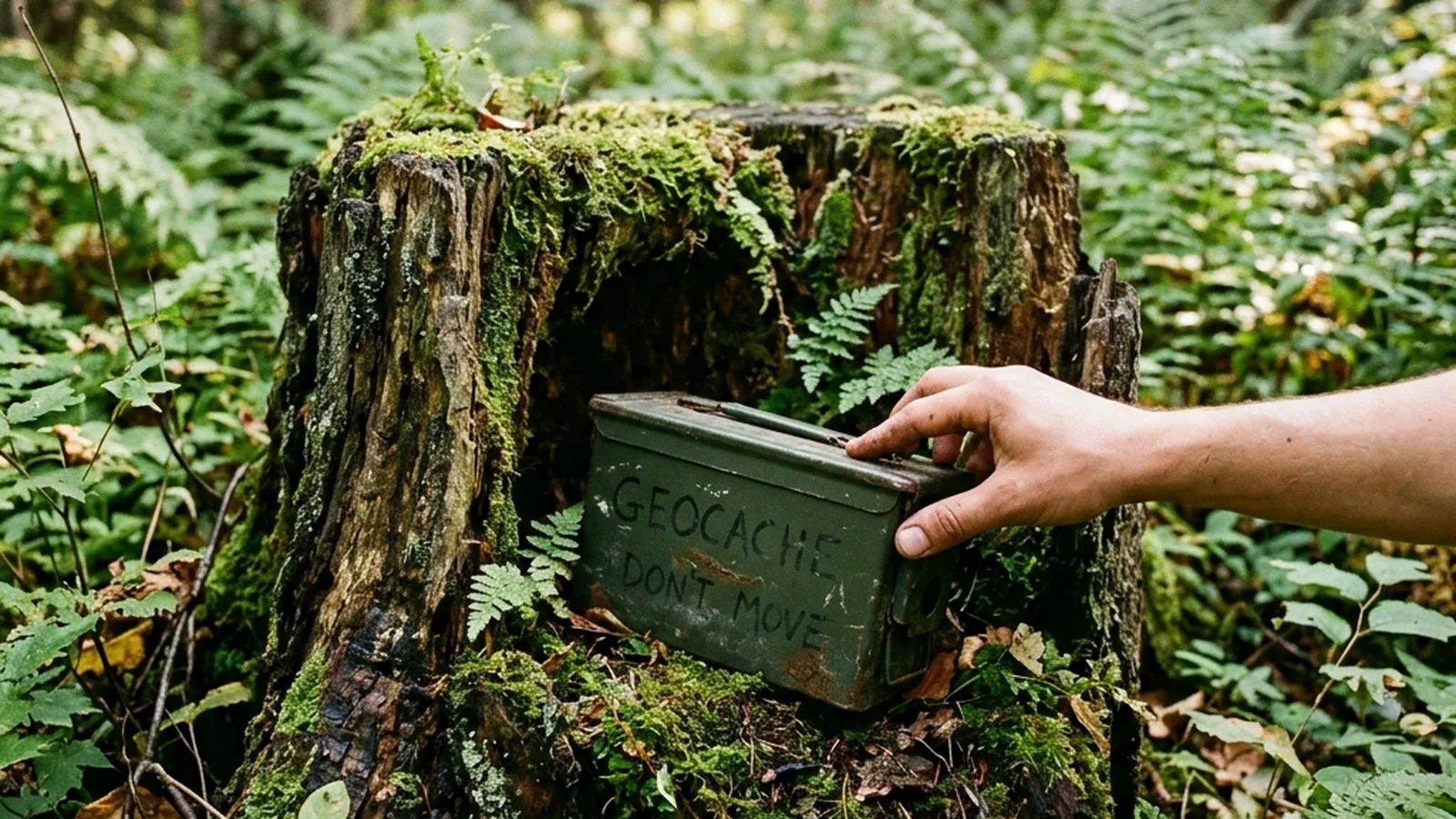
Geocaching is a global GPS-coordinate-based scavenger hunt. Anyone can hide a small weatherproof container (the “cache” — usually a film canister, a plastic ammo box, or a magnetic key holder) somewhere outdoors, then post the GPS coordinates and a hint on geocaching.com. Other people use the coordinates to navigate to the location, find the container, sign the logbook inside, optionally trade small trinkets, and log the find online.
The cache containers come in standard sizes: micro (small enough to hide in a tree-knot or a magnetic clip on a metal sign), small (a film canister or pill bottle), regular (a 200 mL container), and large (an ammo box). The smaller the cache, the harder the find, and the more cognitive engagement involved.
The activity has been around since 2000 (the first cache was hidden in Oregon shortly after the U.S. military stopped degrading civilian GPS accuracy). It’s aged from a niche tech-hobbyist activity into a family-friendly outdoor activity that millions of casual practitioners do worldwide.
Why it works as a fitness intervention specifically
The behavioural science behind geocaching as fitness is straightforward: it converts “exercise” into “treasure hunt,” which is dramatically more engaging for the population that doesn’t intrinsically enjoy walking. Three mechanisms drive the engagement:
Variable-ratio reinforcement. Some caches are easy to find; some take 20 minutes of searching; some are missing entirely. The unpredictable reward schedule is the same psychological driver behind slot machines and social-media notifications, but applied to outdoor walking. The brain releases dopamine on the find, which makes the next hunt easier to start.
Cognitive load. Walking with the cognitive task of navigation and searching produces more sustained mental engagement than walking alone. For people whose minds drift to work stress on a normal walk, the search task acts as a parasympathetic-supportive distraction.
Social and competitive layers. Most caches have an online “Found It Count” that updates publicly. Geocaching premium membership tracks personal totals and statistics. For competitive personality types, the gamification produces motivation to walk that would otherwise require external accountability.
Rigorous, controlled research isolating geocaching itself (as opposed to walking or hiking generally) as a fitness intervention is still limited. What exists points the same direction as the mechanisms above: gamified, self-directed outdoor activity tends to produce more sustained engagement than an unstructured walking prescription, though large controlled trials specific to geocaching are still lacking.
The 30 km Wasaga radius cache map
Within a 30 km drive of central Wasaga Beach, geocaching.com lists over 200 active caches as of mid-2026 Geocaching.com. The cluster patterns:
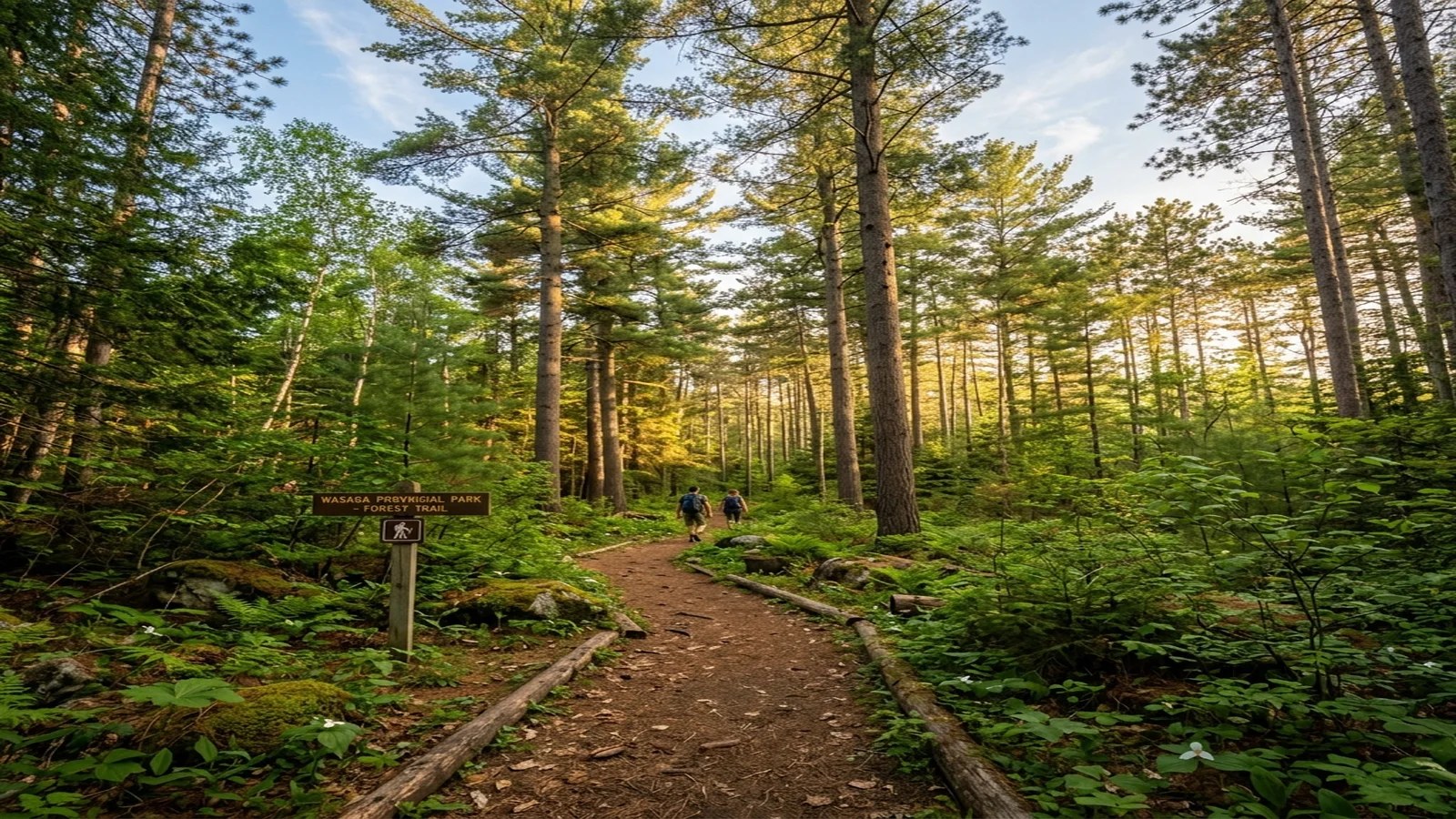
- Wasaga Beach Provincial Park: ~25 caches across the trail system, ranging from easy-find (rated 1.5/5 difficulty) to challenging (4/5).
- Tiny Marsh Provincial Wildlife Area: ~15 caches, several specifically themed around the wetland ecology and bird-watching landmarks.
- Pretty River Valley Provincial Park: ~12 caches, generally higher difficulty (the terrain is more demanding).
- The Georgian Trail rail-trail corridor: ~30 caches spaced along the 32 km from Meaford to Wasaga, accessible by bike or foot.
- Collingwood waterfront and downtown: ~20 urban caches, typically smaller and more puzzle-oriented, suitable for short outings.
- Allenwood Beach Conservation area: ~8 caches, mostly easy-find, themed around the local wildlife observation sites.
For a first-time cacher, the easiest introduction is a visit to the Wasaga Beach Provincial Park trailhead with the geocaching.com app open and a 1-2 km walk attempting to find 3-4 of the rated 1.5/5 difficulty caches near the Day Use Area. Expect to actually find 2-3 of the 4 attempted; some caches go missing or get muggled (geocacher term for non-cacher disturbance).
How to start in the next 30 minutes
- Install the Geocaching app (iOS or Android) and create a free account. The basic membership is enough for most casual caching.
- Open the map view from your current location. Caches appear as small icons; the icon shape indicates the cache type, the colour indicates difficulty.
- Pick 2-3 nearby caches at difficulty rating 1.5/5 to 2/5 for your first outing. Read the cache description and any hints.
- Walk to the GPS coordinates. The app gives you a directional arrow and distance counter as you approach. The last 10-20 metres is where the actual searching begins.
- Find the cache. It will be small, often hidden under bark, in a tree knot, magnetic-clipped to metal, or wedged behind a sign. Read the cache description hints carefully.
- Sign the logbook (bring a pen) and log the find on the app.
- Re-hide the cache exactly where you found it. The next person needs the same find experience.
Total time investment for the first outing: 60-90 minutes including the learning curve. After 3-4 sessions, the search-time-per-cache drops as you develop pattern recognition for common hiding spots.
Year-round practical considerations
Spring (April-May): excellent caching season. Bug pressure low, trails dry, ground vegetation hasn’t covered the cache hiding spots yet (visibility is highest in early spring before leaf-out).
Summer (June-August): peak season for tourists; cache hides are well-camouflaged by full vegetation. Mosquito season factors into wooded caches. Most popular for tourist-cachers visiting Wasaga.
Autumn (September-October): the second peak season. Cool weather, autumn colour, low bug pressure. The Georgian Trail caches are particularly nice in October.
Winter (November-March): fewer cachers active, but caches placed on trails accessible year-round (Beach Drive corridor, Nordic Centre summer trails, Town off-leash park) work as winter caching outings. Snow-covered cache hides are sometimes harder to find; some caches go “winter dormant” in their owner’s archive intentionally.
Family and intergenerational use
Geocaching is one of the most reliable family-fitness activities available, particularly for the 7-12 age range where kids respond well to gamified treasure hunts but resist “going for a hike.” The pattern that works best for families:
- Pick 4-5 caches in a single area that build into a 3-5 km walk.
- Let the kids hold the phone and navigate. The cognitive engagement is part of the value.
- Bring small trinkets to trade in the larger caches (rule: take something, leave something of equal or greater value).
- Build a family stats tracker on geocaching.com. Kids respond to the visual progress.
- Plan around bathrooms and snack stops; the find frequency drops if anyone is hungry or needs a break.
For multi-generational outings (grandparents, parents, kids), the rated 1.5/5 difficulty caches near accessible trail surfaces are the right choice. The Wasaga Provincial Park boardwalk-accessible caches and the Tiny Marsh dyke-trail caches both work for users with mobility limitations.
Etiquette and protocols
The geocaching community has unwritten rules that matter for the activity to keep working:
- Be discreet around non-cachers. The hide locations work because most passers-by don’t notice them. Cachers searching openly draw attention; the local term is “muggling” (after Harry Potter), where a non-cacher discovers and disturbs a cache.
- Re-hide exactly as found. Future cachers depend on the consistency.
- Don’t damage vegetation. Don’t pull at branches or rip moss to find a cache; if you can’t find it without ecological damage, log a “Did Not Find” and move on.
- Trade fairly. Trinkets in larger caches should be of equal or greater value than what you take. Don’t take everything.
- Log honestly. Log finds as “Found It,” non-finds as “Did Not Find,” and report missing caches with a “Needs Maintenance” note.
Practicalities
- Cost: free for basic membership. Premium ($35/year) unlocks higher-difficulty caches and offline maps; worthwhile after 10-15 finds.
- Equipment: phone with GPS, pen for the log, optional small trinkets for trading. No specialised gear required.
- Local meetup: the Simcoe County Geocachers Facebook group runs occasional group outings (CITO — Cache In Trash Out — events combine caching with trail cleanup) CITO.
- Cell coverage: needed for the app. Premium offline maps for the spotty-coverage caches in the Pretty River Valley and Ganaraska sections.
Practical takeaways
- 200+ active caches within 30 km of Wasaga. The cluster density is higher than most Canadian regions of similar size.
- Variable-ratio reinforcement makes the activity more engaging than walking alone for most demographics.
- 4-8 km of incidental walking per typical 90-minute caching outing — meaningful cardio without “exercise” framing.
- Excellent family activity for ages 7+ where kids navigate. Multi-generational outings work with low-difficulty caches near accessible trails.
- Year-round. Spring and autumn are optimal; winter works on accessible-trail caches.
Frequently asked questions
Is geocaching safe?
Generally yes — you’re walking on public trails to documented coordinates. Standard outdoor precautions apply (wildlife, weather, hydration). The main risk is overshooting your fitness on the first outing because the cache hunt is more engaging than expected; pace yourself.
What if I can’t find a cache?
Log a “Did Not Find” on the app and move on. Caches occasionally go missing through weather, animal disturbance, or muggle removal. Your DNF log helps the cache owner track maintenance needs. The community norm is to log honestly — don’t fake a find.
Is the premium subscription worth it?
For casual cachers, no — the basic membership covers most needs. For active cachers (10+ finds in the first month), the offline maps and higher-difficulty cache access make the $35/year membership worthwhile. Try a month free if the option is available.
Can I cache with a stroller or wheelchair?
Some caches yes, with the right rating filter. Look for “wheelchair accessible” in the cache attributes (the geocaching.com filter supports this). The Wasaga Provincial Park boardwalk caches and Tiny Marsh dyke-trail caches typically meet accessibility standards.
How does geocaching compare to other gamified outdoor apps?
Pokemon GO is more spontaneous and urban-oriented; geocaching is more deliberate and trail-oriented. Strava is competitive on a single metric (pace, distance); geocaching rewards exploration and finds. They’re different tools for different motivations — a serious hobbyist might use multiple.
References
Geocaching.comGeocaching.com (Groundspeak Inc.). The official global geocaching platform. View source →CITOCache In Trash Out (CITO) program. Geocaching community trail-cleanup tradition since 2002. View source →