The 60-second version
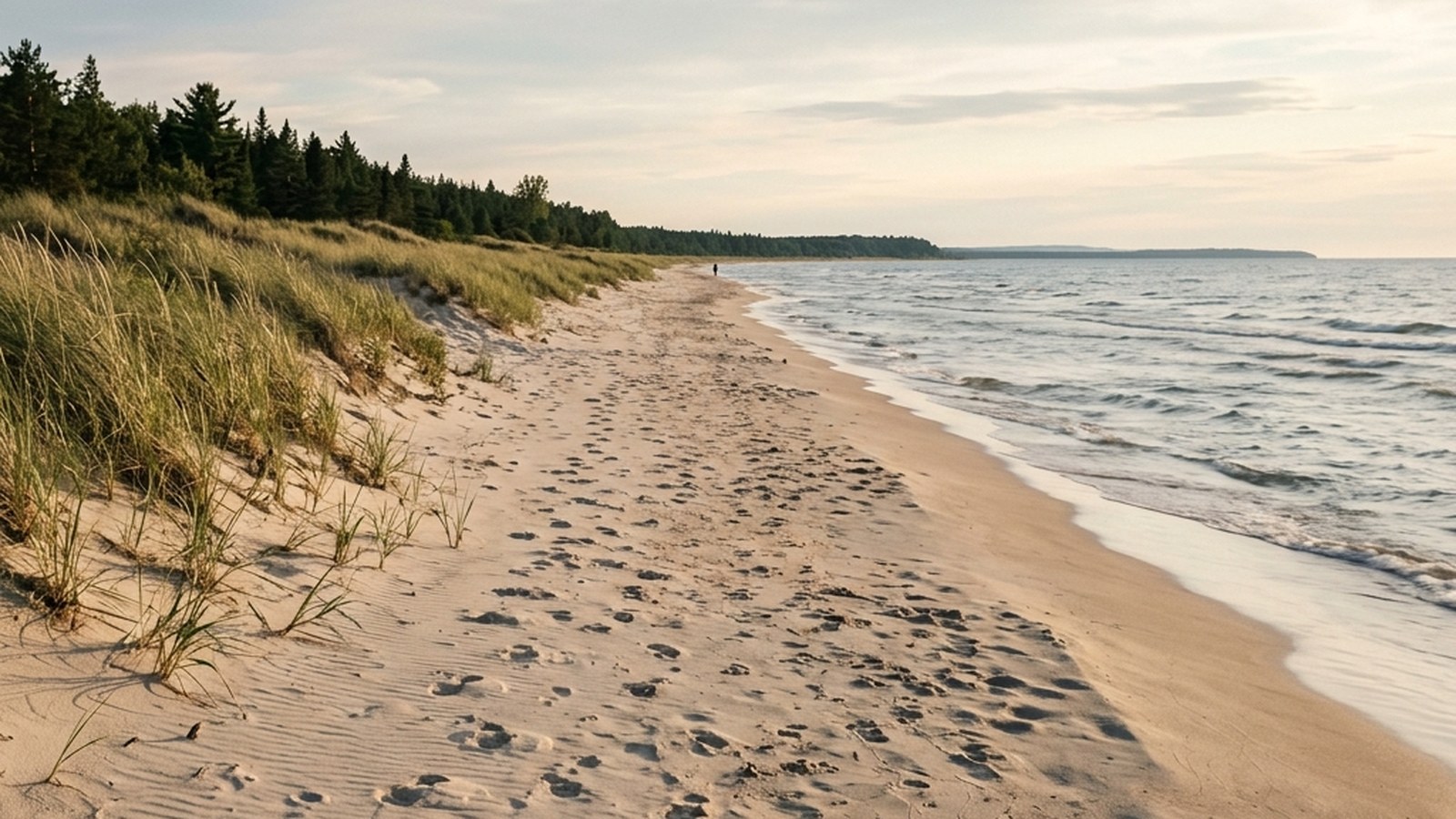
Soft-sand running is one of the most under-rated training surfaces available to anyone with beach access. The metabolic energy cost of running on dry sand is roughly 1.6× the cost of running on pavement at the same pace (Lejeune 1998), with calf, posterior tibialis, and arch musculature recruited at meaningfully higher levels. The trade-offs are real: pace is slower, perceived effort is higher, ground-reaction-force impact is lower (which is why injury risk drops compared to road running), and the central nervous system load is higher because sand is unstable and stride mechanics adapt every footfall. For Wasaga residents and visitors, the 13.7 km of contiguous shoreline is one of the longest soft-sand training surfaces in Ontario. The mistake is treating soft-sand running as a fitness gimmick; the published research positions it as a legitimate, distinct training stimulus.
Educational journalism, not medical advice. Every claim here is checked against its cited sources by editor Timothy Bunce — a health writer, not a physician. It isn’t specific to your situation: for health decisions, talk to your own clinician. How we work →
Some links in this article are affiliate links. If you buy through one, The Beachside Reader earns a commission at no extra cost to you. It never changes which products we pick, or what we say about them. Full affiliate disclosure →
The energetics: why pace drops and effort climbs
Lejeune et al. (1998) is the foundational study on this. Subjects walking and running on dry sand vs hard surfaces showed mechanical work increases of 1.6-2.5× for walking, but only around 1.15× for running — metabolic energy cost, however, climbed roughly 2.1-2.7× for walking and about 1.6× for running at matched paces Lejeune 1998. The mechanism: every footfall on sand displaces material instead of returning elastic energy. The propulsive force the calf and ankle complex would normally generate against pavement’s elastic rebound has to be generated entirely by muscle on sand — meaning more muscle work per stride, longer ground contact times, and higher metabolic cost.
The downstream effects are predictable:
- Pace at matched effort drops 30-50%. A 5:00 min/km road runner runs 6:30-7:30 min/km on soft sand at the same heart rate.
- Heart rate at matched pace climbs 10-15 bpm. At a comfortable conversational effort.
- Stride length shortens roughly 8-12%. Stride frequency stays similar.
- Caloric expenditure per kilometre rises ~60% for the soft-sand surface vs equivalent-pace pavement.
Which muscles work harder, and why it matters
Pinnington & Dawson (2001) measured the metabolic energy cost of running on soft, dry beach sand compared with grass (not EMG or muscle activation), finding net energy cost on sand ran roughly 1.5-1.6× higher at matched speeds Pinnington 2001. That higher energetic cost is consistent with extra work being done in three muscle groups:
Calf complex (gastrocnemius and soleus). The mechanism: every footfall requires more plantar-flexion force to push off the unstable surface, without pavement’s elastic rebound to help. For runners with calf or Achilles weakness, soft-sand work builds the strength a road program can’t produce.
Posterior tibialis. This muscle stabilises the medial longitudinal arch under load; soft-sand running is one of the few activities that loads it heavily. This loading pattern is directly relevant to posterior tibial tendon dysfunction — a related but distinct overuse condition from plantar fasciitis — where rehabilitation programs increasingly use unstable, deformable surfaces like sand to build load tolerance.
Glute medius. The unstable surface recruits frontal-plane stabilisers (which the glute medius is the primary muscle for) more heavily than the predictable surface of pavement. This is the same mechanism that makes single-leg work in the gym important; soft-sand running provides it incidentally to every stride.
The injury-risk trade-off
The simplistic narrative is “sand is harder so it must hurt more.” The published research is more nuanced: the GROUND-REACTION FORCES are lower on sand because the surface compresses, reducing peak impact loading. So at matched paces, sand running has lower peak knee and ankle impact than pavement.
However, the SUSTAINED MUSCULAR DEMAND is higher, particularly on the calf and Achilles. Binnie et al.’s (2013) review of the sand-training literature found the injury evidence mixed rather than conclusive — some studies report higher injury rates on sand, others lower — concluding there is no clear causal evidence linking sand surfaces to either increased or decreased injury incidence Binnie 2013. What the mechanism does support is caution: the added calf and Achilles demand is real, so the surface still rewards a gradual introduction rather than a sudden switch. The injury profile shifts: less knee impact, more calf and Achilles loading.
Practical implication: soft-sand running protects knees while challenging calves. For runners with chronic knee issues (patellofemoral syndrome, IT band, runner’s knee), regular sand work is therapeutic. For runners with calf or Achilles issues, it requires careful progression.
A 4-week progression for first-timers
The mistake most newcomers make is doing 30-45 minutes of soft-sand running on day one. The result: 5-7 days of calf and Achilles soreness that pushes them away from the surface entirely. The right progression:
- Week 1: two sessions, 10-15 minutes each, on the firm wet-sand strip near the waterline (not the soft upper-beach sand). Easy pace, conversational effort.
- Week 2: two sessions, 15-20 minutes each, mixing 5 minutes of soft-sand running into the firm-sand session.
- Week 3: two sessions, 20-25 minutes each, with 50% on soft sand.
- Week 4: two sessions, 25-30 minutes each, primarily on soft sand at conversational pace.
After this 4-week introduction, soft-sand running can be sustained at 2-3 sessions per week without injury risk for most runners. The Achilles and calf adaptations take roughly 6-8 weeks to fully consolidate; the surface-specific cardiovascular adaptations come faster (3-4 weeks).
When to use firm wet sand vs soft upper-beach sand
The Wasaga shoreline offers both surfaces simultaneously. The training-mode distinction:
Firm wet-sand strip (near the waterline): 95% of the speed of pavement, with slightly lower impact. Use for tempo work, longer continuous efforts, race-specific pace practice. The training stimulus is similar to road running but joint-friendlier.
Soft upper-beach sand (near the dune line): 50-70% of the speed of pavement, with dramatically higher muscle recruitment. Use for strength-endurance work, calf and posterior tibialis development, low-impact cardiovascular work for runners returning from injury.
The standard local pattern is to run out on the firm strip (mileage and pace) and walk-or-jog back on the soft strip (stimulus and recovery). The contrast doubles the training value of a single beach session.
How sand running compares to other surface-variety options
Trail running provides surface variety but the variability comes from rocks, roots, and elevation change — the muscle recruitment shifts session-to-session based on terrain. Sand running provides consistent unstable-surface recruitment in a way that’s reproducible across sessions, which makes it more useful for targeted strength-endurance work.
Treadmill running provides controlled effort but no surface variability whatsoever. The proprioceptive and stabiliser recruitment of soft sand is a complete addition to a treadmill-based program rather than an overlap.
Pool running (water-treadmill or aqua-jogging) provides similar low-impact cardiovascular work with even less impact than sand. The trade-off is that water doesn’t recruit the calf and posterior tibialis the way sand does — pool running is the right choice for active recovery; soft sand is the right choice for strength-endurance development.
Practical takeaways
- Soft-sand running raises metabolic cost roughly 1.6× over pavement at matched paces, with walking’s mechanical-work penalty climbing even higher (Lejeune 1998).
- Calf, posterior tibialis, and glute medius are the muscles that get the most additional work compared to pavement running.
- Lower knee impact, higher calf/Achilles loading. Therapeutic for knee issues, requires progression for calf-vulnerable runners.
- 4-week introduction is the right ramp. Two sessions per week, building from 10 minutes firm-sand to 30 minutes soft-sand.
- Use firm wet-sand for distance and pace; soft upper-beach for strength stimulus. Combine in a single session for double value.
Frequently asked questions
Will soft-sand running help me lose weight?
Per kilometre, yes — ~60% more calories burned than pavement at matched pace. But the slower pace means total session caloric expenditure is similar to road running unless you extend the session. The body-recomposition value comes from the muscle-recruitment difference (calf, posterior tibialis, glute medius) rather than calorie count.
Do I need different shoes for soft-sand running?
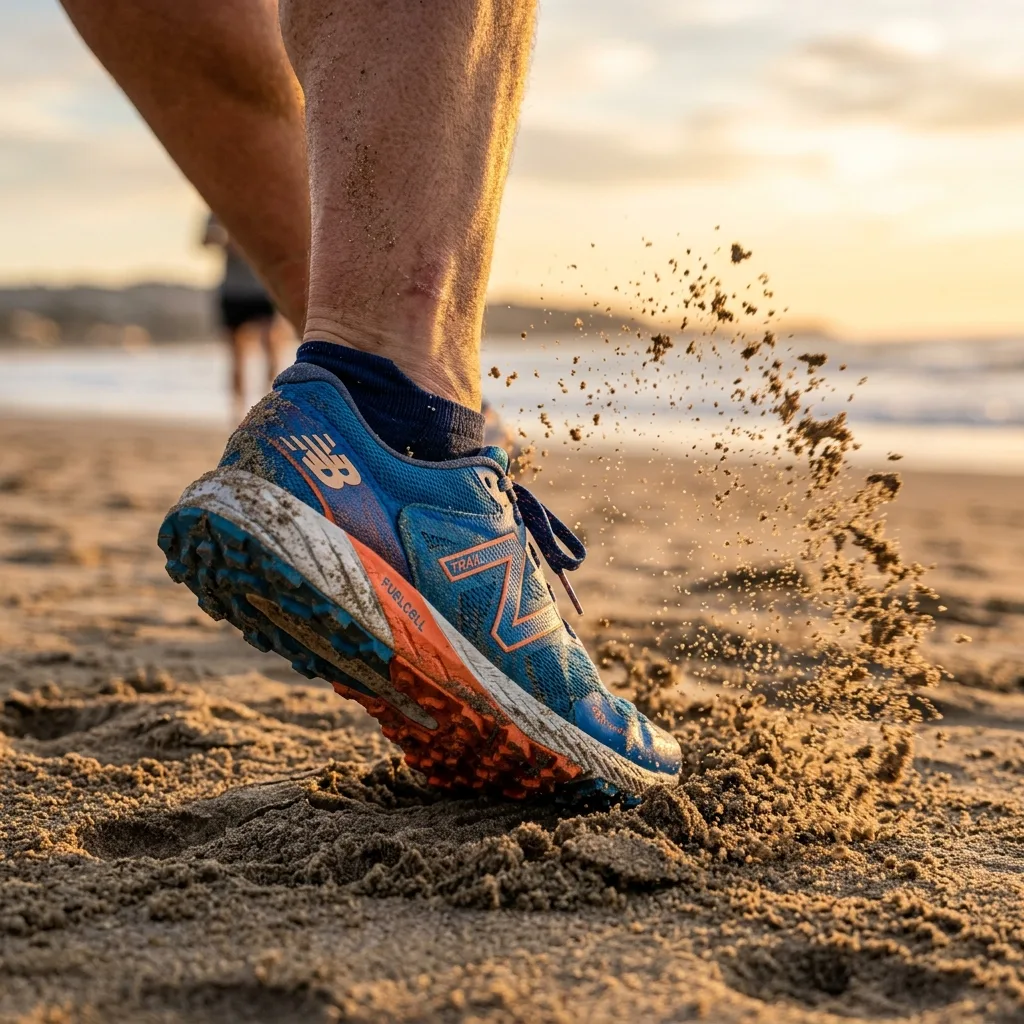
Trail-running shoes drain better and provide arch support that pure beach-running shoes lack. Standard daily-trainer running shoes work too. Avoid white sneakers (sand-staining) and minimalist shoes (insufficient arch support for the higher posterior-tibialis load).
Is barefoot soft-sand running better?
It builds foot intrinsic-muscle strength faster, but injury risk for the unaccustomed runner is real. If you’re experimenting, do it in 5-10 minute increments mixed into shod sessions for the first month.
Can I do interval training on soft sand?
Yes — 30-second to 90-second hard efforts on soft sand are excellent power-endurance work. Recovery walks should be on firm wet sand to keep the effort gradient meaningful.
What about running on the wet-sand strip vs the dry strip?
Wet sand near the waterline provides ~95% of pavement’s speed and slightly lower impact — the joint-friendlier road equivalent. Dry sand higher up the beach is 50-70% of pavement speed with dramatically higher stimulus. Different tools for different sessions.
References
Lejeune 1998Lejeune TM, Willems PA, Heglund NC. Mechanics and energetics of human locomotion on sand. Journal of Experimental Biology. 1998;201(13):2071-2080. View source →Pinnington 2001Pinnington HC, Dawson B. The energy cost of running on grass compared to soft dry beach sand. Journal of Science and Medicine in Sport. 2001;4(4):416-430. View source →Binnie 2013Binnie MJ, Dawson B, Pinnington H, Landers G, Peeling P. Sand training: a review of current research and practical applications. Journal of Sports Sciences. 2013;32(1):8-15. View source →