The 60-second version
Wasaga Beach has more accessible paved trail than its tourism reputation suggests. Five primary paved or hard-packed surfaces work for strollers, walkers using mobility aids, manual and power wheelchairs, and seniors with balance challenges. The Georgian Trail Wasaga section, the Beach Drive multi-use corridor, the Hwy 26 trail extension, the Wasaga RecPlex perimeter loop, and the Wasaga Beach Provincial Park accessible boardwalk together total about 18 km of confirmed accessible surface. Free except where Provincial Park parking applies. The biggest accessibility limitation isn’t the trail surface — it’s the seasonal washroom availability. April-October is the comfortable window; November-March means planning around closed facilities and salt-treated surfaces that wheelchair users find harsher than dry pavement.
Educational journalism, not medical advice. Every claim here is checked against its cited sources by editor Timothy Bunce — a health writer, not a physician. It isn’t specific to your situation: for health decisions, talk to your own clinician. How we work →
Some links in this article are affiliate links. If you buy through one, The Beachside Reader earns a commission at no extra cost to you. It never changes which products we pick, or what we say about them. Full affiliate disclosure →
The Georgian Trail (Wasaga section)
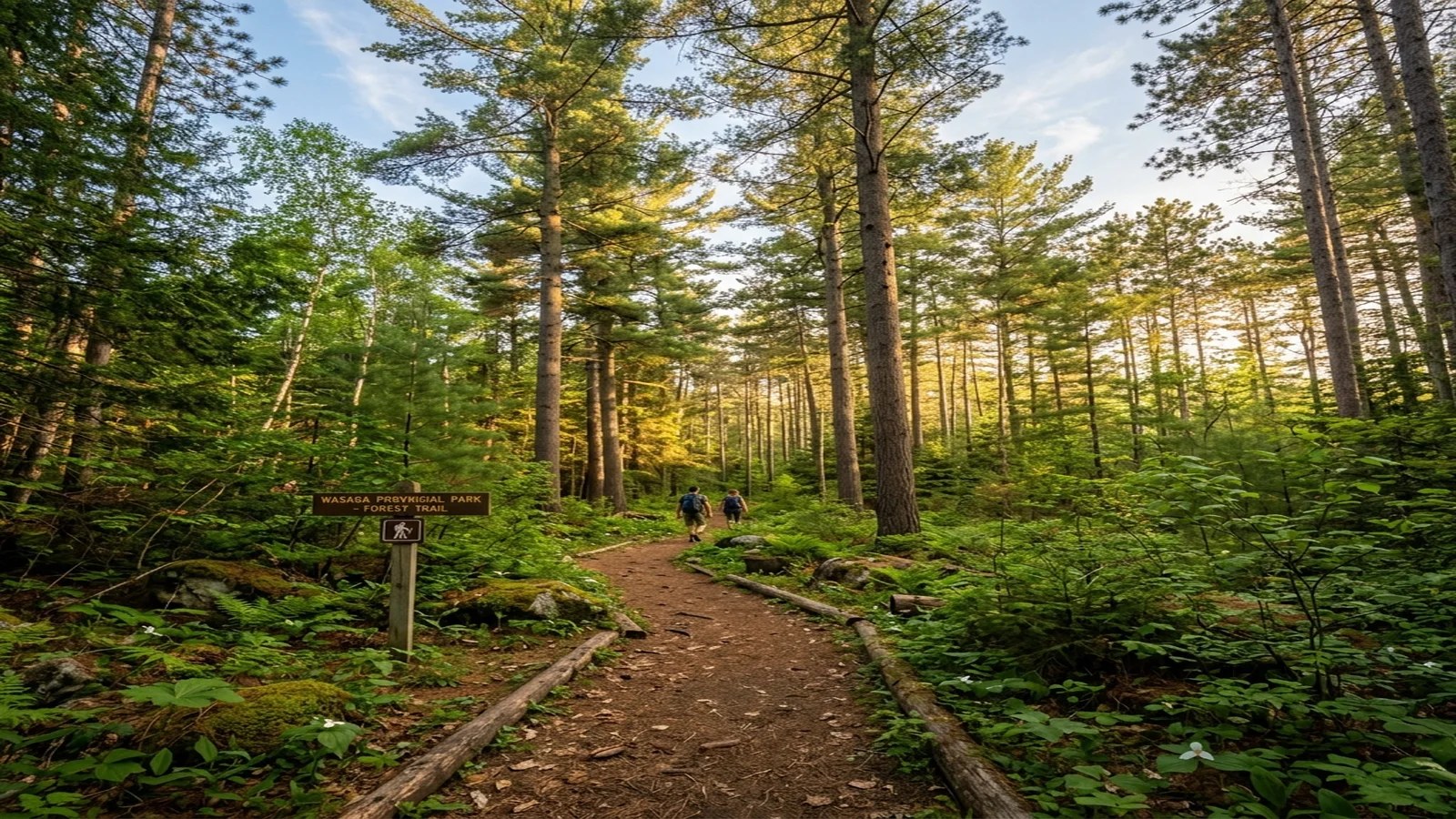
The Georgian Trail is a 32 km converted rail trail running from Meaford through Thornbury and Collingwood to the Wasaga Beach end. The Wasaga section — roughly the eastern 7 km from Sunnidale Road into central Wasaga — is paved or stone-dust hard-packed throughout and works for any mobility device with adequate wheel diameter (full-size strollers, sport wheelchairs, scooters).
Surface specifications: 2.4 metres wide, mostly flat (less than 2% gradient throughout), no overhead obstacles, well-maintained with seasonal sweeping AODA Georgian Trail. Trailhead parking at Sunnidale Road has accessible spaces; secondary access points at Klondike Park and the Highway 26 connector also have accessible parking.
The longest realistic accessible-trail outing in the region uses the Georgian Trail Wasaga section out-and-back from the Klondike Park trailhead — you can build to 14 km of paved trail without crossing a single road. For wheelchair users training for distance, this is the local benchmark surface.
The Beach Drive multi-use corridor
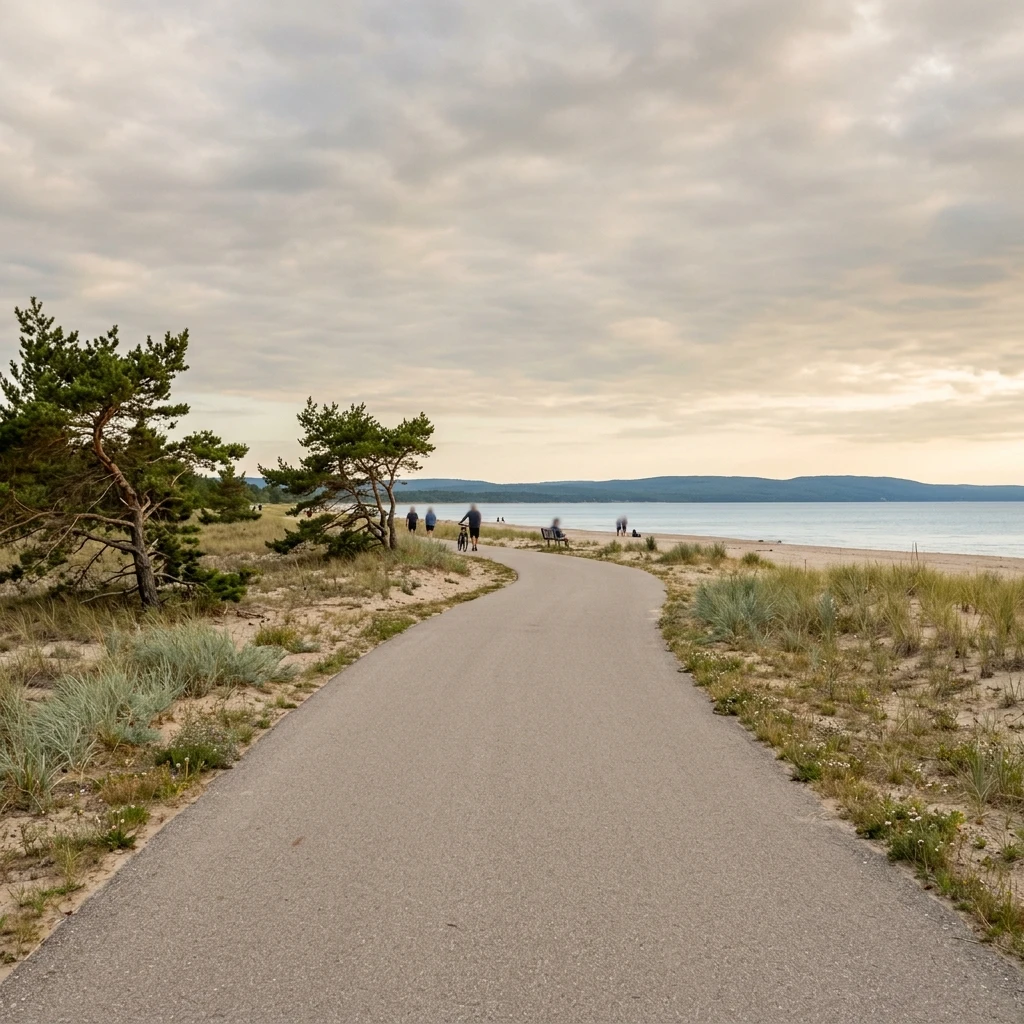
Beach Drive runs the full length of the Wasaga shoreline from west of Area 1 through to the Allenwood Beach access. The dedicated multi-use corridor on the south side of the road is paved, 2 metres wide, and physically separated from car traffic by a curb in most sections.
This is the headline accessible trail for tourists with mobility needs. It connects the six numbered Beach Areas with their accessible parking and washroom facilities, runs adjacent to the major commercial strip with restaurants and shops most needing-services-along-the-way, and provides direct visual access to the beach without requiring transitions onto soft sand. Total length: 13.7 km along the full shoreline.
Limitations: the corridor crosses a few side streets at grade; in busy summer traffic the crossings can require waiting. The pavement quality is variable — sections rebuilt in 2024 are excellent; older sections have minor cracks and frost-heave bumps that wheelchair users feel even at slow walking pace.
Wasaga Beach Provincial Park accessible boardwalk
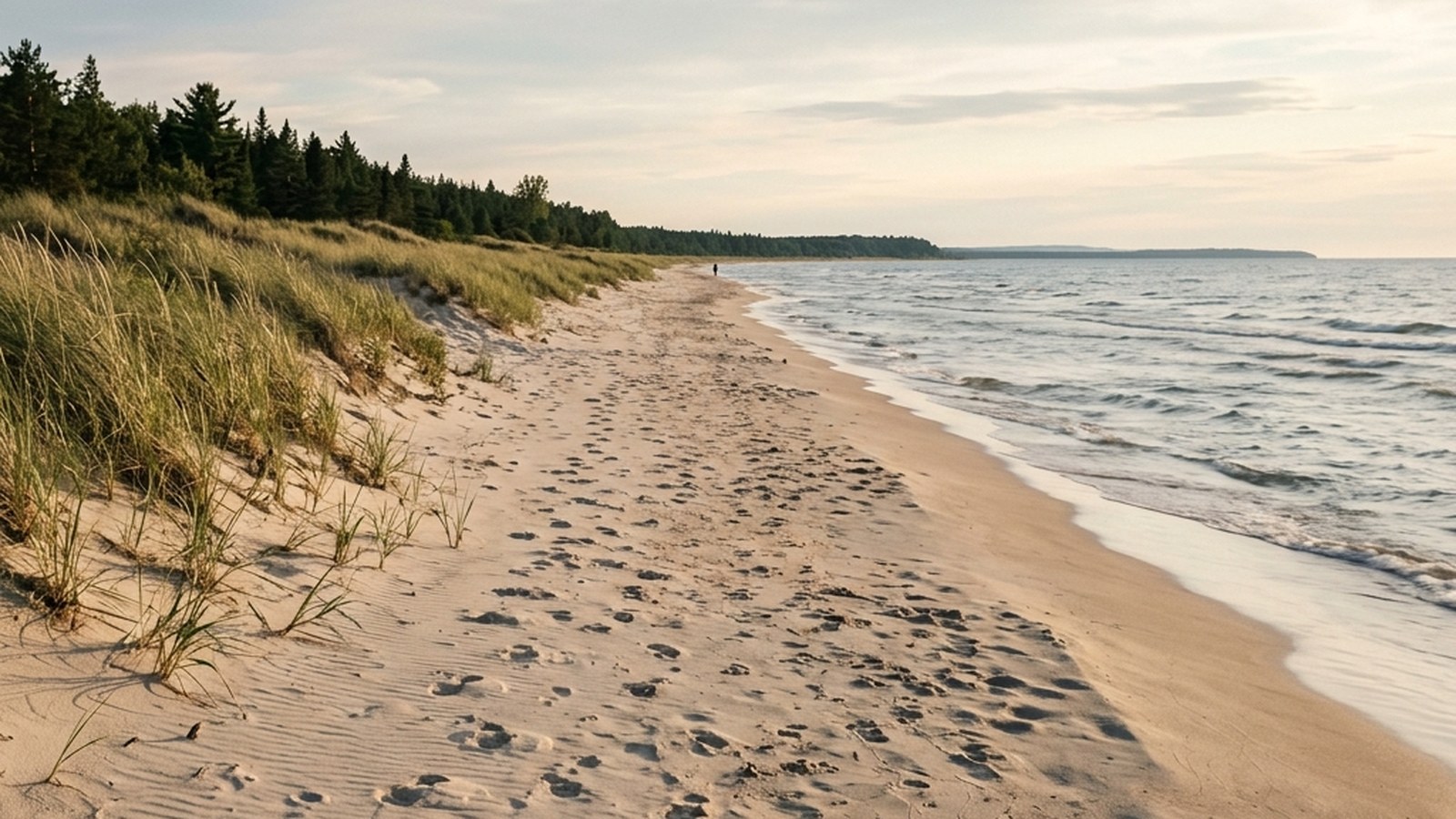
The Provincial Park’s Day Use Area at Beach Area 2 includes a 400-metre accessible boardwalk that crosses the dune system and provides direct beach access for wheelchair users. The boardwalk is wide (1.8 metres), low-sloped, and ends at a hard-packed observation deck with a view of the open beach.
For wheelchair-bound visitors who specifically want to be on the beach (not just adjacent to it), the Provincial Park has beach wheelchairs (large-tire chairs that work on soft sand) available for rental at the visitor centre Ontario Parks Accessibility. Reservations are recommended in summer; booking is via the Ontario Parks reservation system or the day-use desk on a first-come basis.
Park parking fee applies ($14/day or $69/year individual Ontario Parks pass) for the boardwalk and beach wheelchair access.
Wasaga RecPlex perimeter loop
The Wasaga Beach RecPlex (the municipal recreation centre on River Road East) has a paved perimeter loop around the building totalling 1.2 km, used by senior walking groups and as a controlled-environment exercise space. The loop is fully flat, lit until 10 pm, has 4 strategically-placed benches, and connects to accessible washrooms inside the RecPlex during operating hours.
This is the most controlled accessible exercise environment in the area. Particularly valuable for visitors with cardiovascular conditions who want walking distance away from traffic, in a setting where help is available if needed. The senior walking groups (organised through the Wasaga Beach Town recreation department) use this loop year-round; meetup times are posted on the municipal website.
Highway 26 trail extension
The Highway 26 corridor between Wasaga and Stayner has a paved separated trail running about 4.2 km of the route. Less interesting than the lakefront trails for tourist visitors but useful for residents wanting an accessible route between Wasaga and Stayner that doesn’t require driving.
The trail surface is consistent paved asphalt, separated from the highway by a 3-5 metre grass buffer in most sections. Crossing Highway 26 is required at one mid-route intersection; the crossing has a pedestrian-controlled signal but the wait can be 60-90 seconds in summer.
Winter accessibility considerations
Winter changes the accessibility calculus significantly. Three factors:
Salt and grit on the surface. Wheelchair users with manual wheelchairs report that the salt-treated pavement is harder on tires and harder on hands (push-rim grit transfer) than clean dry pavement. Power wheelchair users notice less; the abrasion is the bigger long-term cost. Plan tire-clean-up after each winter session.
Closed seasonal washrooms. The Beach Drive corridor washrooms close mid-October. The Georgian Trail trailhead washrooms close November-April. The RecPlex remains open year-round and is the most reliable winter washroom-available exercise venue.
Snow drifting on Beach Drive. The dune-side wind can drift snow across the multi-use corridor faster than it gets cleared. Local plowing prioritises the Town-maintained sections; some Provincial Park boardwalk sections are not plowed at all in winter.
For winter accessible exercise, the RecPlex perimeter loop and the Georgian Trail are the most reliable options. Beach Drive is variable depending on recent weather and plow timing.
Practicalities
- Accessible parking: Klondike Park (Georgian Trail), Beach Areas 1-6 (each has 1-2 accessible spaces), RecPlex (multiple), Provincial Park Day Use Area. Free except Provincial Park.
- Washrooms: seasonal at most beach access points. Year-round at RecPlex and Provincial Park visitor centre.
- Beach wheelchairs: available for rental at the Provincial Park visitor centre.
- Senior walking groups: organised through the Town of Wasaga Beach recreation department. Drop-in welcome.
- Trail-condition reporting: the Town of Wasaga Beach Facebook page posts winter plowing-status updates within hours of each weather event.
Practical takeaways
- ~18 km of confirmed accessible paved or hard-packed trail across 5 primary surfaces.
- The Georgian Trail Wasaga section is the longest realistic accessible outing — up to 14 km out-and-back without crossing a road.
- Beach Drive multi-use corridor is the headline tourist-accessible route — connects the six Beach Areas and runs adjacent to commercial services.
- Provincial Park has beach wheelchairs for rent at the visitor centre — for wheelchair users who want to be on the beach itself.
- Winter accessibility is harder. RecPlex perimeter loop is the most reliable year-round option.
Frequently asked questions
Are these trails good for parents with strollers?
Yes — all five primary accessible surfaces work for full-size strollers (jogging strollers especially). The Beach Drive corridor and Georgian Trail are the most stroller-friendly because they have no significant grade changes.
Can I rent a beach wheelchair?
Yes, at the Wasaga Beach Provincial Park visitor centre. Reserve in advance for summer; first-come on the day for spring/fall. Free with park admission ($14/day or $69/year Ontario Parks pass).
Are seniors’ walking groups really drop-in?
Yes, organised through the Town of Wasaga Beach recreation department. The RecPlex perimeter loop has Tuesday and Thursday morning groups; meetup times are posted on the municipal website seasonally.
How does Wasaga compare to other Ontario destinations for accessibility?
Better than the Bruce Peninsula (limited paved trail), comparable to Sauble Beach (similar multi-use corridor), behind major urban venues like the Toronto Waterfront Trail (much longer continuous accessible route). For a small-town destination, Wasaga’s 18 km of confirmed accessible surface is above average.
What about cycling on these trails?
Cycling is permitted on the Georgian Trail and the Beach Drive corridor. The RecPlex perimeter loop is foot-traffic only. The Provincial Park accessible boardwalk is foot/wheelchair only. Speed limits and right-of-way etiquette apply on shared trails.
References
Georgian TrailGeorgian Trail Association. Trail surface specifications and accessible-section maps. View source →Ontario Parks AccessibilityOntario Parks. Accessibility services at Wasaga Beach Provincial Park including beach wheelchair rental. View source →AODAProvince of Ontario. Accessibility for Ontarians with Disabilities Act, 2005, and outdoor-trail accessibility standards. View source →