The 60-second version
A 10–15 minute walk after meals is one of the highest-leverage low-cost interventions in modern metabolic health. The published research is consistent: post-meal walking measurably flattens the post-prandial glucose curve — peak-glucose reductions of roughly 20–26% in controlled walking-vs-sitting trials, and 10–22% reductions in whole-day glycemic averages in free-living meal-timing studies — with effects appearing in healthy adults, prediabetics, and type 2 diabetics alike (DiPietro et al. 2013; Reynolds et al. 2016; Bellini et al. 2022). The mechanism is straightforward: light muscular activity activates GLUT4 transporters in working muscle, allowing skeletal muscle to absorb circulating glucose without insulin signalling. The protocol that works for most adults: 10–15 minutes of light-to-moderate walking starting 5–15 minutes after a meal, ideally after the largest meal of the day. The Wasaga-area paved paths (Beach Drive boardwalk, residential streets, Georgian Trail access) make this trivial to implement; even pacing in the hallway or around the block at home works. Cumulative effect over months: meaningful improvements in fasting glucose, HbA1c, post-meal energy, and (likely) cardiovascular event risk.
Educational journalism, not medical advice. Every claim here is checked against its cited sources by editor Timothy Bunce — a health writer, not a physician. It isn’t specific to your situation: for health decisions, talk to your own clinician. How we work →
Some links in this article are affiliate links. If you buy through one, The Beachside Reader earns a commission at no extra cost to you. It never changes which products we pick, or what we say about them. Full affiliate disclosure →
Why post-meal walks work specifically
The post-prandial (post-meal) glucose curve is the rise in blood glucose that follows a carbohydrate-containing meal. In healthy adults, it peaks 30–90 minutes after the meal at 7–9 mmol/L (126–162 mg/dL) and returns to baseline within 2–3 hours. In prediabetic and diabetic populations, the peak is higher (often 11–14 mmol/L / 200–250 mg/dL) and the return to baseline is slower.
Post-meal glucose excursions matter beyond just the immediate experience. Repeatedly large excursions are associated with:
- Endothelial dysfunction (the lining of blood vessels)
- Oxidative stress
- Glycation of long-lived proteins (the chemistry behind elevated HbA1c)
- Increased cardiovascular event risk independent of fasting glucose
- Higher insulin secretion demand, contributing to long-term beta-cell stress
Light activity during the post-meal window blunts the glucose excursion through a non-insulin-dependent mechanism. Skeletal muscle contractions trigger GLUT4 transporter translocation to the muscle cell membrane, allowing direct glucose uptake without requiring insulin signalling. This is the same mechanism by which exercise improves insulin sensitivity over time, but the acute post-meal effect is what makes the timing matter.
What the research actually shows
The published evidence on post-meal walking is unusually consistent across populations and study designs:
- DiPietro et al. 2013: 15 minutes of post-meal walking (after each of the day’s three main meals) lowered 24-hour glucose excursion in older adults at risk for diabetes — significantly more than 45 minutes of morning or afternoon walking on its own DiPietro et al. 2013.
- Reynolds et al. 2016: a randomised crossover trial in 41 adults with type 2 diabetes that compared advice to walk 10 minutes after each main meal against advice to walk 30 minutes a day at any time of the walker's choosing, with no meal-specific timing. Walking soon after meals produced significantly greater reductions in post-prandial glucose than the non-specific-timing advice Reynolds et al. 2016.
- Bellini et al. 2022: one continuous 30-minute brisk walk begun shortly after a meal blunted the post-meal glucose peak in healthy adults, across meals varying in carbohydrate content and composition — substantially more than remaining seated Bellini et al. 2022.
- Buffey et al. 2022 systematic review and meta-analysis: across acute lab studies, breaking up prolonged sitting with light-intensity walking outperformed both standing breaks and continuous sitting for lowering post-meal glucose Buffey et al. 2022.
The effect size in the published studies varies by measure and population: roughly 20–26% reductions in post-prandial peak glucose in controlled walking-vs-sitting trials (Bellini et al. 2022), and 10–22% reductions in iAUC/24-hour glycemic averages in free-living meal-timing studies (DiPietro et al. 2013; Reynolds et al. 2016), with longer-term metabolic benefits accumulating over months of consistent practice. The intervention is essentially free, accessible to nearly any adult, and has no realistic downside.
A specific protocol
For an adult interested in optimizing post-meal glucose control:
- Walk for 10–15 minutes after each main meal. Start within 5–15 minutes of finishing eating; the glucose rise begins quickly and the walk needs to overlap the rising portion of the curve.
- Pace at “light-to-moderate”: brisk enough to feel mild breathing increase, slow enough to converse comfortably. This is roughly 4–5 km/h walking pace for most adults.
- Don’t skip if pressed for time — even a short walk helps; sitting-interruption research shows brief movement breaks blunt glucose excursions too. Pacing in your hallway during a phone call counts.
- Don’t exercise vigorously in the immediate post-meal window — high-intensity work redirects blood flow away from the digestive tract and can cause GI distress. Walking is right; running 5K is too much.
- Build the habit by anchoring to existing meal patterns. After dinner is the easiest entry point for most adults; after lunch is the second easiest if work permits.
- Track if you’re managing diabetes or prediabetes: a continuous glucose monitor (CGM) for 2–4 weeks reveals exactly how meal composition + timing of activity affect your specific glucose response.
Wasaga-area routes for the post-meal walk
The Wasaga area is unusually well-suited to building post-meal walking into daily life:
- Residential streets in any subdivision: nearly every Wasaga residential block has a 0.5–1 km loop at conversational pace from the front door. A 10–15 minute walk fits easily.
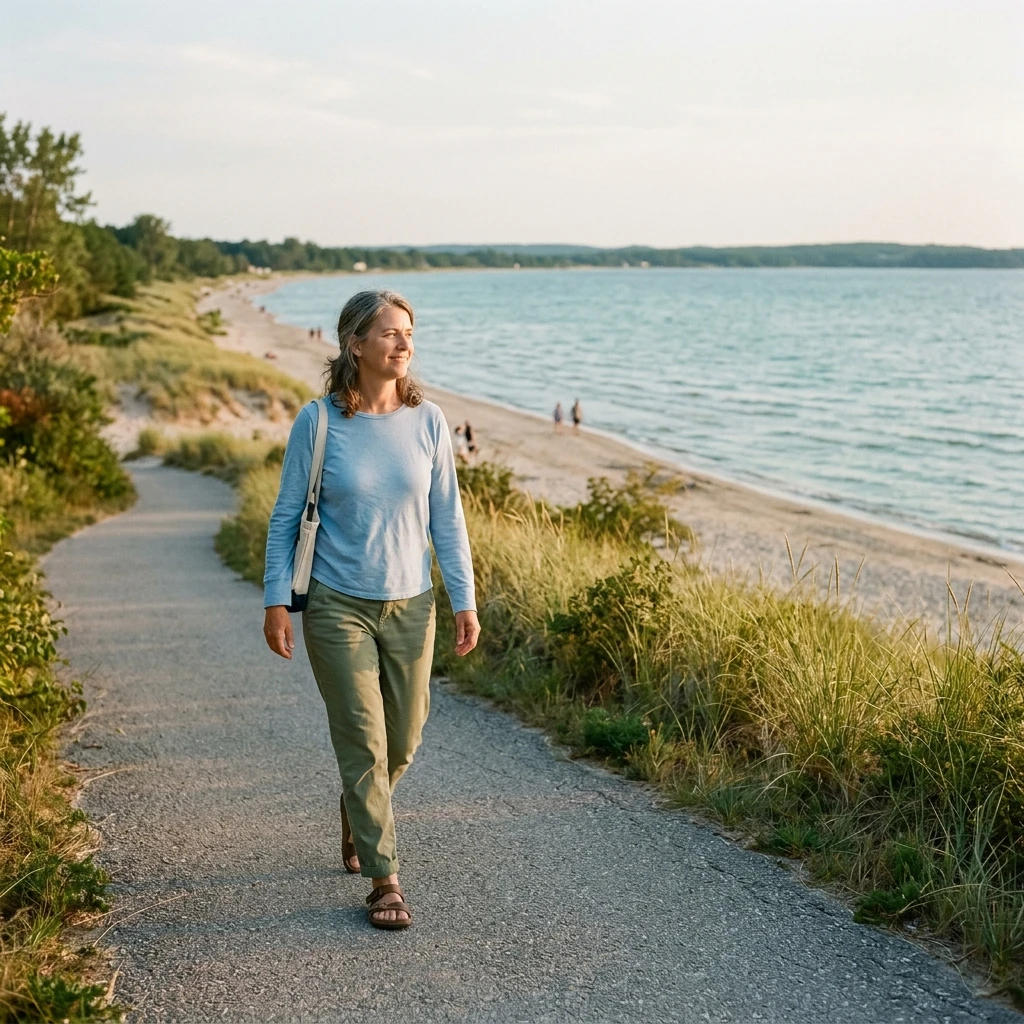
- Beach Drive boardwalk: from any Beach Area parking lot, an out-and-back walk of 10–15 minutes covers 1–1.5 km of scenic shoreline.
- The pier circuit: 1.4–1.6 km loop covering boardwalk, pier, and river-side path. Fits exactly into the 15–20 minute post-meal window.
- Georgian Trail (eastern end): from the Wasaga trailhead, an easy 10-minute out-and-back covers ~1 km. Pleasant in any season.
- Tiny Marsh dyke trails: 5–10 minute drive from central Wasaga, then 10–15 minute walks on flat, scenic dyke trails.
- Indoor mall walking: in extreme weather (deep winter cold, summer thunderstorm), local malls and recreation centres have indoor walking circuits.
The friction-reducing principle: the route should be so accessible that “skip the walk” takes more deliberate effort than “take the walk.” Most adults find the 5-minute drive to a trail too much friction; a walk that starts at the front door succeeds where a destination walk fails.
Optimal timing relative to the meal
The published research generally suggests starting the walk within 5–15 minutes of finishing the meal:
- Too early (during the meal or immediately after): the digestive process needs blood flow to the gut. Walking immediately can cause GI distress for some people.
- 5–15 minutes after: blood is shifting back from acute gut to peripheral circulation. Glucose is starting to rise. Walking now overlaps the rising portion of the glucose curve, where the intervention is most effective.
- 30+ minutes after: glucose has often peaked already. The walk still helps but less than starting earlier.
- 60+ minutes after: the glucose curve is largely descending. Walking has less acute effect (though still has the broader cardiovascular and metabolic benefits of regular activity).
Practical pattern: finish dinner, clean up briefly (5–10 minutes), then walk. The brief delay handles GI comfort; the timing still hits the glucose-rising window.
Who benefits most
The intervention works for nearly everyone but the magnitude of benefit varies:
- Type 2 diabetics: largest absolute benefit. Post-meal walking can reduce post-prandial glucose by 30%+ in this population, supplementing or in some cases reducing medication needs (with physician supervision).
- Prediabetics: substantial benefit. The intervention is among the strongest non-pharmaceutical tools for preventing progression to type 2 diabetes.
- Healthy adults with stable metabolic health: moderate benefit. The effect on individual meals is real but the long-term metabolic improvements are smaller (because the baseline is already healthy).
- Older adults at risk: significant benefit. Post-meal walking improves both metabolic markers and the broader fall-prevention/cardiovascular outcomes that matter most in older age.
- Pregnant adults with gestational diabetes risk: significant benefit. Post-meal walking is one of the safest interventions for blood-sugar management during pregnancy (with prenatal-care provider input).
- Athletes managing high-carbohydrate fueling: small but meaningful benefit. Post-training-meal walking can improve glucose disposal.
Combining post-meal walks with broader fitness routines
Post-meal walks are additive to, not a replacement for, structured exercise. They produce different metabolic benefits than dedicated workout sessions:
- Structured cardio sessions (30–60 minute Zone 2 work) drive cardiovascular fitness and base metabolic capacity.
- Strength training drives muscular adaptations and bone density.
- Post-meal walks drive specific glucose-control benefits that the other modalities don’t replicate as efficiently.
The optimal weekly structure for an adult interested in metabolic health: 3 structured cardio sessions, 2 strength sessions, 3 post-meal walks daily (one after each main meal). Total time: roughly 4–5 hours per week of structured exercise plus 30–45 minutes daily of post-meal walking. The post-meal walk is the most easily-built habit because it’s anchored to an existing daily pattern (eating).
Practical logistics and edge cases
Beyond the core protocol above, several recurring practical considerations come up for adults building post-meal walking into daily life.
Cold-weather post-meal walks. In Wasaga’s winter (December-March), the appeal of stepping outside immediately after a warm meal can be low. Practical adaptations: bundle up before sitting down to eat (so the walk decision is pre-committed); use indoor walking (mall, hallway, treadmill); accept shorter duration (5–7 minutes is meaningful) when full 15 minutes isn’t practical.
Restaurant meals. Walking after a restaurant meal is often easier because you’re already out of the house. Park 5 minutes away from the restaurant; the walk back is your post-meal walk.
Family meals with kids. Post-meal walks become family-walks. Kids tolerate this well as part of the daily routine; younger kids in strollers or wagons keep the parent walking even if the kid isn’t. The Wasaga residential streets and Beach Drive boardwalk are stroller-friendly.
Late-evening meals. Walking 30–60 minutes before bed is fine; the metabolic benefits don’t require daylight. Some research suggests evening exercise may slightly delay sleep onset for sensitive individuals, but a 15-minute easy walk is well below the threshold for sleep disruption.
Eating out of hunger versus boredom. The post-meal walk indirectly addresses overeating: the 15-minute delay between “feeling full” and the satiety signal reaching the brain often resolves during the walk. People who walk after meals report fewer unnecessary second helpings.
Continuous glucose monitor (CGM) experimentation. For adults curious about their own metabolic responses, a 2–4 week CGM trial reveals exactly how individual meal compositions and walk timings affect glucose. Insights are personal: the same meal that spikes one person’s glucose may be flat for another. A short CGM period can substantially improve dietary decisions.
Practical takeaways
- 10–15 minutes of post-meal walking reduces post-prandial glucose by roughly 10–26% depending on the measure and population — largest for peak glucose, smaller for whole-day averages (DiPietro 2013; Reynolds 2016; Bellini 2022).
- Mechanism: GLUT4-mediated insulin-independent glucose uptake by working muscle.
- Timing matters: start 5–15 minutes after the meal; the window during which glucose is rising is when the walk has most effect.
- Even 5 minutes is meaningful; don’t skip just because you can’t do 15.
- Friction-reducing routes: residential streets and Beach Drive boardwalk make Wasaga particularly easy for habit-building.
- Additive to structured exercise: post-meal walks complement (not replace) Zone 2 cardio and strength training.
Frequently asked questions
What if I have a continuous glucose monitor — what should I look for?
Watch the slope and peak of the post-meal curve with and without walking. A typical observation in healthy adults: a meal eaten with no walk produces a peak 90–120 minutes after eating; the same meal with a 15-minute post-meal walk peaks lower and returns to baseline ~30 minutes faster. The acute effect is large and individually obvious in CGM data.
Is it harmful to walk too soon after eating?
For most adults, no. A small fraction of people experience GI discomfort if they start walking immediately after a large meal. The 5–15 minute delay handles this comfortably. Vigorous exercise immediately after eating is a different question — that does redirect blood flow problematically and can cause cramping or nausea.
Does this work for snacks too, or just main meals?
It works for any carbohydrate-containing eating event. Snacks have smaller glucose curves so the absolute effect is smaller, but the acute mechanism is the same. For long sedentary periods, even brief 2–5 minute walks every 30 minutes blunt the cumulative glucose excursion.
Can I substitute fidgeting or standing for walking?
Partially. Standing alone has a small effect; deliberate movement (walking, light pacing, light stair-climbing) has a larger effect. The published research on standing-desk interventions shows benefits but smaller than equivalent-duration walking. If walking isn’t practical, standing-and-pacing is better than seated.
What about insulin-dependent diabetics — does this affect insulin dosing?
It can, and this is a discussion to have with your endocrinologist or diabetes-management team. Some insulin-dependent diabetics need to adjust insulin dosing to account for the additional glucose uptake from post-meal walking. Don’t make adjustments unsupervised; the standard pattern is to introduce post-meal walking with current dosing, monitor glucose response, and adjust as the team prescribes.
References
DiPietro et al. 2013DiPietro L, Gribok A, Stevens MS, Hamm LF, Rumpler W. Three 15-min bouts of moderate postmeal walking significantly improves 24-h glycemic control in older people at risk for impaired glucose tolerance. Diabetes Care. 2013;36(10):3262-3268. View source →Reynolds et al. 2016Reynolds AN, Mann JI, Williams S, Venn BJ. Advice to walk after meals is more effective for lowering postprandial glycaemia in type 2 diabetes mellitus than advice that does not specify timing: a randomised crossover study. Diabetologia. 2016;59(12):2572-2578. View source →Bellini et al. 2022Bellini A, Nicolo A, Bazzucchi I, Sacchetti M. The effects of postprandial walking on the glucose response after meals with different characteristics. Nutrients. 2022;14(5):1080. View source →Buffey et al. 2022Buffey AJ, Herring MP, Langley CK, Donnelly AE, Carson BP. The acute effects of interrupting prolonged sitting time in adults with standing and light-intensity walking on biomarkers of cardiometabolic health in adults: a systematic review and meta-analysis. Sports Med. 2022;52(8):1765-1787. View source →