The 60-second version
Wasaga Beach has limited but specific off-leash dog options. Three designated areas allow off-leash dogs in season: the Wasaga Beach Provincial Park dog beach (Beach Area 1, eastern end, May-October), the Wasaga Beach Town off-leash park on Sunnidale Road, and a small unofficial off-leash zone on the eastern Allenwood Beach. Outside these areas, on-leash is the law and enforcement does happen. The dog-friendliest local trail rotation: Provincial Park dog beach for swimming, Town off-leash park for running play, on-leash hiking on the Ganaraska Wasaga section or Blueberry Trail for exercise without crowds. Mosquito season (June-August) makes the trails less pleasant for dogs without ear and belly protection. Bears in the southern Ganaraska sections April-November mean keeping the dog leashed even where off-leash is technically permitted — the bear-encounter risk is real.
Educational journalism, not medical advice. Every claim here is checked against its cited sources by editor Timothy Bunce — a health writer, not a physician. It isn’t specific to your situation: for health decisions, talk to your own clinician. How we work →
Some links in this article are affiliate links. If you buy through one, The Beachside Reader earns a commission at no extra cost to you. It never changes which products we pick, or what we say about them. Full affiliate disclosure →
Wasaga Beach Provincial Park dog beach (Area 1 east end)
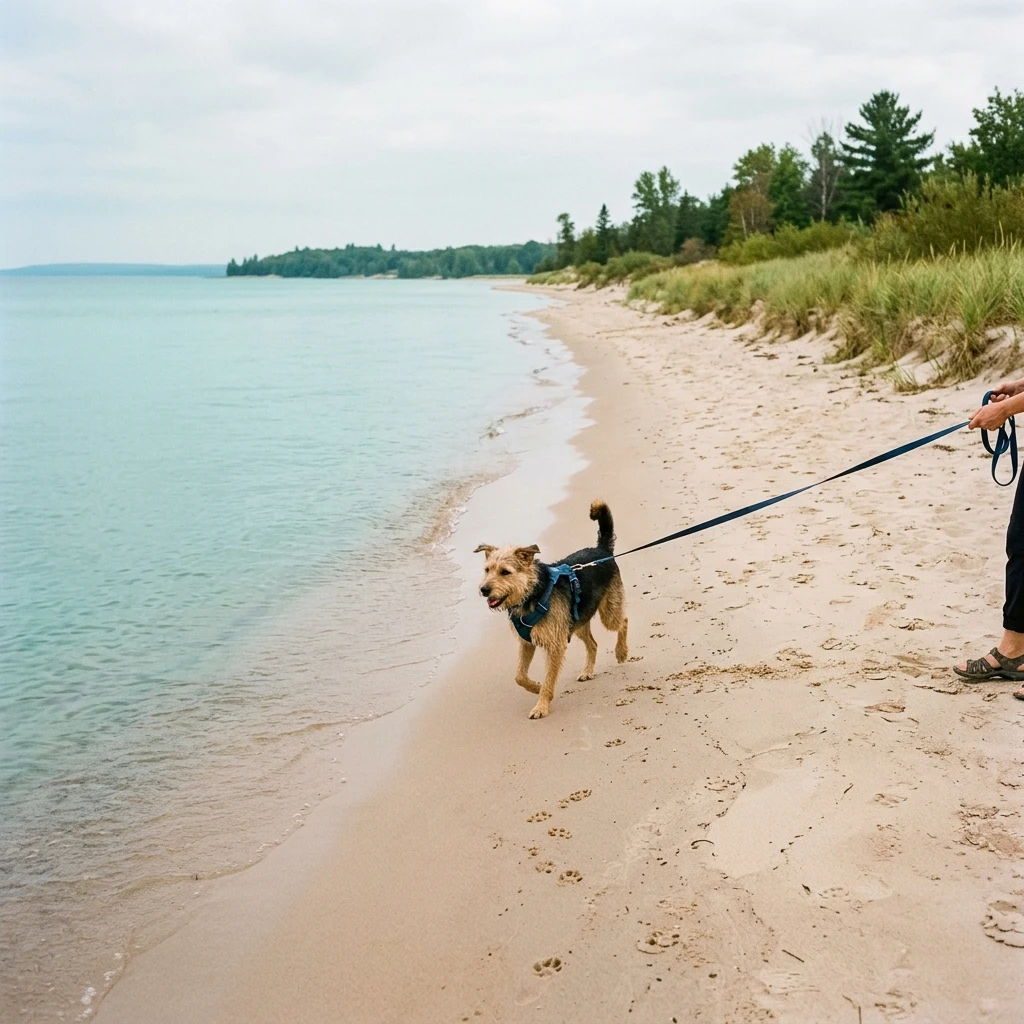
The eastern end of Beach Area 1, just past the lifeguard tower, is signed as the Provincial Park’s designated off-leash dog beach during the May-October season. The space is roughly 200 metres of shoreline, segregated from the swimming-area portion by signage and rope barriers in summer.
Practical experience: this is the busiest off-leash spot in the area. On a Saturday in July you’ll see 30-50 dogs and their owners across a full day. The water access is excellent — gentle entry, no sudden drop-offs, plenty of swim distance. The sand is the same Wasaga soft-sand that makes the trails up the beach so distinctive; dogs tend to enjoy it more than their humans.
Park parking fee applies ($14/day or $69/year individual Ontario Parks pass). The off-leash beach is included in the standard day-use access; no additional fee.
Reasonable dog-owner protocol on this beach: bring a long-line leash for the walk from the parking lot to the off-leash zone (mandatory), pick up after your dog (the Provincial Park provides bag dispensers), keep the dog from approaching strangers without permission, and watch for nesting piping plovers in May-June — if you see signage about an active nest, the rope barriers are non-negotiable COSEWIC 2014.
Wasaga Beach Town off-leash park (Sunnidale Road)
The Town of Wasaga Beach maintains a fenced off-leash dog park on Sunnidale Road, about 2 km north of central Wasaga. The fenced area is roughly 1.5 hectares with a small-dog section and a large-dog section, plus a centre lawn for overflow. Surface is grass with patches of pea gravel and wood chips at the gate areas.
This is the year-round option. Open every day, dawn to dusk. Free, no permit. Water taps are turned on May through October; bring your own bottle in winter. The Town maintains the surface (sweeping, manure pickup, fence repair) on a weekly basis.
Practical experience: weekday mornings (7-9 am) and evenings (5-7 pm) are the high-use windows; midday is quieter. Larger active dogs do better in the large-dog section even if they’re technically friendly with smaller breeds — the play styles differ enough that small-dog owners will appreciate the segregation.
The Allenwood unofficial off-leash zone
The eastern Allenwood Beach (past the official Wasaga Beach Provincial Park boundary) is an informal off-leash zone tolerated by the local township. It’s the quietest of the three options and the only one with consistent winter access.
Important caveat: this zone’s status is informal. It works because the local community has self-managed the etiquette — pick up after your dog, no aggressive dogs, no nesting-bird disturbance. Enforcement is complaint-based; if the local community pushes back the unofficial status will end. Use respectfully.
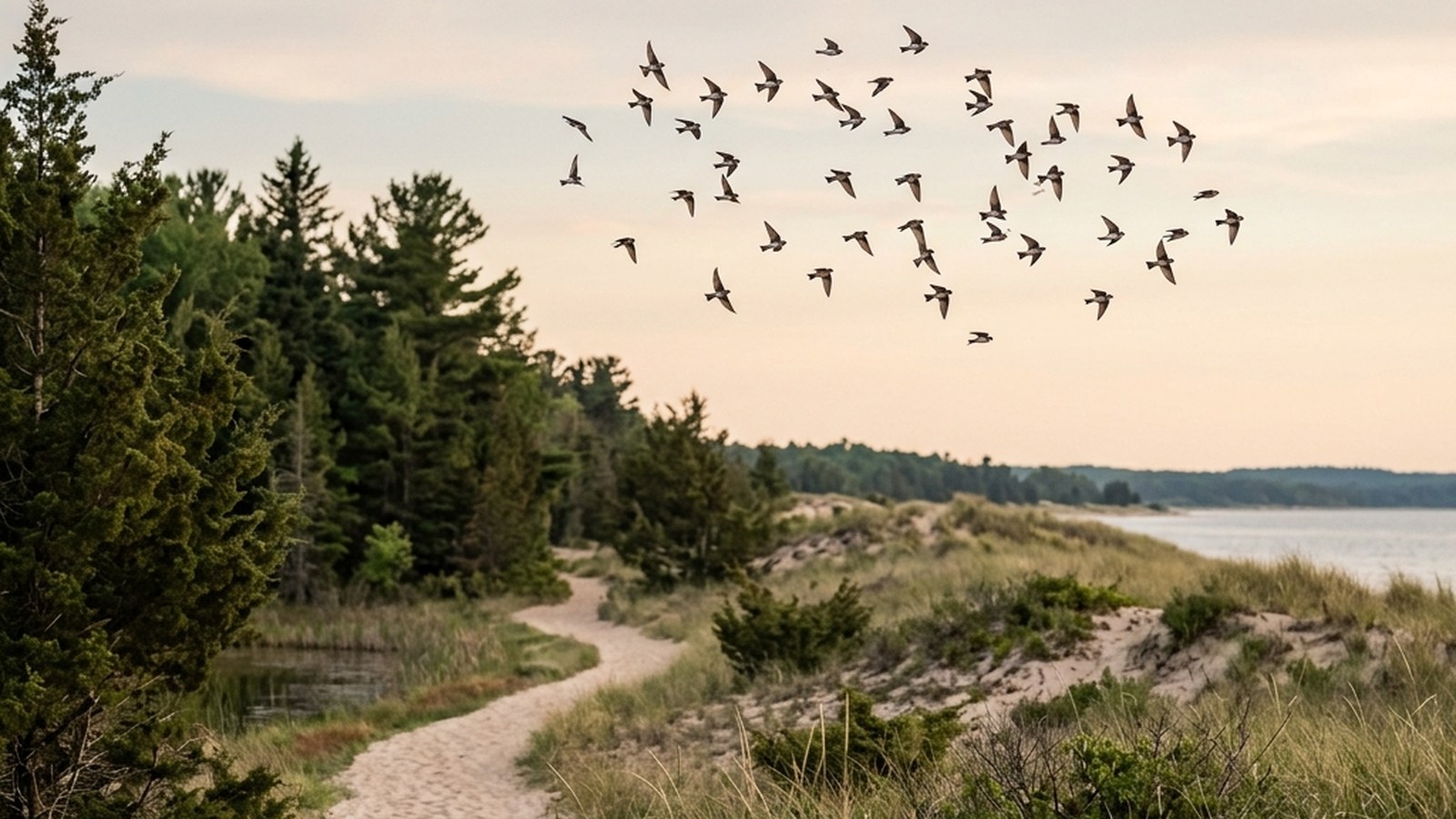
Wildlife concern: the Allenwood area is part of the bank swallow nesting habitat we covered in the Allenwood conservation loop article. May through July, off-leash dogs running through swallow nesting banks is the single biggest threat to the local colonies. Even in the unofficial off-leash zone, leashing during peak nesting (mid-May through July) is the right behaviour even if not strictly required.
On-leash trail options for active dogs
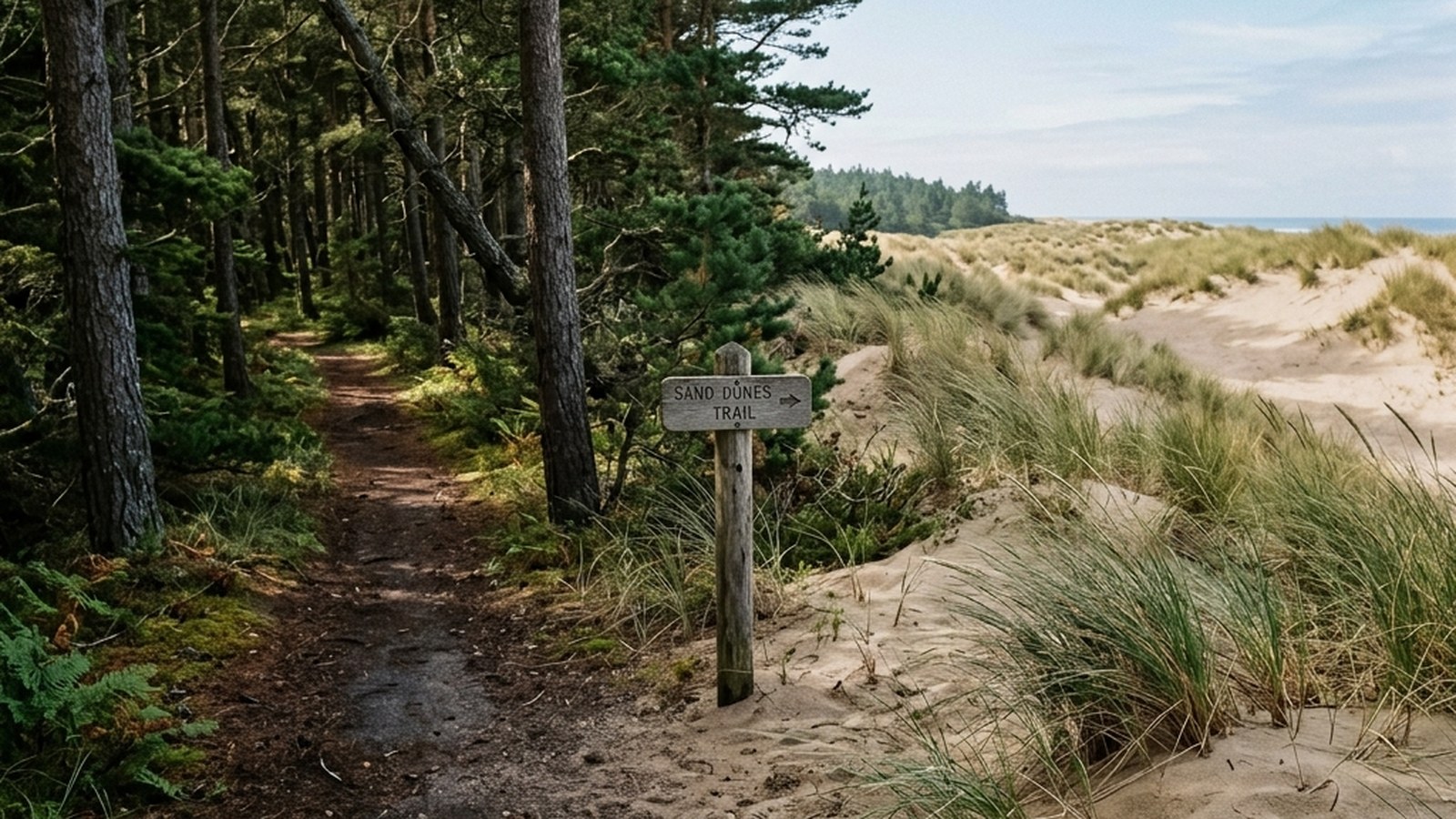
Outside the three off-leash zones, dogs are required to be on-leash on all local trails. The trails that work best for an active dog on a 6-foot leash:
- Ganaraska Wasaga section — long enough for a real workout, packed-dirt surface that’s comfortable for paws, low traffic Monday-Friday. Bear concern April-November — on-leash with bells is the protocol.
- Blueberry Trail — 6.8 km loop with surface variety, excellent for active dogs that need cardio plus mental stimulation. The dune-section bank swallow concerns mean strict on-leash from May through July.
- Nordic Centre summer trails — wide, packed, easy to keep a dog on-leash safely. Dogs not permitted on groomed ski trails December-March; April-November is when this venue works.
- Beach Areas 2-6 (on-leash) — the broader Wasaga shoreline outside the Area 1 off-leash zone. Dogs are technically permitted on-leash on the rest of the Wasaga beach corridor but enforcement varies; in summer’s peak, off-corridor on-leash dogs occasionally draw complaints.
Seasonal dog-running considerations
Spring (April-May): tick season starts. Use a topical tick preventative (Bravecto, Simparica) and check the dog’s ears, neck, and belly after each session. The mud on the Ganaraska section is rough on dogs that hate getting wet.
Summer (June-August): heat is the variable. A dog running on hot soft sand can develop paw-pad burns within 5 minutes if the surface is above 50°C (which is common on a 30°C day in midday sun). Test the sand with the back of your hand for 5 seconds; if it’s uncomfortable for you, it’s burning your dog. Run early morning or evening only in summer.
Autumn (September-October): peak season for dog-running. Cool, dry, low-bug, full trail access. The Ganaraska section’s falling leaves are visually stimulating for most dogs.
Winter (November-March): snow protects paws but salt on the Beach Drive corridor is irritating. Boots help; many dogs hate them but adapt over 2-3 sessions. The Nordic Centre is closed to dogs in groomed-ski season; the Town off-leash park is the year-round reliable winter option.
Hydration for the dog (often forgotten)
Dogs hydrate less efficiently than humans during exercise. A 25 kg dog at moderate running effort in summer will lose 100-200 ml/hour of water through panting. For runs over 30 minutes in temperatures above 20°C, bring water for the dog separately from your own — a collapsible bowl or a dog-specific water bottle (with built-in trough) is the standard kit.
The most common heat-stress signs: excessive panting that doesn’t stop after 5 minutes of rest, wobbly gait, very dark gums or tongue AVMA. If any of these appear, stop immediately, get the dog to shade, offer water, and don’t resume the run. Heat stroke in dogs has a much narrower margin than in humans; don’t push through.
Practicalities
- Bag dispensers are at all three off-leash zones and at most trailheads. Always carry your own as backup.
- Dog-licence enforcement: the Town of Wasaga Beach occasionally checks for current dog tags at the off-leash park. License is $30/year for spayed/neutered dogs Town of Wasaga Beach.
- Veterinary emergencies: the Wasaga Beach Veterinary Hospital and the Stayner Veterinary Services both have emergency-hours protocols. The closest 24-hour emergency vet is in Barrie (40 minutes south) at the Toronto Animal Health Partners.
- Lost-dog protocol: the Wasaga Beach lost-and-found Facebook group is the most effective fast-response resource. The Town animal-services line handles in-hours; the Facebook group runs 24/7 via the local pet-owner community.
Practical takeaways
- Three designated off-leash areas: Provincial Park Area 1 east end (May-October), Town off-leash park on Sunnidale Road (year-round), Allenwood unofficial zone (year-round, respectfully).
- The dog-friendly trail rotation: Town park for daily play, Ganaraska or Blueberry on-leash for cardio, Provincial Park beach for swim sessions.
- Bird-nesting respect mid-May through July: bank swallows and piping plovers are vulnerable to off-leash dogs, even in unofficial zones.
- Heat is the summer killer. Test sand with the back of your hand; run early morning or evening only.
- Year-round winter options exist. Town off-leash park is the reliable winter venue.
Frequently asked questions
Are dogs really allowed on the main beach?
On-leash, yes, on most of the Wasaga shoreline outside Area 1’s off-leash zone. Enforcement is variable. In peak summer at the busiest beach areas, plan for occasional complaint-based interactions; the spring and fall corridor is genuinely dog-friendly without confrontation.
Is the unofficial Allenwood off-leash zone safe?
For dog-on-dog and dog-on-human interactions, yes — community self-management has been effective. For wildlife (bank swallows during nesting season), it’s actively harmful. The respectful answer is on-leash through May-July even in the unofficial zone.
What about the Ganaraska Wasaga section — can dogs go off-leash there?
No. The Ganaraska Hiking Trail Association policy is on-leash, and bear activity April-November is real enough that an off-leash dog encounter with a bear has caused at least two reported incidents in recent years. On-leash with bells is the protocol.
Heat-stroke prevention — how serious is it really?
Very. Dogs can develop heat stroke at 41°C body temperature, and brachycephalic breeds (bulldogs, pugs) at lower thresholds. Pavement and soft sand both retain heat dramatically; the foot test is the practical guideline. Dogs don’t self-regulate as well as humans — if you suspect heat stress, stop immediately.
Are there dog-training classes nearby?
Yes. Several local trainers operate group classes in Wasaga Beach and Stayner; the Wasaga Beach Pet Centre and the Collingwood K9 group are the larger operations. Town recreation department maintains a list of licensed trainers; many also offer private in-home sessions.
References
COSEWIC 2014Committee on the Status of Endangered Wildlife in Canada. Piping Plover assessment and status report. 2014. View source →AVMAAmerican Veterinary Medical Association. Heat stress in dogs: clinical signs and prevention guidelines. View source →Town of Wasaga BeachTown of Wasaga Beach. Dog licence requirements, off-leash park rules, and animal services. View source →