The 60-second version
South Georgian Bay is one of Ontario’s most underrated winter destinations — the Georgian Bay snowbelt produces some of the deepest reliable snow in the province. Wasaga Beach Provincial Park grooms about 24 km of Nordic ski trails (High Dunes for advanced, Blueberry Trails for beginners) plus a dedicated 10 km snowshoe trail system. Blue Mountain Resort typically operates downhill skiing and snowboarding from late November or early December into April, depending on snowfall, on the region’s only commercial mountain. Kolapore Nordic in Heathcote is the region’s serious cross-country destination. Wye Marsh in Midland maintains a dedicated snowshoe trail, open winter-only. Awenda Provincial Park’s trails are accessible for backcountry skiing and snowshoeing through winter. The fitness pairings: groomed Nordic at Wasaga rewards aerobic base and technique; Kolapore demands stronger technique and endurance; Blue Mountain downhill is a different sport entirely (anaerobic legs, balance, gear cost). For most active residents and visitors, the winter calendar is built around two or three of these venues, rotated through December, January, February, and the deeper-snow weeks of March before the spring thaw arrives. This guide covers each venue, the fitness profile it rewards, and the practical safety considerations for cold-weather outdoor recreation in the region.
Educational journalism, not medical advice. Every claim here is checked against its cited sources by editor Timothy Bunce — a health writer, not a physician. It isn’t specific to your situation: for health decisions, talk to your own clinician. How we work →
Some links in this article are affiliate links. If you buy through one, The Beachside Reader earns a commission at no extra cost to you. It never changes which products we pick, or what we say about them. Full affiliate disclosure →
Why winter here
The Georgian Bay snowbelt is real meteorology, not marketing. Cold Arctic air picks up moisture crossing the bay’s open water, then dumps it as lake-effect snow when it hits the colder land mass on the southern shore. The result: Wasaga Beach, Collingwood, Blue Mountain, and the Tiny shoreline sit squarely in the lake-effect snowbelt and reliably receive substantially more seasonal snowfall than the Toronto area. That snow tends to arrive in concentrated late-November-through-mid-March windows. Inland regions like Stayner and Owen Sound receive somewhat less due to distance from the bay, but still reliable winter conditions.
For the active resident or visitor, this means a winter calendar with real depth. The same region that offers world-class summer beach access pivots to a credible winter sports destination from December through March. Few regions in southern Ontario offer this combination.
Wasaga Beach Nordic Centre & Trail System
Wasaga Beach Provincial Park’s Nordic Centre is the region’s flagship cross-country ski destination and a quietly excellent fitness venue. The trail system covers about 24 km of groomed Nordic terrain through pine forest and dune topography behind the Wasaga shoreline.
Trail breakdown:
- Blueberry Trail (Blue) — 4.0 km loop, easy grade, the recommended starting point for new skiers. Open terrain, gentle rolling, well-marked.
- Pine Trail — about 2.4 km, the natural next step once Blueberry feels comfortable.
- Monument Hill Trail — about 3 km, black diamond, with a sustained climb to a lookout — the system’s standout feature. The Rabbit, Fox, and Deer Run skate loops round out the groomed network for experienced skate-skiers.
- High Dunes Trail — the longest and most demanding linear option. The biggest sustained climbs in the system; rewards strong aerobic base and technique on descents.
Snowshoe trails: A dedicated snowshoe network of roughly 7.5 km runs separately from the ski trails, so neither user group interferes with the other. Lower technical demand than skiing, accessible to anyone with reasonable winter walking fitness.
Practical: Access via the Sunnidale Road / Highway 92 approach to the Nordic Centre — not the main beach gate. Daily vehicle permit through Ontario Parks; annual pass holders skip the booth. Equipment rental is available on-site. The trails open when snow conditions permit (typically late December through early March, sometimes longer in colder years). Check the Ontario Parks snow report before going.
Blue Mountain Resort: downhill and snowboard
Blue Mountain is the region’s commercial downhill mountain — the only large-scale lift-served ski resort within an hour’s drive. Typically operating from late November or early December into April, depending on snowfall, on slopes of every difficulty, it draws weekend traffic from across southern Ontario.
The fitness profile is different from Nordic skiing in important ways. Downhill skiing is more anaerobic (short bursts of muscular work on each run, recovery on the lift); the leg-strength demand is high; balance and reflexes matter more than aerobic endurance. Snowboard is similar but with different muscle recruitment patterns. Lessons are available across all levels.
What to know:
- Lift ticket pricing scales with day-of-week and time-of-day. Weekday daytime is generally the best value.
- Equipment rental on-site, but seasonal renters or owners save significant money over the season.
- The base village has full dining, lodging, and après-ski options — this is a resort destination, not just a hill.
- For beginners, the lower-mountain learning areas have dedicated lifts and gentler terrain.
- For advanced skiers, the front-side and back-side both have steep terrain and tree skiing options.
For non-skiing winter visitors, Blue Mountain also runs a tubing park, mountain coaster, and a winter walking path that’s suitable for non-athletes.
Kolapore Nordic and the serious cross-country option
For experienced cross-country skiers, Kolapore Nordic in nearby Heathcote (about 30 minutes west of Blue Mountain) is the region’s serious cross-country destination. The trail system is grass-fed by the Kolapore Uplands Wilderness, with technical terrain, longer loops, and a culture closer to the European cross-country tradition than the family-friendly Wasaga system.
Trail access is maintained by the volunteer-run Kolapore Wilderness Trails Association through memberships, donations, and map sales. The trail system rewards strong technique, real aerobic fitness, and the willingness to handle technical descents on classical or skate skis. Not the right venue for first-timers; very much the right venue for experienced skiers seeking the region’s most demanding groomed terrain.
Wye Marsh Wildlife Centre: snowshoe and observation
Wye Marsh Wildlife Centre in Midland is the region’s winter-bird and snowshoe destination. Open in winter only, the centre maintains a dedicated snowshoe trail (the Graham McDonald Snowshoe Trail) through wetland and forest habitat. The trail is well-marked, accessible to first-timers, and overlaid on a habitat that supports overwintering waterfowl — trumpeter swans, various ducks, owls, woodpeckers, and other resident bird species.
This is the right venue for a slower-paced winter outing: snowshoeing combined with wildlife observation. Snowshoe rental is typically available on-site. The wider Wye Marsh trail network (more than 25 km total) is also accessible in winter for self-sufficient snowshoers, though only the dedicated snowshoe trail is designated and patrolled.
Awenda Provincial Park: backcountry snowshoe and ski touring
Awenda Provincial Park remains open through winter for backcountry-style snowshoeing and ski touring across its 17 km trail system. The park’s trails are not groomed in winter — this is true backcountry travel through hardwood forest and along the Georgian Bay bluff. Skill set required is closer to winter hiking than to groomed Nordic.
The seven trails range from the 1 km Beaver Pond (accessible) to the 13 km Bluff Trail (advanced). In winter, the Brûlé and Robitaille trails are the most reliably-broken-out options because they get more visitor traffic. The Bluff Trail in deep snow becomes a serious half-day commitment requiring strong fitness, navigation skill, and proper equipment. Frozen Georgian Bay vistas from the bluff in mid-winter are spectacular when conditions allow safe access — do not walk on the bay ice; it’s rarely solid enough to trust.
Other winter options across the region
Pretty River Valley Provincial Park (non-operating in winter but trail-accessible) offers snowshoe terrain with real elevation. Devil’s Glen Provincial Park is similar — trail access but no facilities. Both reward strong winter hikers more than casual day-trippers.
Town and township parks across Wasaga, Collingwood, Midland, and Owen Sound maintain winter walking paths and (in some places) outdoor ice rinks. The Collingwood Waterfront Trail stays accessible for winter walking with the Blue Mountains as the dramatic backdrop. Harrison Park in Owen Sound is winter-walkable, with the Sydenham River and hardwood forest cutting a different kind of visual through the snow.
Snowmobile trails network across the region under the Ontario Federation of Snowmobile Clubs (OFSC) trail system. This guide focuses on human-powered outdoor recreation, but the snowmobile infrastructure is real and well-organised for those interested.
Indoor backup options for poor-weather days: Beachside Fitness in Wasaga Beach, various indoor pools, the YMCA in Midland. Winter outdoor plans should always have an indoor Plan B for high-wind, freezing-rain, or extreme-cold days.
Fitness pairings: matching winter discipline to the right venue
New to winter sports. Start at the Wasaga Nordic Centre Blueberry Trail (groomed, easy grade, low risk) or Wye Marsh’s dedicated snowshoe trail. Both are low-commitment, well-serviced, and forgiving to first-timers. If downhill is the goal, Blue Mountain’s lower learning area with a lesson is the standard pathway.
Recreational fitness, intermediate technique. Wasaga Nordic’s Pine or Monument Hill trails, Awenda’s Brûlé Trail in fresh tracks, Blue Mountain’s intermediate runs (the green-to-blue progression handles most weekend skiers).
Trained winter athletes. Wasaga High Dunes Trail at race pace, Kolapore Nordic’s full system, Awenda Bluff Trail in deep snow, Blue Mountain’s expert terrain. The Pretty River Valley and Devil’s Glen backcountry options reward strong winter hikers and ski tourers willing to break their own trail.
Family with young children. Wasaga Nordic Centre rental fleet typically includes child-size gear; the Blueberry Trail is suitable for kids who can handle 2–3 km of effort. Wye Marsh has child-size snowshoes and the snowshoe trail is manageable for elementary-age children with breaks. Blue Mountain has dedicated learning programs for children and a tubing park for non-skiing days.
Winter safety considerations
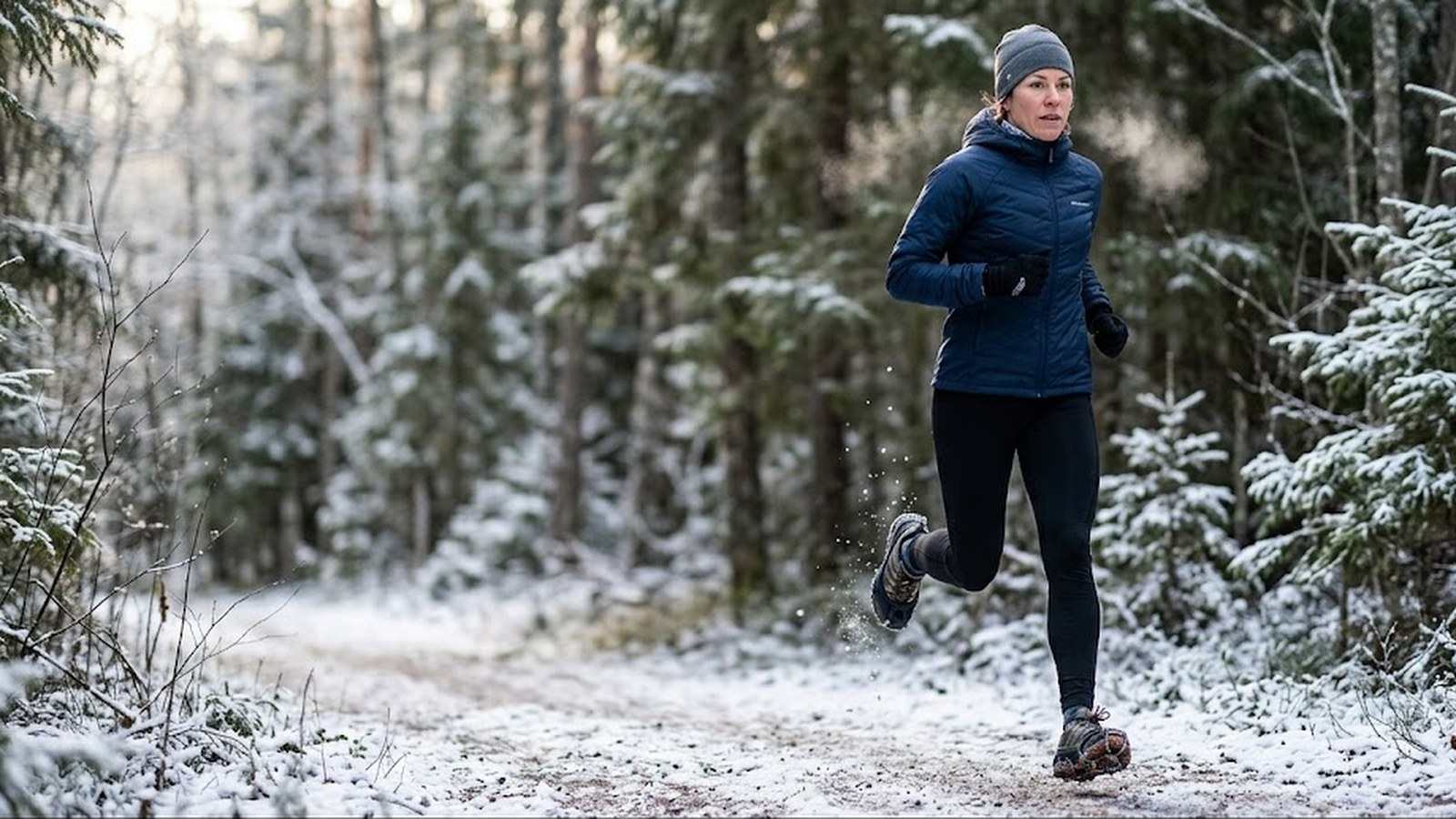
Cold-weather injury prevention. Frostbite risk on exposed skin rises sharply when the windchill drops below -27°C (Environment Canada threshold). Plan around the windchill, not the air temperature alone. Layers are the answer: a moisture-wicking base, an insulating mid (fleece or merino), and a wind-shell outer. Keep extra dry layers in the car for after the activity.
Hydration is still essential. Cold air is dry, exertion produces sweat, and the urge to drink is suppressed in cold weather. Active winter recreation requires the same hydration planning as summer training, just with the bottle insulated from freezing.
Bay ice is not safe. Georgian Bay rarely freezes solid; ice that looks thick can have current-fed thin spots. Do not walk on the bay regardless of how the surface appears. Inland conservation-area lakes and the Sydenham River in Owen Sound similarly should not be assumed safe without specific local knowledge.
Daylight is short. Mid-December through late January, daylight is roughly 9 hours. Plan trail outings for late morning through mid-afternoon to avoid headlamp-required returns. Carry a headlamp anyway.
Navigation and self-sufficiency. Awenda, Pretty River, and Devil’s Glen are not patrolled in winter. Tell someone your plan, carry a phone, and know your turnaround point. Groomed venues (Wasaga, Blue Mountain, Kolapore, Wye Marsh) are patrolled to varying degrees.
Winter season calendar
Late November. Resort terrain opens at Blue Mountain with snowmaking. Backcountry trails accessible but not yet snow-covered consistently. Lake-effect snow begins as the bay cools.
December. First reliable Nordic ski conditions at Wasaga (typically mid-to-late December). Blue Mountain in full operation. Holiday-week traffic at all destinations.
January. Peak winter conditions. Coldest temperatures and deepest snow. Nordic and snowshoe at their best. Watch for extreme-cold days (-20°C and colder) that compress the comfortable training window.
February. Continued peak conditions for most snow sports. Snowmaking at Blue Mountain extends groomed surfaces. Length of daylight begins increasing noticeably late month.
March. Variable conditions. Some of the best Nordic skiing of the year if snow holds (longer days, milder temperatures), but melt-freeze cycles begin. Spring break crowds at Blue Mountain. Backcountry trails become unpredictable as snow density changes.
Early April. Wasaga Nordic typically closes; Blue Mountain’s closing day. Transition season begins.
Practical takeaways
- Wasaga Nordic Centre is the regional Nordic flagship: about 24 km groomed, a dedicated 10 km snowshoe trail, beginner through advanced.
- Blue Mountain Resort owns the downhill space: December through mid-April, all levels, full resort infrastructure.
- Kolapore Nordic is the serious cross-country destination: experienced skiers only.
- Wye Marsh is the family + observation venue: dedicated snowshoe trail with wildlife.
- Awenda is the backcountry option: 17 km of ungroomed winter terrain.
- Match venue to fitness level: Blueberry Trail for first-timers, High Dunes for trained skiers, Bluff Trail for fit backcountry travellers.
- Plan for cold-weather safety: windchill, layers, hydration, daylight, navigation.
- Stay off bay ice: it’s rarely solid, regardless of how it looks.
Frequently asked questions
How many kilometres of ski trails does Wasaga Beach Provincial Park groom in winter?
The Nordic Centre grooms about 24 km of cross-country trails, ranging from the easy 4.0 km Blueberry Trail for beginners to the demanding High Dunes Trail with sustained climbs for strong skiers. A separate dedicated 10 km snowshoe trail system runs apart from the ski trails so the two user groups don’t interfere.
What's the difference between skiing at Wasaga Nordic Centre and Blue Mountain Resort?
Wasaga Nordic Centre offers groomed cross-country skiing that builds aerobic base and technique. Blue Mountain is the region’s only large-scale lift-served downhill mountain, typically operating from late November or early December into April depending on snowfall, with a more anaerobic fitness profile driven by short bursts of muscular work, leg strength, and balance rather than sustained endurance.
Where can I snowshoe with kids in South Georgian Bay?
Wye Marsh Wildlife Centre in Midland maintains a well-marked, first-timer-friendly snowshoe trail (the Graham McDonald Snowshoe Trail, open winter-only) with child-size rentals, good for elementary-age children with breaks. Wasaga Beach’s Blueberry Trail area and its rental fleet also include child-size gear for kids handling 2–3 km of effort.
Is it safe to walk on Georgian Bay when it’s frozen?
No. The article is explicit that Georgian Bay rarely freezes solid, and ice that looks thick can hide current-fed thin spots. Visitors should not walk on the bay regardless of appearance, and the same caution applies to inland conservation-area lakes and the Sydenham River in Owen Sound without specific local knowledge.
What cold-weather safety precautions should I take for winter outdoor recreation here?
Plan around windchill rather than air temperature — frostbite risk rises sharply below -27°C. Dress in moisture-wicking, insulating, and wind-shell layers, keep dry layers in the car, stay hydrated despite reduced thirst cues, watch the short winter daylight (about 9 hours in December/January), carry a headlamp, and tell someone your plan on unpatrolled backcountry trails like Awenda.
References
Additional sources reviewed for this article: Wasaga Beach Nordic Centre, Blue Mountain Resort, Ontario Parks Snow Report, Wye Marsh Winter Programming, Environment Canada Windchill.
Wasaga Beach Nordic CentreWasaga Beach Provincial Park — Nordic Centre trail map, snow report, and seasonal operating information. View source →Blue Mountain ResortBlue Mountain Resort Ontario — Winter skiing and snowboarding programming, trail information, and snow report. View source →Ontario Parks Snow ReportOntario Parks — Snow Report and seasonal trail conditions for Wasaga Beach Provincial Park and other parks. View source →Wye Marsh Wildlife CentreWye Marsh Wildlife Centre — Winter snowshoe trail and wildlife observation programming. View source →Environment CanadaEnvironment and Climate Change Canada — Windchill chart and cold-weather injury thresholds. View source →Ontario Federation of Snowmobile ClubsOFSC — Snowmobile trail network and seasonal status for South Georgian Bay region. View source →Kolapore NordicKolapore Wilderness Trails Association — Trail map, conditions, and membership information for the Heathcote-area Nordic ski system. View source →