The 60-second version
Bright morning light delivers a far stronger circadian-resetting signal than any oral supplement. 15 minutes of outdoor light within an hour of waking shifts the suprachiasmatic nucleus phase reliably; the same effect from melatonin requires careful timing and is dose-dependent. The published research on bright-light therapy for delayed sleep phase syndrome, jet lag, and shift work consistently shows light at 10,000 lux for 15-30 minutes outperforms supplemental approaches.
Educational journalism, not medical advice. Every claim here is checked against its cited sources by editor Timothy Bunce — a health writer, not a physician. It isn’t specific to your situation: for health decisions, talk to your own clinician. How we work →
Some links in this article are affiliate links. If you buy through one, The Beachside Reader earns a commission at no extra cost to you. It never changes which products we pick, or what we say about them. Full affiliate disclosure →
Why light dominates the supplement aisle
The suprachiasmatic nucleus (SCN) is the master circadian pacemaker in the hypothalamus. It receives direct input from intrinsically photosensitive retinal ganglion cells — a specialised cell population most sensitive to short-wavelength (blue, ~480 nm) light. Morning light in this band triggers a precisely-timed cascade: cortisol awakening response, body temperature rise, sleep-pressure clearing, and an evening melatonin onset 14–16 hours later. No oral supplement matches the timing precision of this pathway.
The dose-response is well-characterised. Outdoor light at sunrise on a clear day delivers 10,000–25,000 lux. Indoor light, even in a brightly-lit office, rarely exceeds 300–500 lux. The order-of-magnitude difference is why “getting some morning light through the window” is not the same protocol as actually going outside.
The 15-minute protocol
The published clinical protocol that has been replicated across multiple sleep‑disorder trials:
- Timing: within 60 minutes of waking, ideally within 30.
- Duration: 10–15 minutes outdoors on a bright day; 20–30 minutes on an overcast day; longer in winter near 40+°N latitudes.
- Eyewear: no sunglasses during the 15-minute window. Sunglasses block the ipRGC signal that drives the SCN response.
- Direction: facing in the general direction of the sun (not directly at it). Peripheral light intake matters as much as direct gaze.
- Activity: walking is ideal (also drives the morning cortisol rise) but stationary works.
Why melatonin often fails where light succeeds
Most commercial melatonin products contain 5–10 mg per dose; the endogenous nocturnal level peaks at ~70–100 pg/mL, which corresponds to roughly 0.3–0.5 mg oral equivalent. The standard commercial dose is 10× or more above physiological peak. Higher doses can paradoxically suppress endogenous production over time and produce next-morning grogginess.
More fundamentally, melatonin is a phase-shifting cue, not a sedative. Taken at the wrong time, it can worsen the phase problem it’s meant to solve. Light is the dominant phase cue evolution gave us; supplementation works best as a backstop for travel and shift-work disruption, not as a daily replacement.
Seasonal variation and the winter problem
At Wasaga Beach’s latitude (44.5°N), winter sunrise can be 7:45 am or later. For working-age adults whose schedule starts at 6 am, the morning-light window is genuinely sunless three months of the year. The published winter protocol: 10,000-lux therapy lamps (the SAD-research standard) for 20–30 minutes within the first hour of waking. Multiple controlled trials show comparable phase-shifting effect to natural light at this lux level.
The lamps that work for this are the medical-grade ones used in seasonal-affective-disorder research, not consumer “sunrise alarm clocks.” The latter are too dim (a few hundred lux maximum) to drive SCN response. They’re fine as wake-up cues but don’t substitute for therapeutic dosing.
The evening side: protecting the win
Morning light without evening protection still works, but the effect is amplified by minimising evening light exposure 2–3 hours before bed. Blue-blocker glasses or screen-tint software during the wind-down window pair the morning protocol with the evening one. The biology is symmetric: light suppresses melatonin until you remove it.
For most working adults, the practical evening protocol is dimming lights and switching screens to warm-tone mode after 8 pm. The aggressive version (amber glasses, no screens after 9 pm) is overkill for most cases but available if jet lag or shift work is the underlying issue.
Who benefits most from this protocol
Three populations see the largest measurable benefit from morning light protocols:
- Delayed sleep phase syndrome (DSPS) sufferers, often diagnosed as “night owls” or in adolescence. Morning light at 6–7 am shifts the phase earlier by 30–60 minutes per week of consistent practice.
- Shift workers transitioning back to day schedule. Light within 30 minutes of the new desired wake time accelerates re-entrainment.
- Travel-acclimating adults: 3 mornings of bright-light therapy at the destination cuts jet-lag duration roughly in half in published trials.
Healthy adults with normal-pattern sleep see smaller but real effects: faster sleep onset at night, slightly earlier endogenous melatonin onset, improved next-day alertness.
A Wasaga-specific morning routine
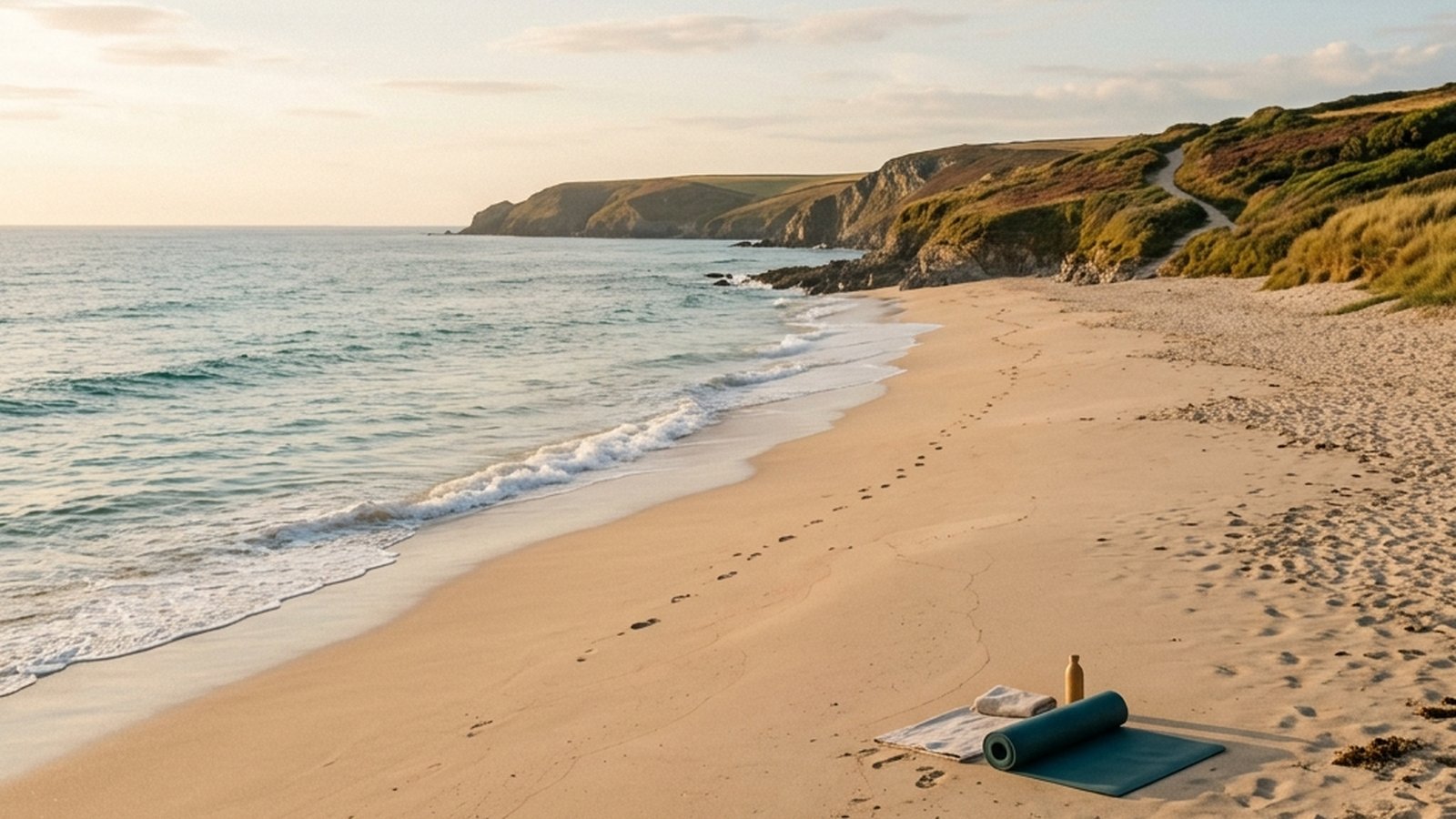
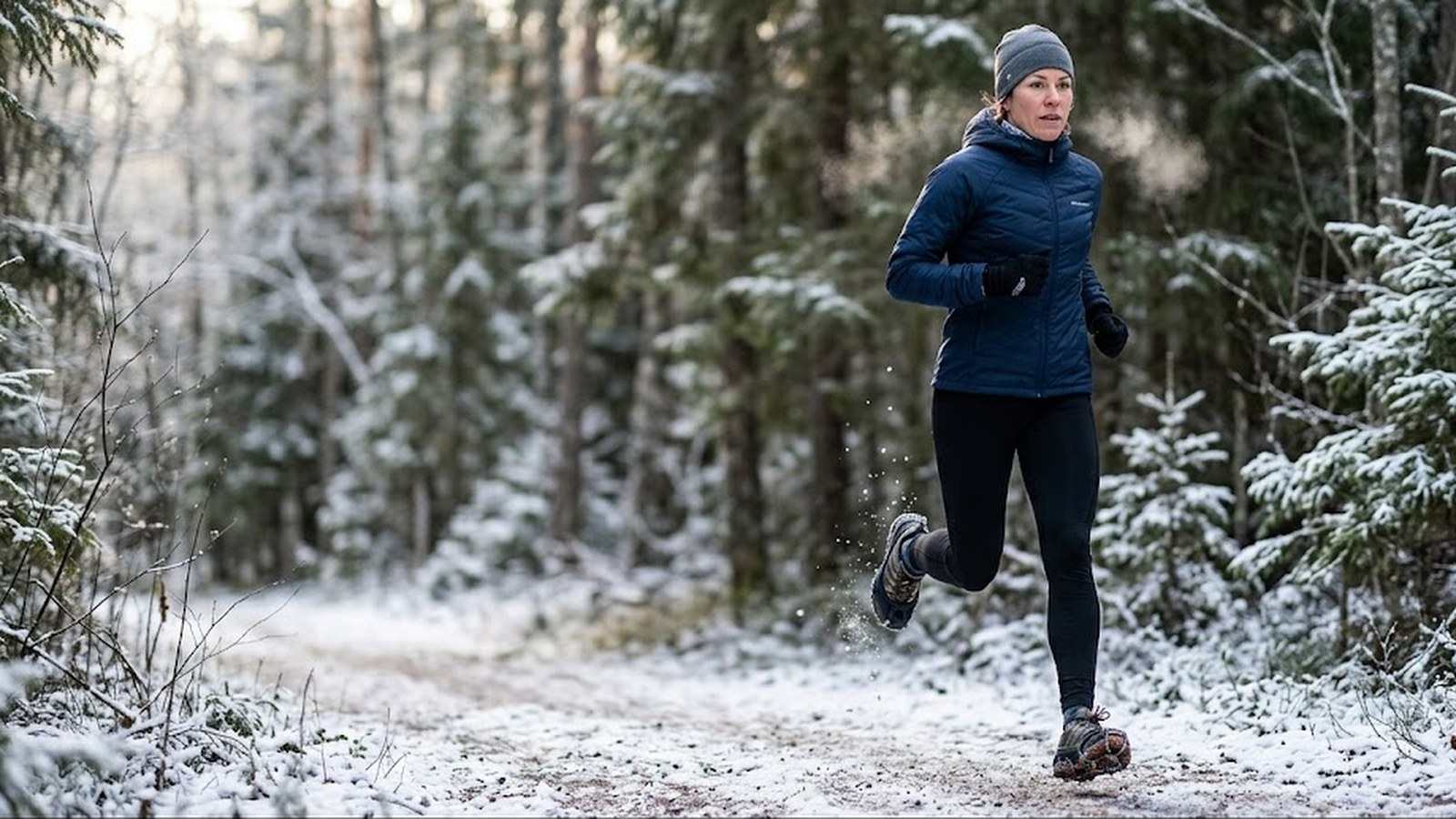
For local readers: the Shore Lane Trail at sunrise is the practical implementation. 15 minutes east-facing along the lakeshore handles the protocol perfectly. Year-round, the trail surface is suitable for walking; in winter, ice cleats handle the snow-pack and the 7:45 am sunrise still happens before most working days start.
Local data point: Wasaga’s Georgian-Bay-facing east shoreline is unusually well-suited to sunrise walking because the open water gives genuinely unimpeded eastern horizon access — far less light blockage than urban or wooded environments.
Practical takeaways
- 15 minutes of outdoor morning light beats melatonin for most adults with sleep complaints.
- Within 60 minutes of waking; ideally within 30. No sunglasses during the window.
- Outdoor lux is 10×+ indoor lux even on overcast days — you have to actually go outside.
- Winter backup: 10,000-lux SAD lamp for 20–30 minutes if pre-sunrise wake.
- Pair with evening dimming for compound effect.
- Highest impact in DSPS, shift work, and jet lag. Smaller but real benefit for everyone else.
- Melatonin supplements work as backstops for specific situations, not as daily replacements.
Frequently asked questions
How soon after waking should I get outdoor morning light?
Within 60 minutes of waking, ideally within 30 minutes. This is the window in which morning light most reliably shifts the suprachiasmatic nucleus and anchors the rest of the day’s circadian cascade.
How long do I need to be outside for the protocol to work?
10 to 15 minutes on a bright day is enough; plan on 20 to 30 minutes if it’s overcast, and longer near 40°N-plus latitudes in winter. Outdoor light, even under cloud cover, still delivers far more lux than an indoor room.
Should I wear sunglasses during the morning walk?
No. Sunglasses block the short-wavelength light that intrinsically photosensitive retinal ganglion cells rely on to signal the suprachiasmatic nucleus, which blunts the phase-resetting effect. Save sunglasses for later in the day.
What if sunrise happens after I have to be at work in winter?
Use a 10,000-lux light therapy lamp for 20 to 30 minutes within the first hour of waking — the same intensity used in seasonal-affective-disorder research. Consumer sunrise alarm clocks put out only a few hundred lux and are too dim to substitute.
Is a sunrise walk actually better than taking melatonin?
For most adults with sleep-timing complaints, yes. Standard melatonin doses of 5 to 10 mg are roughly ten times higher than the body’s physiological peak level, and melatonin works as a phase-shifting cue rather than a sedative — taken at the wrong time it can worsen the very problem it’s meant to fix. Morning light delivers a stronger, more reliable signal without that risk.
References
Additional sources reviewed for this article: Czeisler 1989, Wright 2013, Lewy 2006, Lockley 2003.
Czeisler 1989Czeisler CA et al. Bright light induction of strong (type 0) resetting of the human circadian pacemaker. Science. 1989;244(4910):1328-33. View source →Wright 2013Wright KP et al. Entrainment of the human circadian clock to the natural light-dark cycle. Curr Biol. 2013;23(16):1554-8. View source →Lewy 2006Lewy AJ. Melatonin as a marker and phase-resetter of circadian rhythms in humans. Adv Exp Med Biol. 2006;460:425-34. View source →Lockley 2003Lockley SW et al. High sensitivity of the human circadian melatonin rhythm to resetting by short wavelength light. J Clin Endocrinol Metab. 2003;88(9):4502-5. View source →Burgess 2002Burgess HJ, Sharkey KM, Eastman CI. Bright light, dark and melatonin can promote circadian adaptation in night shift workers. Sleep Med Rev. 2002;6(5):407-20. View source →Eastman 2009Eastman CI, Burgess HJ. How to travel the world without jet lag. Sleep Med Clin. 2009;4(2):241-55. View source →