The 60-second version
A 5km looped route in Wasaga Beach combining the paved Shore Lane Trail with town parkland. Stroller-friendly throughout, multiple bail-out points where the route crosses parking and washroom infrastructure, shaded segments for hot days, and ends at a playground with washrooms. The specific route, parking, family logistics, and time-of-day recommendations.
Educational journalism, not medical advice. Every claim here is checked against its cited sources by editor Timothy Bunce — a health writer, not a physician. It isn’t specific to your situation: for health decisions, talk to your own clinician. How we work →
Some links in this article are affiliate links. If you buy through one, The Beachside Reader earns a commission at no extra cost to you. It never changes which products we pick, or what we say about them. Full affiliate disclosure →
The route at a glance
The 5 km loop runs along the eastern segment of Wasaga’s Shore Lane Trail, branches inland through New Wasaga residential streets, and returns via a town park route. Total elevation change is essentially zero; the entire route is paved or hard-packed; multiple natural break points provide bail-out options if a small kid hits the wall partway through.
Start/finish: Sunset Point Park (Beach Area 5 parking lot).
Total distance: 5.0–5.4 km depending on chosen variant.
Surface: 80% paved, 20% hard-packed sand/gravel.
Suitable for: jogging strollers, walking-age kids 4+, tricycle-age kids 5+, dogs on leash.
Time to complete: 60–90 minutes with a family pace and breaks; 35–45 minutes at a brisk adult pace.
Step-by-step route
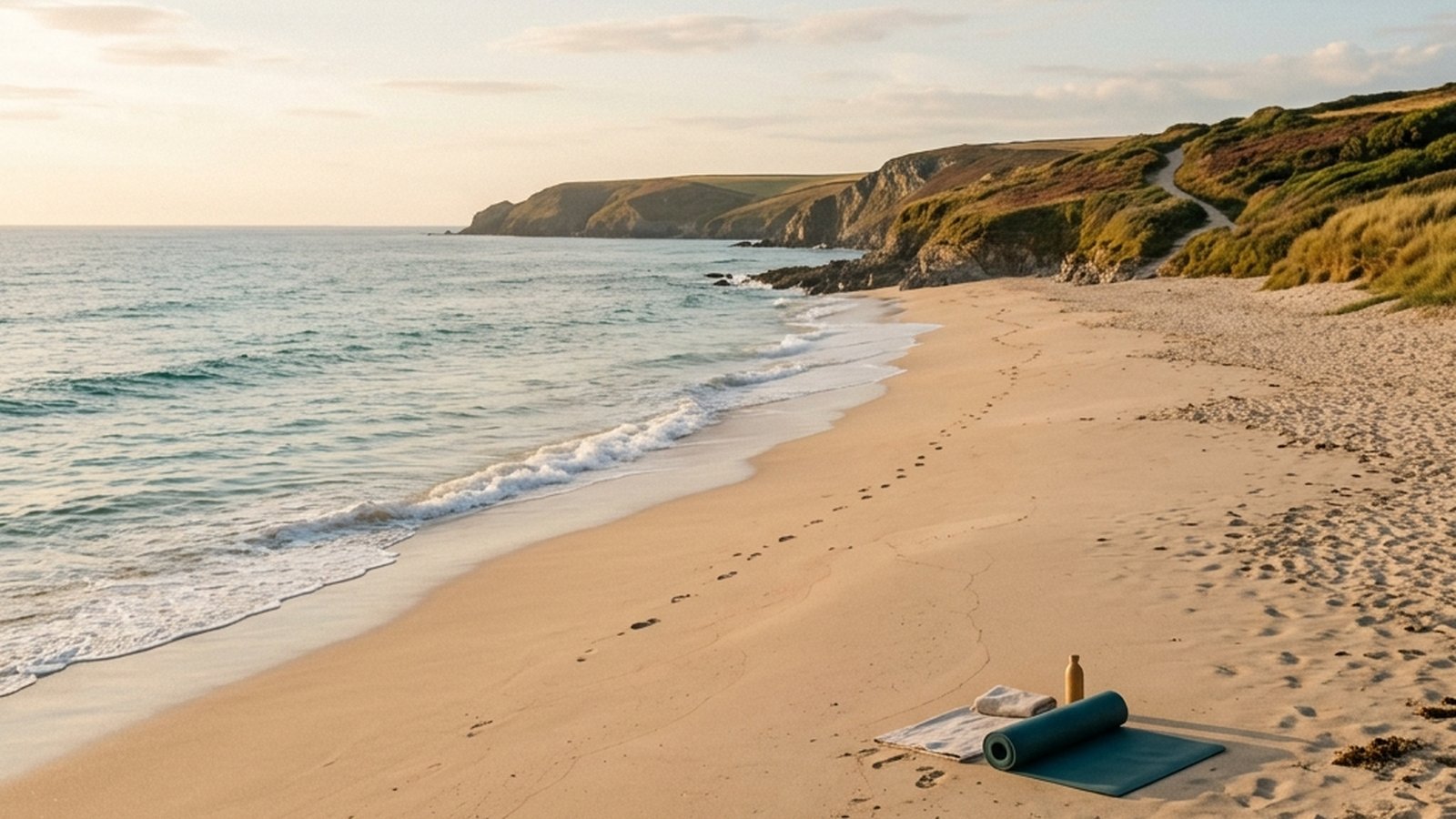
0.0–1.2 km: Start at Sunset Point Park parking lot. Head west on the paved Shore Lane Trail with Georgian Bay on your right. This section runs along the lake with views, has zero traffic interruption, and is the photo-friendly opening segment. Stroller pushes easily; kids on scooters or trikes handle it.
1.2 km bail-out point: Beach Area 4 parking lot — washrooms (seasonal), water fountain, picnic tables. If the route is too much for a younger kid, turn back here for a manageable 2.4 km round trip.
1.2–2.5 km: Continue west on Shore Lane Trail past the dune access boardwalks. The lake remains visible on the right; dune grass and pine give shade on the left. This is the section where the trail surface transitions to harder-packed sand in places — still stroller-passable but slower.
2.5 km halfway point: Beach Area 3 parking lot. Larger washroom facility, larger parking, ice cream and refreshment kiosks during summer. Natural lunch/snack stop. If you’re running the route as a fitness loop, this is the turnaround for a 5 km out-and-back.
2.5–3.5 km: Turn inland (south) from Beach 3, head down the residential connector street (the route uses signed crossings; one road crossing with a marked pedestrian crossing). This section is shaded by residential trees and has light traffic. The transition gives kids something visually different after the open lakeshore.
3.5 km bail-out point: The Wasaga Beach Public Library (or community centre, depending on which residential connector route you choose). Public washrooms inside; air conditioning on hot days.
3.5–5.0 km: Loop back to Sunset Point Park via the inland connector. Mixed paved sidewalk and town parkland paths. This is the section to slow down and let kids look around — a small wooded section, a community garden, and views of residential Wasaga.
5.0 km finish: Back at Sunset Point Park with playground, picnic tables, beach access, and washrooms. Plan to spend 30–60 minutes here at the playground or beach as the cool-down reward.
Parking and logistics
Sunset Point Park parking: free, large lot, busy weekends from late June onward. Pre-season (mid-May through late June) parking is available throughout.
Provincial Park beach areas along the route: daily vehicle permit required if you park at Beach 3 or 4. If parking at Sunset Point, no provincial permit is needed for the trail itself — Shore Lane Trail crosses provincial property but is open public access.
Washrooms on route: Beach 4 (seasonal, mid-May through October), Beach 3 (seasonal), Sunset Point Park (year-round, with limited winter hours), Public Library or community centre (year-round).
Water: Beach 4 and Beach 3 have water fountains (seasonal). Bring water for kids; the route can feel longer than 5 km without it.
Time-of-day recommendations
Early morning (7–9 am): coolest, most photogenic, least crowded. Wildlife sightings (birds, occasionally deer at the dune edge) are most likely. Parking is empty.
Mid-morning (9–11 am): warmer but still comfortable. Snack stop at Beach 3 works well. Most family-friendly window.
Mid-day (11 am–2 pm): hot in summer. Skip unless you commit to the shaded back-half segment. Sun exposure on the open Shore Lane section is intense.
Late afternoon (3–6 pm): good golden-hour light. Sunset Point Park finish is photogenic. Watch for tired toddler meltdowns at the back end.
Sunset hour (7–9 pm in summer): magical light for older kids; toddlers usually too tired. Make sure you finish before full dark — the residential return segment is well-lit but the Shore Lane Trail isn’t.
Seasonal considerations
Spring (April–May): trail surface is wet through April; mid-May is the practical start. Bug pressure (black flies) peaks late May; finish the loop by 11 am to avoid the worst of it.
Summer (June–August): hot middays. Stick to early or late timing. Parking competitive on weekends from late June.
Fall (September–October): trail is excellent. Cooler, dry, peak colour mid-October. Sunset Point Park playground stays open through frost.
Winter (November–March): the route is technically walkable but the Shore Lane Trail isn’t plowed and the surface is unpredictable. Better to switch to the cleared sections of town walking paths (or Wasaga Beach Provincial Park’s Nordic system if you have the gear).
Variations
Shorter (3.0 km): Sunset Point Park to Beach 4 and back. Stays entirely on the Shore Lane Trail. Easier for younger kids and faster total trip.
Longer (7.0 km): extend west to Beach 2 before turning inland. Adds 1.5 km of Shore Lane Trail. Suitable for older kids or fitness-focused runs.
Bike variant: the full 5 km loop works for kids on bikes age 7+ if they can handle a residential road crossing safely. Adult cyclists treat the loop as a warm-up rather than a destination route.
Why this specific route works
Most Wasaga walking suggestions either stay entirely on the Shore Lane Trail (boring for kids who’ve done it before) or use back-residential routes that don’t showcase the lakeshore. This loop combines both: the lakeshore opens the experience visually, the inland return gives kids something different to look at, and the playground finish gives them a reward worth completing the distance for. The bail-out points mean a meltdown isn’t a crisis.
For visiting families, this is the route to do on day one to get oriented. For locals, it’s the regular family walk that doesn’t get old.
Practical takeaways
- 5 km looped route: Sunset Point Park → Shore Lane Trail west to Beach 3 → inland return → back to Sunset Point.
- Stroller-friendly throughout; 80% paved.
- Three bail-out points with washrooms (Beach 4, Beach 3, public library/community centre).
- Ends at a playground as the kid-reward finish.
- Best time: early morning (7–9 am) or late afternoon (3–6 pm).
- Skip: midday summer (sun exposure on the open Shore Lane).
- Pre-season (mid-May through late June) has the best parking and lowest crowds.
Frequently asked questions
When is peak autumn colour in Wasaga?
Peak typically falls between October 10 and 20, with year-to-year variation of about a week each direction depending on weather conditions. The Bruce Trail Conservancy and Ontario Parks both publish updated colour reports through October. Forest sections at slightly higher elevation (Pretty River, Blue Mountain) sometimes peak earlier than lower-elevation sections.
Are mosquitoes still around in October?
No, by October mosquito activity is essentially nil. The cooler temperatures eliminate breeding pool activity. Black flies are similarly gone. Tick activity declines but doesn’t fully end; tick prevention practices remain sensible particularly on grassy and brushy trails.
Can I still cycle the Georgian Trail in late October?
Yes — the trail surface is well-maintained and dry through October in most years. Cool-weather cycling kit (light jacket, gloves, full-finger gloves below 10°C) makes the ride comfortable. Watch for leaf litter on the trail surface; can be slippery when wet.
Is October too cold for open-water swimming?
For most casual swimmers, yes. Water temperatures of 14–18°C are below the comfort threshold for swims longer than 10–15 minutes. Cold-water swimmers in wetsuits continue training; otherwise, October is the start of indoor pool season for most local swimmers.
How dark is it for evening runs by late October?
Sunset is around 6 PM by month-end with full darkness by 7 PM. A headlamp or flashing red light becomes essential for evening trail running; bright clothing essential for road running. Many local runners shift evening sessions to morning for the daylight.
References
Additional sources reviewed for this article: Town of Wasaga Beach Trails, Wasaga Beach Provincial Park, Accessible Playgrounds Ontario.
Town of Wasaga BeachTown of Wasaga Beach — Parks, trails, and the Shore Lane Trail public infrastructure information. View source →Wasaga Beach Provincial ParkOntario Parks — Wasaga Beach Provincial Park beach areas, seasonal operating dates, and family infrastructure. View source →Accessible Playgrounds OntarioAccessible Playgrounds Ontario — Database of accessible playground infrastructure across Wasaga Beach. View source →Canadian Paediatric SocietyCanadian Paediatric Society — Physical activity guidelines for children including stroller-age outdoor recommendations. View source →